

I think it’s extremely unhealthy for any academic field to make it taboo to critique publications from senior or junior scholars or to critique certain popular methods. This makes the field worse or makes us look bad to people outside our field (including the public). It erodes…— Jay Van Bavel, PhD (@jayvanbavel) October 13, 2024
Cas (Stephen Casper) on Twitter / X
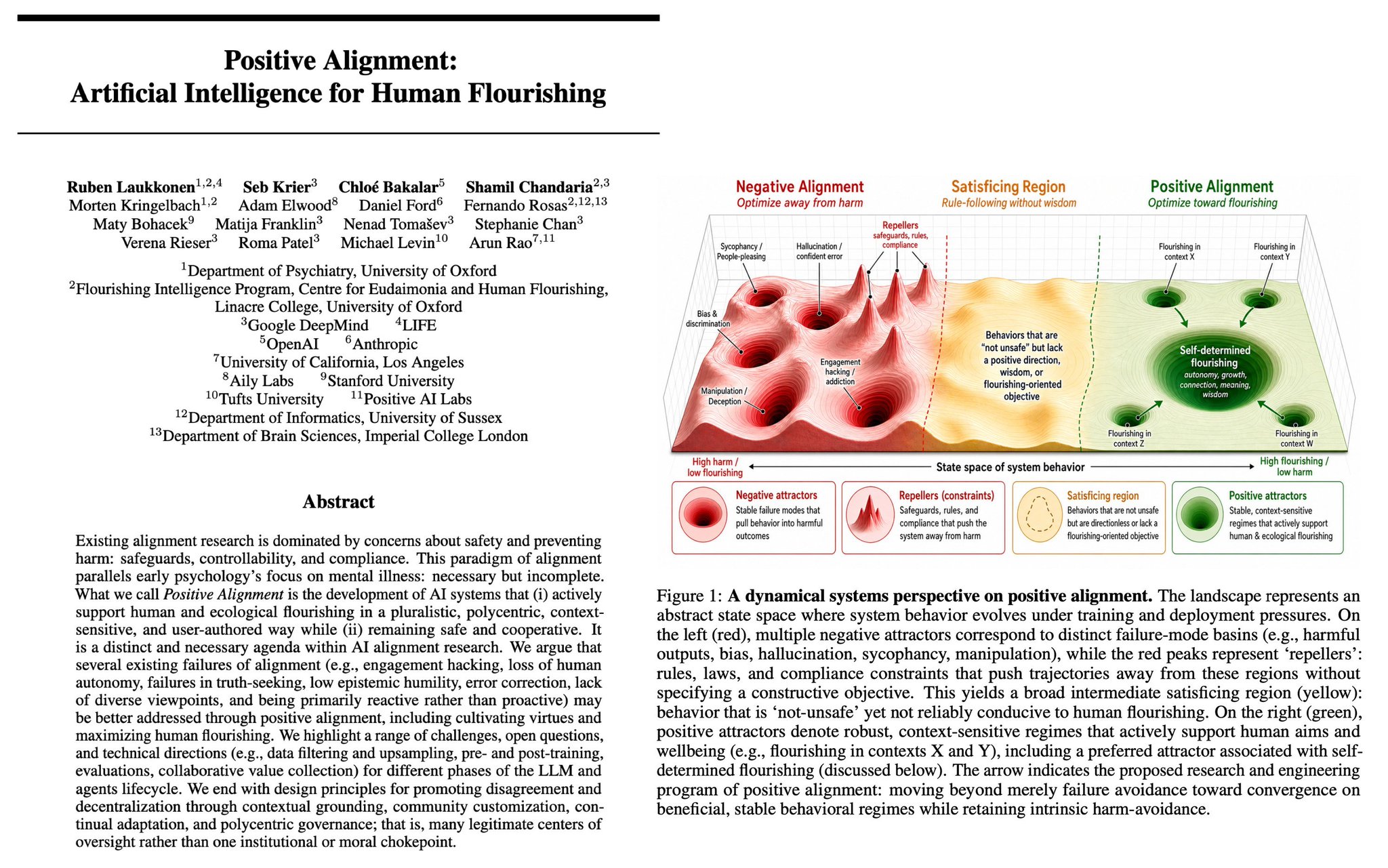
It is hard to overstate how disappointing I think this new paper from Oxford, OpenAI, Anthropic, and Google (et al) is. I can't take it seriously as academic work, just as propaganda. It also has some very bad scholarship and questionable adherence to research ethics. Having… pic.twitter.com/Z5fBx360ya— Cas (Stephen Casper) (@StephenLCasper) May 13, 2026
‘I Have a Folder in My Email Called Hate Mail’: Academic Public Engagement, Digital Hate and the Unequally Distributed Risks of Visibility
Public engagement through �traditional� and social media is an increasingly important way for scholars to communicate research w

[52] Menschplaining: Three Ideas for Civil Criticism
As bloggers, commentators, reviewers, and editors, we often criticize the work of fellow academics. In this post I share three ideas to be more civil and persuasive when doing so. But first: should…
Shreya Shankar on Twitter / X
This problem has gotten significantly worse. As Twitter and other social media have become primary channels for sharing research, academics are now expected to make the same ideas legible and appealing to both the general public (to go "viral") and senior scholars (to get the… https://t.co/zPF3tKzbVa— Shreya Shankar (@sh_reya) July 25, 2026
Jason Shepherd on Twitter / X
I have quite a lot of thoughts on this..that won't fit in a tweet. Bottomline is that there are issues scientists in the US would love to improve - faster review, less grant writing, more stability and freedom to do risky science. The folks celebrating this doc are mostly../1 https://t.co/xlPAH9XYNC— Jason Shepherd (@JasonSynaptic) July 23, 2026
Breaking the silence
Research on science communication has largely focused on teaching scientists how to describe their studies in ways that interest the public while deepening their understanding of scientific exploration. However, there is another, often overlooked side to science communication—how scientists respond when questions arise about the integrity of their research. Often, the tendency has been to stay silent and wait for any controversy to pass or be resolved in professional forums. But in an age of growing, intense attacks on science, silence can be detrimental to both public trust and the careers of scientists who are under scrutiny. For better or worse, journalists, social media professionals, and the public may take a response of “no comment” as a concession that the critics are correct, so forthright communication about research questions is more urgent than ever.

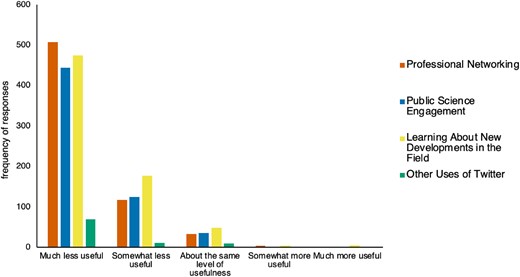
Scientists no Longer Find Twitter Professionally Useful, and have Switched to Bluesky
Synopsis Social media has become widely used by the scientific community for a variety of professional uses, including networking and public outreach. For the past decade, Twitter has been a primary home of scientists on social media. In recent years, new leadership at Twitter has made substantive changes that have resulted in increases in the prevalence of pseudoscience, conspiracy theory, and harassment on the platform, causing many scientists to seek alternatives. Bluesky has been suggested as a good alternative to Twitter, but the phenomenon of academics switching social media platforms has not previously been studied. Here we report on the results of a survey distributed to scientists on Twitter and Bluesky (n = 813). Results overwhelmingly confirm that changes to Twitter have made the social media platform no longer professionally useful or pleasant, and that many scientists have abandoned it in favor of Bluesky. Results show that for every reported professional benefit that scientists once gained from Twitter, scientists can now gain that benefit more effectively on Bluesky than on Twitter.
So maybe now we can agree that having an unchecked research integrity militia who unfortunately has the ear of the press and increasingly that of the the publishers, but who fiercely rejects any… | Ioana A. Cristea
So maybe now we can agree that having an unchecked research integrity militia who unfortunately has the ear of the press and increasingly that of the the publishers, but who fiercely rejects any minimal ethics or code of conduct, is a (growing) problem? Also, that 1. problems have to be investigated before deciding they are are legitimate and serious; 2. this investigation is not social media, blogs and the press; 3. this investigation should not be on the front page of journals and Retraction Watch; 4. there are degrees of seriousness and some things can just be corrected or are simply not very consequential (no, it's not a house of bricks where we have to check every brick, that's a dumb analogy), so being absolutely hysterical and overdramatic about any lie, inaccuracy or mistake is purposeful at worse and should be ignored at best and 5. it is not only unnecessary, but harmful, to also go into other, non-academic things the person did or does to complete "investigations" that you (press, sleuth, blogger, etc) do not have the tools and information to do completely and accurately (this fixation would be called harassment in the before times). Others will justly write about what the institutions did or did not do, but what I want to say is that we really should end it with the blank credit we give to any and all allegations that come from the establish research integrity truth fighters.

The Alt-Right Playbook: Why Don't You Respond to Criticism?
The Drain of Scientific Publishing
The domination of scientific publishing in the Global North by major commercial publishers is harmful to science. We need the most powerful members of the research community, funders, governments and Universities, to lead the drive to re-communalise publishing to serve science not the market.

A budding discipline around how science gets read and judged - Aris
Scholarly publishing spent thirty years arguing about access. It has barely begun arguing about what readers do with the paper once they have it. At Aris we call that second argument scholarly interface design. Mike Morrison's community calls it ScienceUX. Either way it is becoming a field, and here is why it is worth your attention.
Why do we do astrophysics?
At time of writing, large language models (LLMs) are beginning to obtain the ability to design, execute, write up, and referee scientific projects on the data-science side of astrophysics. What implications does this have for our profession? In this white paper, I list - and argue for - a set of facts or "points of agreement" about what astrophysics is, or should be; these include considerations of novelty, people-centrism, trust, and (the lack of) clinical value. I then list and discuss every possible benefit that astrophysics can be seen as bringing to us, and to science, and to universities, and to the world; these include considerations of love, weaponry, and personal (and personnel) development. I conclude with a discussion of two possible (extreme and bad) policy recommendations related to the use of LLMs in astrophysics, dubbed "let-them-cook" and "ban-and-punish." I argue strongly against both of these; it is not going to be easy to develop or adopt good moderate policies.
Bill Ackman on Twitter / X
Almost nothing makes my blood boil more than when a large powerful institution unfairly destroys someone’s reputation, and its principal reason for doing so is to minimize bad publicity in an effort to protect its own ‘reputation.’ Sadly, I have seen this occur in many academic…— Bill Ackman (@BillAckman) January 2, 2026
Guest post: Should universities investigate questionable papers students and faculty wrote elsewhere?
Be-Art/iStock I am a research ethicist and often get asked by my university to investigate when potential concerns are raised about our staff or students. One example involved the recent case of th…

Some researchers, including some I very much respect, think that we need to stop pussyfooting around and start being more brutal in our way of talking about bad work in our field I disagree. When you are refuting someone’s work, I think it’s important not to be a dick about it
"We should be able to have an open discussion about what's good science and freely critique bad research. No not you! You shouldn't be having an open discussion about what's good metascience or freely critique bad metaresearch. That's censorship." Idk about you folks but I'm tired of the bullshit.

