Introducing Hyperagents: an AI system that not only improves at solving tasks, but also improves how it improves itself.The Darwin Gödel Machine (DGM) demonstrated that open-ended self-improvement is possible by iteratively generating and evaluating improved agents, yet it… pic.twitter.com/YJPFTJ51SO— Jenny Zhang (@jennyzhangzt) March 23, 2026
Hyperagents
Self-improving AI systems aim to reduce reliance on human engineering by learning to improve their own learning and problem-solving processes. Existing approaches to self-improvement rely on fixed, handcrafted meta-level mechanisms, fundamentally limiting how fast such systems can improve. The Darwin Gödel Machine (DGM) demonstrates open-ended self-improvement in coding by repeatedly generating and evaluating self-modified variants. Because both evaluation and self-modification are coding tasks, gains in coding ability can translate into gains in self-improvement ability. However, this alignment does not generally hold beyond coding domains. We introduce \textbf{hyperagents}, self-referential agents that integrate a task agent (which solves the target task) and a meta agent (which modifies itself and the task agent) into a single editable program. Crucially, the meta-level modification procedure is itself editable, enabling metacognitive self-modification, improving not only the task-solving behavior, but also the mechanism that generates future improvements. We instantiate this framework by extending DGM to create DGM-Hyperagents (DGM-H), eliminating the assumption of domain-specific alignment between task performance and self-modification skill to potentially support self-accelerating progress on any computable task. Across diverse domains, the DGM-H improves performance over time and outperforms baselines without self-improvement or open-ended exploration, as well as prior self-improving systems. Furthermore, the DGM-H improves the process by which it generates new agents (e.g., persistent memory, performance tracking), and these meta-level improvements transfer across domains and accumulate across runs. DGM-Hyperagents offer a glimpse of open-ended AI systems that do not merely search for better solutions, but continually improve their search for how to improve.

Harness Engineering for Self-Improvement
The concept of recursive self-improvement (RSI) dates back to I. J. Good (1965), where he defined an “ultraintelligent machine” as a system that can surpass humans in all intellectual activities and design better machines to improve itself. Yudkowsky (2008) used the phrase “recursive self-improvement” for a specific feedback loop: an AI uses its current intelligence to improve the cognitive machinery that produces its intelligence. This feedback loop in modern AI may indicate the model rewriting its own weights directly, or more broadly the model improves the training pipeline and the deployment system, which in turn enables a better successor model with improved performance across economically valuable tasks. The speed of research development in AI has been shown to drastically accelerated in frontier labs (Anthropic; OpenAI).
Import AI 455: AI systems are about to start building themselves.
The first step towards recursive self improvement

Awesome RSI: A curated research map of Recursive Self-Improvement
A curated research map of Recursive Self-Improvement (RSI): models, agents, harnesses, embodied systems, automated AI R&D, benchmarks, and safety.
Prime Intellect - The Open Stack for Self-Improving Agents
The compute and infrastructure platform for you to train, evaluate, and deploy your own agentic models.
Prime Intellect - The Open Stack for Self-Improving Agents
The compute and infrastructure platform for you to train, evaluate, and deploy your own agentic models.
Building and evaluating AI Agents — Sayash Kapoor, AI Snake Oil
RSI Simulator: Play the Economics of Recursive Self-Improvement
Bootstrap an AI lab from scratch. A web game from Paradigm built on real economic models of AI recursive self-improvement.
XMUDeepLIT/Awesome-Self-Evolving-Agents
A Survey of Self-Evolving Agents | A curated list of resources (surveys, papers, benchmarks, and opensource projects) on Self-Evolving Agents.
AI agents team up in Agent Laboratory to speed scientific research
Johns Hopkins University and AMD have developed Agent Laboratory, a new open-source framework that pairs human creativity with AI-powered workflows.

When AI builds itself
Our progress toward recursive self-improvement, and its implications.

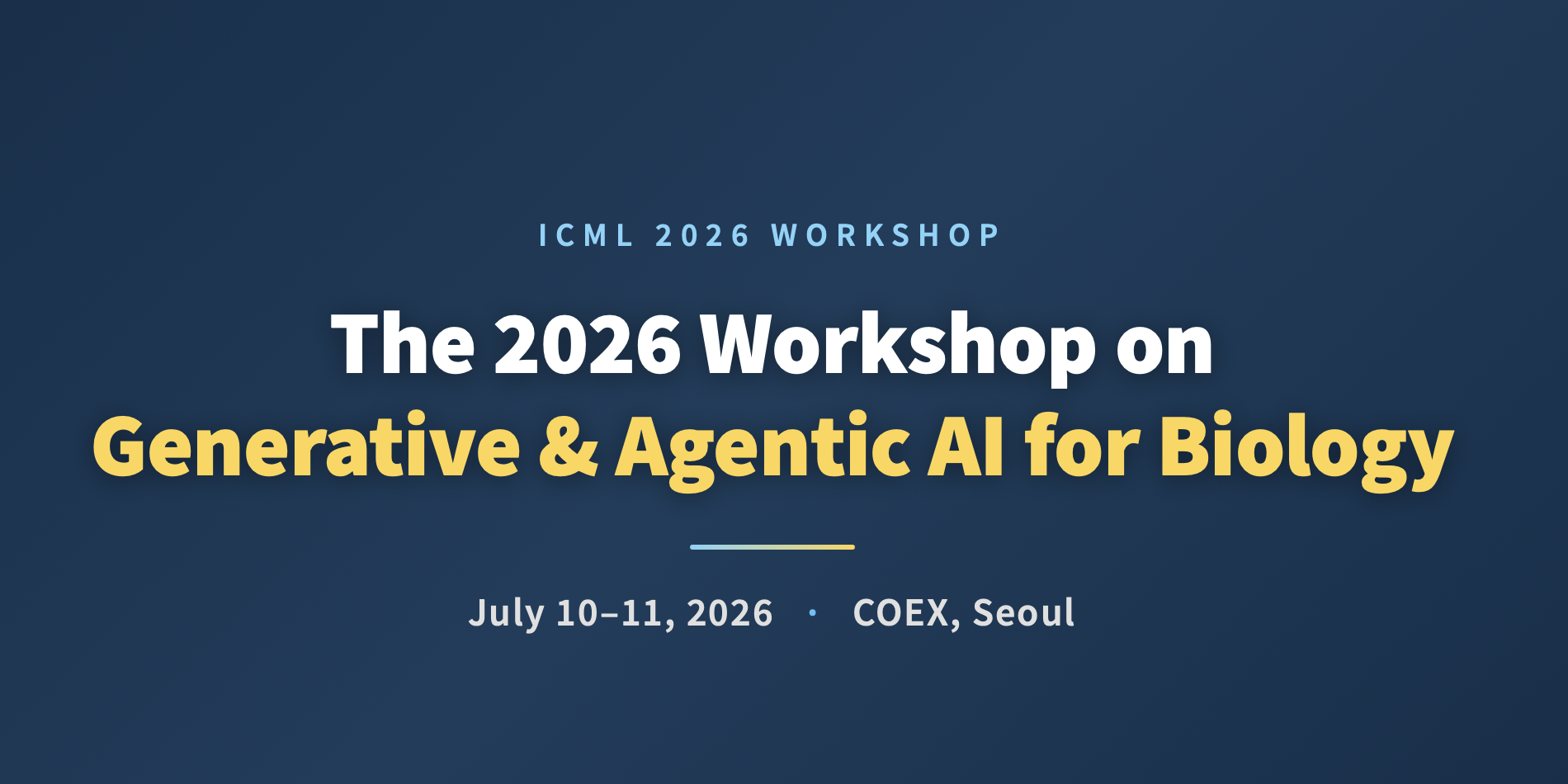
GenBio ICML Workshop 2026
The 2026 workshop on Generative and Agentic AI for Biology at ICML 2026, Seoul, South Korea.
Meet Foundry: An AI Startup that Builds, Evaluates, and Improves AI Agents

Recursive Self-Improvement through Multi-Agent Self-Supervision
Recursive self-improvement (RSI) of a model on non-verifiable tasks, such as open-ended research, faces a supervision bottleneck when its outputs exceed what even human experts can reliably assess, leaving the model itself (optimizee) as the best available optimizer and evaluator. However, a single model instance struggles to critique and improve its own complex reasoning under this homogeneous loop. To address this, we propose Multi-Agent Self-Supervision (MASS), an RSI method that alternates between evolutionary workflow optimization and supervised fine-tuning on self-generated trajectories. Guided by early findings that multi-agent topologies excel at complex reasoning, MASS prompts a single base model to iteratively propose, execute, and self-evaluate multi-agent workflows. Through an evolutionary search constrained by structural guardrails, the model optimizes these computational-graph-like orchestrations, discovering the most effective distinct roles and information routing for a given task. Over two MASS cycles with Qwen3.6-27B, the model achieves 1.2-1.6x higher performance per output tokens on four open-ended public benchmarks. Because the improved model subsequently acts as a better optimizer and evaluator, this alternating framework enables a continuous, recursive bootstrapping of the model's capabilities. Moreover, multi-agent traces are also more training-efficient: a student trained on them outperforms a single-agent student trained on 1.4x more training tokens. These findings suggest that jointly learning orchestration and bounded subagent execution from multi-agent trajectories can provide an effective signal for RSI.
Letta
Making machines that learn. Create stateful agents that remember everything, learn continuously, and improve themselves over time.

Introduction to Agents
Discover what actually works in AI. Join millions of builders, researchers, and labs evaluating agents, models, and frontier technology through crowdsourced benchmarks, competitions, and hackathons.