

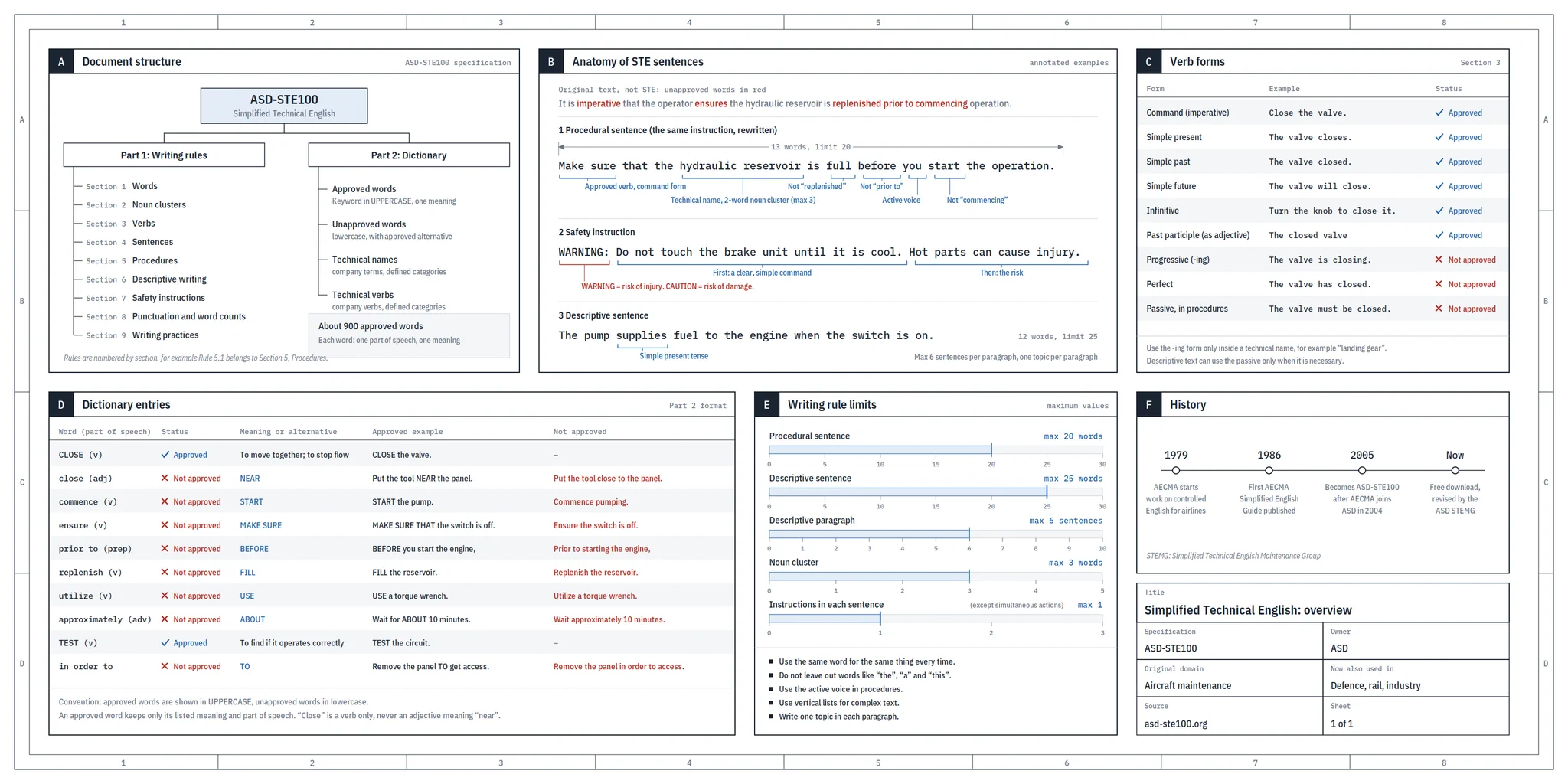
We'll be spending a lot more time trying to understand the outputs of language models. A few thoughts, tips & tricks:Writing. Something I've had success with: Ask your LLM to explain something in ASD-STE100, it's a controlled language specification originally developed for… pic.twitter.com/uMFWTcBCsl— Andrej Karpathy (@karpathy) October 2, 2026
Stanford CS336 | Language Modeling from Scratch (Spring 2025 Archive)
Archived course website for Stanford CS336: Language Modeling from Scratch (Spring 2025), including schedule, assignments, logistics, and materials.

Structured Outputs with Will Kurt and Cameron Pfiffer - Weaviate Podcast #119!
How Large Language Models Actually Work
Stanford CS336 Language Modeling from Scratch I 2025
First Languages AI Reality | Mila
The FLAIR initiative aims to develop a method for the rapid creation of customized ASR models for Indigenous languages.

An Intuitive Introduction to Flow-Based Language Generation — Floor Eijkelboom
Why autoregressive models have a structural ceiling, why discrete-diffusion LLMs are still autoregression in disguise, and what flow-based language models actually give us.
The Kaitchup – AI on a Budget | Benjamin Marie | Substack
Weekly tutorials and news on adapting large language models (LLMs) to your tasks and hardware using the most recent techniques and models. The Kaitchup proposes a collection of 180+ AI notebooks regularly updated. Click to read The Kaitchup – AI on a Budget, by Benjamin Marie, a Substack publication with tens of thousands of subscribers.

Build A Large Language Model (From Scratch), Published by Manning, ISBN 978-1633437166
Implement a ChatGPT-like LLM in PyTorch from scratch, step by step
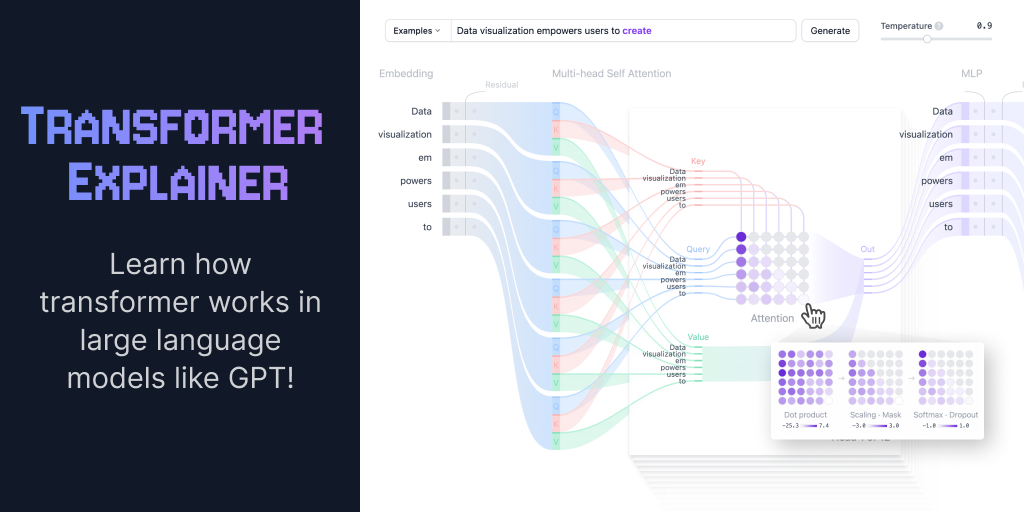
Transformer Explainer: LLM Transformer Model Visually Explained
An interactive visualization tool showing you how transformer models work in large language models (LLM) like GPT.
Beyond Model Collapse: Scaling Up with Synthesized Data Requires...
Large Language Models (LLM) are increasingly trained on data generated by other LLM, either because generated text and images become part of the pre-training corpus, or because synthetized data is...

Understanding Understanding: A Pragmatic Framework Motivated by...
Motivated by the rapid ascent of Large Language Models (LLMs) and debates about the extent to which they possess human-level qualities, we propose a framework for testing whether any agent (be it...
Circuit Tracing: Revealing Computational Graphs in Language Models
We describe an approach to tracing the “step-by-step” computation involved when a model responds to a single prompt.


Hypothesis generation and updating in large language models
Large language models (LLMs) increasingly help people solve problems, from debugging code to repairing machinery. This process requires generating plausible hypotheses from partial descriptions,...
Introducing Mu language model and how it enabled the agent in Windows Settings
We are excited to introduce our newest on-device small language model, Mu. This model addresses scenarios that require inferring complex input-output relationships and has been designed to operate efficiently, delivering high performance while runnin

I'm creating a series of short form videos about how language models work technically. The goal is to be something in between "you know it's next token prediction" and "now you've taken a machine learning class." I'd love your thoughts so here are the first few! 🧵 youtube.com/shorts/VZB8XCcyllE

How does ChatGPT work? Or rather, language models in general- Part 1 attempting a lay explanation.
www.youtube.com