

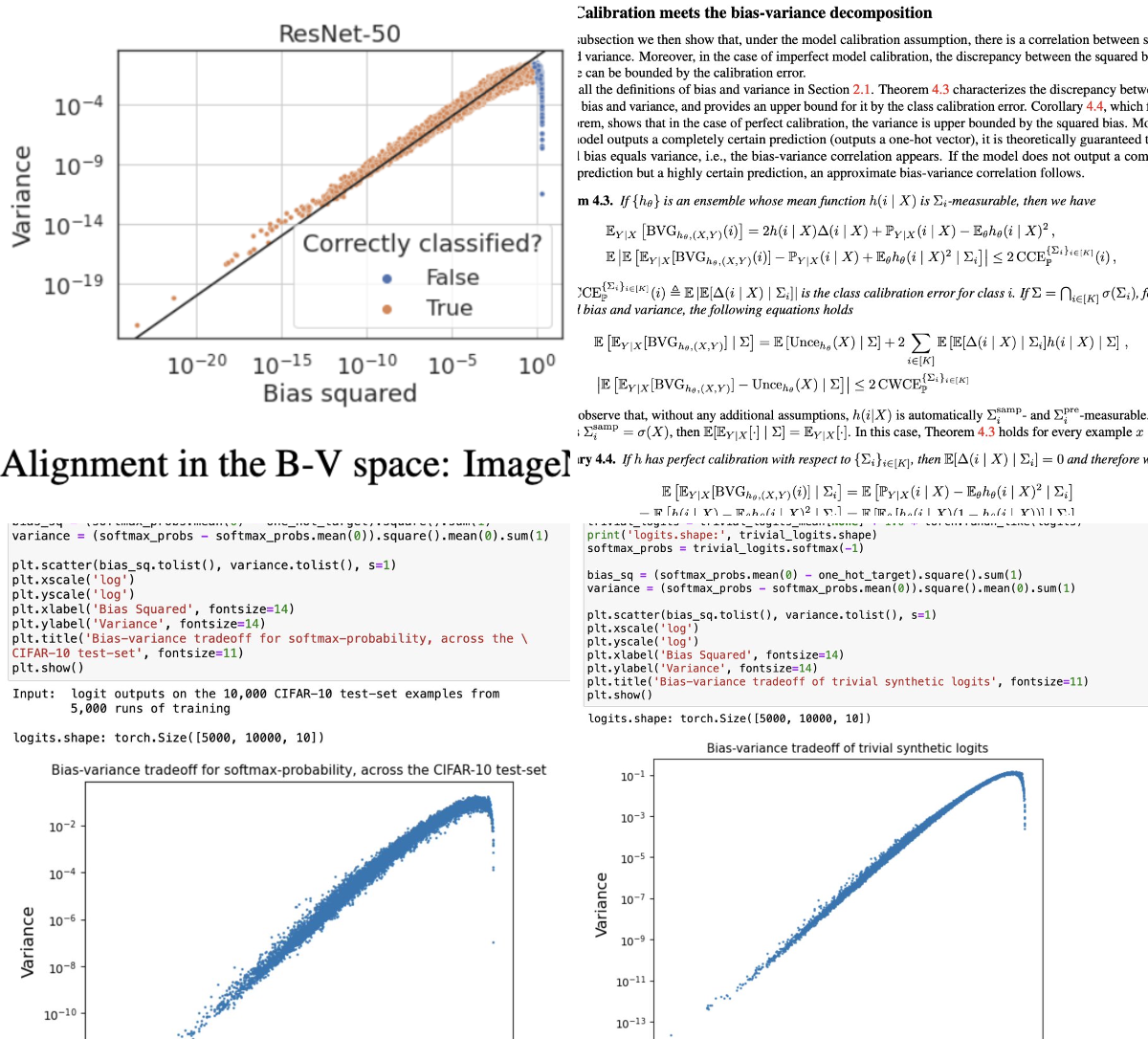
I'm interested in this recent ICLR 2024 spotlight paper from Google research, which found a power-law alignment between bias and variance in softmax probability spacehttps://t.co/xUNre8D1OEIn this thread I'll replicate its central empirical result, but then argue that it… pic.twitter.com/7a9HEbL0yb— Keller Jordan (@kellerjordan0) March 11, 2024
Social media promotion improves job market outcomes
Social media has transformed how academics disseminate research, but its effect on academic job outcomes remains unclear. Previous research has shown correlations between social media exposure and metrics like citation counts, but these relationships may be confounded by unobserved factors such as researcher quality or access to professional networks. We examine whether social media promotion causally affects job market outcomes in economics through a field experiment on Twitter (now X). We first collect tweets about job market papers from 519 candidates and post them from a dedicated account. We then randomize half of the posts to be quote-tweeted by established economists in the candidates’ fields, and measure the effects on both online visibility and hiring outcomes. We find that posts in the treatment group receive 441% more views and 303% more likes than those in the control group. Candidates whose posts were assigned to be quote-tweeted receive one additional flyout invitation compared to the control group average of 5.4 flyouts. Furthermore, women in the treatment group receive 0.9 more job offers than women in the control group, who receive 3 offers on average. Exploring mechanisms, we find that academic reputation drives these results, with stronger effects for quote-tweets from highly cited scholars and for candidates from top institutions. Our findings suggest social media promotion causally increases research visibility and improves academic job market outcomes.

David Rozado on Twitter / X
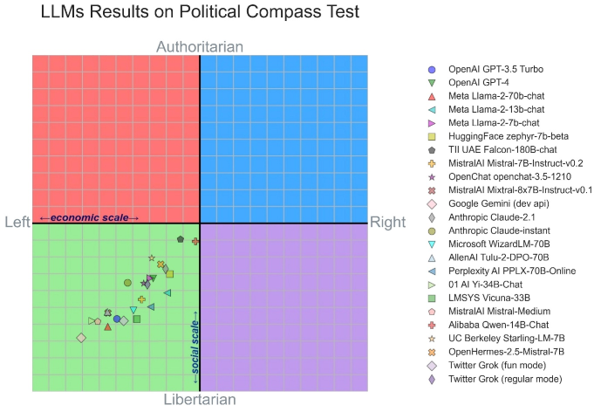
1. Have we been measuring AI political bias wrong? In a new paper @PTetlock and I argue that we might have. Studies have found that AIs tend to produce left-of-center responses to politically loaded questions. But ideological preferences are not the same as epistemic failure. pic.twitter.com/JuGrboRVb0— David Rozado (@DavidRozado) June 22, 2026
Deb Raji on Twitter / X
Almost exactly three years ago, in 2023, @alondra gave the keynote @FAccTConference, literally titled "Thick Alignment".This has been so far from a "niche" view! https://t.co/0db7qcM6LB pic.twitter.com/z5FqDz8TUv— Deb Raji (@rajiinio) August 22, 2026

Cas (Stephen Casper) on Twitter / X
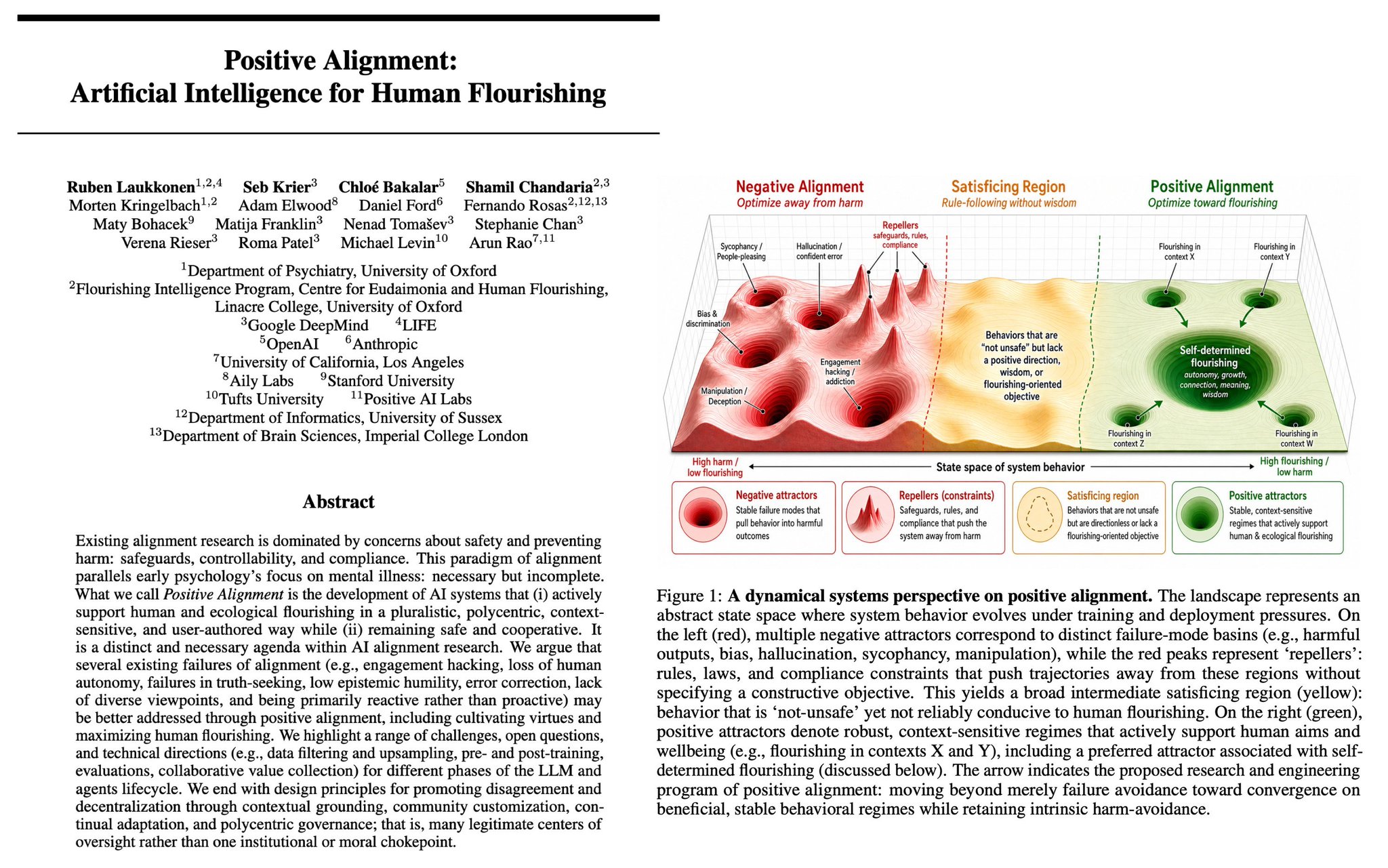
It is hard to overstate how disappointing I think this new paper from Oxford, OpenAI, Anthropic, and Google (et al) is. I can't take it seriously as academic work, just as propaganda. It also has some very bad scholarship and questionable adherence to research ethics. Having… pic.twitter.com/Z5fBx360ya— Cas (Stephen Casper) (@StephenLCasper) May 13, 2026
Weights & Biases on Twitter / X
Hey MCP developers!Let’s talk about something broken 🧠🛠️Agents are calling tools left and right.But what happens inside those tools?No traces. No visibility. No security.Just a black box. 🕋The observability gap is real. Let's fix it together with observable[.]tools pic.twitter.com/htHmtBaJGH— Weights & Biases (@wandb) April 9, 2025

Lei Yang on Twitter / X
Got burned by an Apple ICLR paper — it was withdrawn after my Public Comment.So here’s what happened. Earlier this month, a colleague shared an Apple paper on arXiv with me — it was also under review for ICLR 2026.The benchmark they proposed was perfectly aligned with a… pic.twitter.com/ON782SFNjI— Lei Yang (@diyerxx) November 27, 2025

Evaluating Twitter’s algorithmic amplification of low-credibility content: an observational study
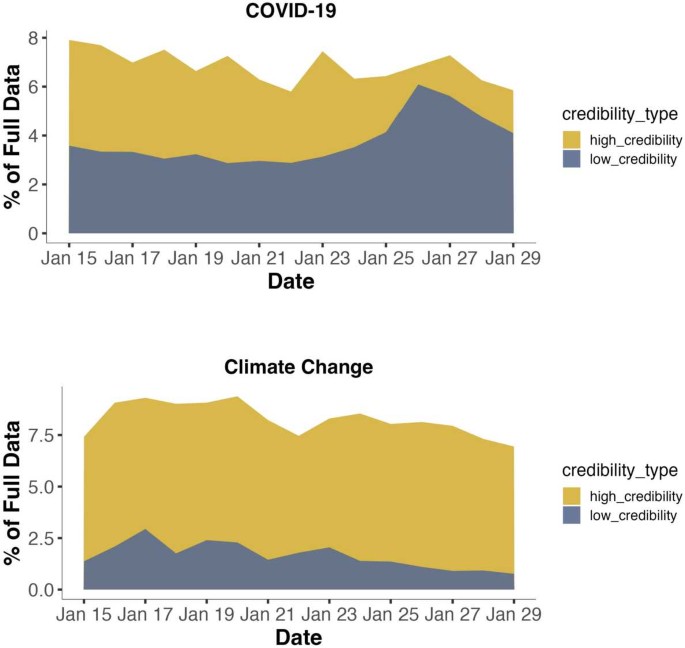
Artificial intelligence (AI)-powered recommender systems play a crucial role in determining the content that users are exposed to on social media platforms. However, the behavioural patterns of these systems are often opaque, complicating the evaluation of their impact on the dissemination and consumption of disinformation and misinformation. To begin addressing this evidence gap, this study presents a measurement approach that uses observed digital traces to infer the status of algorithmic amplification of low-credibility content on Twitter over a 14-day period in January 2023. Using an original dataset of ≈ 2.7 million posts on COVID-19 and climate change published on the platform, this study identifies tweets sharing information from low-credibility domains, and uses a bootstrapping model with two stratifications, a tweet’s engagement level and a user’s followers level, to compare any differences in impressions generated between low-credibility and high-credibility samples. Additional stratification variables of toxicity, political bias, and verified status are also examined. This analysis provides valuable observational evidence on whether the Twitter algorithm favours the visibility of low-credibility content, with results indicating that, on aggregate, tweets containing low-credibility URL domains perform better than tweets that do not across both datasets. However, this effect is largely attributable to a difference in high-engagement, high-followers tweets, which are very impactful in terms of impressions generation, and are more likely receive amplified visibility when containing low-credibility content. Furthermore, high toxicity tweets and those with right-leaning bias see heightened amplification, as do low-credibility tweets from verified accounts. Ultimately, this suggests that Twitter’s recommender system may have facilitated the diffusion of false content by amplifying the visibility of low-credibility content with high-engagement generated by very influential users.
Evaluating Twitter’s algorithmic amplification of low-credibility content: an observational study
Artificial intelligence (AI)-powered recommender systems play a crucial role in determining the content that users are exposed to on social media platforms. However, the behavioural patterns of these systems are often opaque, complicating the evaluation of their impact on the dissemination and consumption of disinformation and misinformation. To begin addressing this evidence gap, this study presents a measurement approach that uses observed digital traces to infer the status of algorithmic amplification of low-credibility content on Twitter over a 14-day period in January 2023. Using an original dataset of ≈ 2.7 million posts on COVID-19 and climate change published on the platform, this study identifies tweets sharing information from low-credibility domains, and uses a bootstrapping model with two stratifications, a tweet’s engagement level and a user’s followers level, to compare any differences in impressions generated between low-credibility and high-credibility samples. Additional stratification variables of toxicity, political bias, and verified status are also examined. This analysis provides valuable observational evidence on whether the Twitter algorithm favours the visibility of low-credibility content, with results indicating that, on aggregate, tweets containing low-credibility URL domains perform better than tweets that do not across both datasets. However, this effect is largely attributable to a difference in high-engagement, high-followers tweets, which are very impactful in terms of impressions generation, and are more likely receive amplified visibility when containing low-credibility content. Furthermore, high toxicity tweets and those with right-leaning bias see heightened amplification, as do low-credibility tweets from verified accounts. Ultimately, this suggests that Twitter’s recommender system may have facilitated the diffusion of false content by amplifying the visibility of low-credibility content with high-engagement generated by very influential users.
Maksym Andriushchenko on Twitter / X
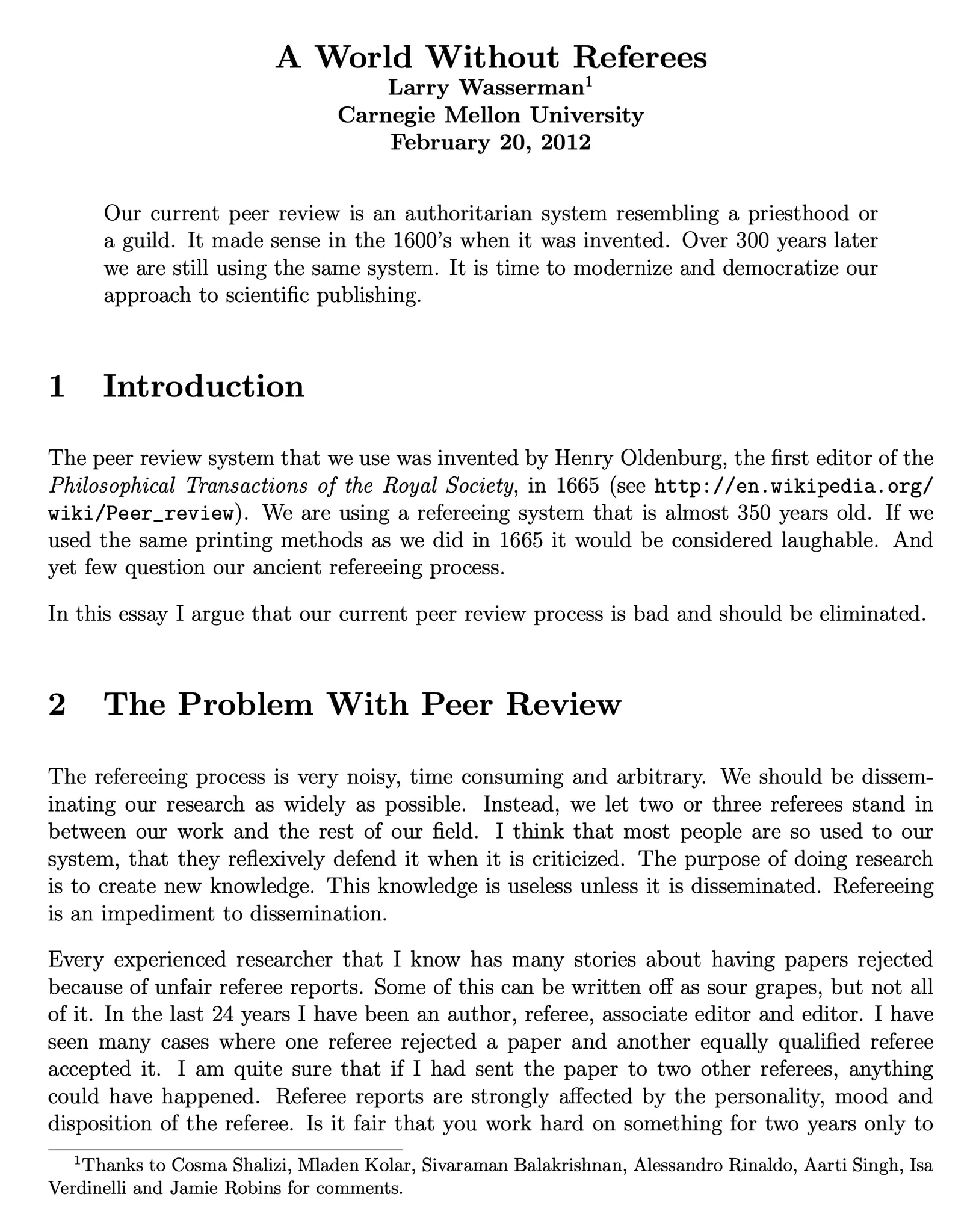
many people seem to be upset by >50k submissions to ICLR. i think we should celebrate it! more people are doing AI (including AI safety) research - isn't it amazing?as for how to navigate the growing amount of papers, luckily, Larry Wasserman formulated a solution back in 2012! pic.twitter.com/U85FGshTqw— Maksym Andriushchenko (@maksym_andr) September 20, 2026
Laura Luebbert, PhD on Twitter / X
MVS has dismissed our findings as "typographical errors and minor oversights," accused Lior and me of being "unprofessional," and called any allegations "totally bizarre." For context, I am showing four examples of duplicated data as described in our arxiv manuscript (Fig 3 & 4). pic.twitter.com/ZuTX6ivBGM— Laura Luebbert, PhD (@NeuroLuebbert) July 11, 2024

Distributional Training Data Attribution: What do Influence Functions Sample?
Randomness is an unavoidable part of training deep learning models, yet something that traditional training data attribution algorithms fail to rigorously account for. They ignore the fact that, due to stochasticity in the initialisation and batching, training on the same dataset can yield different models. In this paper, we address this shortcoming through introducing _distributional_ training data attribution (d-TDA), the goal of which is to predict how the distribution of model outputs (over training runs) depends upon the dataset. Intriguingly, we find that _influence functions_ (IFs), a popular data attribution tool, are 'secretly distributional': they emerge from our framework as the limit to unrolled differentiation, without requiring restrictive convexity assumptions. This provides a new perspective on the effectiveness of IFs in deep learning. We demonstrate the practical utility of d-TDA in experiments, including improving data pruning for vision transformers and identifying influential examples with diffusion models.
The LA Times’ AI ‘bias meter’ looks like a bid to please Donald Trump | Margaret Sullivan
The paper’s billionaire owner, who barred it from endorsing Kamala Harris, is leaving human journalists out of the equation

Do Science <i>Kardashians</i> Get Citation Premium? Self‐Fulfilling Effects of Social Media on Scientific Impact
ABSTRACT We analyze whether the visibility of scientists on social media affects the number of academic citations. We use the global COVID‐19 pandemic as a quasinatural experiment that exogenously increased public attention and the demand for expertise. Using publications on COVID‐related topics by social media stars and their coauthors prior to the outbreak of the pandemic, we find that social media stars' pre‐COVID‐era papers received about – more citations annually per paper after 2019. Quantitatively comparable results are obtained when we use scientists' Kardashian index (K‐index) as a benchmark for stardom, however we find no significant effects when using the intensive margin of scientists' K‐indexes. We provide a brief discussion of policy implications in light of these findings.

Elena Rossini 🌈 (@_elena@mastodon.social)
Attached: 2 images Dear Fedi friends, Apologies for another toot about #WSocial but I am genuinely shaking right now. The @EUCommission@ec.social-network.europa.eu and its president Ursula von der Leyen have recently migrated their ATproto (Bluesky) accounts to W Social. I cannot fathom why they would pick a private enterprise whose leaders didn't even have ATproto accounts 3 months ago... and who are so open to having their users' data mined to train European AI models. My articles on them: 🔗 : https://blog.elenarossini.com/tag/w-social/ Wow. Just wow.
Twitter: Last Week Tonight with John Oliver (HBO)
Elena Rossini 🌈 (@_elena@mastodon.social)
🚨 New post alert 📝 A deep dive into #WSocial with some fascinating findings: candid statements about their motives, a Greta Thunberg connection, potential AI plans (!!!) Why write about it again? I still had so many questions after publishing my first article. I spent 3 weeks watching every interview I could find and connecting the dots. I hope you'll enjoy this piece: 🔗 : https://blog.elenarossini.com/the-untold-story-about-w-social-unconventional-beginnings-strategic-pitches-conflicting-signals/ #blog #longread #privacy #DataMining #Europe