

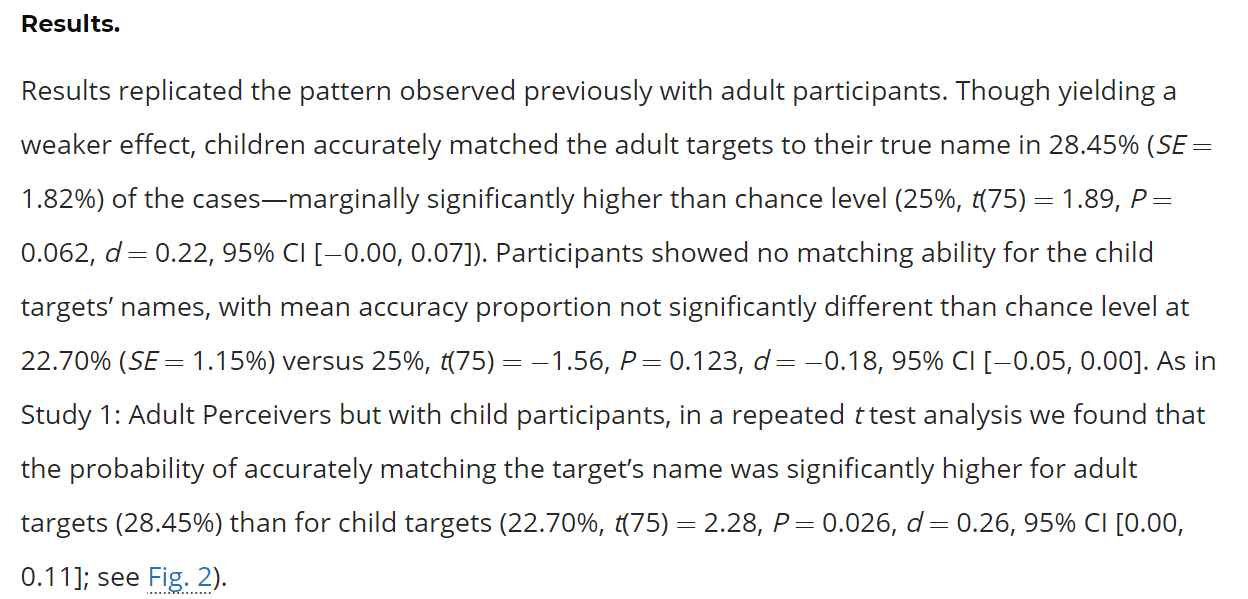
Can they? Published in PNAS 🚩Edited by Susan Fiske🚩None of the link to preregs are public in publication🚩difference between significant and non-significant is itself not significant errors 🚩marginally significant results interpreted as support for hypothesis 🚩and then some https://t.co/6n8aJ2DSuo pic.twitter.com/c0eVKnlUfK— Daniël Lakens (@lakens) July 30, 2024
Jason Shepherd on Twitter / X
I have quite a lot of thoughts on this..that won't fit in a tweet. Bottomline is that there are issues scientists in the US would love to improve - faster review, less grant writing, more stability and freedom to do risky science. The folks celebrating this doc are mostly../1 https://t.co/xlPAH9XYNC— Jason Shepherd (@JasonSynaptic) July 23, 2026
Ferhat Tura on Twitter / X
I have recently detected minor mistakes in the codes of a paper published in a high-quality journal and contacted the lead author first!, who acknowledged the mistake and contacted the journal. I thanked the author for doing open science and now we are collaborating on a paper💪— Ferhat Tura (@FerhatTura19) May 15, 2024
Itai Yanai on Twitter / X
Is the scientific paper a fraud? Peter Medawar (Nobel Prize winner) suggested that publications are overly structured and formal, giving only a sanitized version of the discovery without revealing the thought process that actually led to it. pic.twitter.com/E3ttRPzcfL— Itai Yanai (@ItaiYanai) October 27, 2024

Michael 英泉 Eisen on Twitter / X
ALSO WHY THE FUCK ARE WE STILL JUST CITING PAPERS INSTEAD OF SPECIFIC PIECES OF DATA OR CLAIMS? https://t.co/dngS9d8nOW— Michael 英泉 Eisen (@mbeisen) May 16, 2026
Denny Zhou on Twitter / X
ICLR 2027 has received more submissions than all previous years (2013–2026) combined pic.twitter.com/loUOKvf6si— Denny Zhou (@denny_zhou) September 20, 2026

Jason Crawford on Twitter / X
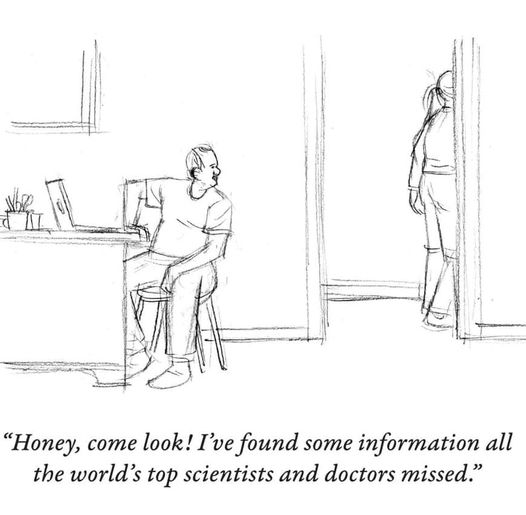
It's hard to find information that all the world's top scientists and doctors have missed.But it's not that hard, if you're intelligent, thoughtful, and diligent, to find information that the medical system has not yet caught up to—information that is not yet incorporated into… pic.twitter.com/HrgGzCUdX2— Jason Crawford (@jasoncrawford) September 22, 2024
Dan Shipper 📧 on Twitter / X
this is true and is a big reason why you don’t need to be a highly technical researcher to use LLMs in surprising and novel ways https://t.co/TuxNzXzToU— Dan Shipper 📧 (@danshipper) July 27, 2025
Hilde Kuehne on Twitter / X
I'm currently writing and editing ICLR submission (and yes, I'm a dinosaur. I still do this by hand, no AI, just a spell checker) and I realized that when I work on a paper, at every step I try to imagine how someone would read this. Is the information clear? Will they get the…— Hilde Kuehne (@HildeKuehne) September 25, 2026
Dan Singleton 🏳️🌈🏳️⚧️ on Twitter / X
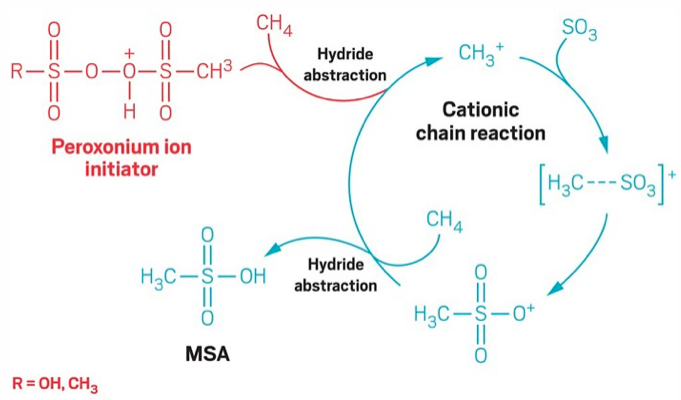
1. Ok, this is the thread to end all threads, or possibly my career. I am about to trash a new paper in @sciencemagazine, its editors, its reviewers, C&E News, others who stated or wrote adoring commentaries, anyone who looked at the paper or its commentaries without seeing pic.twitter.com/K5O1cX1BJP— Dan Singleton 🏳️🌈🏳️⚧️ (@dasingleton) April 8, 2019
A new study suggests that scientists are leaving X (formerly known as Twitter) in significant numbers due to its declining professional value. Many now find Bluesky to be a more effective platform for networking, outreach, and staying updated on research.
36K votes, 1.1K comments. 34M subscribers in the science community. This community is a place to share and discuss new scientific research. Read…
👋 Jan on Twitter / X
Introducing Jan-v1: 4B model for web search, an open-source alternative to Perplexity Pro.In our evals, Jan v1 delivers 91% SimpleQA accuracy, slightly outperforming Perplexity Pro while running fully locally.Use cases:- Web search- Deep ResearchBuilt on the new version… pic.twitter.com/YApIShOAHI— 👋 Jan (@jandotai) August 12, 2025

One of the issues that has come up again and again in my reporting on misinformation and social media is the massive influence social media companies have on research in the field. Last night a preprint dropped that tries to get at this with some numbers. My piece in @science.org (and 🧪🧵 coming):

Nearly a third of social media research has undisclosed ties to industry, preprint claims
www.science.orgAn editorial was published in Nature recently claiming that glam journal publication of LLMs (like DeepSeek-R1 this case) marks a step towards greater transparency, accountability & credibility nature.com/articles/d41586-025-02979-9. I have thoughts ... 1/
https://www.nature.com/articles/d41586-025-02979-9
t.coThing is, I've seen nobody able to provide any evidence re: "if rightwing online traffic plummeted" Just...nothing. Someone cited a single "twitter engagement tracker" website, but that doesn't even show a single account's historical data.

Dana Houle
I see complaints that people don’t know what bots are, not everything is a bot, that they’re misreading the data, etc. But is the data about discussion about the AfD traffic wrong? People can argue about terms & definitions, but if rightwing online traffic plummeted that’s one hell of a correlation


