yeah there used to be a company called Eureka that powered these types of observational, more lifestyle style studies (here's an example looking at coffee's effect on different biomarkers/conditions)https://t.co/urQRvTVTb7I think it can work if you have enough people in…— Nikhil Krishnan (@nikillinit) September 14, 2025
Acute Effects of Coffee Consumption on Health among Ambulatory Adults
Coffee is one of the most commonly consumed beverages in the world, but the acute health effects of coffee consumption remain uncertain. We conducted a prospective, randomized, case-crossover trial...

#paperclip | James Zou | 46 comments
What if, for any scientific claim, you can search 100M+ papers to find the strongest evidence for and against it ⚡️ in 1 second? That’s now possible with Evidence API! 🚀 https://lnkd.in/dzQ_HT-P Evidence API combines #paperclip with our new Jev-style model trained to extract relevant evidence in lightning speed. Great job by Kevin Wu and GXL For example, does drinking coffee reduce diabetes risk? | 46 comments on LinkedIn
Creating Scientific Theories with Online Communities using Gut Instinct
People's lived experiences provide intuitions about their health. Can they transform these personal intuitions into scientific theories that inform both science and their lives? My research introduces social computing architectures and system principles for people to brainstorm and test causal scientific theories. These ideas are instantiated in the Gut Instinct system (gutinstinct.ucsd.edu). 344 voluntary online participants from 27 countries created 399 personally-relevant questions about the human microbiome, 75 (19%) of which microbiome experts found potentially scientifically novel. To test their theories, end users design structurally-sound experiments, improve them via community reviews, and run them with other participants. Controlled experiments show that participants create better hypotheses and experimental designs when they have access to procedural training. My research illustrates a novel way to tackle complex, creative tasks online by building expertise in online volunteer communities.

Statistical Modeling, Causal Inference, and Social Science
I saw in a recent issue of the Times Literary Supplement that you have been critical of the “chambermaid” study which purported to show that people were losing weight without changing their diet or exercise. I agree that this study did not show what it claimed.
Dispatch
An occasional update on the lab’s latest findings, appearances, and happenings.
Meta’s New AI Asked for My Raw Health Data—and Gave Me Terrible Advice
Meta’s Muse Spark model offers to analyze users’ health data, including lab results. Beyond the obvious privacy risks, it’s not a capable stand-in for a real doctor.


Annual Reports | CAA
For archived content, please refer to the National Diet Library's Web Archiving Project (WARP).
Science Banana on Twitter / X
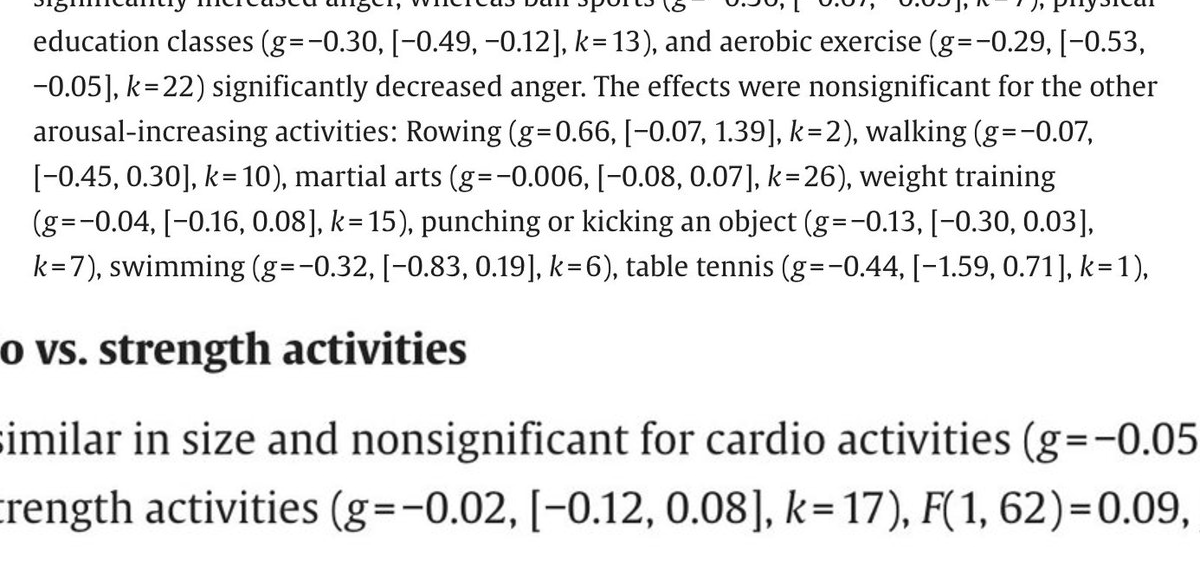
I don't even know where to start with this crap (partly because it's hard to tell which of the studies the 17 "jogging" effects came from, partly because it seems obvious from the paper that the more studies the more the "effect" disappears) https://t.co/Gniv5Ht8g3 pic.twitter.com/qbToQ2yOGM— Science Banana (@literalbanana) March 12, 2024
i quit coffee for 30 days (and it ruined my life)
Electric Cloud - Naturally Lifted With CBD & Adaptogens™
0g sugar. no nasties. Discover the most delicious mood-lifting beverage made with CBD and adaptogens designed to lift and level the mind. Made by mixologists it's naturally uplifting, helping you find your focus and feel your best throughout the day. Non-GMO, gluten-free, paleo, vegan, keto-friendly and all-natural.
Can Alzheimer’s really be reversed, as a new documentary claims?
A CNN documentary follows two people with Alzheimer’s who took part in a study to determine if lifestyle changes can reverse symptoms.
Coffee, tea, and caffeine consumption and serum uric acid level: The third national health and nutrition examination survey
AI linked to explosion of low-quality biomedical research papers
Analysis flags hundreds of studies that seem to follow a template, reporting correlations between complex health conditions and single variables based on publicly available data sets.