


Building a personal knowledge base for my agents is increasingly where I spend my time these days. Like @karpathy, I also use Obsidian for my MD vaults. What's different in my approach is that I curate research papers on a daily basis and have actually tuned a Skill for… https://t.co/4AQSFOv4PV pic.twitter.com/YI5cWUhqT3— elvis (@omarsar0) April 2, 2026
elvis on Twitter / X
arXiv Papers → LLM ArtifactsThis is how I keep up with AI research now.It's like having access to the most personalized arXiv feed.Automations run everyday to curate papers based a set of rules and insights.Curated papers are indexed and power the artifacts.Agent… pic.twitter.com/5UCxF8ZsT0— elvis (@omarsar0) May 6, 2026

Karpathy's LLM Knowledge Base Wiki for Enterprise | Vijoy Pandey posted on the topic | LinkedIn
There's a new kind of computer media in the enterprise: Write once, Read never. The docs are perpetually stale, constantly diverging from reality, and scattered across Confluence, SharePoint, GitHub, Webex (or Slack) threads, Notion, Obsidian - and in my personal life, add Apple Notes, Goodnotes, web clippings, and multiple Google Drives worth of docs and slides that nobody is ever going back to. Karpathy tweeted his LLM knowledge base wiki architecture which went viral last weekend and I decided to give it a run yesterday. Verdict: You *have* to try this out. Prediction: You won’t be able to live without it soon. There were a few mods and decisions I made to the base Karpathy provided. First, the vault / folder structure in Obsidian. I already use Obsidian as a human. Instead of creating separate vaults and dealing with the sync nightmare, I just have folders for Human and Agent, and a Raw folder. (1) The Human/ folder is where I write long form articles and notes independent of the knowledge base wiki. No LLM or agent touches this folder. (2) I do have Arnold Layne, my OpenClaw agent, doing background tasks for me. Raw/ is where both Arnold and I, dump raw snippets. Inclusive of diverse kinds of media. (3) The Agent/ folder is where the LLM (Claude in my case) synthesizes the wiki. No human touches this folder. Second, some customizations to CLAUDE.md for enterprise-like usage - (4) Domain extensions - the agent needs to know that quantum computing and agentic AI have different entity types and different provenance thresholds. (5) Primary source protection, when I drop in my own original work, secondary sources can extend it or raise questions against it, but they cannot overwrite it. It sounds like a small thing but its’s not, especially at enterprise scale where provenance actually matters. Karpathy is upfront that what he’s built is working memory for a single agent, and it’s truly remarkable at that. The jump to Shared Context across teams, reconciling conflicting beliefs at org scale, ontologies that don’t collapse under the weight of a hundred contributors - those are much harder problems and what we are exploring with the Internet of Cognition. PS: The screenshot shows my Obsidian vault after just two runs: one with Karpathy’s original tweet and gist file itself (so meta!) and one with our Internet of Cognition paper. Claude (Sonnet) read it, compiled it into structured summaries, entity pages, concept pages, backlinks, merged all the information cohesively, and keeps it all maintained from there. You just read the Wiki. It’s simply magical.

I Built a Knowledge Base That Writes Itself. Here Is What Andrej Karpathy Got Right.
Andrej Karpathy posted about using LLMs to build personal knowledge bases. I took his workflow, wired it into my Obsidian vault with Claude Code, and within an hour had 21 cross-linked wiki articles compiled from YouTube transcripts. Here is how it works and why it matters.
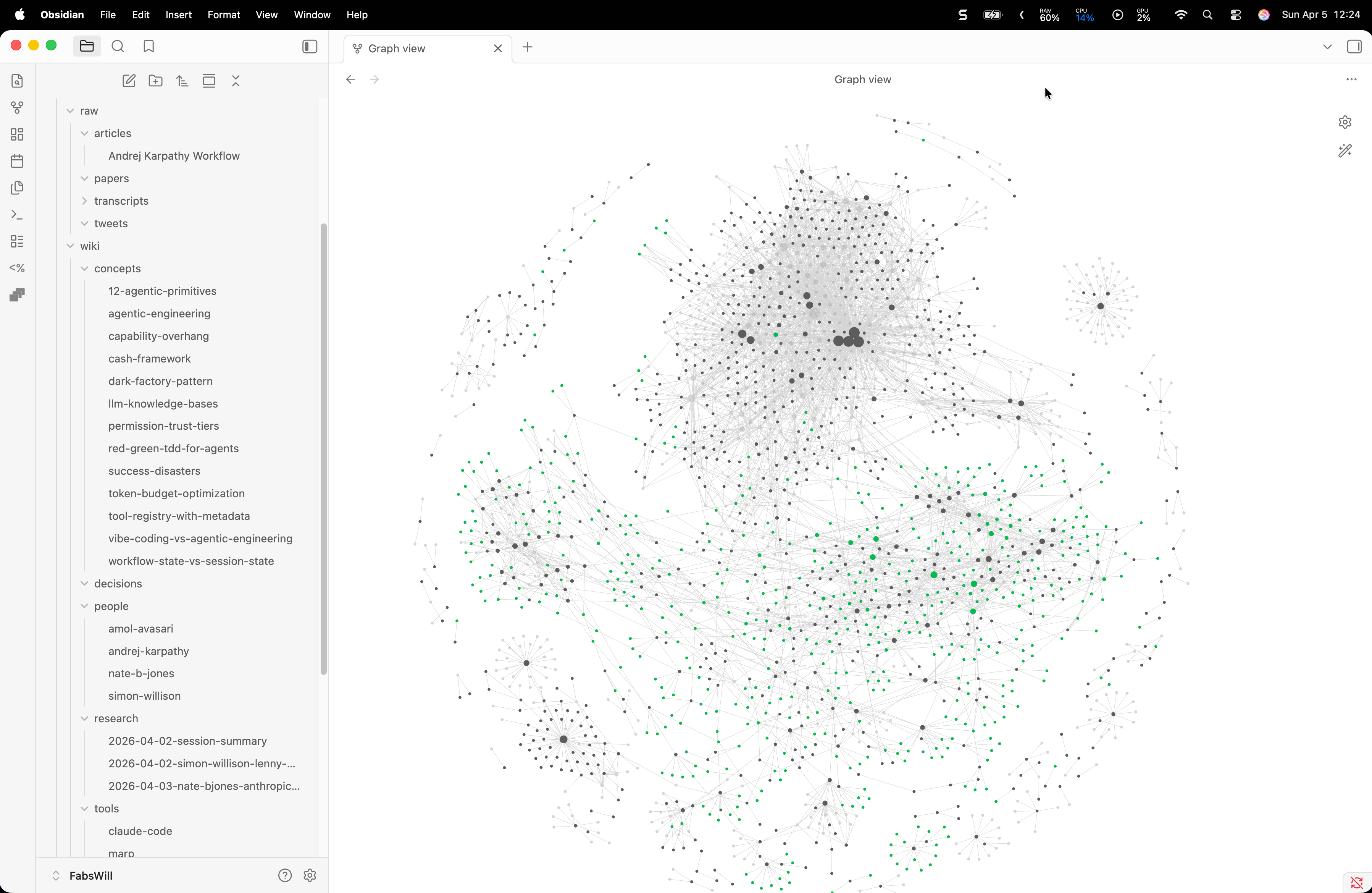
Turn 10,994 Notes Into Memory - Paul Iusztin, Decoding AI & Louis-François Bouchard, Towards AI
I Built a Digital Brain Upload Using Karpathy's LLM Knowledge Base
Andrej Karpathy on Twitter / X
LLM Knowledge BasesSomething I'm finding very useful recently: using LLMs to build personal knowledge bases for various topics of research interest. In this way, a large fraction of my recent token throughput is going less into manipulating code, and more into manipulating…— Andrej Karpathy (@karpathy) April 2, 2026
Why LLM Wiki? 🧠 Future Of Knowledge For Agentic AI & Humans
Building Scholar-Ready AI: A Conversation with Todd Toler - The Scholarly Kitchen
A conversation on AI retrieval, the provenance problem, and the shared infrastructure scholarly publishing needs.

How To Build LLM Wiki In Obsidian? 🧠 A Memory Layer For Any Agentic AI
Charlie Deist on Twitter / X
My hobby: scraping entire podcasts into open source wikis.Then decomposing them into skill.md files, articles, and short books for my personal consumption only.https://t.co/1hKjJICJ16Then rebundling the skills into topic-specific pluginsSo much gold to mine. pic.twitter.com/T2h8DYIcEj— Charlie Deist (@chdeist) April 3, 2026

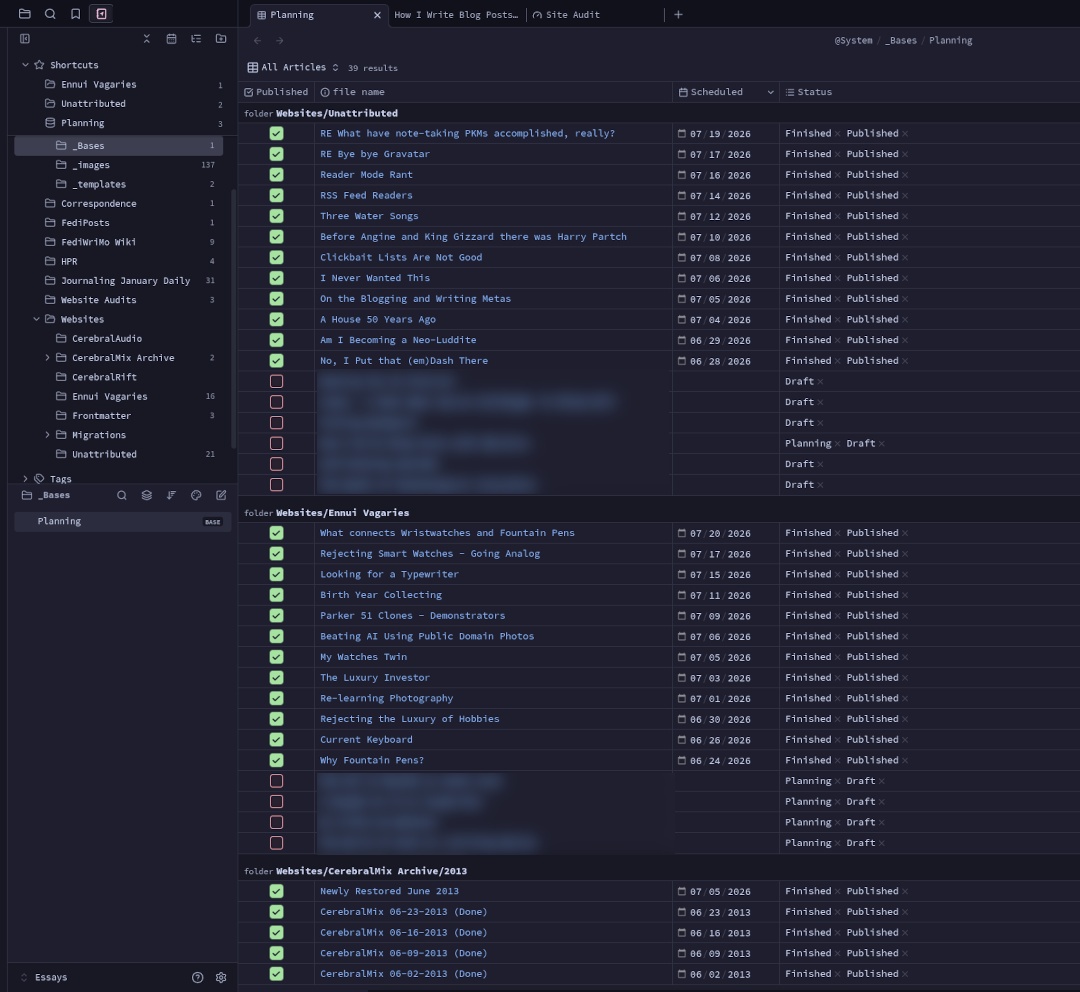
How I Write Blog Posts with Obsidian — Unattributed
You've probably run into some Obsidian evangelist espousing some convoluted system of organizing all their notes, and building some knowl...
Paper Skygest: Personalized Academic Recommendations on Bluesky
We build, deploy, and evaluate Paper Skygest, a custom personalized social feed for scientific content posted by a user's network on Bluesky and the AT Protocol. We leverage a new capability on emerging decentralized social media platforms: the ability for anyone to build and deploy feeds for other users, to use just as they would a native platform-built feed. To our knowledge, Paper Skygest is the first and largest such continuously deployed personalized social media feed by academics, with over 50,000 weekly uses by over 1,000 daily active users, all organically acquired. First, we quantitatively and qualitatively evaluate Paper Skygest usage, showing that it has sustained usage and satisfies users; we further show adoption of Paper Skygest increases a user's interactions with posts about research, and how interaction rates change as a function of post order. Second, we share our full code and describe our system architecture, to support other academics in building and deploying such feeds sustainably. Third, we overview the potential of custom feeds such as Paper Skygest for studying algorithm designs, building for user agency, and running recommender system experiments with organic users without partnering with a centralized platform.

Build an LLM Wiki for Your AI Agents
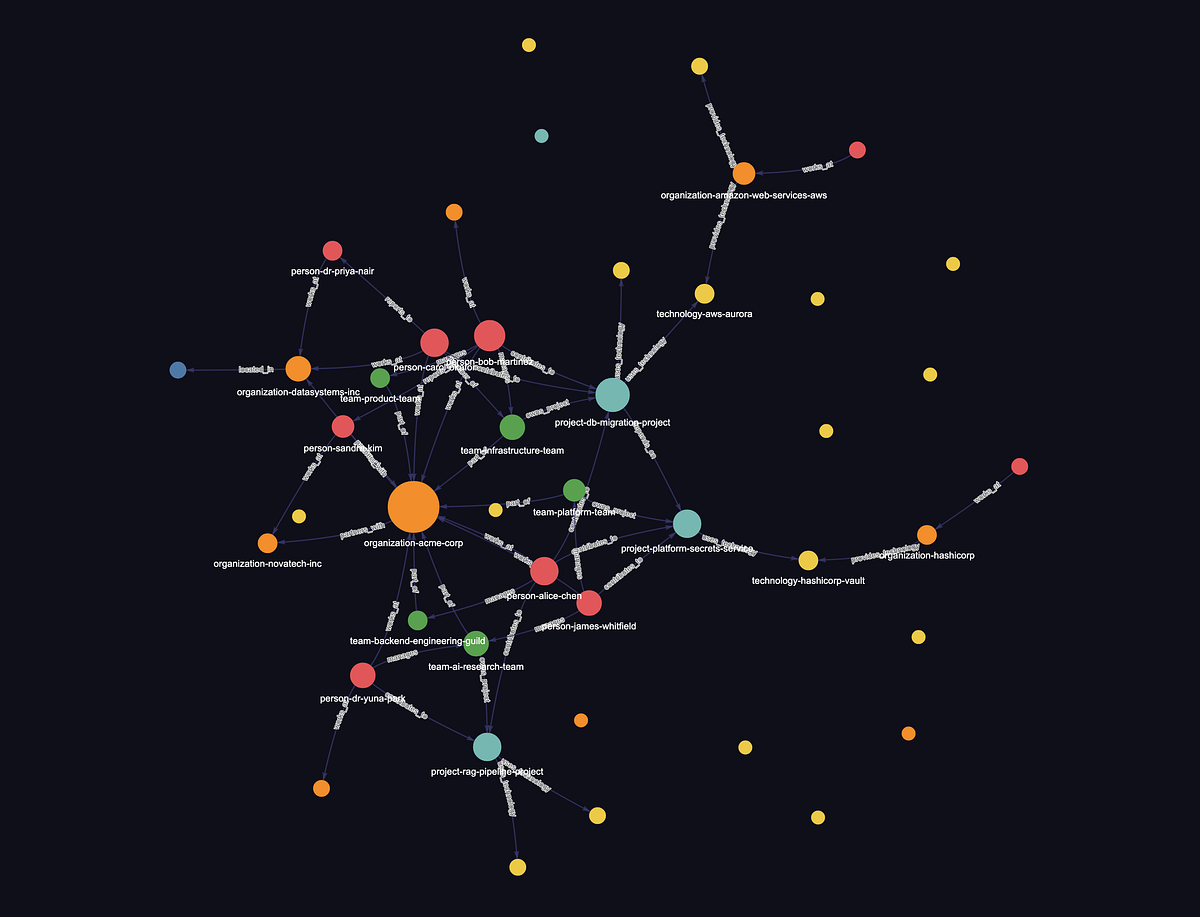
Build an LLM Wiki for Your AI Agents with myKG and Obsidian How to turn a folder of mixed format documents into a typed, interlinked knowledge graph your agents can actually read — using myKG and …
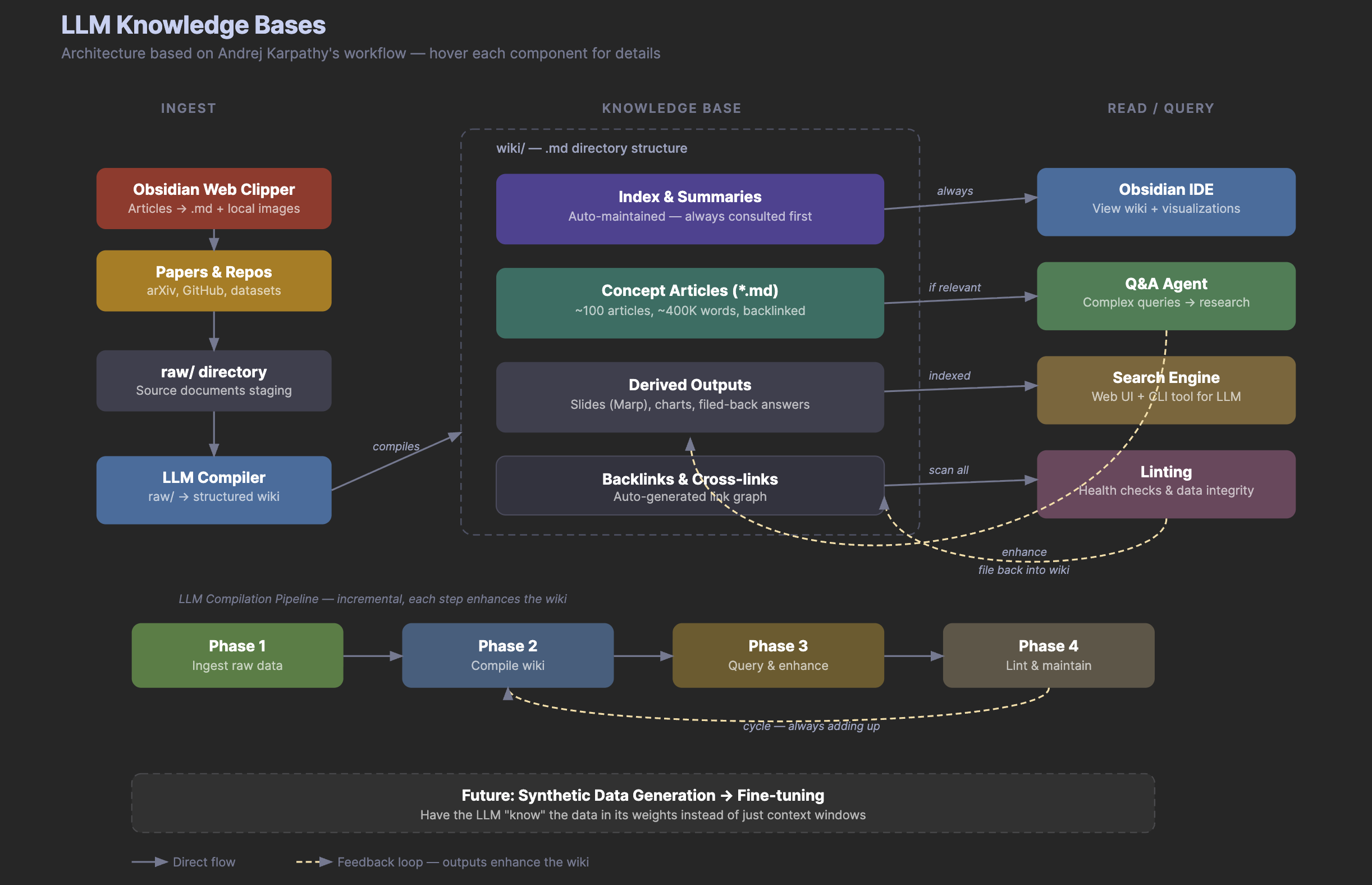
LLM Knowledge Bases
A visual breakdown of Andrej Karpathy's approach to building personal knowledge bases powered by LLMs. Learn the 4-phase pipeline: ingest, compile, query, and maintain - with an interactive architecture diagram.
elvis on Twitter / X
Diagram of the LLM Knowledge Base system.Feed this to your favorite agent and get your own LLM knowledge base going. https://t.co/4AQSFOv4PV pic.twitter.com/nPSNi4Ayqv— elvis (@omarsar0) April 3, 2026

Intrigued by @semble.so as a potential research tool for creatives as well as encouraging deeper thinking, making connections between ideas. For me, I can see using it alongside @obsidian.md (which I use similarly, but for my private use). Also love how responsive the developers are to questions.
