


Observing some people close to me with chronic health conditions, it's striking how useful Reddit frequently ends up being. I think a core reason is because trials aren’t run for a lot of things, and Reddit provides a kind of emergent intelligence that sits between that which any… pic.twitter.com/Eto23uQMDb— Patrick Collison (@patrickc) September 14, 2025
Chris Beiser on Twitter / X
it'd be interesting to quantify the rate at which unaffiliated reddit users have improved on the state of the art for treatment protocols for diseases. my guess is that for 75% of diseases, they're responsible for a greater QoL increase than pharmaceutical companies over 10 years— Chris Beiser (@ctbeiser) June 7, 2021
Jason Crawford on Twitter / X
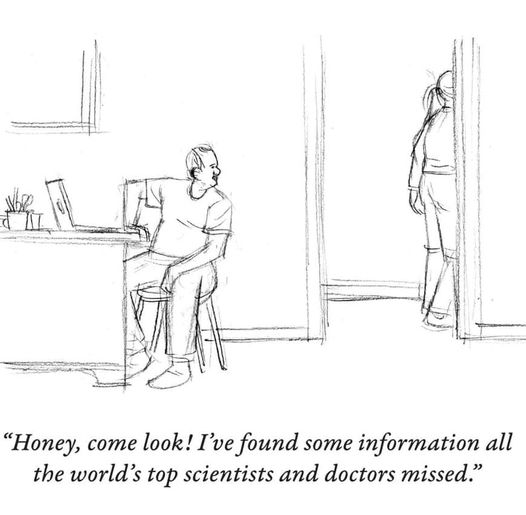
It's hard to find information that all the world's top scientists and doctors have missed.But it's not that hard, if you're intelligent, thoughtful, and diligent, to find information that the medical system has not yet caught up to—information that is not yet incorporated into… pic.twitter.com/HrgGzCUdX2— Jason Crawford (@jasoncrawford) September 22, 2024
AI linked to explosion of low-quality biomedical research papers
Analysis flags hundreds of studies that seem to follow a template, reporting correlations between complex health conditions and single variables based on publicly available data sets.

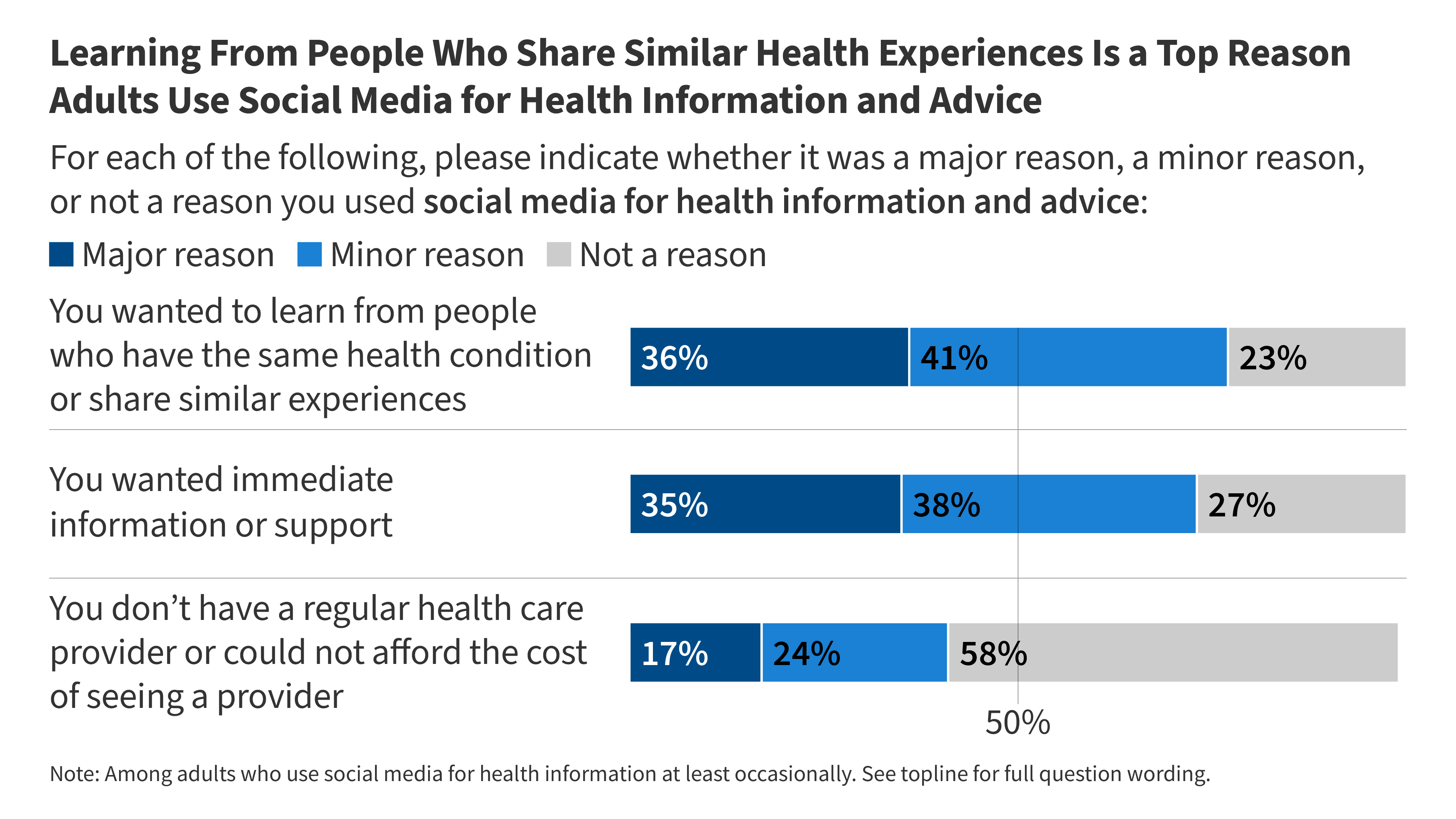
KFF Tracking Poll on Health Information and Trust: Use of Social Media and AI For Health Information and Advice | KFF
This poll finds that about 3 in 10 adults turn to social media for health information and advice at least monthly. Community connection and the need for immediate answers are the top reasons why people are turning to these tools. Slim majorities of those who use social media for health are confident they can tell what is true, and relatively few take steps to check the information they receive.
Using AI Made Doctors Worse at Spotting Cancer Without Assistance
A new study offers the latest evidence of potential “deskilling” effects on AI users.

How To Prompt on Twitter / X
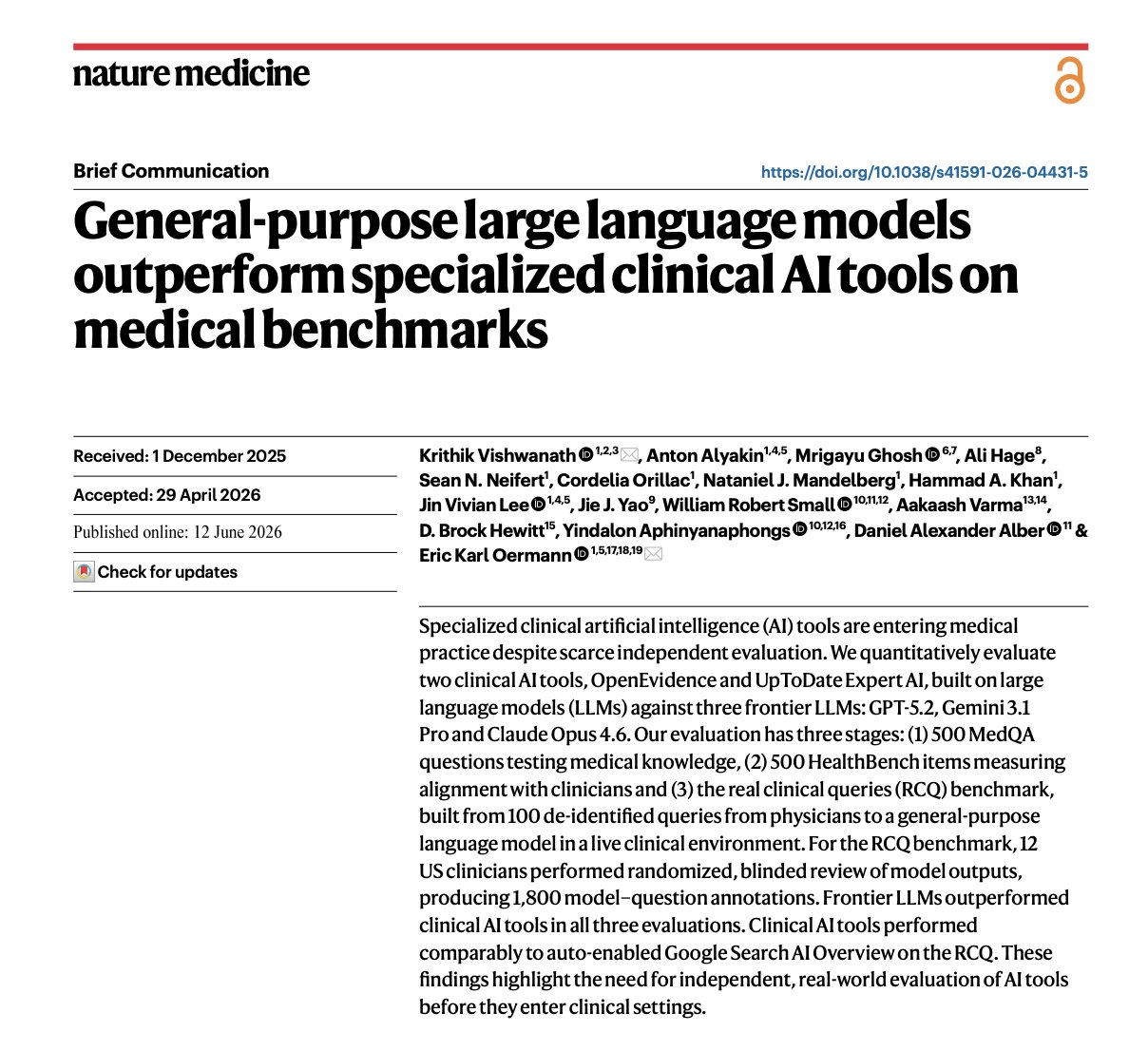
scientist tested a 3.5 billion dollar medical AI against regular chatGPT and it lost on every single one.they just published a paper in nature medicine, and the results are actually mindblowing.they took specialized clinical ai tools and tested them against general-purpose… pic.twitter.com/P7ePLunrDj— How To Prompt (@HowToPrompt__) July 6, 2026
Two Research Papers Published on PatientsLikeMe - SPM Blog
Two research papers were published this month on the Health 2.0 website, PatientsLikeMe. PatientsLikeMe is arguably the only “real” health social network online today, because it lets patients share actual […]
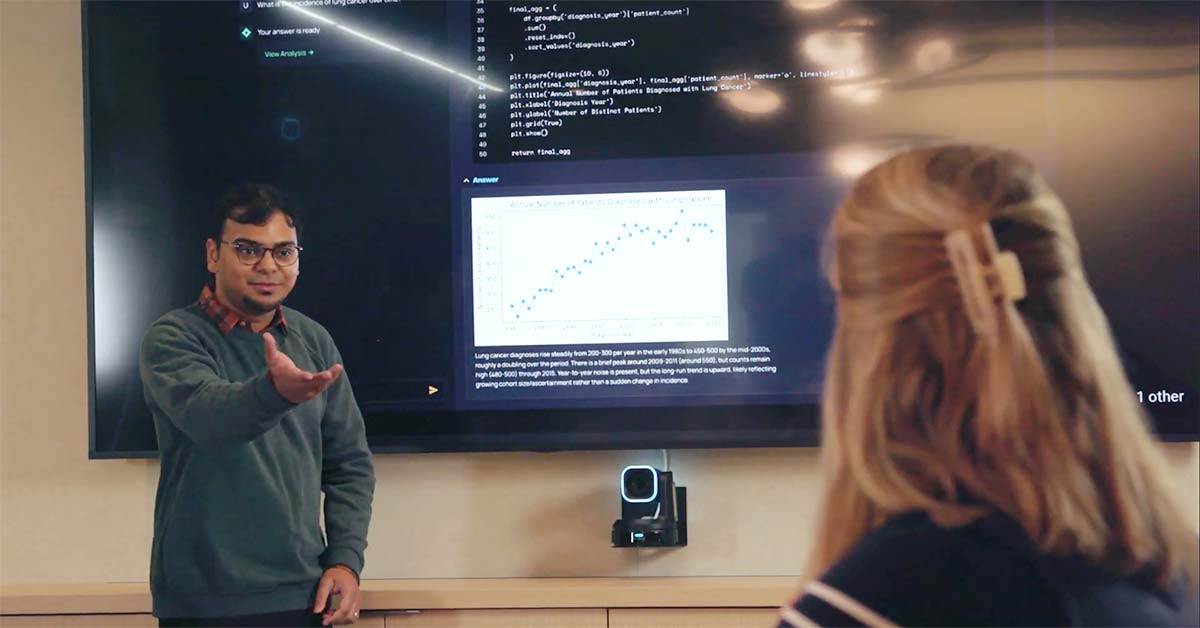
Fred Hutch researchers test privacy-first AI platform for cancer research
Researchers at Fred Hutch Cancer Center are testing whether a collaborative AI research platform can accelerate the pace of cancer research leading to faster diagnoses and more precise, targeted therapies, especially for rare types of cancers while safeguarding patient privacy.
Crowdsourced Health Research Studies: An Important Emerging Complement to Clinical Trials in the Public Health Research Ecosystem
Background: Crowdsourced health research studies are the nexus of three contemporary trends: 1) citizen science (non-professionally trained individuals conducting science-related activities); 2) crowdsourcing (use of web-based technologies to recruit project participants); and 3) medicine 2.0 / health 2.0 (active participation of individuals in their health care particularly using web 2.0 technologies). Crowdsourced health research studies have arisen as a natural extension of the activities of health social networks (online health interest communities), and can be researcher-organized or participant-organized. In the last few years, professional researchers have been crowdsourcing cohorts from health social networks for the conduct of traditional studies. Participants have also begun to organize their own research studies through health social networks and health collaboration communities created especially for the purpose of self-experimentation and the investigation of health-related concerns. Objective: The objective of this analysis is to undertake a comprehensive narrative review of crowdsourced health research studies. This review will assess the status, impact, and prospects of crowdsourced health research studies. Methods: Crowdsourced health research studies were identified through a search of literature published from 2000 to 2011 and informal interviews conducted 2008-2011. Keyword terms related to crowdsourcing were sought in Medline/PubMed. Papers that presented results from human health studies that included crowdsourced populations were selected for inclusion. Crowdsourced health research studies not published in the scientific literature were identified by attending industry conferences and events, interviewing attendees, and reviewing related websites. Results: Participatory health is a growing area with individuals using health social networks, crowdsourced studies, smartphone health applications, and personal health records to achieve positive outcomes for a variety of health conditions. PatientsLikeMe and 23andMe are the leading operators of researcher-organized, crowdsourced health research studies. These operators have published findings in the areas of disease research, drug response, user experience in crowdsourced studies, and genetic association. Quantified Self, Genomera, and DIYgenomics are communities of participant-organized health research studies where individuals conduct self-experimentation and group studies. Crowdsourced health research studies have a diversity of intended outcomes and levels of scientific rigor. Conclusions: Participatory health initiatives are becoming part of the public health ecosystem and their rapid growth is facilitated by Internet and social networking influences. Large-scale parameter-stratified cohorts have potential to facilitate a next-generation understanding of disease and drug response. Not only is the large size of crowdsourced cohorts an asset to medical discovery, too is the near-immediate speed at which medical findings might be tested and applied. Participatory health initiatives are expanding the scope of medicine from a traditional focus on disease cure to a personalized preventive approach. Crowdsourced health research studies are a promising complement and extension to traditional clinical trials as a model for the conduct of health research.

Meta’s New AI Asked for My Raw Health Data—and Gave Me Terrible Advice
Meta’s Muse Spark model offers to analyze users’ health data, including lab results. Beyond the obvious privacy risks, it’s not a capable stand-in for a real doctor.

Creating Scientific Theories with Online Communities using Gut Instinct
People's lived experiences provide intuitions about their health. Can they transform these personal intuitions into scientific theories that inform both science and their lives? My research introduces social computing architectures and system principles for people to brainstorm and test causal scientific theories. These ideas are instantiated in the Gut Instinct system (gutinstinct.ucsd.edu). 344 voluntary online participants from 27 countries created 399 personally-relevant questions about the human microbiome, 75 (19%) of which microbiome experts found potentially scientifically novel. To test their theories, end users design structurally-sound experiments, improve them via community reviews, and run them with other participants. Controlled experiments show that participants create better hypotheses and experimental designs when they have access to procedural training. My research illustrates a novel way to tackle complex, creative tasks online by building expertise in online volunteer communities.

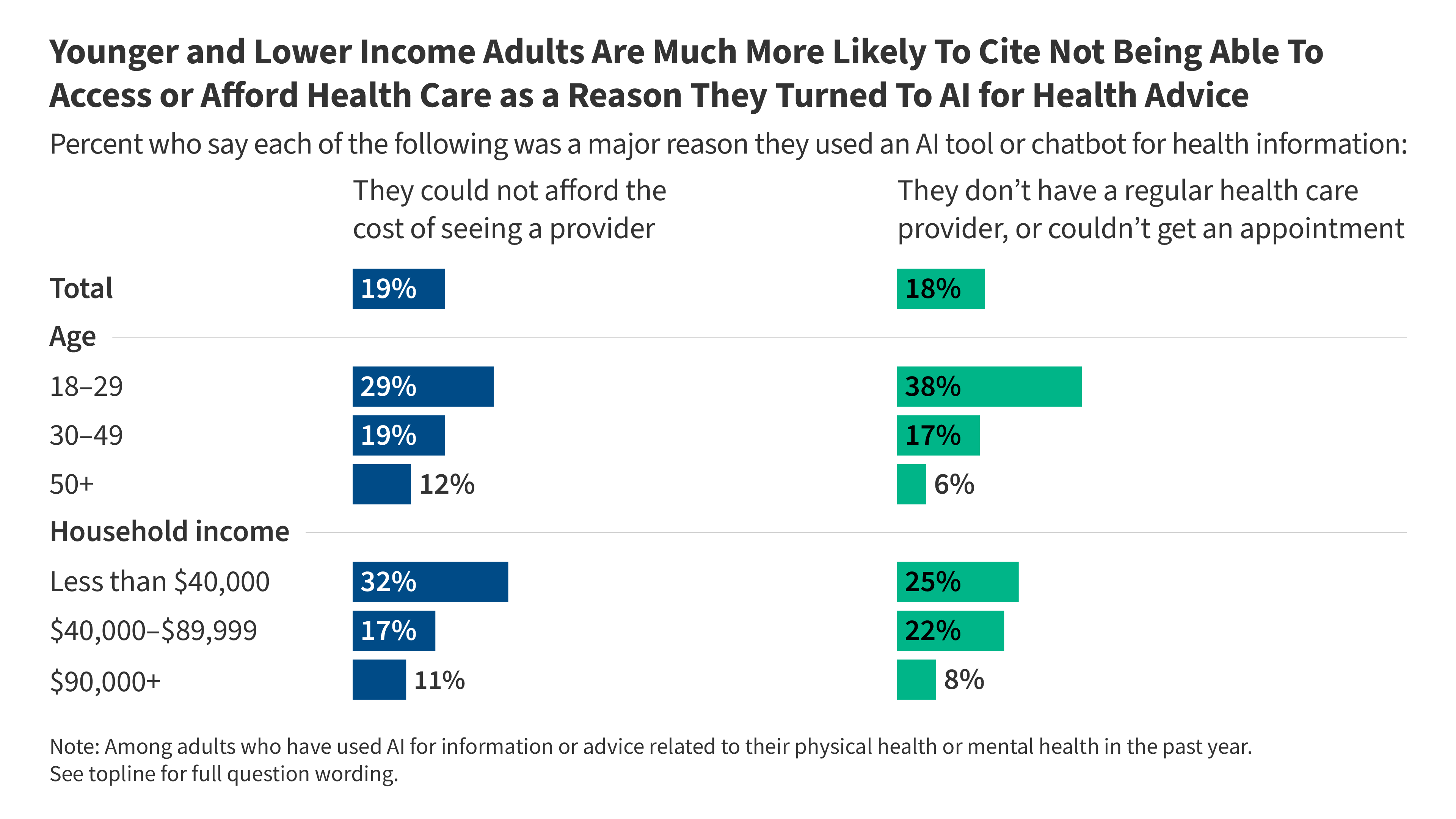
KFF Tracking Poll on Health Information and Trust: Use of AI For Health Information and Advice | KFF
This poll finds that about as many adults are turning to AI for health information as social media, with health care costs and access driving many users, particularly younger users.
AI for Proactive Mental Health: A Multi-Institutional, Longitudinal, Randomized Controlled Trial
Young adults today face unprecedented mental health challenges, yet many hesitate to seek support due to barriers such as accessibility, stigma, and time constr

Dario Amodei — We Must Pace the Frontier
I have worked on AI for the last twelve years because I believe it could dramatically raise the quality of human life. I’ve written often about these incredible benefits: I believe that AI could cure most major diseases in the next 5–10 years, greatly accelerate economic growth rates, create a world of abundance and empowerment, and usher in a renaissance of democracy and freedom. I feel the urgency personally. My own father died of a disease that was cured just a few years after his death, and I myself survived an early-stage cancer that would not have been treatable even fifty years ago. Carefully wielded, AI can be the latest in a long line of technological miracles that have uplifted and ennobled humanity.

Randomized Controlled Trials without Data Retention
Amidst rising appreciation for privacy and data usage rights, researchers have increasingly acknowledged the principle of data minimization, which holds that the accessibility, collection, and retention of subjects' data should be kept to the bare amount needed to answer focused research questions. Applying this principle to randomized controlled trials (RCTs), this paper presents algorithms for making accurate inferences from RCTs under stringent data retention and anonymization policies. In particular, we show how to use recursive algorithms to construct running estimates of treatment effects in RCTs, which allow individualized records to be deleted or anonymized shortly after collection. Devoting special attention to non-i.i.d. data, we further show how to draw robust inferences from RCTs by combining recursive algorithms with bootstrap and federated strategies.

People are using AI for their health crises, and no amount of screaming about it is stopping that. I started slowly drafting a piece about my experiences having long, slow conversations about AI practices in the patient communities I'm in, where I primarily stay just to provide scientific support
