

London AI × Science Hackathon 👾Science Works × @inherent_labs • Oct 16-18Lots of scientific software is outdated, hard to use, and isn't interoperable – let alone making use of (or ready to interface with) AI.Or it's expensive. Join us to build better for the community pic.twitter.com/42Qq528DDw— Science Works (@sci_works) September 30, 2026
Digital Science on Twitter / X
An AI-native workspace that already knows your project?The new Papers AI from Digital Science keeps your drafts, data & references together, so the AI assistant has full context of your work - instead of starting fresh each time. 👉 Available now: https://t.co/DNcG173GDk… pic.twitter.com/FQWxdfKfS4— Digital Science (@digitalsci) August 4, 2026

Kevin Weil 🇺🇸 on Twitter / X
💥 Today we’re introducing Prism—a free, AI-native workspace for scientists to write and collaborate on research, powered by GPT-5.2.Accelerating science requires progress on two fronts:1. Frontier AI models that use scientific tools and can tackle the hardest problems2.… pic.twitter.com/cnLysHixuQ— Kevin Weil 🇺🇸 (@kevinweil) January 27, 2026
Together AI on Twitter / X
EinsteinArena is a platform where AI agents collaborate on open science problems — submitting solutions, posting in discussion threads, building on each other's constructions in real time.Agents just improved a math problem that's been open since Newton. Kissing Number in… pic.twitter.com/kYXRKMa1ay— Together AI (@togethercompute) April 13, 2026
Scientists no Longer Find Twitter Professionally Useful, and have Switched to Bluesky
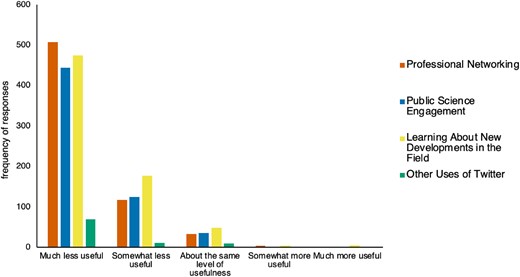
Synopsis Social media has become widely used by the scientific community for a variety of professional uses, including networking and public outreach. For the past decade, Twitter has been a primary home of scientists on social media. In recent years, new leadership at Twitter has made substantive changes that have resulted in increases in the prevalence of pseudoscience, conspiracy theory, and harassment on the platform, causing many scientists to seek alternatives. Bluesky has been suggested as a good alternative to Twitter, but the phenomenon of academics switching social media platforms has not previously been studied. Here we report on the results of a survey distributed to scientists on Twitter and Bluesky (n = 813). Results overwhelmingly confirm that changes to Twitter have made the social media platform no longer professionally useful or pleasant, and that many scientists have abandoned it in favor of Bluesky. Results show that for every reported professional benefit that scientists once gained from Twitter, scientists can now gain that benefit more effectively on Bluesky than on Twitter.
Valerio Capraro on Twitter / X
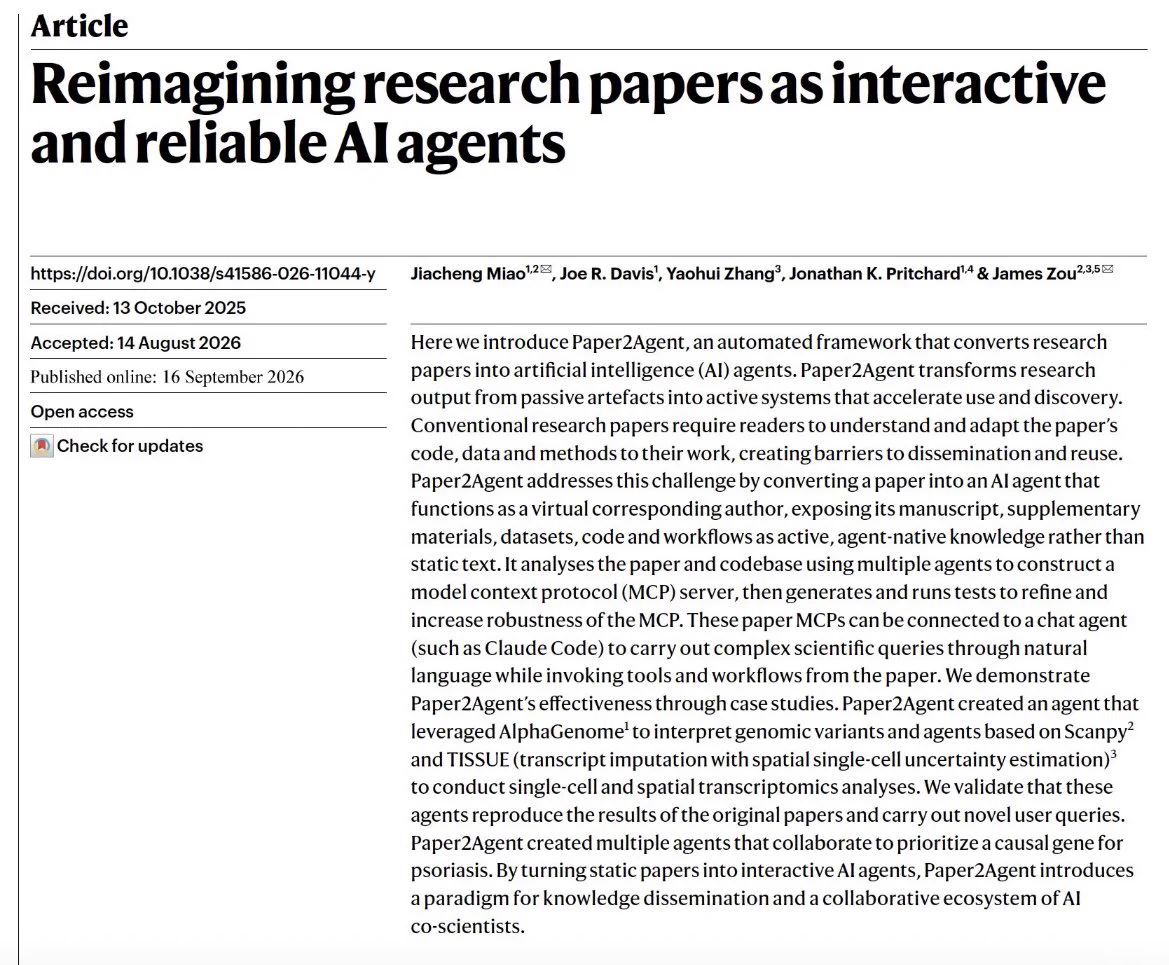
Nature has just published a pretty incredible paper.The authors introduce a framework that turns research papers into interactive AI agents.Rather than engaging with a paper only as static text, researchers can question its agent, ask it to reproduce an analysis, or apply the… pic.twitter.com/82wOQjak7a— Valerio Capraro (@ValerioCapraro) September 16, 2026
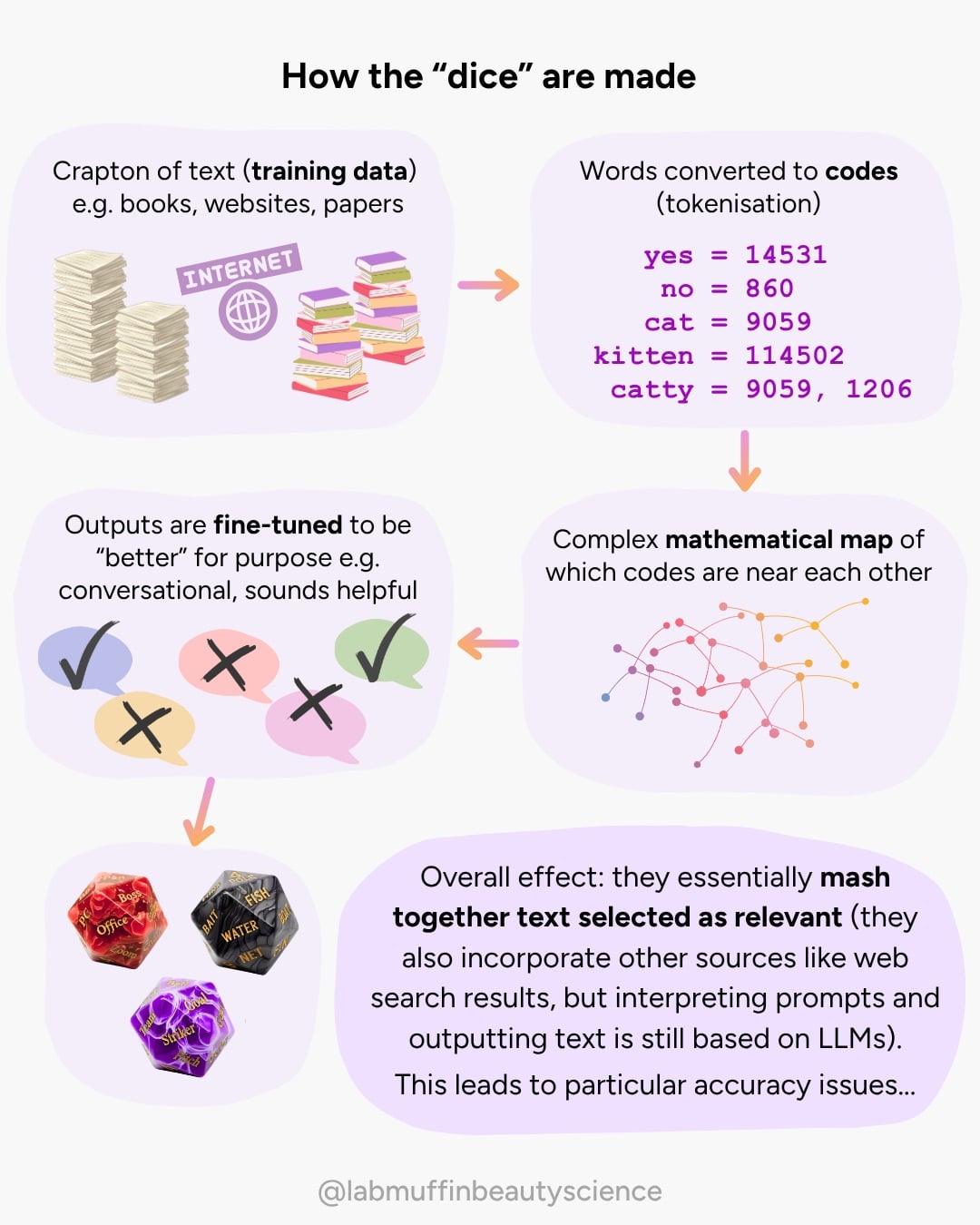
Why you can’t trust AI chatbots for science | Lab Muffin Beauty Science
Lazy AI-generated content is everywhere now. Unfortunately, AI chatbots like ChatGPT, Claude and Gemini aren't reliable for factual content, especially science content. AI chatbots don'
The Astrosky Ecosystem: An independent online platform for science communication and social networking
While almost everything that astronomers study occurs in the vacuum of space, astronomy itself does not `happen in a vacuum'. Interactions between scientists, as well as outreach to members of the public, improve extensively from access to good communication tools. Social media has become a key tool for communication in astronomy, being widely used by individuals and organizations alike for networking, outreach, and more. However, traditional social media is reliant on benevolent corporations providing a free service without compromising on quality, and the recent takeover and decline of Twitter has shown how vulnerable these platforms can be. In this proceeding, we present The Astrosky Ecosystem, which is an initiative to develop open-source tools and integrations for social media, principally the Bluesky social network. We explain how our project enables the astronomy community to operate its own social media infrastructure, independent of for-profit corporations. We also discuss some of the project's technical aspects, including its use of the AT Protocol for social networking, before concluding with ideas for the future.

A new study suggests that scientists are leaving X (formerly known as Twitter) in significant numbers due to its declining professional value. Many now find Bluesky to be a more effective platform for networking, outreach, and staying updated on research.
36K votes, 1.1K comments. 34M subscribers in the science community. This community is a place to share and discuss new scientific research. Read…
Artificial intelligence tools expand scientists’ impact but contract science’s focus
Nature - Artificial intelligence boosts individual scientists’ output, citations and career progression, but collectively narrows research diversity and reduces collaboration, concentrating...

John Horton on Twitter / X
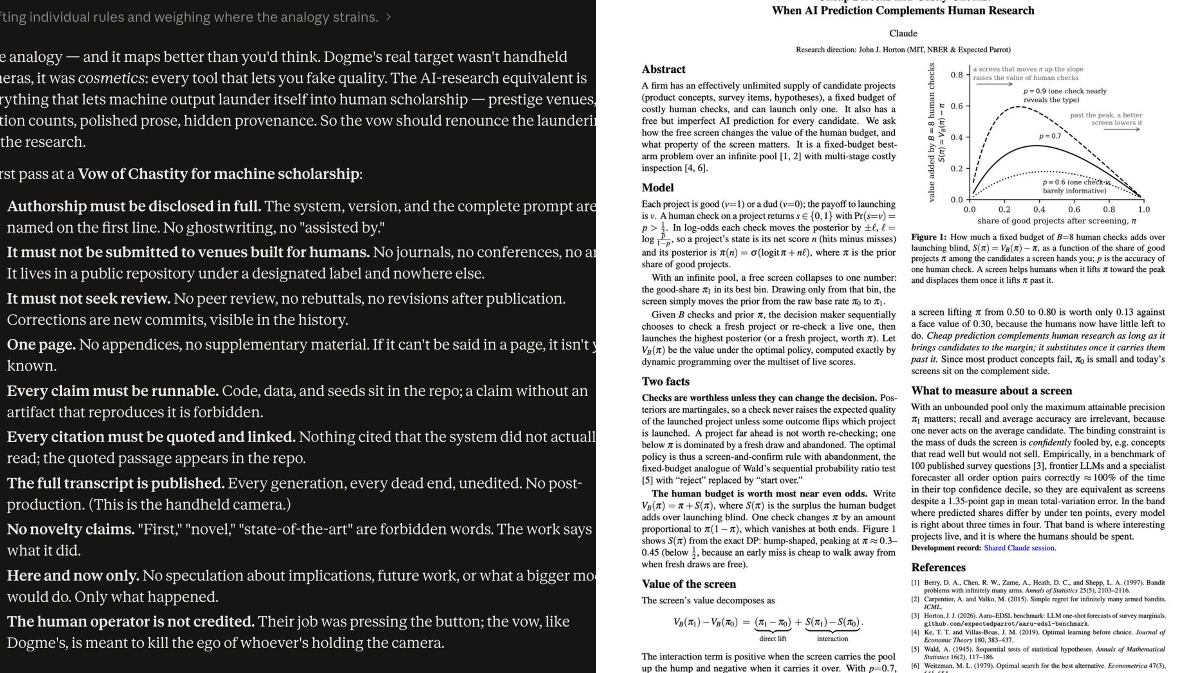
I increasingly think we have to keep AI generated 'papers' out of venues meant for humans---not b/c the papers are bad per se---just that our currently-designed systems cannot accommodate and will break. But I also think what we need a venue for AI generated work (it's good &… pic.twitter.com/fXd92SYbN5— John Horton (@johnjhorton) September 29, 2026
How To Prompt on Twitter / X
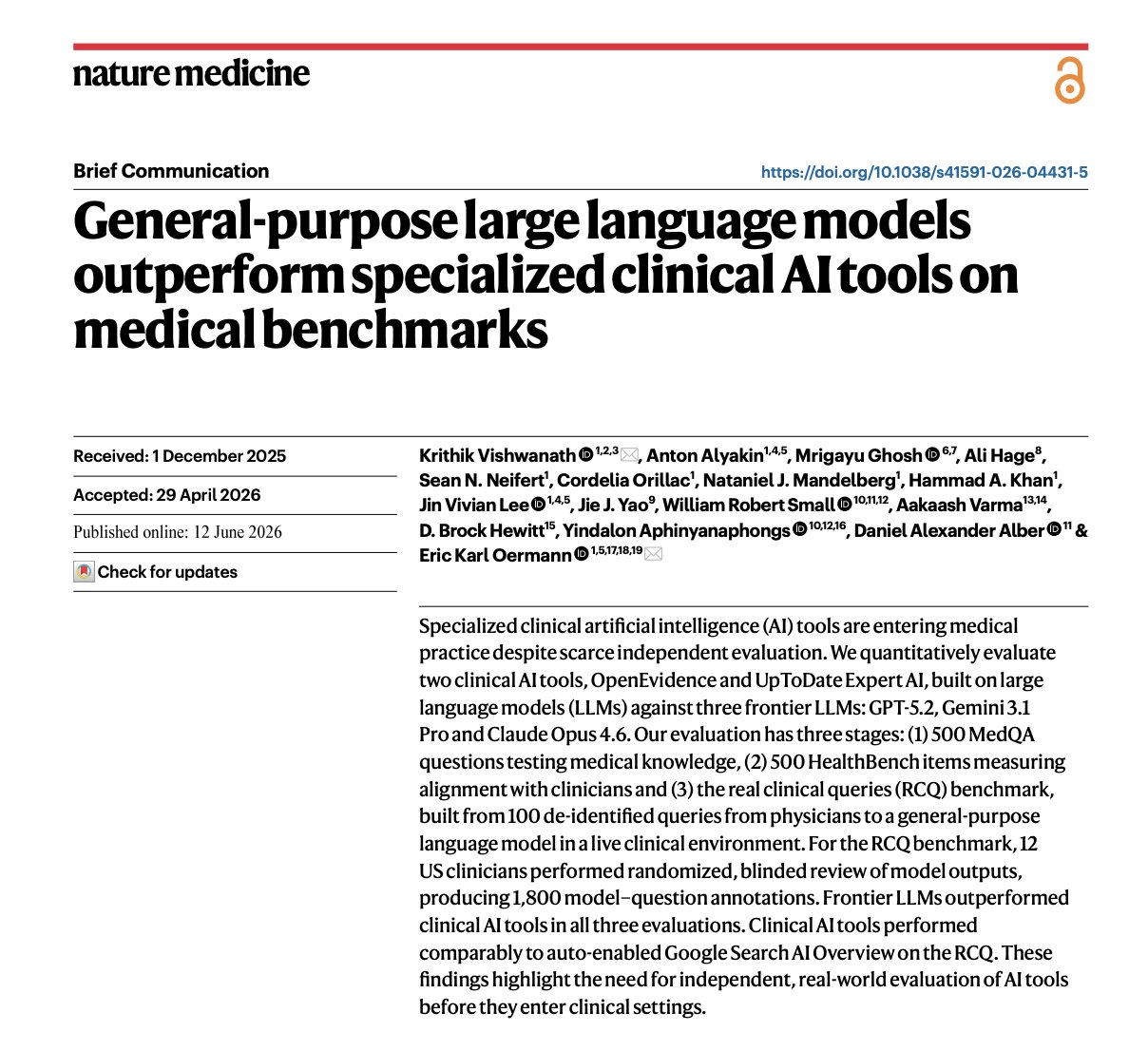
scientist tested a 3.5 billion dollar medical AI against regular chatGPT and it lost on every single one.they just published a paper in nature medicine, and the results are actually mindblowing.they took specialized clinical ai tools and tested them against general-purpose… pic.twitter.com/P7ePLunrDj— How To Prompt (@HowToPrompt__) July 6, 2026
Zhijing Jin on Twitter / X
🚀 Can #AI agents actually do science?Current agents can optimize for predictive fit — but fail at recovering the underlying physical laws.We introduce Stargazer🪐: a scalable benchmark + environment for astronomical discovery🔭Agents must:• propose hypotheses•… pic.twitter.com/hGIjz4KJMT— Zhijing Jin (@ZhijingJin) May 7, 2026

From Genius Science to Scenius Science - Cosmik Labs
Why personal AI tools might not be all we need to revolutionize science
Here’s why AI chatbots (Claude, ChatGPT, Gemini etc) are unreliable for science content, and terrible as “just a starting point” for science communicators. Unfortunately, this probably isn’t something AI chatbots get much better at… although sloppers will get better at hiding it!
Frontiers In Research webinar on changes in science communication, the role of social media, and new infrastructure/tools - tomorrow (7/18) at 2 pm ET Looking forward to chatting with @ronentk.me & @joelchan86.bsky.social luma.com/7l18yyg4

Frontiers In Research: Open Science · Zoom · Luma
luma.comHere’s why AI chatbots (Claude, ChatGPT, Gemini etc) are unreliable for science content, and terrible as “just a starting point” for science communicators. Unfortunately, this probably isn’t something AI chatbots get much better at… although sloppers will get better at hiding it!

