

Attention @arxiv authors: Our Code of Conduct states that by signing your name as an author of a paper, each author takes full responsibility for all its contents, irrespective of how the contents were generated. 1/— Thomas G. Dietterich (@tdietterich) May 14, 2026
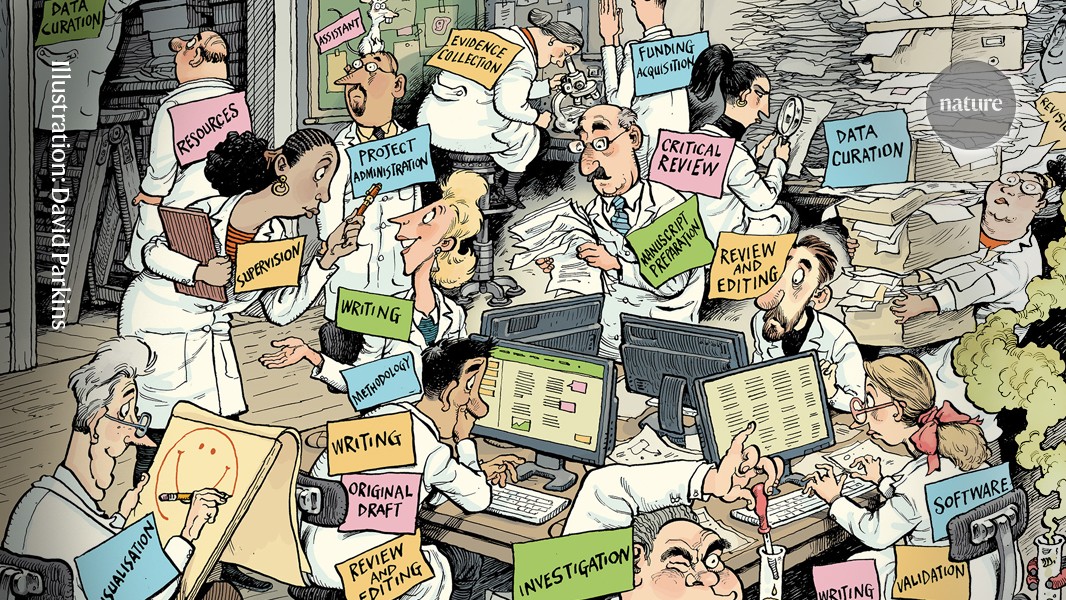
A ten-year drive to credit authors for their work — and why there’s still more to do
Nature - Information about the roles of each author of a paper can help to build trust, integrity and responsible research assessment. Coordinated efforts are needed to consolidate progress.
Thomas G. Dietterich on Twitter / X
We are seeing a new trend in submissions to @arxiv (and presumably to conferences and journals): Authors submitting papers whose contents they likely do not understand. 1/— Thomas G. Dietterich (@tdietterich) September 13, 2026
Project Rachel: Can an AI Become a Scholarly Author?
This paper documents Project Rachel, an action research study that created and tracked a complete AI academic identity named Rachel So. Through careful publication of AI-generated research papers, we investigate how the scholarly ecosystem responds to AI authorship. Rachel So published 10+ papers between March and October 2025, was cited, and received a peer review invitation. We discuss the implications of AI authorship on publishers, researchers, and the scientific system at large. This work contributes empirical action research data to the necessary debate about the future of scholarly communication with super human, hyper capable AI systems.

Contributor Covenant | Contributor Covenant 3
The most widely adopted code of conduct in open source. Stewarded by the Organization for Ethical Source.
Eric Topol on Twitter / X
This is a FRAUDULENT paper, AI-generated. My name was used as an author and I had nothing to do with it, never saw it until today https://t.co/Ky60zJrMEZThe "Editors" Angelo Rossi Mori, David Mensah, and Zarnie Khadjesari should be reported. pic.twitter.com/2Z5CE8w4bn— Eric Topol (@EricTopol) April 22, 2026

The social contract of writing | jola.dev
About the value of genuine writing in a world being drowned in slop.
The Ptah Protocol
Open infrastructure for creative authorship on the AT Protocol. Fifteen record types for world-building, attribution, lineage, and rights across any media.
The Published Voice: Whose Voice Are We Really Reading? - The Scholarly Kitchen
What happens then to “author voice,” which has always been an important consideration to authors and reviewers alike, if AI is helping researchers with their writing?

Human Responsible · AI Contribution Policies
Your tools are your business, but everything you submit must be yours.
Anthropic sued by authors over alleged misuse of copyrighted works for AI training
The complaint alleges that Anthropic used pirated versions of books by hundreds of thousands of authors to develop its AI models without proper authorization or compensation.

human.json
A lightweight protocol for humans to assert authorship of their website content and vouch for the humanity of others.
in my imagination of the future, of AIs doing raw research, it was the AIs that had full control over the proofs they wrote--attribution was clear, and so was the choice to disclose it. but as it stands we are in some hybrid situationship where the human prompter still assumes responsibility.


