

We are seeing a new trend in submissions to @arxiv (and presumably to conferences and journals): Authors submitting papers whose contents they likely do not understand. 1/— Thomas G. Dietterich (@tdietterich) September 13, 2026
Cas (Stephen Casper) on Twitter / X
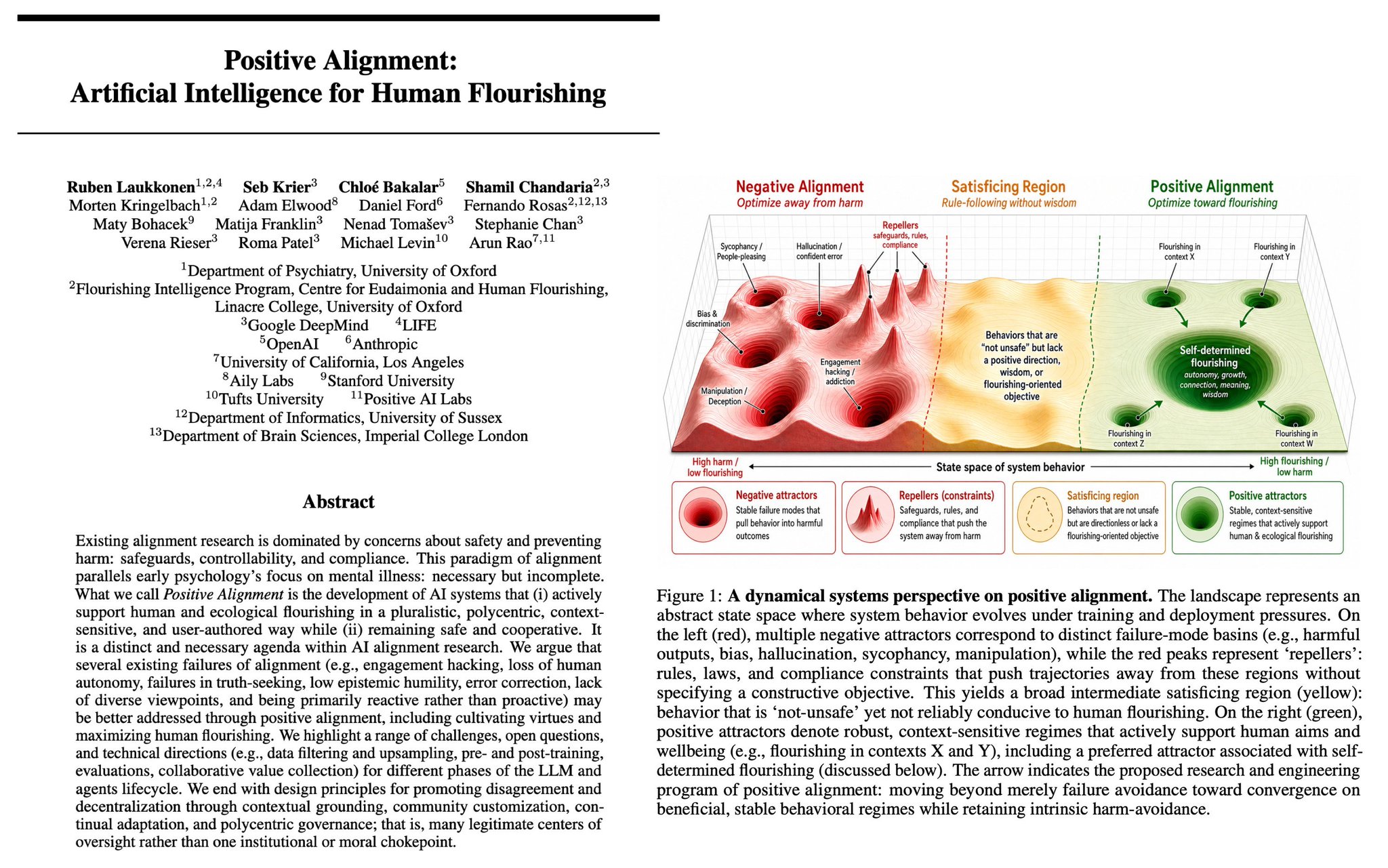
It is hard to overstate how disappointing I think this new paper from Oxford, OpenAI, Anthropic, and Google (et al) is. I can't take it seriously as academic work, just as propaganda. It also has some very bad scholarship and questionable adherence to research ethics. Having… pic.twitter.com/Z5fBx360ya— Cas (Stephen Casper) (@StephenLCasper) May 13, 2026
Gautam Kamath on Twitter / X
Nihar Shah did a heroic experiment for TMLR: he spent 20-25 hours over two weeks interviewing authors of seemingly low-quality submissions about their own papers. He confirmed what we all suspected: people submitting these papers have *no idea* what is going on in them. https://t.co/6CJF152u7I— Gautam Kamath (@thegautamkamath) September 16, 2026
Michael 英泉 Eisen on Twitter / X
ALSO WHY THE FUCK ARE WE STILL JUST CITING PAPERS INSTEAD OF SPECIFIC PIECES OF DATA OR CLAIMS? https://t.co/dngS9d8nOW— Michael 英泉 Eisen (@mbeisen) May 16, 2026
Eric Topol on Twitter / X
This is a FRAUDULENT paper, AI-generated. My name was used as an author and I had nothing to do with it, never saw it until today https://t.co/Ky60zJrMEZThe "Editors" Angelo Rossi Mori, David Mensah, and Zarnie Khadjesari should be reported. pic.twitter.com/2Z5CE8w4bn— Eric Topol (@EricTopol) April 22, 2026

Jason Shepherd on Twitter / X
I have quite a lot of thoughts on this..that won't fit in a tweet. Bottomline is that there are issues scientists in the US would love to improve - faster review, less grant writing, more stability and freedom to do risky science. The folks celebrating this doc are mostly../1 https://t.co/xlPAH9XYNC— Jason Shepherd (@JasonSynaptic) July 23, 2026
Thomas G. Dietterich on Twitter / X
Attention @arxiv authors: Our Code of Conduct states that by signing your name as an author of a paper, each author takes full responsibility for all its contents, irrespective of how the contents were generated. 1/— Thomas G. Dietterich (@tdietterich) May 14, 2026
rohit on Twitter / X
One of the most fun papers I've read in recent times. Excellent. Reminiscent of the good old days of science papers. pic.twitter.com/4a7qRTloSG— rohit (@krishnanrohit) December 30, 2024

Shreya Shankar on Twitter / X
This problem has gotten significantly worse. As Twitter and other social media have become primary channels for sharing research, academics are now expected to make the same ideas legible and appealing to both the general public (to go "viral") and senior scholars (to get the… https://t.co/zPF3tKzbVa— Shreya Shankar (@sh_reya) July 25, 2026
Dan Singleton 🏳️🌈🏳️⚧️ on Twitter / X
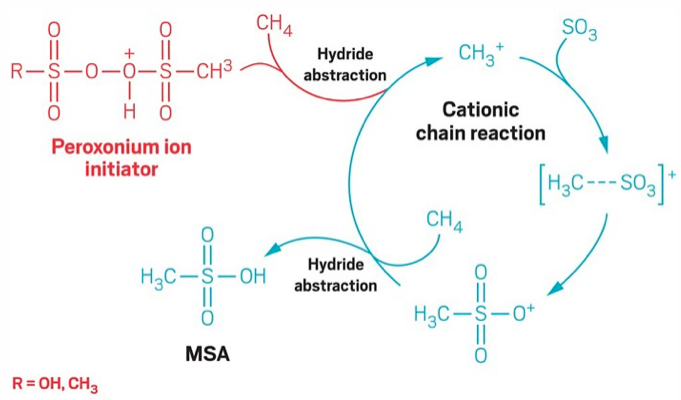
1. Ok, this is the thread to end all threads, or possibly my career. I am about to trash a new paper in @sciencemagazine, its editors, its reviewers, C&E News, others who stated or wrote adoring commentaries, anyone who looked at the paper or its commentaries without seeing pic.twitter.com/K5O1cX1BJP— Dan Singleton 🏳️🌈🏳️⚧️ (@dasingleton) April 8, 2019
Q&A from the slop trenches – GeoSpatial ML
We reviewed 22 ML conference submissions this summer. Fifteen had fabricated citations, hallucinated authors, or clear LLM slop, so we complain about that a bit, and release the paper references audit we now run.
elvis on Twitter / X
arXiv Papers → LLM ArtifactsThis is how I keep up with AI research now.It's like having access to the most personalized arXiv feed.Automations run everyday to curate papers based a set of rules and insights.Curated papers are indexed and power the artifacts.Agent… pic.twitter.com/5UCxF8ZsT0— elvis (@omarsar0) May 6, 2026

Itai Yanai on Twitter / X
Is the scientific paper a fraud? Peter Medawar (Nobel Prize winner) suggested that publications are overly structured and formal, giving only a sanitized version of the discovery without revealing the thought process that actually led to it. pic.twitter.com/E3ttRPzcfL— Itai Yanai (@ItaiYanai) October 27, 2024

Thomas Wolf on Twitter / X
wtf is this way to handle mathematicians work and scientific communicationTLDR: Leven and Tristan worked over several months on one of the Millenium Prize Problems with various AIs to reach final interesting results. OpenAI apparently heard about it in the last days and… https://t.co/zNozwkFcFO pic.twitter.com/XcefJ17AQe— Thomas Wolf (@Thom_Wolf) September 8, 2026

steve hsu on Twitter / X
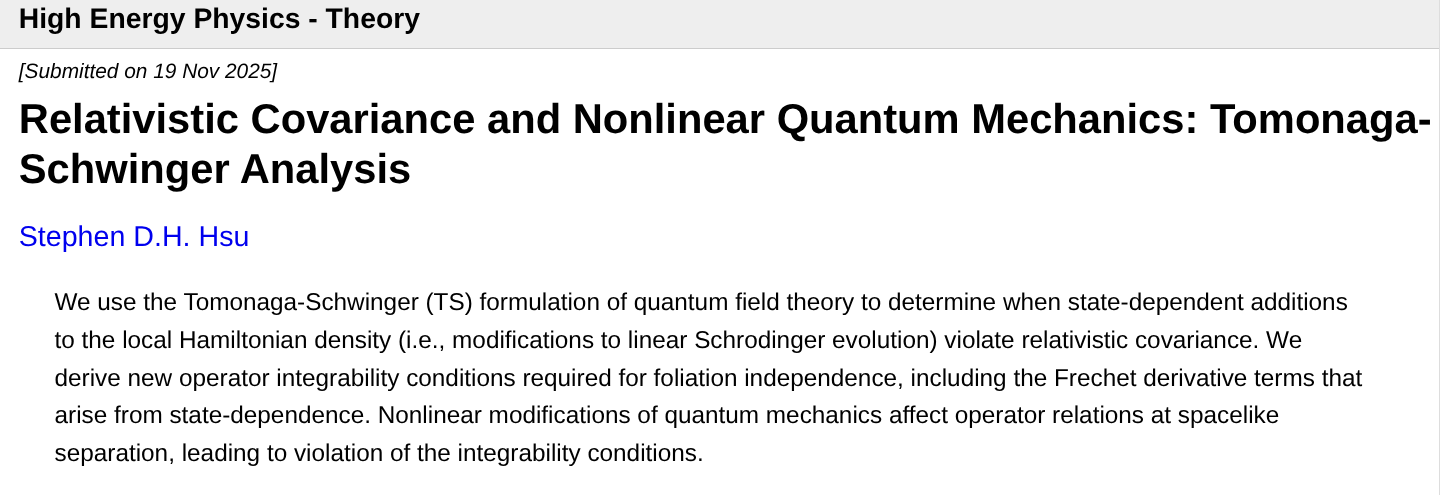
I think I’ve published the first research article in theoretical physics in which the main idea came from an AI - GPT5 in this case. The physics research paper itself (on QFT and state-dependent quantum mechanics) has been published in Physics Letters B.I've written an… pic.twitter.com/6IYDTS2JAt— steve hsu (@hsu_steve) December 3, 2025
This is the summer of micro-papers: small ideas, shared freely, archived for posterity. I've had 2 separate emails and multiple new citations based on my micro-paper I wrote for micro-papers back in 2023.

The Micro-Paper: Towards cheaper, citable research ideas and conversations
arxiv.org1. We—@eduede.bsky.social, @mjcrockett.bsky.social, Kevin Gross, and I—have a new preprint on the arXiv today, based on ideas that emerged during an @sfiscience.bsky.social workshop in November 2024: The unintended consequences of large language models as a labor-augmenting technology in science.

The unintended consequences of large language models as a labor-augmenting technology in science
arxiv.org
