XMTP is a decentralized and quantum-resistant messaging protocol for builders.
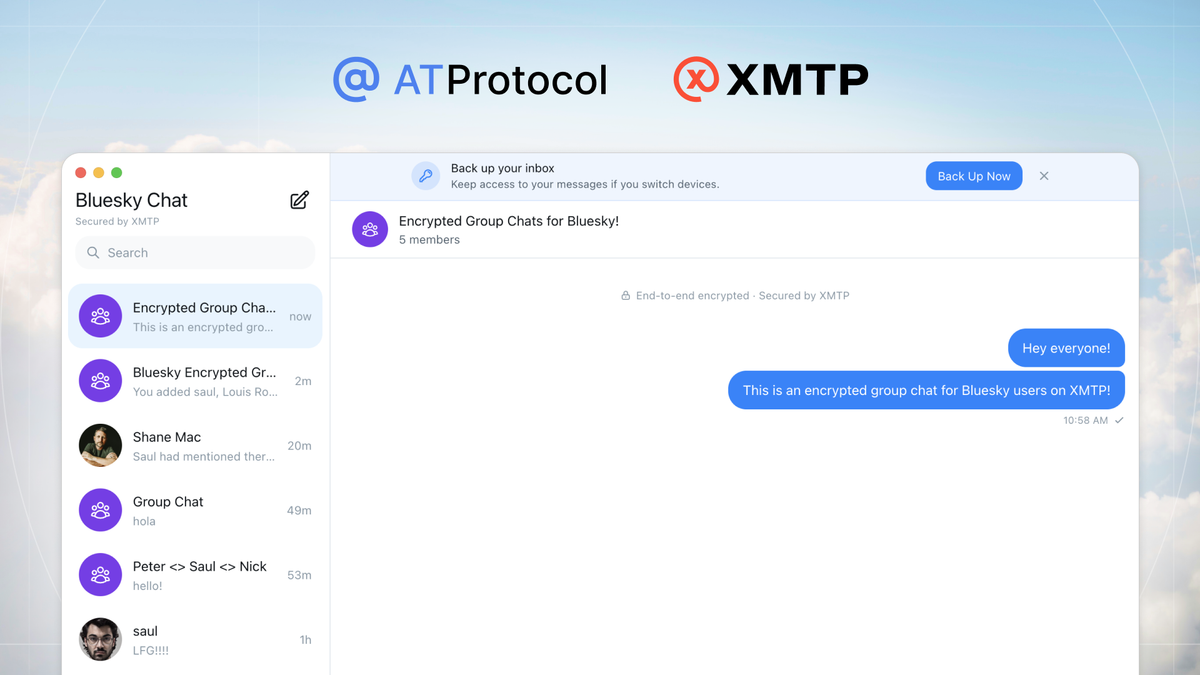
Unlocking Quantum-Encrypted Group Chats for ATProto on XMTP
Developers building with ATProto (the protocol powering Bluesky) have been asking how they can use XMTP to power messaging between users in their apps. It’s possible today to add secure messaging to any Bluesky app, and to add Bluesky identity to any messenger built on XMTP. 0:00 /0:
XMPP - The universal messaging standard
XMPP is the Extensible Messaging and Presence Protocol, a set of open technologies for instant messaging, presence, multi-party chat, voice and video calls, collaboration, lightweight middleware, content syndication, and generalized routing of XML data.

Wave - Secure Messaging App
Privacy-first messaging with quantum-level encryption. No signup, fully decentralized, zero tracking.

DIDComm: The Future of Secure and Decentralized Communication
How the W3C-Defined DIDComm Protocol is Revolutionizing Digital Messaging
Protocol: How Control Exists after Decentralization
How Control Exists after DecentralizationIs the Internet a vast arena of unrestricted communication and freely exchanged information or a regulated, highly
Making MLS more decentralized
It’s no secret that we at Phoenix R&D are big fans of the Messaging Layer Security (MLS) protocol, having helped it to come into existence. It’s a versatile group key agreement and messaging protocol that’s used to power both asynchronous and real-time applications. MLS is relatively

MCP and LLM Security Research Briefing | Wiz Blog
Explore the evolving Model Context Protocol (MCP), its security risks, and how to prepare for safe adoption as LLMs connect to external systems.

Appendix:Xanadu - AT Protocol Paper Errata and Details
A description of known problems in Bluesky PBC's paper, "Bluesky and the AT Protocol: Usable Decentralized Social Media", as well as notes on terminology changes and how Bluesky's implementation differs from that described in the paper.
How to Use Signal Encrypted Messaging
The best end-to-end encrypted messaging app has a host of security features. Here are the ones you should care about.


A Post-Quantum Future for Let's Encrypt
Let’s Encrypt is committed to a post-quantum-safe Web PKI. The path we’re planning to take is Merkle Tree Certificates (“MTCs”), a new approach that adds post-quantum authentication to the web without sacrificing the speed and reliability that have made TLS universal. This post is about these plans and why we believe MTCs are worth pursuing as a key to a post-quantum future. An increasingly urgent problem For much of the last several years, the conversation about post-quantum cryptography has been a conversation about encryption. The reasoning was straightforward: an attacker who records encrypted traffic today might be able to decrypt it years from now once quantum computers can break the underlying math. Authentication, the part of TLS that indicates a server is who it says it is, has been a less urgent problem. A quantum computer needs to forge a signature in real time, not retroactively, so threats to authentication hinge on the existence of a cryptographically relevant quantum computer (CRQC).
Cypherpunk Retreat
This retreat brings together the top builders and front-line organizers in digital privacy to align on roadmaps, drive technical coordination, and accelerate progress toward a more private and resilient internet. The goal is not just to discuss, but to ship: to create tangible advancements that can be implemented and adopted rapidly.