

When I express any shred of doubt about whether I deserve or am qualified for something, people often try to reassure me that I am just experiencing impostor syndrome. About 10% of the time, it’s true. Amelia Greenhall’s excellent piece, however, has inspired me to clear up a big misconception about what is happening the other 90% of the time.
Imposter Syndrome: Understanding and Managing It
Imposter Syndrome can be unnerving and frustrating. Here I unpick what it is, why it happens, and how to pragmatically manage it.
Blog | Online Therapy NYC | New York City 11096 | The Keely Group
Struggling with self-doubt at work? Click here to explore therapy for imposter syndrome in Manhattan, NY, tailored for twice-exceptional professionals.

‘My brain feels like it’s been punched’: the intolerable rise of perfectionism
The pursuit of perfection, taken to extremes, can lead to OCD and depression – and the number of students reporting the problem has jumped by 33% since 1989
The lie at the heart of hopelessness
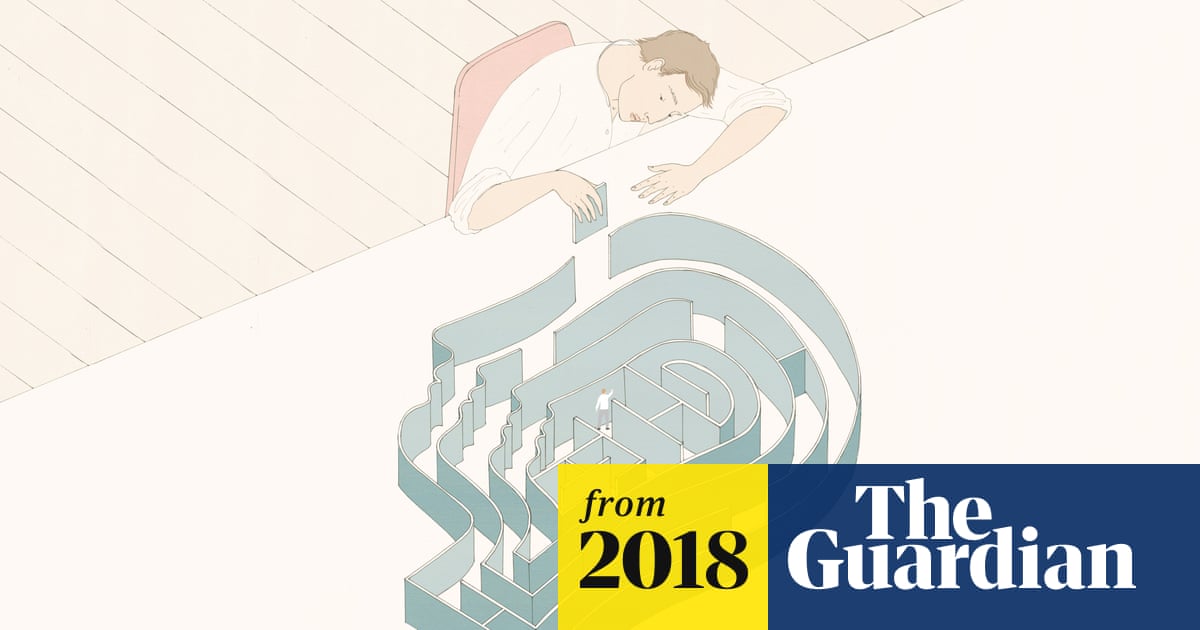
Most people I know are fighting severe anxiety about their individual and our collective future right now, struggling to picture a life worth planning. It is paralysing, also for me. It is also a lie. Not that reality isn't grim (ignoring that will only make things worse) but paralysis is neither

What Happens When Your Career Becomes Your Whole Identity
Many people with high-pressure jobs find themselves unhappy with their careers, despite working hard their whole lives to get to their current position. Hating your job is one thing – but what happens if you identify so closely with your work that hating your job means hating yourself?Psychologists use the term “enmeshment” to describe a situation where the boundaries between people become blurred, and individual identities lose importance. Enmeshment prevents the development of a stable, independent sense of self. While identifying closely with your career isn’t necessarily bad, it makes you vulnerable to a painful identity crisis if you burn out, get laid off, or retire. Individuals in these situations frequently suffer anxiety, depression, and despair. By claiming back some time for yourself and diversifying your activities and relationships, you can build a more balanced and robust identity in line with your values.

How to take things less personally and avoid mind reading | Psyche Guides
Always blaming yourself or assuming others think ill of you? A CBT therapist shares ways to break these self-critical habits

The Retweeting Class
I have often found myself confounded by the behaviour of some people who seem impervious to reality — like the people still on X today. Here, I try to understand what grounds their epistemology and its consequences, and what that means for the rest of us. Being committed to a better future is where genuine seriousness is, and that seriousness can only be approached in a spirit of embodied, determined, relentless hope.
Your Most Improbable Life
Your life’s goal should be to become the most improbable person you can be.

Social Verification Theory: A New Way to Conceptualize Validation, Dissonance, and Belonging
Academic Abstract In the present review, we propose a theory that seeks to recontextualize various existing theories as functions of people’s perceptions of their consistency with those around them. This theory posits that people seek social consistency for both epistemic and relational needs and that social inconsistency is both negative and aversive, similar to the experience of cognitive dissonance. We further posit that the aversive nature of perceiving social inconsistency leads people to engage in various behaviors to mitigate or avoid these inconsistencies. When these behaviors fail, however, people experience chronic social inconsistency, which, much like chronic rejection, is associated with physical and mental health and well-being outcomes. Finally, we describe how mitigation and avoidance of social inconsistency underlie many seemingly unrelated theories, and we provide directions for how future research may expand on this theory. Public Abstract In the present review, we propose that people find inconsistency with those around them to be an unpleasant experience, as it threatens people’s core need to belong. Because the threat of reduced belongingness evokes negative feelings, people are motivated to avoid inconsistency with others and to mitigate the negative feelings that are produced when it inevitably does arise. We outline several types of behaviors that can be implemented to avoid or mitigate these inconsistencies (e.g., validation, affirmation, distancing, etc.). When these behaviors cannot be implemented successfully, people experience chronic invalidation, which is associated with reduced physical and mental health and well-being outcomes. We discuss how invalidation may disproportionately affect individuals with minoritized identities. Furthermore, we discuss how belongingness could play a key role in radicalization into extremist groups.

Post-exertional malaise (PEM) in ME/CFS
Post-exertional malaise (PEM), the cardinal feature of ME/CFS, is particularly debilitating as it involves the amplification of existing symptoms, alongside the potential appearance of new ones, following minimal exertion. However, the term “exertion” may be misconstrued, by those unfamiliar with ME/CFS, as activities typically considered high intensity by healthy individuals. Consequently, healthy individuals may inappropriately…

Degeneracy is a Symptom
On Conspicuous Despair, the Ponzi stage of being alive, and why your grandparents are wrong about you.

Eliezer Yudkowsky Is Frequently, Confidently, Egregiously Wrong
It is bad when people who are consistently egregiously wrong become deferred to on everything

The idea that oppressions are subconscious scares me - Lemmy
In order to understand oppression as a subconscious thing, let’s take a couple of examples. Many women complain that they express an idea that is immediately dismissed, only for a man to be cheered for saying the exact same thing, minutes later. I have witnessed time and again a woman pointing to the correct explanation or solution for a bug and a man just ignoring her repeatedly, only to exhaust all other solutions before arriving to the same conclusion and solution. There is a ton of lab research to show this goes beyond anecdotal evidence. Some researchers recently showed that for the same length of speech, women speakers were judged as being overtaking the dialog. In fact, the balance that the average listener gauged as fair was 70% male speech vs 30% female speech. Don’t get me started about bias of doctors, not only against women and transgender people, but, let’s face the elephant in the room, black people. A recent study had found that doctors hold outdated racist tropes, for instance, that black people are more resistant to pain. Doctors are also more likely to discount complains from any marginalized group, and send them home with a “have less stress” tap on the back, when in reality they do have something serious. The list goes on and on. There is a whole book, called “Dying of Whiteness”, which shows that white people are opposed to welfare measures, when they think that black people will benefit from welfare too. The number of leftist and anarchist people who maintain some blatant form of medicalized cisgenderism is astonishing. And this is not about transphobia only. The track record of many collectives with sexism is harrowing. Someone recently wrote “Why I am not giving to your mutual aid project”, TL;DR because every collective has a couple of skeletons of sexual abuse in their closet. Haven’t we all seen the silent machismo and the solidarity between male authority figures in these spaces? Whenever a story like this pops up, the whole repertoire of discount tropes for sexual abuse allegations is taken out from the secret place it is kept for emergencies like this. This is consequential for broader organization as well, not only gendered and racialized oppression. In a strict Bakunian sense, the informality of a circle of buddies pulling the strings on any topic of field of activity is a form of State. A kyriarchy, or oppression. And there are more oppressions that we don’t even know, in jobs, universities, hobbies, and more. Some of them can be traced back to sexism, like the hard-science superiority complex has sexist undertones, but wherever there is inequality, there is oppression. It seems that people have a predisposition to form groups and make rules that reify social categories, for instance when some universities are considered elite and others shitholes, or some squat is seen as true hardcore anarchists and the others as alternative lifestyle hippies. ALL of this operates subconsciously. For quite some time I thought that the channels of anarchist organization would remedy human predisposition towards inequality, oppression, and bias. I now realize that this can not happen automatically, but a serious component of self-reflection to transcend internalized kyriarchies must be necessary. But we now see the prevail of the most vulgar and raw inequality instincts, enabled by systemic capitalist indoctrination and consent manufacturing campaigning. And we know that this seed is also present in leftists and anarchists. I believe that something horrible is about to happen the following five to ten years. We will then reflect, as we did in the aftermath of the two first world wars, on human predisposition to outgroup, other, dehumanize and eliminate. We might as well reinvent the science of the human psychology of obedience, conformity, prejudice, oppression and kyriarchy. And anarchists might have to reinvent the principles of political organization, this time to include the understanding of subconscious oppression, and embrace procedures to address and transcend all kyriarchies. That would stay truth to the spirit of complete abolition of all State, including internalized states of mind. (The pun is not intended.) In fact, I finally tend to agree with some anarchist pedagogists, that preparing people to be active members in an equal society, free of oppressions, the work must start in childhood, to eradicate the instincts of property, selfishness, power and supremacy. So, although it might seem there could not be a bleakest time to raise such issues, that in fact the struggle for visibility, for the normalization of queer lives, for the subversion of verbal sexism, and so on and so forth, all were important and integral to the anarchist cause. The white male racist kleprocratists might shed ours and many of our siblings’ blood over the next ten years. But 2030’s anarchism will re-discover the procedures that engender these demands and bake the relentless struggle for complete equality right into the channels of anarchist social organization and generational reproduction.
I Am What I Am - TV Tropes
The I Am What I Am trope as used in popular culture. Often a character will be ashamed of some aspect of themself (or society insists they should be). It …

The extent to which every single one of these guys has absolutely no idea what the fuck they're talking about is frankly stunning. You should be embarrassed to go out in public and spout shit like this. It should scar your soul and make you weep in shame, but that requires introspection, so...shit.

Dave Lee
Where to begin with this
This, and even more - to get super-rich almost requires *suppressing* the cultivation of a self or interiority. “Our system produces, elevates, and rewards psychopaths.” x.com/uTobian/status/20412132683884…

Levi Stahl
The empty boredom of the super-rich who never had to cultivate a self or interiority is the root cause of so many of our problems.

