

Part 1: The Continuous Thunderdome. Loops and graphs, Wheelhouse and Beads, the end of human code review, the Land Rush that replaces CI/CD, and the Wish Factory — a field report from 12 months in the future.
The Shape of Things to Come, Part 2: Model Welfare for Agentic Engineers — Steve Yegge
Part 2 of The Shape of Things to Come. Model welfare as an engineering discipline: seats and sessions, laurels, handoffs instead of /exit, and how to build a city worth waking up in.
Roblox Dream Diary
A series of microgames made over the course of one year. Walk through a lit doorway to be transported to that dream. Some dreams have buttons in the lower right corner that will transport you back; those that do not will do so automatically. In order of construction; Shell Museum Atrium Tornadoes Toro Cany## ###es Pluto Boat in the Cottonwoods Neon Industrial Channel Train It's Time (cw: themes of death of ##### ####) Herons If you want a place to start I'd suggest; Pluto, Train, It's Time, Herons, or Domes.

The Traffic King of Reddit
by Brian O’ConnorLast week, while avoiding work, I stared at a gif of an endless model train spiral for what seemed like hours, transfixed by the constant, seamlessly looping stream of miniature carriages, moving without end, going nowhere, ...
Design for a Living Planet: Settlement, Science, & the Human Future
In this brief, accessible volume, the authors — an urban philosopher and a mathematician-physicist — explain the surprising new findings from the sciences that are beginning to transform environmental design in the modern era. Authors Michael Mehaffy and Nikos Salingaros explore fractals, networks, self-organization, dynamical systems and other revolutionary ideas, describing them to non-science readers in a direct and engaging way. The book also examines fascinating new topics of design, including Agile, Wiki, Design Patterns and other “open-source” approaches from the software world. The authors conclude that a profound transformation is under way in modern design — and today’s students and practitioners will need to be aware of its implications for our future.“Lucidly describes what’s coming in the world of design — and what needs to come.” — Ward Cunningham, Inventor of wiki, and pioneer of Pattern Languages of Programming, Agile, and Scrum“Essential reading for all urban designers.” — Jeff Speck, Author of Walkable City“Brilliant.” — Charles Montgomery, Author of Happy City“Inspired, compelling and fascinating… Recognizes that a true architecture can be dug from the facts, insights, and theories, that occur with a broadening of science to include the human being.” — Christopher Alexander, Author of A Pattern Language and Notes on the Synthesis of FormSome comments on the individual chapters:“Packed with detail and beautiful in presentation.” — Gil Friend“Human society must find a path of retreat. Salingaros and Mehaffy point the way.” — David Brussat, Providence Journal“Michael Mehaffy and Nikos Salingaros have written some brilliant articles on how we can co-create cities which are truly resilient, rather than being ‘engineered resilient’.” — Smallworld Urbanism“For me, this essay was like a flash of insight, and I suddenly saw the world in a new light.” — Oeyvind Holmstad, Permaliv“We’ve just come across a very thoughtful article by Michael Mehaffy and Nikos Salingaros… [who] draw a number of lessons from biological systems and use them to draw conclusions about how resilient human systems must be designed.” — Resilient Design Institute“Salingaros and Mehaffy take us from the configuration of city spaces to the order of cells in living beings.” — Jaap Dawson, Delft Institute of Technology“If you wanted to know where the cutting edge was in urban design, it is here.” — Patrick J. Kennedy, CarFreeInBigD“This is the single most intelligent and illuminating article I’ve seen on Archdaily in 3 years.” — Nìming Pínglùn Zhě, ChinaMichael Mehaffy is an urbanist and design theorist, and a periodic visiting professor or adjunct in five graduate universities in four countries and three disciplines (architecture, urban planning and philosophy) including the University of Oregon (US) and the University of Strathclyde (UK). He has been a close associate of the architect and software pioneer Christopher Alexander, and a Research Associate with the Center for Environmental Structure, Alexander’s research center founded in 1967. He is currently executive director of Portland, Oregon based Sustasis Foundation, and editor of Sustasis Press.Nikos A. Salingaros is a mathematician and polymath known for his work on urban theory, architectural theory, complexity theory, and design philosophy. He has been a close collaborator of the architect and computer software pioneer Christopher Alexander. Salingaros published substantive research on Algebras, Mathematical Physics, Electromagnetic Fields, and Thermonuclear Fusion before turning his attention to Architecture and Urbanism. He is Professor of Mathematics at the University of Texas at San Antonio and has been on the Architecture faculties of universities in Italy, Mexico, and The Netherlands.
Build the thing you wish to see in the world
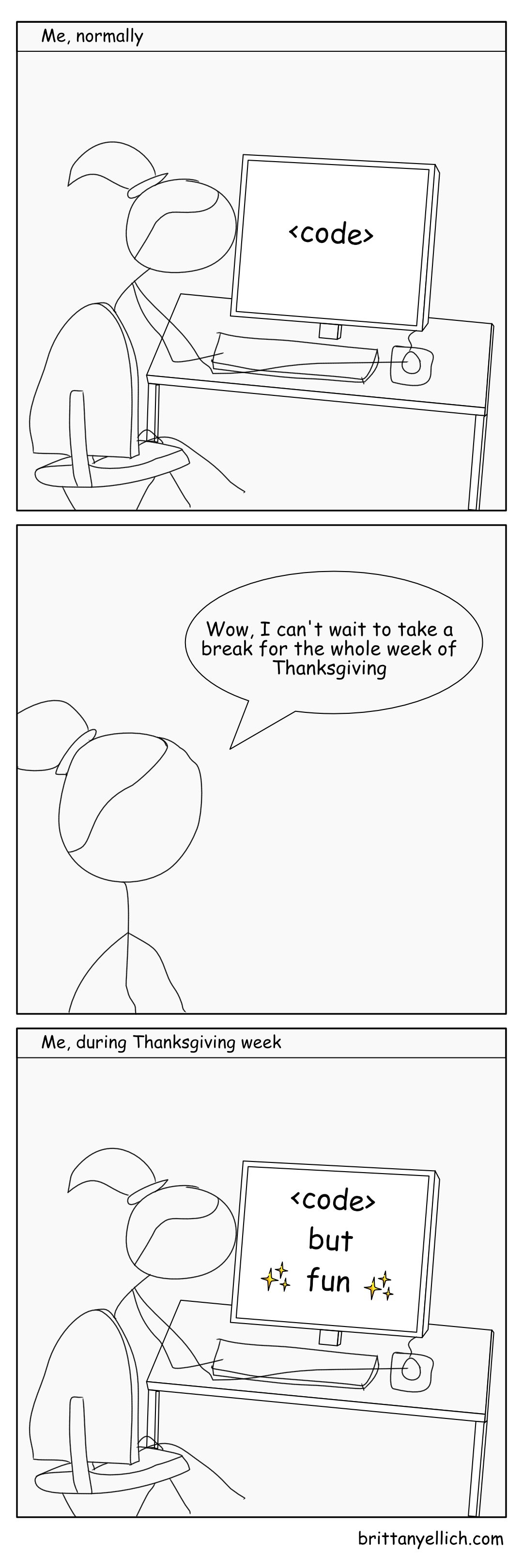
For most of my career, I've been confusing building products with building businesses—and that confusion kept me from pursuing a lot of ideas. Two weeks off helped me realize that not everything needs to be a startup, and some of the best things we build are the ones we build just because we want them to exist.
Big Thunder Creek: Part I ~ Rock Work
This fall I'll be finishing the scenery around Big Thunder Creek, a major scene on the Thunder Mesa section of the railroad. Howdy, f...


Model Making Quick Tip: Scenes and Transitions
Submissions to 2025 Delta Green Mini-Campaign Jam: Beginner Campaigns

Model Making Quick Tip: Structure Mock-ups
Build to think - gordonbrander.com
It's best to explore new opportunity spaces through prototyping. To try to model an opportunity space in your head is to explore that opportunity space in your imagination. You'll only find what you already know.
[AINews] Loopcraft: The Art of Stacking Loops
a quiet day lets us highlight a great concept from Peter Steinberger, Boris Cherny, and Andrej Karpathy
Notes from the Mystery Machine Bus - Steve Yegge
Notes from the Mystery Machine Bus - Steve Yegge · GitHub

Put Something Back | Steve Jobs Archive
In 2010, Steve wrote himself an email outlining his driving motivation. In fact, he had been turning to a set of core ideas for decades.

» An Ion Storm!, Part 1: The Ascent to Gamer Paradise The Digital Antiquarian
At id, the company was rolling in millions of dollars and we just had walls. It was the whole Carmack idea of, “I don’t need anything on my walls, all I need is a table and a computer and a chair,” instead of, “Okay, we’ve got a lot of money, why not make a really bad-ass office?”