


Posts about Probabilistic thinking written by mdsy10
The marketplace of rationalizations
Recent work in economics has rediscovered the importance of belief-based utility for understanding human behaviour. Belief ‘choice’ is subject to an important constraint, however: people can only bring themselves to believe things for which they can find rationalizations. When preferences for similar beliefs are widespread, this constraint generates rationalization markets, social structures in which agents compete to produce rationalizations in exchange for money and social rewards. I explore the nature of such markets, I draw on political media to illustrate their characteristics and behaviour, and I highlight their implications for understanding motivated cognition and misinformation.

#19 Turing, Julia and Bayes in Economics, with Cameron Pfiffer
The economics of agents - Marginal REVOLUTION
From Patrick Collison: Assorted things I’ve been mulling over regarding agents in the economy: • Companies are in some sense the original superintelligence. It’s often the case that they can use their amortized cognitive surplus to advance their interests against those of certain consumers: relative to the optimization capacity of companies, consumers can be inattentive, […]

Power: A Primer for Perplexed Economists
Let's Assume an Unfettered Marketplace of Ideas! Or Actually, Let's Not.

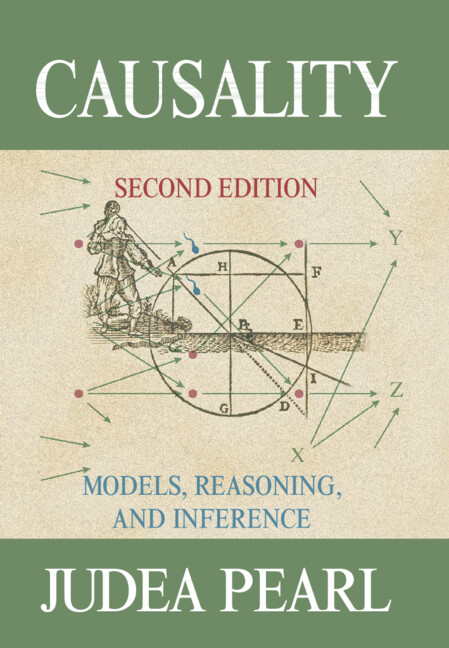
Causality
Written by one of the preeminent researchers in the field, this book provides a comprehensive exposition of modern analysis of causation. It shows how causality has grown from a nebulous concept into a mathematical theory with significant applications in the fields of statistics, artificial intelligence, economics, philosophy, cognitive science, and the health and social sciences. Judea Pearl presents and unifies the probabilistic, manipulative, counterfactual, and structural approaches to causation and devises simple mathematical tools for studying the relationships between causal connections and statistical associations. Cited in more than 2,100 scientific publications, it continues to liberate scientists from the traditional molds of statistical thinking. In this revised edition, Judea Pearl elucidates thorny issues, answers readers' questions, and offers a panoramic view of recent advances in this field of research. Causality will be of interest to students and professionals in a wide variety of fields. Dr Judea Pearl has received the 2011 Rumelhart Prize for his leading research in Artificial Intelligence (AI) and systems from The Cognitive Science Society.

Rational Inattention: A Review
We review the recent literature on rational inattention, identify the main theoretical mechanisms, and explain how it helps us understand a variety of phenomena across fields of economics. The theory of rational inattention assumes that agents cannot process all available information, but they can choose which exact pieces of information to attend to. Several important results in economics have been built around imperfect information. Nowadays, many more forms of information than ever before are available due to new technologies, and yet we are able to digest little of it. Which form of imperfect information we possess and act upon is thus largely determined by which information we choose to pay attention to. These choices are driven by current economic conditions and imply behavior that features numerous empirically supported departures from standard models. Combining these insights about human limitations with the optimizing approach of neoclassical economics yields a new, generally applicable model.
Ergodicity Economics – Formal economics without parallel universes
Does the way we look at a problem – over time or across an ensemble – change what we see? The main insight from Ergodicity Economics is that when ergodicity […]
Frameworks v0.2
FRAMEWORKS v0.2 Many of the thoughts in this document draw on and synthesize concepts from economics, math, physics, chemistry, biology, and psychology. Here are a handful of core concepts that are often relied on as inputs: Activation energy Behavioral economics Cognitive biases Darwinism En...

How ergodicity reimagines economics for the benefit of us all | Aeon Ideas
A radical concept called ergodicity at the heart of economics could change our approach to risk for the benefit of all

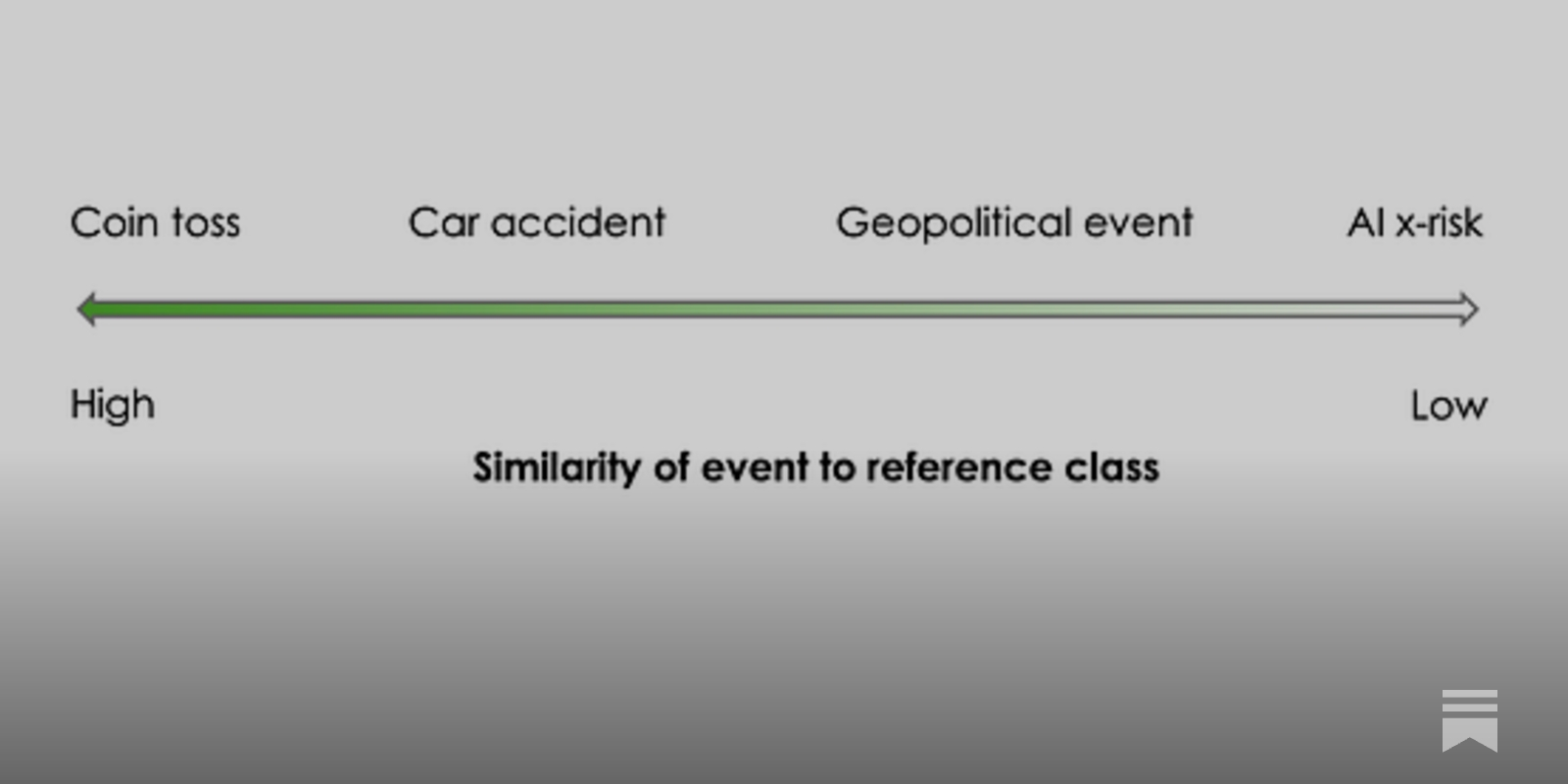
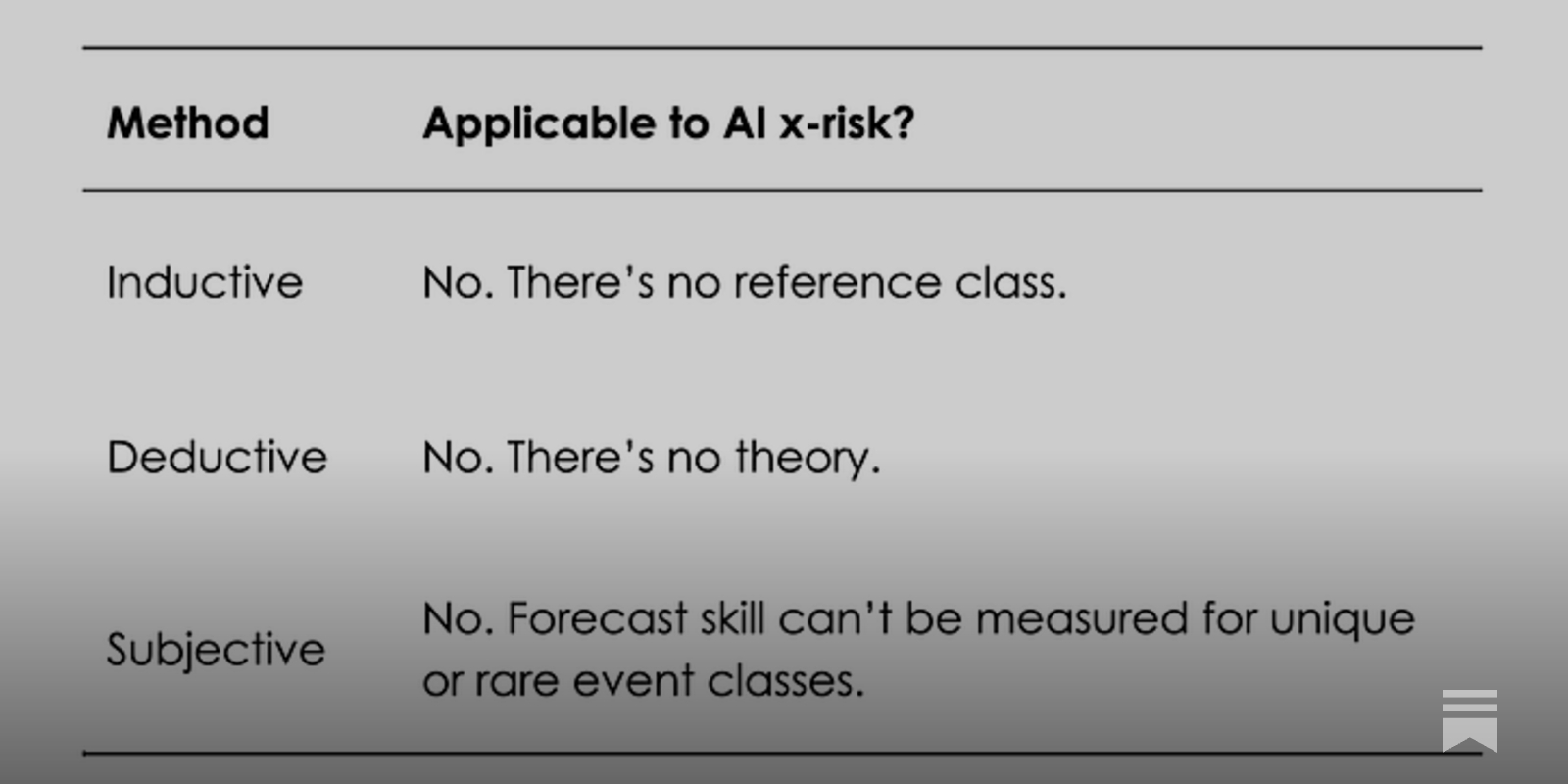
AI existential risk probabilities are too unreliable to inform policy
How speculation gets laundered through pseudo-quantification
Cognitive Bias Lab | Learn to Make Better Decisions
Explore cognitive biases with interactive tests, simulations, and real-world examples. Free platform to sharpen decision-making and critical thinking — no sign-up needed.

We don’t have a hundred biases, we have the wrong model
Behavioral economics has identified dozens of cognitive biases that stop us from acting 'rationally'. But instead of building up a messier and messier picture of human behavior, we need a new model.

Pluralistic: Goodhart’s Law vs “prediction markets” (24 Mar 2026) – Pluralistic: Daily links from Cory Doctorow
The most selectively believed-in verse in the conservative catechism is the idea that "incentives matter."
AI existential risk probabilities are (still) too unreliable to inform policy
How speculation gets laundered through pseudo-quantification
Where Browsers Come From
In this post, I’ll talk about the evolution of the economics around browsers, and what we should think about as we move forward.