

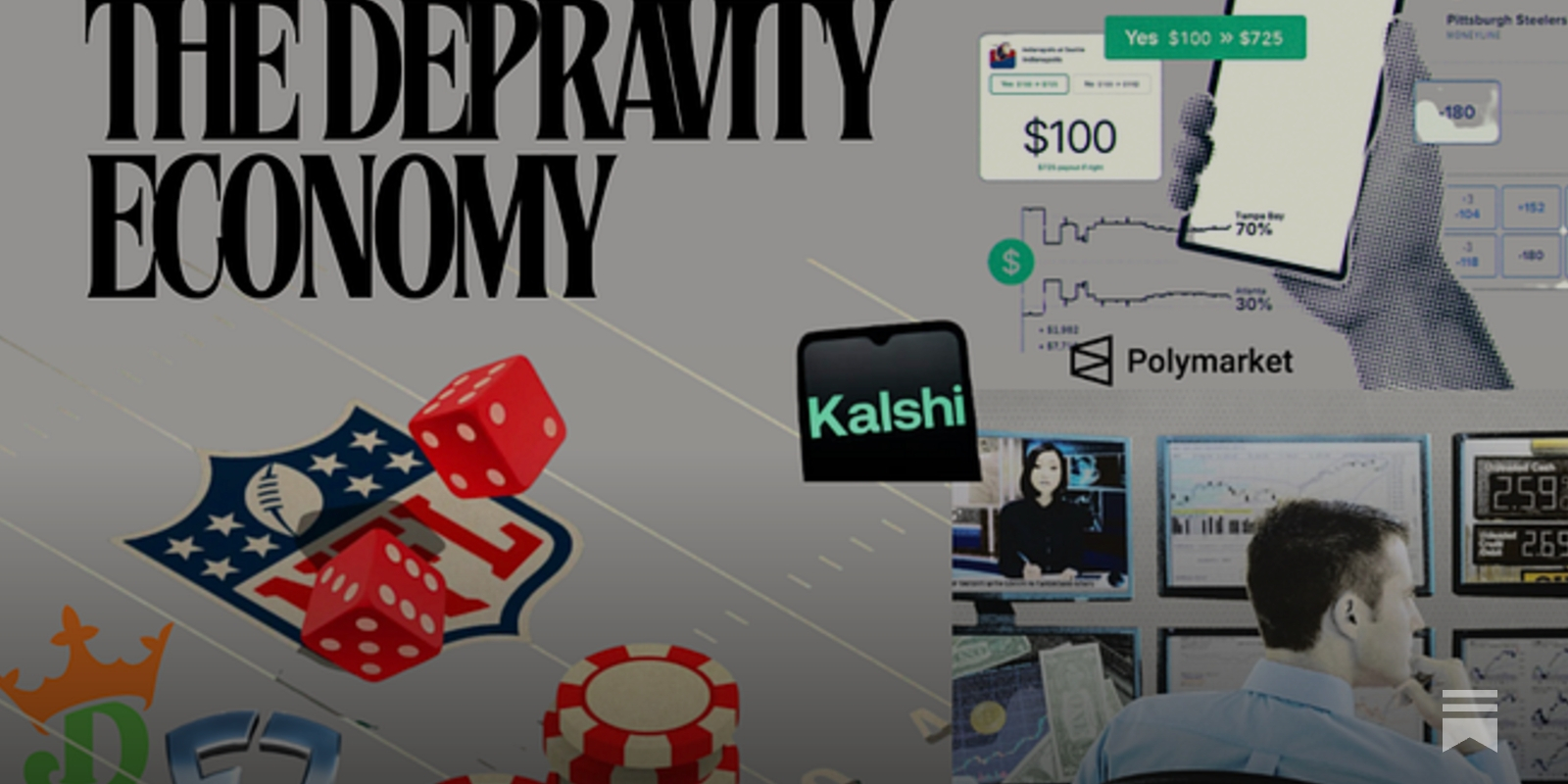
How gambling is eroding empathy, destroying relationships, and changing our culture — even for people who never bet.
We Haven’t Seen the Worst of What Gambling and Prediction Markets Will Do to America
I don’t think people have thought hard enough about how bad this could get.
ADDICTION BY DESIGN: Machine Gambling in Las Vegas – Natasha Dow Schüll
Slot machines, revamped by evermore compelling digital and video technology, have unseated traditional casino games as the gambling industry’s revenue mainstay. Drawing on fifteen years of field research in Las Vegas, anthropologist Natasha Dow Schüll explores the dark side of machine gambling—a solitary, rapid, continuous form of play that has less to do with the competitive thrill of winning than with the pull of “the machine zone,” as gamblers call the trancelike state they enter.
How Everything Became Gambling
It’s not just DraftKings and Polymarket — the logic of gambling undergirds everything coming out of Silicon Valley.

More Than a Quarter of Americans Gamble Online Daily, But Frequent Gamblers Likely to Self-Impose Br
As millions of Americans log on to track their college basketball pools, more than half (58%) of adults who gamble online daily say that they have intentionally taken a break or limited the amount of time they spend gambling, new poll data from the American Psychiatric Association (APA) shows.

We are all going to regret Kalshi and Polymarket.
Gambling should be like cigarettes: Legal but inaccessible.

The Art of Taking Smart Risks
Good risk can bring joy to life, but Americans are up against forces that profit from the reckless kind.

From Pill Mills to Prop Bets: Prediction Markets and Mobile Sports Betting Apps Are Fueling America’s Next Addiction Crisis
Against the gamblification of the world.

Generative AI runs on gambling addiction — just one more prompt, bro!
You’ll have noticed how previously normal people start acting like addicts to their favourite generative AI and shout at you like you’re trying to take their cocaine away. Matthias Döpm…
Mark Zuckerberg Sure Sounds Eager to Get Young People Hooked on Online Gambling
The Meta CEO is developing a social network betting market app—and wants help from Polymarket and Kalshi.

#760: Gambling the future into existence
Plus: Cosmo for conservatives, AI;DR and being "agentic"
A Star Investor's Tale of Risk, Ruin & Reinvention w/ Victor Haghani (RWH071)
Online Sweepstakes Casino USA - Quick Prize Cashouts
Compare the top sweepstakes casinos available to US players. Free to enter, no purchase necessary, with Sweepstakes Coins redeemable for prizes. Find your best option here.
A Mega-Replication of the Effect of Cash Versus Card Payment on Pain of Paying: Magnitude, Behavioral Outcomes, and Moderators
Abstract We revisit the widely accepted finding that paying with cash is more painful than paying with card by conducting the first systematic mega-replication (including 13 large-scale preregistered replications; a total of 32,371 participants, 65 products, and 57 price points ranging from $1.09 to $400). The aggregate evidence reveals four insights: (1) leveraging a broad set of established paradigms, we replicate the finding that paying with cash is more psychologically painful than paying with card, even among today’s consumers who own multiple cards, digital wallets, and virtual currencies; (2) comparing two outcome variables—amount spent and willingness-to-pay (WTP), we find a more reliable and larger overall direct effect of payment method on amount spent than on WTP; (3) these direct effects of payment method on outcome variables are mediated by pain of paying; (4) the mode-of-payment effect on pain of paying (and thereby on outcome variables) is moderated by individual differences, particularly the relative frequency of using cash versus card. We outline actionable guidance and future directions for researchers and practitioners interested in examining mode-of-payment effects, and discuss the value of and suitable approaches for future theory-driven large-scale replications.

Double or Nothing!
Climb from Lv 1 Street Crook to Lv 99 Gambling CEO and gamble all over the place!

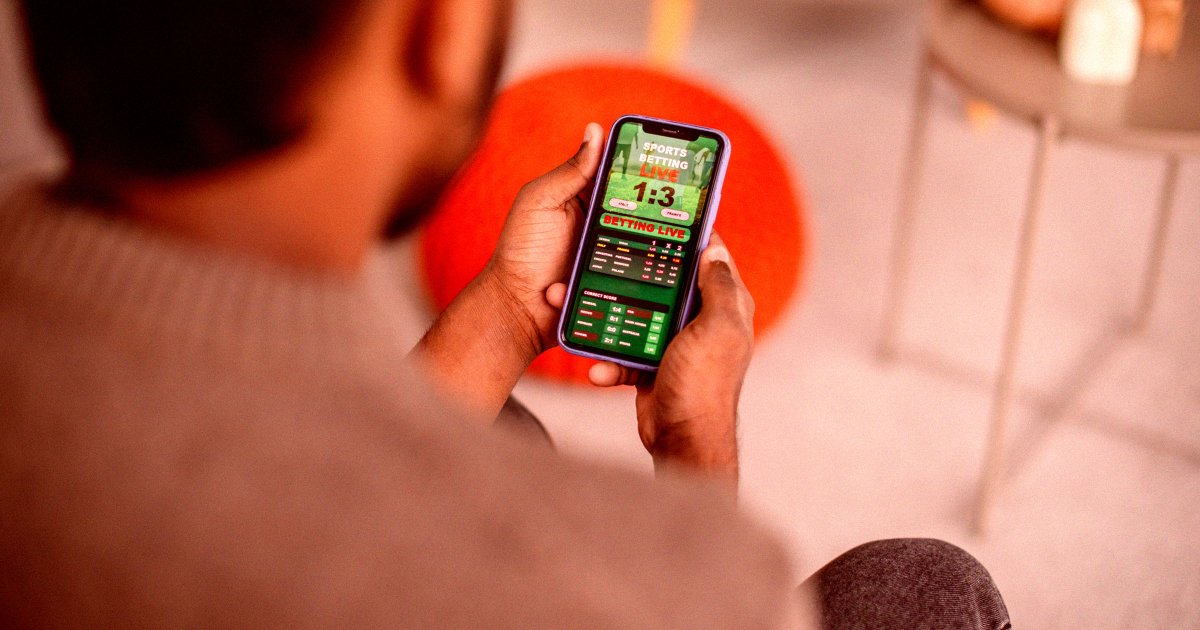
More Than Half of Men Aged 18 to 49 Have Already Fallen Into Online Sports Betting
A recent survey found that more than half of American men aged 18 to 49 said they had an active sports betting account.
A psychologically rich life: Beyond happiness and meaning.