Domain-Driven Design Europe 2026 - Organised by Aardling (https://aardling.eu/) https://dddeurope.com https://newsletter.dddeurope.com/ https://www.linkedin.com/company/domain-driven-design-europe https://bsky.app/profile/dddeu.bsky.social https://m.aardling.social/@dddeu What is AI? What is AI for, and what are its goals? Can we use AI for programming? The dominant discourse in 2026 makes it easy to believe in 2026 that AI is unequivocally good, and will make our lives much easier. In this talk Felienne, professor of Computer Science education will take you through an alternate history of AI, programming and its epistemological development. She will take you through over a century of alternative tech voices, and discuss what we can learn from that for the current state of programming and its future. About Felienne Hermans: Professor of Computer Science Education Felienne Hermans is a professor of Computer Science Education at the Vrije Universiteit Amsterdam. She also works as a high-school CS teacher one day a week at Open Schoolgemeenschap Bijlmer. Felienne is the creator of the Hedy programming language, a gradual and multi-lingual programming language designed for teaching and author of the book "The Programmer's Brain" a book that helps programmers understand how their brain works and how to use it more effectively. In 2021, Felienne was awarded the Dutch Prize for ICT research. She writes for Dutch newspaper Volkskrant every month and writes a weekly newsletter on computer science, AI and many other things (at www.felienne.nl)
AI made me doubt everything about programming by Felienne Hermans - DDD Europe 2026
How we use AI at Stalwart
It is difficult to have a conversation about software in 2026 without AI showing up in it. Two years ago the interesting question was…
The Era of Experience & The Age of Design: Richard S. Sutton, Upper Bound 2025
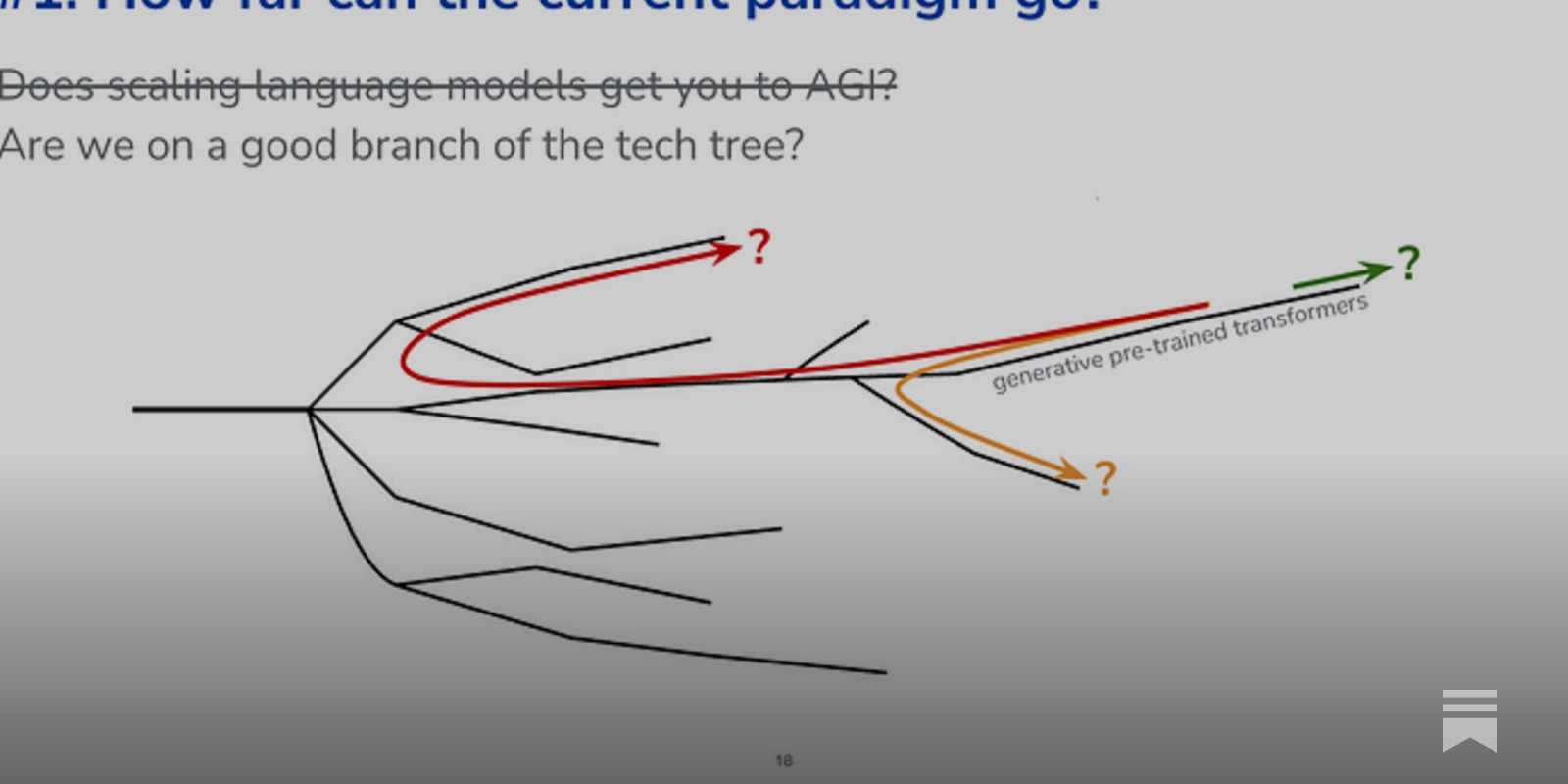
Unresolved debates about the future of AI
How far the current paradigm can go, AI improving AI, and whether thinking of AI as a tool will keep making sense
Why tech is racing to adopt AI coding
The head of AI coding platform Cursor on what’s next for programming, whether AGI is imminent, and competing with Anthropic and OpernAI.

More Than a Tool
What We Learned from a Year of Conversations About AI
AI Science Fiction Versus Reality
Generative AI in a Nutshell - how to survive and thrive in the age of AI
Maggie Appleton - How to design for the future of AI products and LLMs (Dive Club Ep. 57)
Agentultra - Why I Won't Use AI
If you are a programmer in 2025 you have likely been pressured into adopting generative artificial intelligence tools into your workflow. Maybe you have already been ordered to. You have probably wondered if next year will be the year that you will be replaced with an AI. Or maybe in the next five years. Weren’t we supposed to be replaced already?
The Same Old Fantasies Behind AI and New Technology
A review of Adam Becker, “More Everything Forever: AI Overlords, Space Empires, and Silicon Valley’s Crusade to Control the Fate of Humanity” (Basic Books, 2025).

State of AI 2026 | The Industry-Defining Report
Explore how AI is shaping the digital economy in 2026, with 80+ pages of data on ad spend, app downloads, web behavior, user demographics, and so much more.
Stuff we figured out about AI in 2023
2023 was the breakthrough year for Large Language Models (LLMs). I think it’s OK to call these AI—they’re the latest and (currently) most interesting development in the academic field of …
Andrej Karpathy on Twitter / X
Sharing an interesting recent conversation on AI's impact on the economy.AI has been compared to various historical precedents: electricity, industrial revolution, etc., I think the strongest analogy is that of AI as a new computing paradigm (Software 2.0) because both are…— Andrej Karpathy (@karpathy) November 16, 2025
The Scaling Era: An Oral History of AI, 2019–2025
An inside view of the AI revolution, from the people an…