

Answer.ai launched their new Solveit course today (https://www.answer.ai/posts/2025-10-01-solveit-full.html), based on their new platform and approach to using AI for coding (or for anything else really!). There are four pieces of it: * Understand the Problem: identify what you’re being asked to do; restate the problem * Devise a Plan: draw on similar problems; break down into manageable parts; consider working backward; simplify the problem * Carry Out the Plan: verify each step * Look Back and Reflect: consider alternatives; extract lessons learned We get back with Jeremy Howard, Eric Ries, and Johno Whitaker to talk about it! 00:00:00 Introduction 00:01:18 The Philosophy Behind Answer.AI 00:03:47 Building with 12 People: The Constraint Strategy 00:13:30 Solveit Demo: Interactive AI Development 00:16:00 Dialogue Engineering and Context Control 00:18:35 Learning Mode and Small Steps Philosophy 00:20:30 User Feedback and Community Impact 00:22:29 Personal Software Revolution 00:25:31 Johno's Perfume Search Demo 00:33:50 Eric's Book Writing Workflow 00:39:40 Composability and Module Sharing 00:46:20 The Andrej Karpathy Challenge 00:49:26 Course Announcement and Community 00:53:58 Mission and Public Benefit
‘AI fatigue’ is settling in as companies’ proofs of concept increasingly fail. Here’s how to prevent it | Fortune
Along with the excitement about the possibilities of generative AI is a great deal of pressure for leaders and employees participating in projects.

AI made me doubt everything about programming by Felienne Hermans - DDD Europe 2026
AI made me doubt everything about programming by Felienne Hermans - DDD Europe 2026
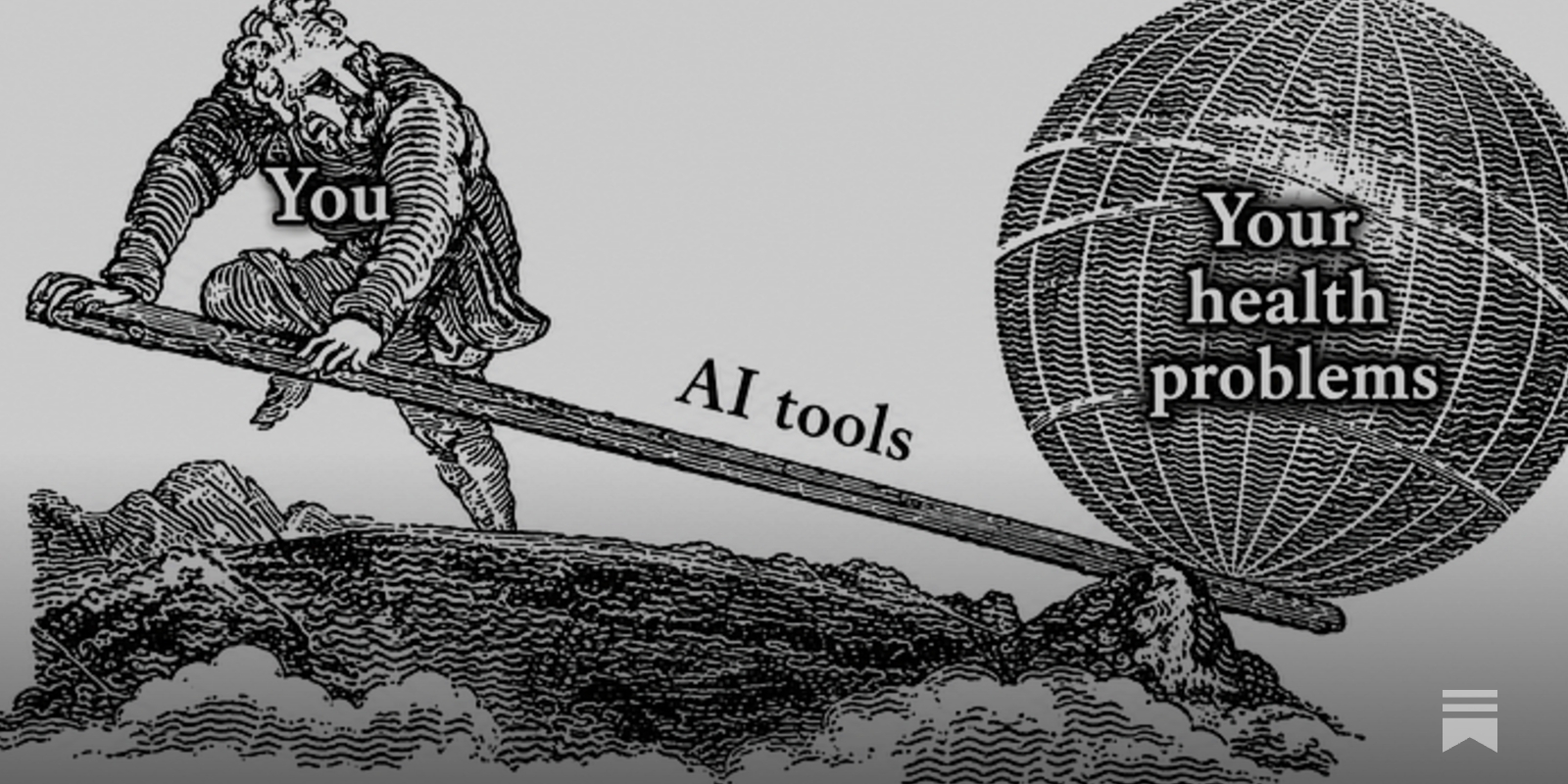
AI coding wisdom from the people who would know
Essays and threads from experienced developers who've gone deep on AI-assisted coding.
Generative AI in a Nutshell - how to survive and thrive in the age of AI
The AI Question that No AI Person Asks
The AI Question that No AI Person Asks
The 80% Problem in Agentic Coding
Managing comprehension debt when leaning on AI to code

Import AI 455: AI systems are about to start building themselves.
The first step towards recursive self improvement

Itai Yanai on Twitter / X
Unpopular opinion: Going straight to AI limits your creatively, because it short-circuits the iterative process you need to develop new ideas. pic.twitter.com/O2iPs0bfh0— Itai Yanai (@ItaiYanai) June 20, 2026

AI is getting too advanced
AI Quests
AI Quests: A game-based learning experience for middle schoolers (11-14) on AI. Code-free quests use real Google projects to solve societal issues.
Arvind Narayanan (@aisnakeoil)
There’s a big, under-appreciated reason why people may have very different experiences and opinions about using AI for work — are they using it for tasks they’re already an expert at, or tasks they can’t do themselves? The former leads to a growth cycle and the latter leads to a dependence spiral. When I use AI to do something I’m an expert at, like coding, I treat it as a tool. I can build quickly, maintaining an understanding of the code, knowing that if necessary, I can fix the code myself. It feels empowering. It frees up my time to think about the complex, judgment-oriented parts of software engineering that I can’t or won’t delegate to AI. That means my own skills improve rapidly, and I get to climb the ladder of complexity and develop higher-level skills, much more so than when I write the code myself. I feel in control. I can lock in and achieve a flow state — when AI is working, I’m reviewing, building understanding, and planning the next steps. I never get the feeling that the tool is about to replace me. This is the growth cycle. (Of course, the growth cycle is not automatic. I still need to exercise agency to use AI responsibly. But it’s the same challenge with any productivity-enhancing technology, and those who’ve navigated such transitions before are well-equipped to navigate it with AI as well.) On the other hand, if I use it for tasks I don’t understand and haven’t learned to perform myself, I have no choice but to treat it as a superintelligence. If something breaks, the best I can do is ask AI to fix it and hope for the best. I generally can’t evaluate the quality of the output myself. The only way to find out if it's any good is if and when the work is ultimately reviewed by an actual expert. The experience is confusing, unsettling and disempowering. And forget about flow state. By over-relying on AI, I risk losing whatever skill I had at the task in the first place, even if it boosts productivity in the short term. This is the dependence spiral. It’s no wonder that entry-level workers and students preparing to enter the workforce find themselves in a bind. To compete with the AI-enabled productivity of more seasoned workers, they must adopt AI themselves, but doing so risks the dependence spiral. I have some thoughts on solutions that I will share in later posts, but I think having a clear diagnosis of the problem is a useful first step.

'AI' Sucks the Joy Out of Programming
I’ve used spicy auto-complete, as well as agents running in my IDE, in my CLI, or on GitHub’s server-side. I’ve been experimenting enough with LLM/AI-driven programming to have an opinion on it. And it kind of sucks.

The Era of Experience & The Age of Design: Richard S. Sutton, Upper Bound 2025