Head to https://squarespace.com/ladyofthelibrary to save 10% off your first purchase of a website or domain using code LADYOFTHELIBRARY Is reading really dying, or are we asking the wrong question? After a recent Atlantic article warned of "the end of reading," many people began wondering whether books are becoming obsolete. But when we look at history, the story is far more complicated. For most of human history, literacy was a privilege rather than the norm, and yet literature, ideas, and intellectual culture still endured. In this video, I explore whether we're truly facing a reading crisis or whether the greater danger lies elsewhere: growing anti-intellectualism, declining support for the humanities, and cultural narratives that encourage us to see reading, scholarship, and curiosity as unnecessary or elitist. GET MORE FROM ME: ✨ Support me on Patreon: https://www.patreon.com/Cinzia 💌 Sign up for my newsletter: https://www.ladyofthelibrary.com/sign-up 🎥 Nerdy Self-Help Channel: @TheAnnotatedMind 🎙️The Annotated Mind Podcast: https://tinyurl.com/mr3k4w4m ➡️🎙️Listen to The Annotated Mind on YouTube: https://tinyurl.com/2rxpjsdv 📩 Video Request form: https://forms.gle/zF6HjhJGZPR2hVx69 🌍 My website/blog: https://www.ladyofthelibrary.com SOCIALS: 📚 Bookish Insta: https://www.instagram.com/lady.of.the.library 🦋 BlueSky: https://bsky.app/profile/cinzia-dubois.bsky.social 🎓 PhD Insta: https://www.instagram.com/the.literary.academic 📱 TikTok: https://www.tiktok.com/@lady.of.the.library 📚 Goodreads: http://www.goodreads.com/user/show/6341226-c-dubois WHO AM I? Hey there, I’m Cinzia DuBois On this channel, I talk about dark and ancient history, literature and folklore. ❗️DISCLAIMER I'm very dyslexic, so I apologise for any mispronunciations that occur when I'm reading scripts for videos. Additionally, whilst flattered, I'm only a PhD student and not a professional educator. As such, I would advise against ever citing my videos or using them as an academic resource: please instead cite references for papers I list in the description box. 🔗 Sources and references below. Horowitch, Rose. 2026. “The End of Reading Is Here.” The Atlantic. theatlantic. July 8, 2026. https://www.theatlantic.com/magazine/2026/08/reading-crisis-postliterate-age/687618/. “A Time of Hope and Worry: Unpacking the 2022 NEA Survey Results about Reading.” 2022. National Endowment for the Arts. 2022. https://www.arts.gov/impact/research/responses-to-the-2022-SPPA/a-time-of-hope-and-worry. UCL. 2025. “Proportion of Americans Reading for Pleasure Fell by 40% over 20 Years.” UCL News. August 19, 2025. https://www.ucl.ac.uk/news/2025/aug/proportion-americans-reading-pleasure-fell-40-over-20-years. The Economist. 2025. “Is the Decline of Reading Making Politics Dumber?.” The Economist. September 4, 2025. https://www.economist.com/culture/2025/09/04/is-the-decline-of-reading-making-politics-dumber. Evershed, Nick. 2025. “Have Men Really Stopped Reading? We Take a Deeper Dive into the Data.” The Guardian. The Guardian. August 16, 2025. https://www.theguardian.com/news/2025/aug/17/men-books-reading-rates-data-statistics-women-children-australia. Faverio, Michelle, and Andrew Perrin. 2022. “Three-in-Ten Americans Now Read E-Books.” Pew Research Center. January 6, 2022. https://www.pewresearch.org/short-reads/2022/01/06/three-in-ten-americans-now-read-e-books/. Grady, Constance. 2025. “Are Men’s Reading Habits Truly a National Crisis?.” Vox. January 3, 2025. https://www.vox.com/culture/392971/men-reading-fiction-statistics-fact-checked.
The End of Reading Never Began
What “The End of Reading Is Here” gets wrong about literacy, intellectual authority, and American “decline”
“The End of Reading Is Here” - The Ringer
There’s no doubt that reading is in decline. But what is that decline doing to the way we think? Derek talks with The Atlantic’s Rose Horowitch about why Americans are reading fewer books than ever and struggling more with complex texts and what that means for education, work, politics, and culture.
The End of Reading Is Here
Optimists once believed that universal literacy was inevitable. Now it seems that the age of reading might be a short anomaly in human history.
What’s Happening to Reading?
For many people, A.I. may be bringing the age of traditional text to an end.
What’s Happening to Reading?
For many people, A.I. may be bringing the age of traditional text to an end.
Reading Wars
Read online or download for free Reading Wars explores heated, even murderous, political struggles over who gets to read and what they get to read. Those conflicts, once again in the news, stretch back centuries. In this book, Don Herzog examines the history and politics of anxieties about readers and reading, spanning both the United States and Britain, from the 1500s right up to contemporary battles over banning library books and freedom of speech. In these pages, Herzog deftly interweaves episodes from Reformation England, when first Catholics and then Protestants cracked down on unsupervised Bible-reading, with the deadly campaigns in pre-Civil War America to keep black people – both free and enslaved – illiterate. Drawing on a wealth of primary sources, he reconstructs arguments insisting that ordinary men and women could not be trusted to read what they liked – indeed, that some of them ought not read at all. And he charts struggles to promote literacy. Herzog argues that at stake in these battles is whether some people – those banned from reading – are perceived as not fully human, or lesser persons than others. The radical campaign to let more or less everyone read more or less everything is ultimately, therefore, a campaign for equality. Click here to read praise for Reading Wars "In characteristically engaging and straight-forward language Don Herzog explores the debates past and present, largely in Britain and America, about whether or not to suppress reading. By taking seriously the arguments for suppressing or restricting books and their readers, Herzog suggests that those arguments turn on the claim that for some people reading is dangerous. This assumption, Herzog compellingly argues, ignores the fact that literacy is largely a social activity. In Reading Wars, Herzog develops a powerful liberal argument for literacy and reading. An argument, Herzog shows, that has incompletely triumphed." — Steve Pincus, Thomas Donnelly Professor of History, University of Chicago "Knowledge is power - which is why efforts to acquire knowledge through reading have been outlawed, suppressed through violence, and remain targets today. Don Herzog's Reading Wars tells the astonishing history behind the wars on reading in a readable, clever style, underscoring the stakes of many of the current fights over censorship and book bans." — Leah Litman, cohost of the podcast Strict Scrutiny and New York Times bestselling author of Lawless "A rich yet accessible introduction to the many ways in which society has attempted to restrict reading materials throughout British and United States history. Equal parts illuminating and horrifying, it lays the groundwork for the 21st century’s own shameful dabbles with censorship through its careful consideration of the key concerns and prejudices that structure each generation’s literacy battles." — Alison Hicks, Associate Professor in Library and Information Studies, UCL "Political theory, historical sense, worrisome texts, unheralded documents, and great storytelling join forces in Herzog’s virtuoso investigation of the brutal fighting over who gets to learn to read (and what) in early and late modern America and Britain. The bloodshed may have lessened, but we are still fighting, and Herzog shows the deeper stakes involved in reading’s relation to equality and personhood." — Mary G Dietz, John Evans Professor Emerita of Political Theory, Northwestern University , Reading Wars explores heated, even murderous, political struggles over who gets to read and what they get to read. Don Herzog examines the history and politics of anxieties about readers and reading, spanning the United States and Britain, from the 1500s right up to contemporary battles over banning library books and freedom of speech.

Reading in the Age of Constant Distraction by Mairead Small Staid
February 8, 2019 – Twenty-five years ago, Sven Birkerts published “The Gutenberg Elegies: The Fate of Reading in an Electronic Age.” Have his fears and projections come to pass?
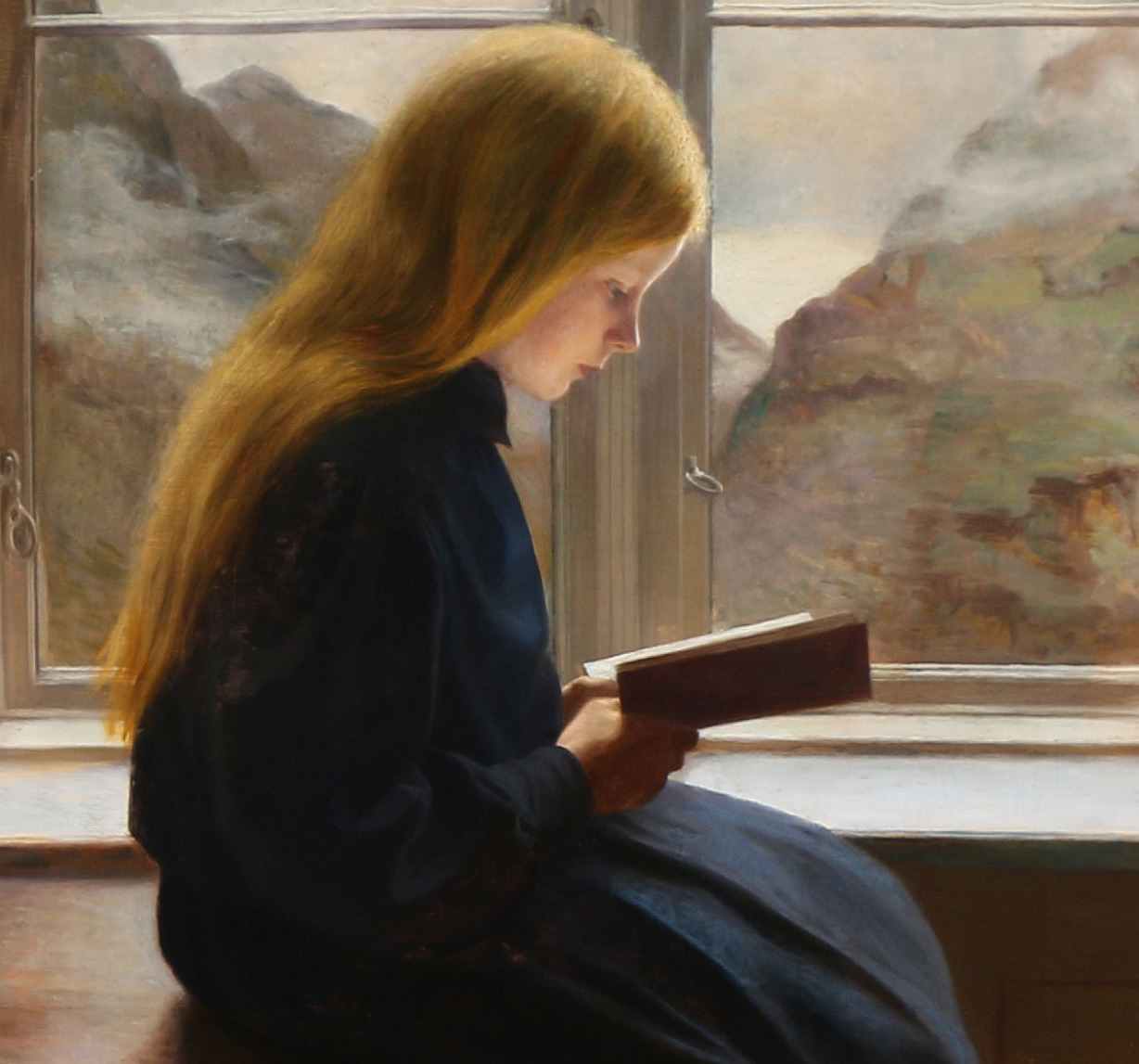
This is Not the End of Reading. It's the End of Modernism.
Why academics and journalists are confusing Modernism with reading itself.
For The People
We all love libraries, and we all love reading - but that’s not enough. It’s essential that more leftists become involved in their local libraries. We’re being out-organized by a right-wing movement that’s focused on taking over public institutions to privatize & weaken them.

How to Read Fewer Books - The School of Life
We publish articles around emotional education: calm, fulfilment, perspective and self-awareness. | How to Read Fewer Books — Read now

Brett Scott (@brettscott)
Marshall McLuhan is famous for his observation that the form of a communication technology can shape our mind and society The age of the printed book, for example, carried with it a particular way of being. Regardless of the differing content of different books, all books required a particular mindset in which a thread is followed from the beginning to the end through an arc I feel the age of social media is like the age of a ripped up book, as if we were surrounded by torn shards and shreds of paper floating like confetti around us. We grab for them, hoping for some tiny insight, but not having any way of knowing where it fits in the overarching narrative This note is one such shard. You can toss it away now

How books can sap the soul and poison readers with ideas | Aeon Essays
What’s more wholesome than reading? Yet books wield a dangerous power: the best erode self, infecting readers with ideas
Hardcover
We're a social network for book lovers to find life changing books, track what you read & want to read, and connect with passionate readers.