

Infinity Nikki’s Revelry Season is now here for you to enjoy! Download here: https://infinitynikki.onelink.me/P6fe/h9bb5x9p Participate in the event to unlock 15 free pulls, 2500 diamonds and 4 free limited outfits! Claim free resources in game using the Gift Code: INFINITYNIKKISteam Add Infinity Nikki to your to Steam wishlist for exclusive rewards: https://bit.ly/InfinityNikkionsteam #infinitynikki #infinitynikkionsteam The internet landscape of today is incredibly different than it was 10 years ago, especially for kids. Today, let's look at the disappearance of online kids virtual worlds, and the decidedly less safe apps that have replaced them. Edited by @theletterkei !!! :D ❤︎❤︎ SOCIAL MEDIA ❤︎❤︎ Patreon - / izzzyzzz Merch - https://www.izzzyzzz.com/ Twitter - https://x.com/IzzzyzzzArt Instagram - https://www.instagram.com/izzzyzzz/?h... Email [business inquiries only] - izzzyzzz@night.co ❤︎❤︎ MUSIC ❤︎❤︎ Petz Catz 2 OST ❤︎❤︎ DISCLAIMER ❤︎❤︎ All credit goes to the musicians and composers! This video is not meant to target or harass any person. This video does not condone or encourage anyone to harass or contact any person or persons discussed in this video. This video is purely for entertainment and informational purposes.
Growing up in the online world: a national consultation
We are consulting on further measures to prepare children for the future in an age of rapid technological change. This includes potential age restrictions on social media and other services such as gaming sites and AI chatbots, restrictions on addictive design features and risky functionalities, and better support for parents and families.

Erlend Sogge Heggen (@erlend.sh)
1. solitude: single-player game loop 2. bottomlessness: infinite scroll 3. speed: instant delivery/gratification 4. teasing: generally satisfactory, never perfect; “maybe the next one is exactly what I want” ↘️ quoting NPR (@npr.org): Taken together, these four features can create a trancelike state that can keep us stuck on social media apps or video games for hours. Children are particularly vulnerable. n.pr/4mH6i6s
KWS - Tools to help developers manage youth audiences at scale
Kids Web Services is built to enable safer digital experiences for young audiences. We help our partners navigate the complex global landscape of parental consent and verification, enabling youth audiences to access the games and platforms they love.
howard rheingold's | the virtual community
Those words have become a family code for the way my virtual community has infiltrated our real world. My seven-year-old daughter knows that her father congregates with a family of invisible friends who seem to gather in his computer. Sometimes he talks to them, even if nobody else can see them. And she knows that these invisible friends sometimes show up in the flesh, materializing from the next block or the other side of the planet.
The "Segregate-and-Suppress" Approach to Regulating Child Safety Online
<div> In an effort to protect children online, regulators around the country and the world are enacting laws that compel Internet publishers to age-authenticat

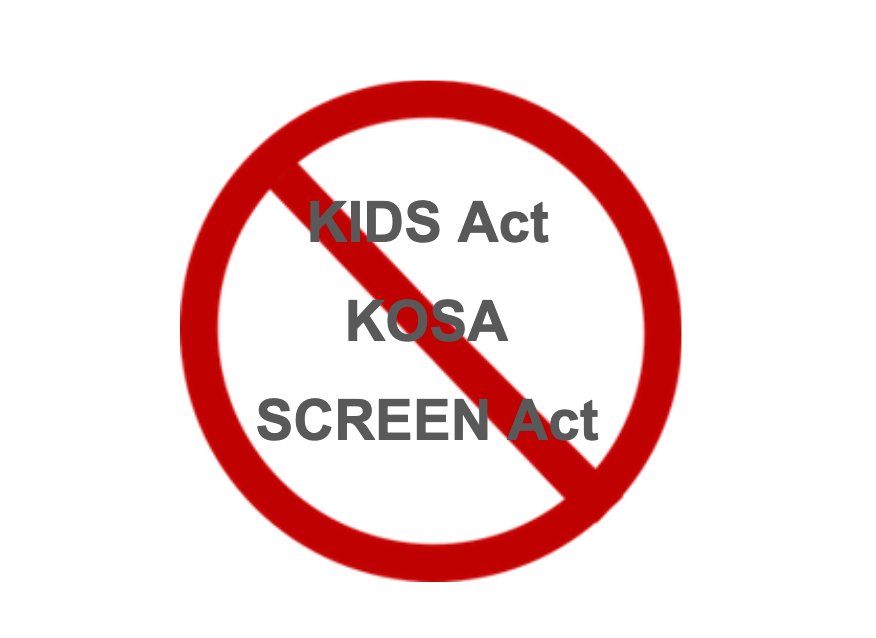
KOSA, the KIDS Act, AI, Bad Internet Bills, and a potential giveaway to big tech (UPDATED)
Just say no to bills that age restrict, censor, and surveil the internet!
wife swap, supernanny & how we discriminate against kids
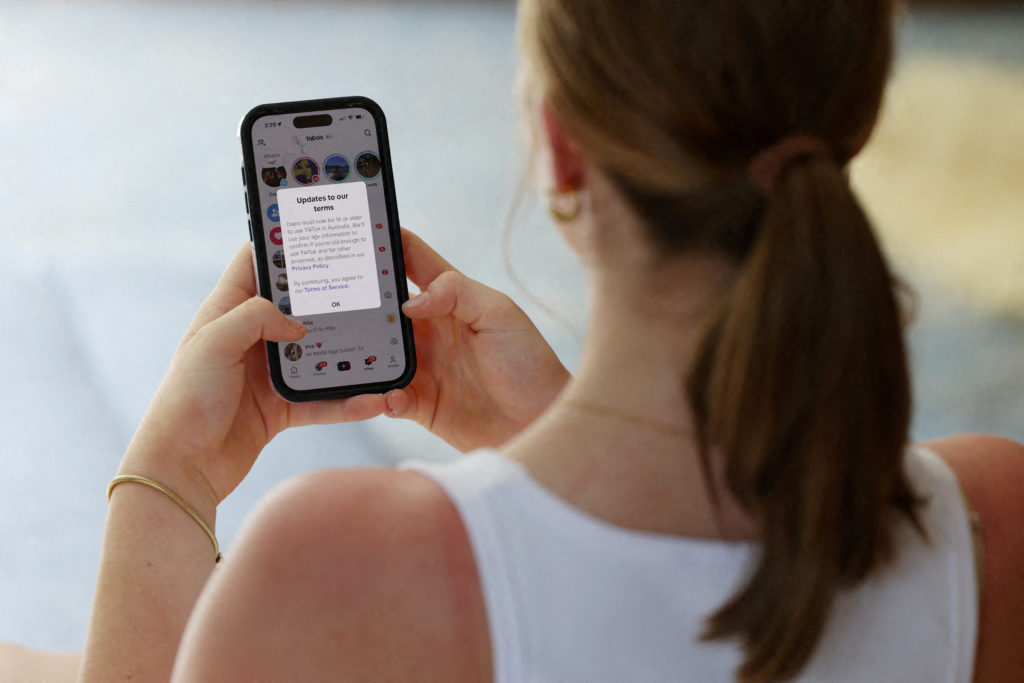
Social media platforms removed 4.7 million accounts after Australia banned them for children younger than 16
The figures, reported to Australia's government by 10 social media platforms, were the first to show the scale of the landmark ban since it was enacted in December over fears about the effects of harmful online environments on young people.
Home | Protecting Kids Online
Our mission is to protect children and defend parental rights by equipping families and citizens with the tools to keep kids safe online. We oppose government surveillance disguised as child safety legislation and seek to build an informed, independent parent-led coalition to #ProtectKidsOnline.

Debate: Social media in children and young people – time for a ban? Weighing up the implications and limitations of age-based social media restrictions
Recent legislation in Australia banning social media accounts for children under 16, alongside similar proposals worldwide, has ignited debate about whether age-based restrictions are an effective way to protect young people's mental health. While the intent of such bans is to reduce exposure to harmful content, their feasibility and effectiveness remain unclear. Enforcement requires robust age verification, often relying on sensitive data such as government-issued identification or facial scans, which raises privacy concerns and can be circumvented through the use of VPNs. Moreover, social media use is diverse. Although it can intensify harms such as bullying, it also provides vital opportunities for connection and support, particularly for marginalised adolescents. Removing access to accounts may limit risks within platforms, but does not prevent exposure to harmful content elsewhere, nor does it guarantee increased offline engagement. Importantly, blanket bans fail to address unsafe design features embedded within social media or to equip adolescents with the skills needed to navigate online environments. More targeted, evidence-based regulation that promotes safer platform design and accountability may provide a more effective pathway to protecting young people's well-being.

Ensuring a safer online experience for U.S. kids and teens
An overview of our approach to age assurance and our commitment to online safety for young users and families.

Everything You Wanted to Know About a Kids' Social Media Ban (But Were Rightly Afraid to Ask): A FAQ on Age Verification and Mandated ID for Everyone - Michael Geist
The government is expected to table the Digital Safety Act on Wednesday with reports that it will include a ban on social media for those under 16, framed as a “temporary” measure that platforms can exit once a new digital regulator certifies their safety standards. I have been writing about these issues, from the original Online Harms Act to mandated age verification and website blocking and now the kids’ ban, for several years. This FAQ gathers the analysis in one place, with links throughout to the longer pieces for anyone who wants to go deeper. The key takeaway is that a kids' social media ban is an ineffective and harmful policy that raises privacy concerns for tens of millions of Canadians through mandated age verification requirements. The policy fails to address the underlying concerns with social media and the prospect of a "temporary" ban makes little sense since the requirement might be reversible, but the data collection and regulatory infrastructure are permanent.

Australia’s teen social media ban is a flop. But there’s no joy in ‘I told you so’ | Samantha Floreani
Around seven in 10 children remain on major platforms. Who could possibly have predicted that this wasn’t going to work? Well, lots of people
The Illusion of Protection: Why Canada’s Growing Push to Ban Social Media for Kids Won’t Work - Michael Geist
The momentum behind a social media ban for Canadian minors has been building for months. The federal Liberals voted at their April policy convention to back a minimum age of 16 for social media accounts and AI chatbots, the government’s expert panel on online safety is studying the issue, protesters have now rallied on Parliament Hill calling for it, and on Saturday night, Manitoba Premier Wab Kinew told a Winnipeg fundraiser that his government will be the first in Canada to ban social media and AI chatbots for kids. Kinew did not specify which kids, when it would happen, or how it would be enforced, none of which appeared to matter to the audience. The political appeal of a ban is obvious, since concerns about social media’s effects on young users are widely shared. Yet the policy itself is a terrible idea that will not work. This post examines at least six reasons why an outright age-based ban, particularly one that extends to AI chatbots, is the wrong response to a serious issue.
Bad Game Design - Clicker Games
The Web has lost its Soul - LOVEWEB