

Stay informed on breaking news and practice critical thinking by subscribing through my link https://ground.news/zoebee to get 50% off unlimited access this month with the Vantage Subscription. Language affects us more than we realize. From metaphors to cognitive frames, the words we use can physically change our brains, and politicians can take advantage of that. So let's explore how language shapes politics, healthcare, and crime; let's explore Donald Trump's rhetoric on immigration, Tucker Carlson calling Trump "daddy," and how phrases like "War on Terror" influence public perception and policy. And finally, let's explore how we can actually have productive discussions with those on the other side of the political aisle. CHAPTERS: 00:00 - Metaphors are Everywhere 05:12 - Language and Brains 21:36 - Everything is a Nail 38:01 - Maps and Frames 52:47 - Arguing, Awareness, and Action 1:05:19 - Outro, Poem, Bloopers SOURCES (in order of appearance) ------ Metaphor: A Practical Introduction by Zoltan Kovecses ------ @zoe_bee 's Grading Video - https://youtu.be/fe-SZ_FPZew?si=b01pwF-6pRtB00pd ------ Alfred Hitchcock's North by Northwest and To Catch a Thief ------ “Similarity is Closeness: Metaphorical mapping in a conceptual task” by Inge Boot and Diane Pecher in The Quarterly Journal of Experimental Psychology ------ “Your Highness: Vertical Positions as Perceptual Positions of Power” by Thomas W. Schubert in The Journal of Personality and Social Psychology ------ “Experiencing Physical Warmth Promotes Interpersonal Warmth” by Lawrence E. Williams and John A. Bargh in Science Magazine ------ “Weight as an Embodiment of Importance” by Nils B. Jostmann, Daniel Lakens, and Thomas W. Schubert in Psychological Science ------ “Is it Light or Dark? Recalling Moral Behavior Changes Perception of Brightness” by Pronobesh Banerjee, Promothesh Chatterjee and Jayati Sinha in Psychological Science ------ “The War on Prevention II: Battle Metaphors Undermine Cancer Treatment and Prevention and Do Not Increase Vigilance” by David J. Hauser and Norbert Schwarz in Health Communication ------ “Emotional Implications of Metaphor: Consequences of Metaphor Framing for Mindset about Cancer” by Hendricks et al in Metaphor and Symbol ------ “Medical Metaphors Matter: Experiments Can Determine the Impact Of Metaphors on Bioethical Issues” by David J. Hauser and Norbert Schwarz in The American Journal of Bioethics ------ “Metaphors for the War (or Race) against Climate Change) by Stephen J. Flusberg, Teenie Matlock and Paul H. Thibodeau in Environmental Communication ------ “Metaphors We Think With: The Role of Metaphor in Reasoning” by Paul H. Thibodeau and Lera Boroditsky in PloS ONE ------ Language vs Reality: Why Language is Good for Lawyers and Bad for Scientists by N. J. Enfield ------ Arrival (2016) ------ @LackingSaint 's Zootopia Video - https://youtu.be/7oR6iET6FVo?si=AuTejuouksi7Lxaf ------ @LindsayEllisVids 's Bright Video - https://youtu.be/gLOxQxMnEz8?si=yruWj9G3ntU5cV1m ------ @nytimes 's Mitt Romney Video - https://youtu.be/wfXgpem78kQ?si=qBOi8QvO1oVWuAGA ------ Moral Politics: How Liberals and Conservatives Think by George Lakoff ------ “Metaphors We Ought Not Live By: Rush Limbaugh in the Age of Cognitive Science” by Tim Adamson, Greg Johnson, Tim Rohrer and Howard Lam ------ Tucker Carlson Speech Tweet - https://x.com/atrupar/status/1849220716299735455 ------ PragerU's Dennis Prager Clip - https://youtu.be/phwHEE-Zz_A?si=RG1jZOfzsfn4u09n ------ GOPAC Document - https://files.persagen.com/01/newt_gingrich-gopac_memo-1990.pdf ------ @zoe_bee 's Facts and Feelings Videos - https://youtu.be/E8ISzmBBTvo?si=q2ijUbXmYzivuGoR , https://youtu.be/OnG2AKeP5hE?si=hvx-zq-mWuumXzPM ------ The Political Mind by George Lakoff ------ @Bloomberg-News 's Stop the Steal Video - https://youtu.be/zV8tZNzJ3Ys?si=qqq3xHmGk5S1cyzD ------ “‘Like an animal I was treated’: anti-immigrant metaphor in US public discourse” by Otto Santa Ana in Discourse & Society ------ The Little Blue Book: The Essential Guide to Thinking and Talking Democratic by George Lakoff and Elisabeth Wehling ------ PragerU Economy Video - https://youtu.be/TWKyRErnlpk?si=-ivjTMlqTtOiRebG OTHER RESOURCES & RECOMMENDATIONS ------ Metaphor: Key Topics in Semantics and Pragmatics by L. David Ritchie ------ Metaphors We Live By by George Lakoff and Mark Johnson * To Support Me: * ---Become a channel Member! ➤ https://www.youtube.com/channel/UCecF2icZlEIJ__9XS6woPGw/join ---Join the Patreon! ➤ https://www.patreon.com/zoe_bee ---Make a one-time donation! ➤ https://ko-fi.com/zoebee ---Join the Discord! ➤ https://discord.gg/8GBmS9Qug9 ---Check out my second channel! ➤ https://youtube.com/@zoecee ---Watch my Warrior Cats Podcast! ➤ https://art19.com/shows/the-only-warrior-cats-podcast ---Watch my D&D game! ➤ https://www.youtube.com/@thejaycorn ---Watch my Blades in the Dark game! ➤ https://www.twitch.tv/itucrew
Metaphor and the Political War
Deep Storytelling: Collective Sensemaking and Layers of Meaning in U.S. Elections
Misinformation and disinformation about elections remain pressing concerns for researchers, policymakers, and the public. Critics, however, argue that fears surrounding these issues are exaggerated due to a lack of evidence of impact. This debate highlights the challenges inherent in assessing the impacts of misinformation, as the drivers of false and misleading content often exist in the context of a specific claim. To address this issue, we examined false and misleading information surrounding the 2020 and 2022 U.S. national elections, focusing on the contextual features of online conversations that fueled various rumors. We developed two qualitative codebooks, creating the second after realizing that the first, which labeled individual tweets, failed to capture broader rumoring dynamics. By integrating multi-layered qualitative coding with thematic analysis and quantitative visualizations, we show how influencers, political elites, and audiences collaboratively told deep stories from 2020 through 2022. As these stories were told, audiences interpreted events in 2022 through the lens of the 2020 story, guided by influencers' cues, leading to an evolution in storytelling style between the two election cycles. This ongoing performance was tailored to align with the incentive structures, affordances, and attention economy of social media. We combine deep stories with theories of collective sensemaking and rumoring, creating a framework to better assess the contextual features surrounding false and misleading information.

Many Minds: Seven metaphors for AI
If you wanted a petri dish for understanding metaphors—how they emerge and evolve and jostle with each other—it would be hard to do better than the world of AI. We talk about AI systems variously as coaches or co-pilots, little genies or alien intelligences. Some researchers claim that AIs "grow," that they're entering their phase of "adolescence." Critics deride AI products as slop and dismiss LLMs as a kind of autocomplete on steroids. What's behind these different characterizations? Which ones are accurate and which are unfair? And are our metaphors mostly colorful rhetoric or do they matter? Are they shaping how we understand, adopt, and ultimately regulate these new technologies? My guest today is . Melanie is a computer scientist and Professor at the Santa Fe Institute. She is the author of the book, and she writes a by the same name. This episode is a bit of a companion to with Steve Flusberg. In that episode, Steve and I attempted a kind of crash course on metaphor and the human mind. Here, Melanie and I sit down for more of an extended case study: how metaphors are guiding, galvanizing, and maybe deceiving us in the contested realm of AI discourse. We unpack seven of the most widely used metaphors in this space. We consider how these metaphors are shaping not only our everyday understandings of AI, but also law and policy. We also talk about the metaphor and analogy capabilities of AI itself. Can these systems reason abstractly in the way that humans can? Along the way, Melanie and I touch on: AI-generated poetry, anthropomorphism, the original sin of AI research, the myth of Narcissus, psychometric testing and its pitfalls, metaphors for AI that are a bit hard to spot, and the question of whether an AI has ever come up with a decent analogy for itself. Longtime fans of the show will know that we've had Melanie on the show . We invited her back, not only because she's thought about metaphor and analogy in AI discourse for decades, but because she's a voice of calm insight in an area that’s increasingly awash in hype and polemic. Longtime fans of the show may also note that we are now celebrating our 6th birthday at Many Minds. That's right, the show launched in February 2020. If you'd like to support us as we recognize this milestone, you can leave us a rating or a review, recommend us to a friend, or give us a shout out on social media. Your support is always appreciated. Without further ado, on to my conversation with Dr. Melanie Mitchell. Enjoy! Notes 3:30 – For an overview of Douglas Hofstadter’s work on analogy, see . 8:00 – Much of our discussion in this interview draws on Dr. Mitchell’s piece on the in Science magazine. 13:30 – For earlier discussions of anthropomorphism on the show, see our earlier episodes and . 16:00 – See for the original discussion of LLMs as “stochastic parrots.” 17:00 – See for the original discussion of ChatGPT as a “blurry jpeg.” 18:30 – See for the original discussion of LLMs as role players. 22:00 – See for one use of the “LLMs as crowds” metaphor. See also a discussion of this metaphor (and other metaphors for AI) . 25:00 – For one discussion of AI as a “cultural technology” by Alison Gopnik and colleagues, see . For a more recent discussion of the same metaphor by Henry Farrell, Alison Gopnik and others, see . 27:00 – For the podcast series on intelligence that Dr. Mitchell co-hosted for the Santa Fe Institute, see . 28:00 – See for an influential formulation of the idea that AI is an “alien intelligence.” 29:00 – For philosopher Shannon Vallor’s book about AI as “mirror,” see . 31:00 – For the recent study on users’ metaphors for AI systems, see . 33:00 – For more on the rise of social AI, see our earlier episode . 38:00 – For more on what AI researchers might learn from developmental and comparative psychologists, see Dr. Mitchell’s (summarizing her keynote at NeurIPs). 42:00 – For more on the ARC (Abstraction and Reasoning Corpus) and the research that Dr. Mitchell and colleagues have been doing with it, see and . 48:30 – For the study on humans' preference for AI-generated poetry, see . 50:30 – For Brigitte Nerlich’s documentation and discussion of various metaphors for AI (including AI’s metaphors for itself), see . Recommendations , by Shannon Vallor ‘,’ by Murray Shanahan (!) et al. ‘,’ by Henry Farrell et al. Many Minds is a project of the , which is made possible by a generous grant from the John Templeton Foundation to Indiana University. The show is hosted and produced by , with help from Assistant Producer and with creative support from DISI Directors Erica Cartmill and Jacob Foster. Our artwork is by . Subscribe to Many Minds on Apple, Stitcher, Spotify, Pocket Casts, Google Play, or wherever you listen to podcasts. You can also now subscribe to the Many Minds newsletter ! We welcome your comments, questions, and suggestions. Feel free to email us at: manymindspodcast@gmail.com. For updates about the show, visit or follow us on Bluesky ().

Sharing without clicking on news in social media
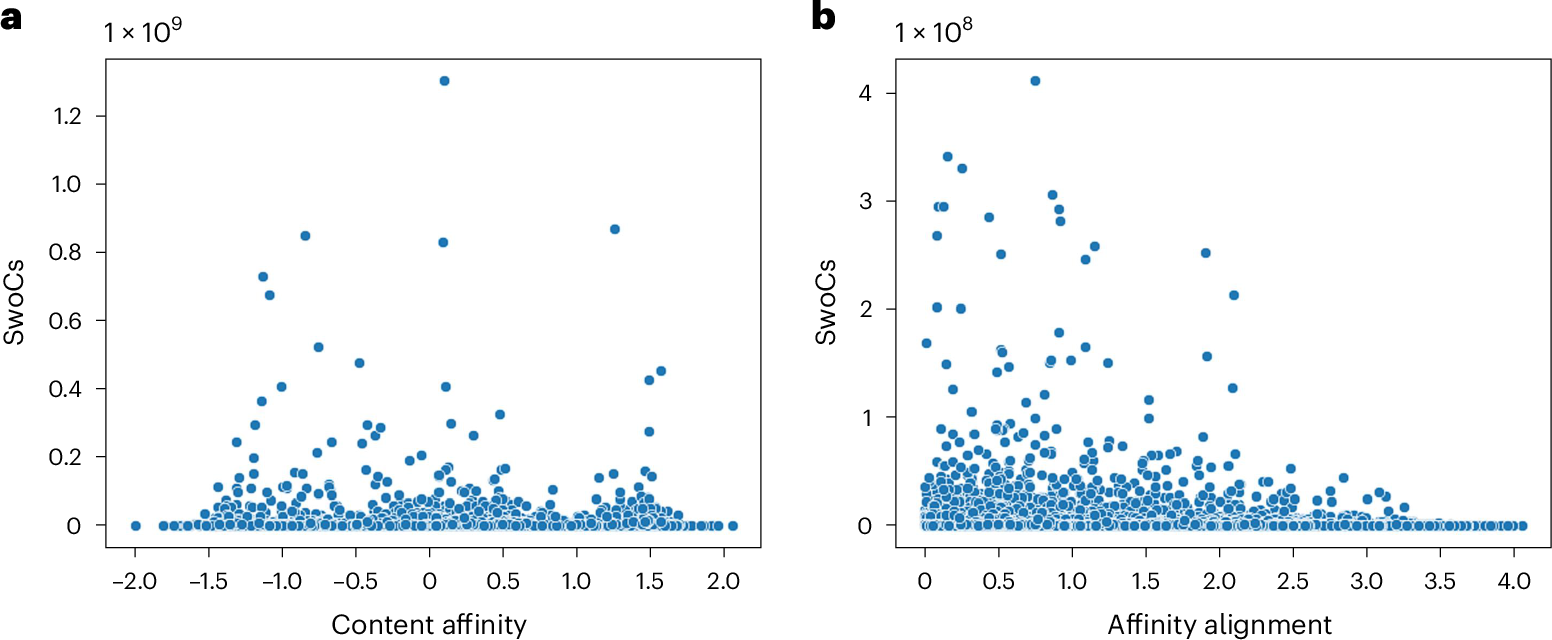
Social media have enabled laypersons to disseminate, at scale, links to news and public affairs information. Many individuals share such links without first reading the linked information. Here we analysed over 35 million public Facebook posts with uniform resource locators shared between 2017 and 2020, and discovered that such ‘shares without clicks’ (SwoCs) constitute around 75% of forwarded links. Extreme and user-aligned political content received more SwoCs, with partisans engaging in it more than politically neutral users. In addition, analyses with 2,969 false uniform resource locators revealed higher shares and, hence, SwoCs by conservatives (76.94%) than liberals (14.25%), probably because, in our dataset, the vast majority (76–82%) of them originated from conservative news domains. Findings suggest that the virality of political content on social media (including misinformation) is driven by superficial processing of headlines and blurbs rather than systematic processing of core content, which has design implications for promoting deliberate discourse in the online public sphere.
Contra Literacy-Laundering: Mechanistic Critical AI Literacy
Critical discourse on large language models (LLMs) has bifurcated between epistemic dismissal that invokes some form of the stochastic parrot metaphor to puncture hype, and pragmatic accommodation that treats LLM capability improvements as grounds for updating the critique. We argue that both misdiagnose the problem as the issue is not whether or not LLMs work, but what kind of working is happening and at whose cost. Drawing on meta-theoretical frameworks of cognitive science, feminist labor analysis and critical pedagogy, we propose a conceptual reorientation. We develop this claim through registers of (i) the cognitive, examining what is forfeited when statistical pattern-matching substitutes for the iterative, grounded processes that constitute thinking; (ii) the pedagogical, examining how “AI literacy” as currently deployed is itself a symptom of the confusion it purports to address; and (iii) the political, examining how the infrastructure framing of AI naturalizes asymmetric labor displacement, particularly of feminized cognitive and reproductive work. The stochastic parrot, deployed with mechanistic precision rather than mere rhetorical convenience, specifies what is forfeited when cognitive labor is delegated, who bears the cost, and why a literacy adequate to this moment must begin from the epistemology of those most harmed by the systems it describes. We conclude with underlining that critical AI literacy, which this paper embodies an instance of, is the only sensible way forward.
Why mental metaphors do not help us understand chatbot mistakes
The function of chatbots like OpenAI’s ChatGPT is based on detecting probabilistic patterns in the training data. This makes them vulnerable to generating factual mistakes in their outputs. Recently, it has become commonplace in philosophical, scientific, and popular discourses to capture such mistakes by metaphors that draw on discourses about the human mind. The two most popular metaphors at present are hallucinating and bullshitting. In this paper, we review, discuss, and criticise these mental metaphors. By applying conceptual metaphor theory, we provide numerous reasons why they do not succeed in providing us with a better understanding of factual chatbot mistakes. We conclude by calling for justifications of the epistemic feasibility and fruitfulness of the metaphors at issue. Furthermore, we raise the question what would be lost if we stopped trying to capture factual chatbot mistakes by mental metaphors.

Political Violence | The Paper Pilot
The Paper Pilot's digital garden of thoughts on philosophy, politics, and sociology
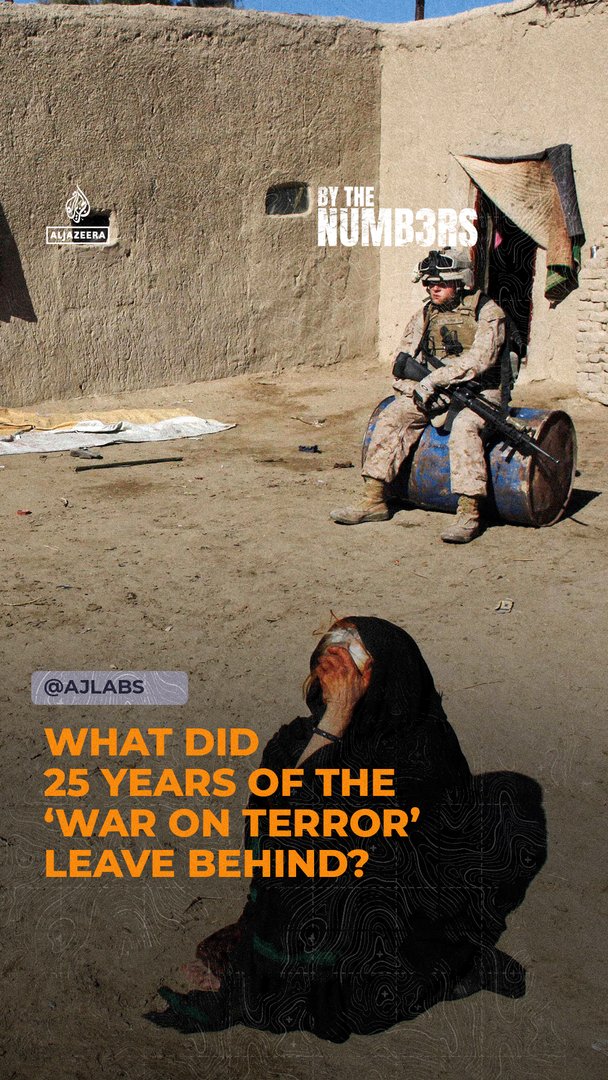
‘War on terror’: How 9/11 changed the language of conflict
The events of September 11, 2001 spawned a new lexicon which effectively sanitised the erosion of human rights.
Language Models Trained on State Media Sources Launder Propaganda
Tech Policy Press is a nonprofit media and community venture intended to provoke new ideas, debate and discussion at the intersection of technology and democracy. We publish opinion and analysis.

Afternoon parallel: Baird Howland explores shifts in White House media in the Political Polarization and Discourse session: | IC2S2
Afternoon parallel: Baird Howland explores shifts in White House media in the Political Polarization and Discourse session:

Revisiting Iran's Missile and Drone Campaign
An early reflection on my writing and thinking during the war

PDF Reader | Immunological Discourse in Political Philosophy
Insults | The Paper Pilot
The Paper Pilot's digital garden of thoughts on philosophy, politics, and sociology
"Violence Has No Place In Politics" OH REALLY?
AI Safety Is a Narrative Problem · Special Issue 5: Grappling With the Generative AI Revolution
This op-ed explores power and narrative dynamics around AI. Drawing on pop-culture references, the professional experiences of the author and examples from 2023’s “Great AI Safety Hype Roadshow,” this piece draws on the literary criticism technique of practical criticism to consider how speeches and announcements from both Silicon Valley executives and research scientists to interrogate the media-friendly nature of p(doom) discourse—which focuses on the existential risks of AI (PauseAI, 2023)—and its likely consequences. The complexities of AI and its numerous social impacts can be difficult for even the most expert analyst to unpack. In spite of this, the potential of “existential threats” has successfully cut through to become a mainstay of mainstream media coverage over the last year. This piece will make the case that this is an effective narrative conceit that has achieved a number of ends that traditional science communication tends to find difficult, if not impossible, to achieve. Firstly, it is easy to understand. Simplification of this nature—that removes jargon and complexity and focuses on a single outcome—is much easier to fit on a TV rolling news ticker or on the cover of a tabloid newspaper than more well-balanced, representative opinions. Secondly, it inherits prior assumptions from well-known dramatic forms. P(doom) plays to stories familiar from Greek tragedy through to Marvel movies, in which lone male heroes battle ineluctable forces. Thirdly, it is imbued with urgency and so becomes difficult to ignore.

Political Quizzes | The Paper Pilot
The Paper Pilot's digital garden of thoughts on philosophy, politics, and sociology