

patreon: http://patreon.com/InnuendoStudios tumblr: http://innuendostudios.tumblr.com twitter: https://twitter.com/InnuendoStudios nebula: https://nebula.tv/innuendostudios research: https://innuendostudios.tumblr.com/post/183630744222/research-masterpost transcript: https://www.tumblr.com/innuendostudios/762147014213517312/new-alt-right-playbook-this-ones-on-spurious
The Alt-Right Playbook x PhilosophyTube: Doublewrong
The Alt-Right Playbook: The Reverse Gish Gallop
The Alt-Right Playbook: How to Radicalize a Normie
The Alt-Right Playbook: How to Radicalize a Normie
The Alt-Right Playbook: Always a Bigger Fish
On Social Media and Its Discontents - Cal Newport
Split Reactions As someone who has publicly criticized the major social media platforms for years, I’ve become familiar with the common arguments surrounding this topic. ... Read more

The Antiquity to Alt-Right Pipeline — Working Classicists
If it seems like the alt-right are filling social media with their bile, this piece will at least confirm that for you.

Ingmar Rentzhog (@ingmar.wsocial.eu)
Criticism and scrutiny are welcome. But why so much hostility? Why assume the worst about our motives? I honestly don’t understand. If we share the goal of better social media, let’s talk about how to get there.

The Alt-Right Playbook
Brett Scott (@brettscott)
Marshall McLuhan is famous for his observation that the form of a communication technology can shape our mind and society The age of the printed book, for example, carried with it a particular way of being. Regardless of the differing content of different books, all books required a particular mindset in which a thread is followed from the beginning to the end through an arc I feel the age of social media is like the age of a ripped up book, as if we were surrounded by torn shards and shreds of paper floating like confetti around us. We grab for them, hoping for some tiny insight, but not having any way of knowing where it fits in the overarching narrative This note is one such shard. You can toss it away now

Is Organic Social Media Dead? — Sympolymathesy, by Chris Krycho
There are easy critiques to make of Bluesky etc., and they are mostly wrong. There are also *deep* critiques, and they may be right.

Whatever Happened to Civility on The Internet?
In response to Wil Shipley’s recent post about the lack of an iPhone SDK, a reader left this comment: I often enjoy reading these entries, but you always come across as a little bit of an a**hole. Full of yourself, overly critical and a bit mean. Dismissing and
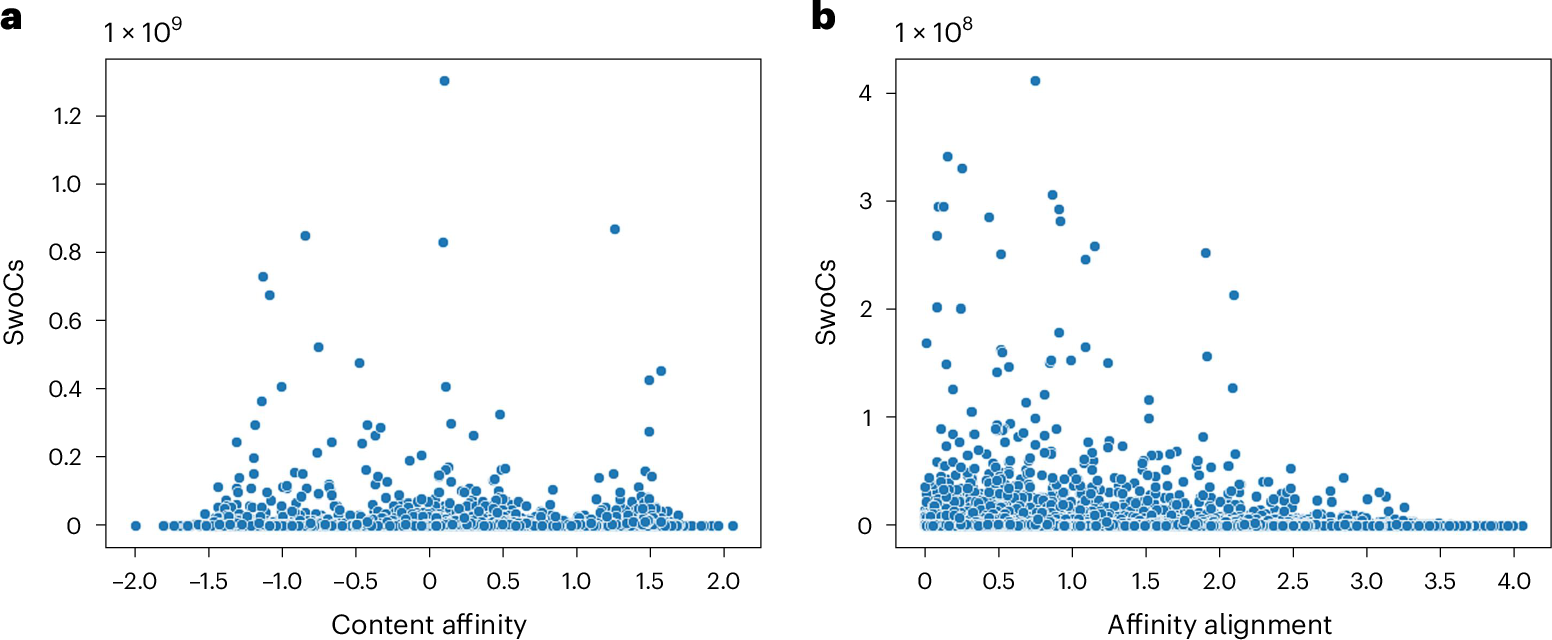
Sharing without clicking on news in social media
Social media have enabled laypersons to disseminate, at scale, links to news and public affairs information. Many individuals share such links without first reading the linked information. Here we analysed over 35 million public Facebook posts with uniform resource locators shared between 2017 and 2020, and discovered that such ‘shares without clicks’ (SwoCs) constitute around 75% of forwarded links. Extreme and user-aligned political content received more SwoCs, with partisans engaging in it more than politically neutral users. In addition, analyses with 2,969 false uniform resource locators revealed higher shares and, hence, SwoCs by conservatives (76.94%) than liberals (14.25%), probably because, in our dataset, the vast majority (76–82%) of them originated from conservative news domains. Findings suggest that the virality of political content on social media (including misinformation) is driven by superficial processing of headlines and blurbs rather than systematic processing of core content, which has design implications for promoting deliberate discourse in the online public sphere.
Science discussions of retracted articles on Bluesky: public scrutiny or misinformation spreading?
Post-publication peer review (PPPR) has emerged as an important supplement to traditional peer review, with social media playing a growing role in publicising potential problems in published research. However, it remains unclear whether social media discussions of retracted articles primarily reflect good practices, such as exposing flaws and acknowledging retraction status, or bad practices, such as overlooking retractions and continuing to disseminate scientific misinformation. In this study, we collected Bluesky posts referencing scholarly articles from Altmetric and retrieved metadata for the referenced articles using OpenAlex. The final dataset included 284 retracted articles with 79 pre-retraction posts and 857 post-retraction posts, 59 retraction notices with 186 posts, and 609,461 non-retracted articles with 1,344,756 posts. We manually coded Bluesky posts discussing retracted articles to identify instances of good and bad practice. The results show that posts demonstrating good practice (89.9%) substantially outnumbered those demonstrating bad practice (10.1%). Posts reflecting good practice also had more user engagement. In the pre-retraction phase, good practice posts constituted a slight minority (43.0%), whereas in the post-retraction phase they were dominant (94.2%). Most negative posts in the pre-retraction phase (90.0%) had good practice while only 17.3% positive posts in the post-retraction phase showed bad practice. Thus, sentiment analysis can be helpful to filter posts that could flag potential flaws before retraction, but it may struggle to accurately identify the spread of misinformation after retraction. More broadly, this study highlights the potential of Bluesky to support responsible scientific communication, public scrutiny, and research integrity.

Some thoughts on #WSocial, how they have been responding to criticism and why I believe they are showing the limits of free speech absolutism. I agree with @echna.bsky.social that "W Social seems to be on an X speedrun - without ever having been like Twitter." 🔗: aseachange.com/@elena/statuses/01M0SDV98GRDW…

Elena Rossini on GoToSocial ⁂ (@elena@aseachange.com)
aseachange.com🐝 Social Media (SB Commentary)

things I said about social media

Bee 🐝 (@sweetbee.vip)
Bee 🐝 (@sweetbee.vip)
Bee 🐝 (@sweetbee.vip)
