

Paris Marx is joined by Kate Mackenzie and Tim Sahay to discuss the geopolitics behind China’s investments in green tech and electrification, and how it presents the prospect of a new development model based on renewables instead of fossil fuels. Kate Mackenzie is an adjunct fellow at Macquarie University. Tim Sahay is co-director of the Net Zero Industrial Policy Lab at Johns Hopkins University. They are the co-writers of the Polycrisis newsletter (https://www.phenomenalworld.org/series/the-polycrisis/) from Phenomenal World. Tech Won’t Save Us offers a critical perspective on tech, its worldview, and wider society with the goal of inspiring people to demand better tech and a better world. Support the show on Patreon (https://www.patreon.com/techwontsaveus) . The podcast is made in partnership with The Nation. Production is by Kyla Hewson. Also mentioned in this episode: • Tim and Kate wrote about the potential role of the BRICS (https://www.phenomenalworld.org/analysis/brics-in-2025/) in future geopolitics. • The Financial Times explored the implications of China as an electrostate (https://www.ft.com/content/f86782fa-9f2e-448a-b710-29e787dc9831) . • China leads the growing electric vehicle market, by a lot (https://www.cbc.ca/news/science/ev-sales-china-iea-1.7535190) . • Pakistan imported 17 gigawatts of solar panels (https://www.independent.co.uk/climate-change/news/pakistan-solar-energy-panels-imports-china-b2732711.html) in 2024 alone, as Africa is in the midst of its own surge (https://www.wired.com/story/african-imports-of-chinese-solar-panels-increase/) in Chinese solar panel imports. • Trump’s policies are pushing China and India to strengthen ties (https://www.aljazeera.com/news/2025/8/20/did-trumps-tariff-war-force-india-and-china-to-mend-ties) .
Climate, Energy, & the Future–How Infrastructure Works–Deb Chachra–The Future is Literally Bright
Why "Solutions" Fail | Dave Snowden
Insurance in the Polycrisis | Kate Mackenzie & Tim Sahay
The future is triage on an uninsurable earth.

Jenny Zhang: Workers Can Take Back Tech
Becca Lewis - Reactionary Futurism - 2025/2027 Rogers Chair Series
Lambda Land | Book Review: Technopoly
In Technopoly: The Surrender of Culture to Technology, Neil Postman argues that our infatuation with technology has insidiously eroded our culture. We gain much through technology, but it comes at a price; all too often we are blind to that price. This book seeks to call attention to the costs of a technology-focused society. I felt this poignantly because I, as a technology worker, know what that infatuation feels like.
A Real Political Economy of Technology - The Ideas Letter
Two technological futures are competing for political and material priority: generative AI and the green transition. Benanav argues that while AI is marketed as a world-reordering breakthrough, its productivity gains…
Dylan Patel – Two labs will soon control most of the world's workforce
The Technological Republic: The Sunday Times bestseller from the great minds behind Palantir
The Sunday Times and #1 New York Times Bestseller‘The Technological Republic is far too important to ignore’ Times Literary SupplementSilicon Valley’s brightest minds once collaborated with governments to advance technologies, securing the West’s dominance on the global stage. But that relationship has corroded – with perilous repercussions for us all.Lifting the veil on tech giant Palantir and its broader political project, visionary co-founder and CEO Alexander C. Karp and his long-time deputy Nicholas W. Zamiska offer a searing critique of our collective culture of complacency. To regain geopolitical power and preserve our freedoms, we must tackle the world’s most pressing challenges – including the artificial intelligence arms race – together and head-on. Now is the time for the West to wake up.‘Bold and ambitious ... Essential reading’ Eric Schmidt‘Fascinating’ Financial Times‘A stirring manifesto’ Niall Ferguson‘Provocative and insightful’ Jamie Dimon
Cybernetics is the science of the polycrisis
What Stafford Beer and Dan Davies say and why you need to read them

The Geopolitics of AI Infrastructure - Dylan Patel, SemiAnalysis
The Critical Legacy of Chinese Cybernetics
In Post-War America, cybernetics inspired countercultural visions of wild complexity. Its Chinese legacy, in contrast, is as an applied science of technocratic nation-building. As the world tilts towards new geopolitical priorities, it is this latter legacy that may prove more prophetic.

A Thesis on the History of the 21st Century: Technocracy, AI, and the End of the World
Reviewing a trio of books by a sextet of ruling-class ideologues, Mathias Fuelling finds an ambient anxiety hanging over a perceived crisis in American capitalism, with visions of bolstering a Silicon Valley-led technocracy fueled by AI investment reflecting American fears over the dawn of a "Chinese Century."

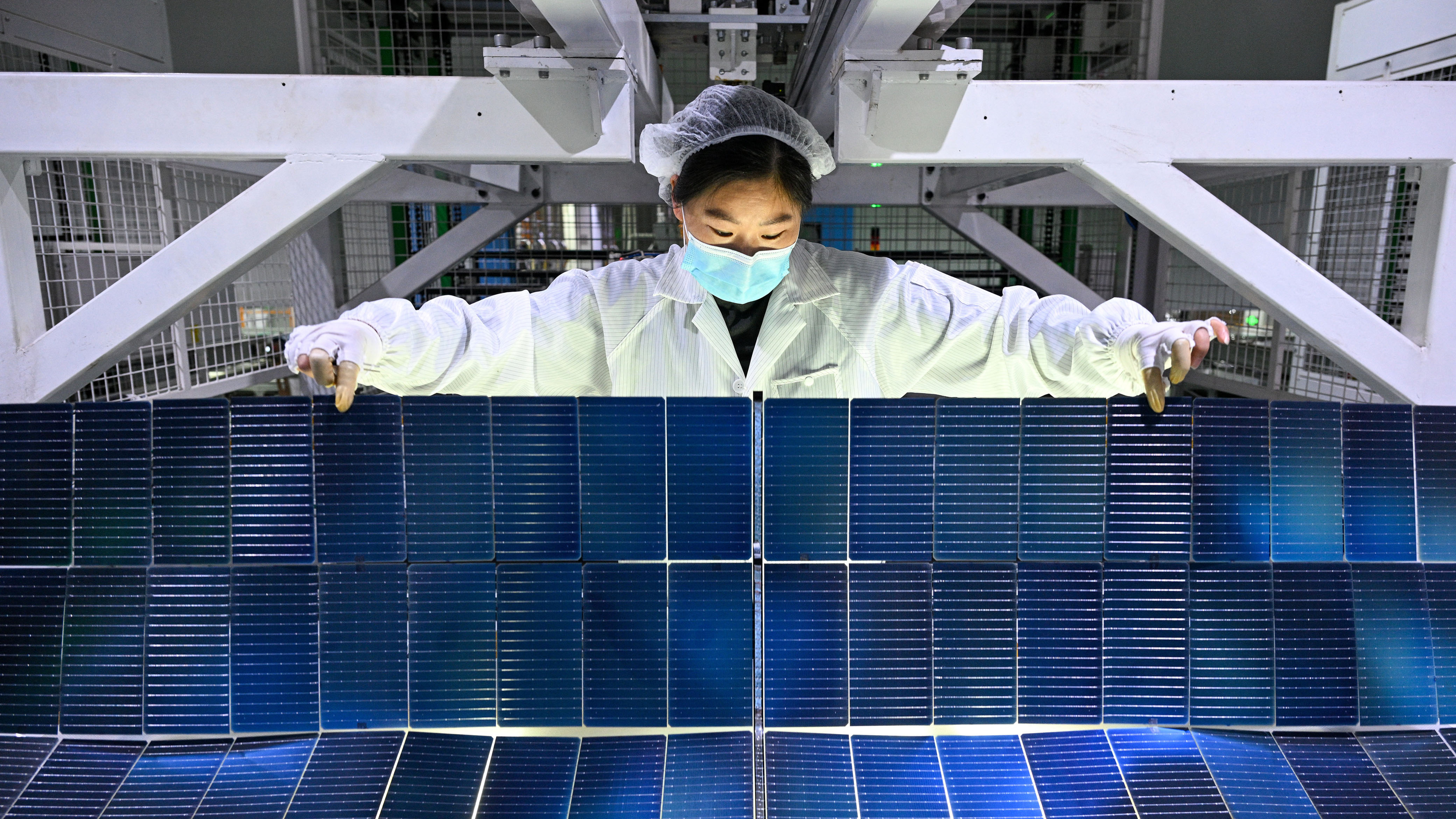
China’s Solar Industry Is in Upheaval—The Effects Will Be Global
Rather than opening space for rivals, China’s solar industry shakeout is forging a more resilient core — embedding deeper into global value chains, securing a technological lead, and reshaping the industry’s future trajectory to its own long-term advantage.
Episode 5: Metaphors for AI, with Shannon Vallor
This week, Adam talks with Shannon Vallor, a philosopher of AI, about the metaphors we use to talk about AI and ourselves. They also dunk on libertarians and San Francisco billboards, and consider what kind of hope we can have for the future of technology.Messages: • Support the show at patreon.com/DreamingAgainstTheMachine • Follow us on Bluesky and Instagram • Subscribe to the show wherever you get your podcasts! • Check out other great podcasts from Multitude like Wow if TrueAbout the show:Dreaming Against the Machine is a podcast about envisioning a realistic and hopeful future. Each week, the show’s host, journalist and astrophysicist Dr. Adam Becker, will have an earnest (and entertaining!) conversation with a guest about possible futures, seen through the lenses of history, science, and culture. In a world where tech oligarchs and their power fantasies are driving visions of the future, Dreaming Against the Machine aims to take back the terms of the public conversation about what our world can and should be.

The world’s renewable-energy superpower
China’s moment for climate leadership has arrived
