

Join "Interface Studies" to help make more videos. Your support keeps new content coming. https://www.youtube.com/channel/UCqv7gk4p_rB4nRz0j7B5yFA/join The "Back" button sits quietly in every browser's toolbar, encoding decisions about time, memory, and reversibility that most users never question. This video traces the concept of "back" across five distinct systems: Vannevar Bush's Memex trails, Ted Nelson's bidirectional links in Project Xanadu, the browser's history stack, Git's directed acyclic graph, and the scrollable logs of conversational AI. Each system makes a different wager on what kind of past should be available to the user. Each reveals something about why reversibility is an unsolved design problem. --------------------------- Subscribe on Substack: https://interfacestudies.substack.com/ Happy to jump on a call if it'd be useful: design strategy, experience design, critique, feedback. https://intro.co/salehkayyali Elsewhere: X: https://x.com/mskayyali Bluesky: https://bsky.app/profile/mskayyali.com --------------------------- CHAPTERS [00:00] Introduction: The Web's Back Button [01:55] Quick Historical Overview [05:14] How Browser History Works [06:21] What makes Git different [07:26] "Back" in mobile operating systems [08:48] The Web's Single Page Applications [10:45] The Challenge with AI Chat Interfaces [11:45] Is "Back" just a scroll? REFERENCES - Vannevar Bush, "As We May Think," The Atlantic, July 1945: https://www.theatlantic.com/magazine/archive/1945/07/as-we-may-think/303881/ - Ted Nelson, The First Xanadu Proposal, 1966 : https://archive.org/details/TheFirstXanaduProposal1966/mode/2up - Ted Nelson, Computer Lib / Dream Machines, 1974: https://en.wikipedia.org/wiki/Computer_Lib/Dream_Machines - Tim Berners-Lee, Weaving the Web, 2000: https://amzn.eu/d/01pu7VuF Linda Tauscher & Saul Greenberg, "How People Revisit Web Pages: Empirical - Findings and Implications for the Design of History Systems," International Journal of Human–Computer Studies, 47(1), 1997 https://grouplab.cpsc.ucalgary.ca/grouplab/uploads/Publications/Publications/1997-RevisitWeb.IJHCS.pdf - Jakob Nielsen, The Top 10 Web Design Mistakes of 1999, NN/Group: https://www.nngroup.com/articles/the-top-ten-web-design-mistakes-of-1999/ - Git Documentation https://git-scm.com/docs - Material UI Navigation Guide https://m3.material.io/foundations/interaction/gestures - Apple Human Interface Guidelines https://developer.apple.com/design/human-interface-guidelines/menus-and-actions Additional videos from @Technomentary @TheTedNelson @SheffieldLibraryGuy
What Do We Really Know About the Back Button?
What Do We Really Know About the Back Button?
4 Design Patterns That Violate “Back” Button UX Expectations – 59% of Sites Get It Wrong – Baymard
Our large-scale usability testing reveals that users expect the "Back" button to take them back to what they perceive to be their previous page, which often differs from site behavior.
"Save for Later" Has No Later
"Save for Later" Has No Later
Exa on Twitter / X
We built a time machine for the web.Introducing Exa Snapshot: an index of 400 billion historical snapshots of webpages that lets you search as if it's the past.Snapshot is already being used for backtesting prediction models, RL at labs, exploring the pre-AI web, and more. pic.twitter.com/UHeknyUbeF— Exa (@ExaAILabs) September 17, 2026
The Future of The Web (Full Movie - without commentary) Mozilla Labs Aurora Concept Browser Video by Adaptive Path ( Internet Browser )
Context Graph: It’s time to bring context back to the web
The largest button on a modern browser is the back button. Trips to the web are short. Enter a search, get a result, click back, then try…

Backstitch - Godot Asset Store
Real-time version control for Godot! Backstitch enables fast collaboration for dev teams, game jams, and classrooms.
Solutions for Link Rot on the Modern Web
Web links are fundamental to the web, enabling navigation between pages and citations in research articles. However, web links suffer from "link rot", a phenomenon in which links are likely to become inaccessible over time. This can occur if a link’s site disappears, making it impossible to resolve the hostname or establish a server connection, or the linked page has been deleted, resulting in an HTTP 404 "Not Found" error. Today, a common solution to tackle link rot is to rely on web archives, which capture snapshots of web pages for future reference. However, the modern web has evolved significantly since web archives were first introduced, leading to several limitations in their effectiveness. First, the scale of the web has grown tremendously, making it infeasible to crawl every page whenever it changes. As a result, many broken links either have no archived copies, or the archived copies have stale content. Second, modern web pages rely heavily on increasingly complex and diverse JavaScript. This shift has made it more challenging for preserving fidelity in archived copies, significantly increasing both the computational cost of operating browser-based crawlers and engineering effort required to maintain accurate replay systems. This thesis presents a set of solutions to cope with link rot on the modern web. My work aims to mitigate the various limitations of web archives. First, for broken links without any archived copy, or if the archived copy includes stale content or unavailable functionalities, I built Fable. Fable revives the dead link with the new URL to the same page whenever available. Compared to prior approaches, Fable revives 4.6K broken links—a 50% increase—with much higher accuracy. Second, for pages that require dynamic crawling, I show how web archives can achieve a better tradeoff between efficiency and fidelity. By carefully choosing 8.9% of pages to crawl dynamically and strategically reusing resources from those crawls, an archive can serve 99% of the remaining statically crawled pages without any fidelity loss. Third, for fidelity violations in archived copies that are caused by incorrect edits to crawled scripts, I built FidEx. FidEx reliably detects when an archived page differs from its original version and pinpoints the root cause. After fixing the most common errors pinpointed by FidEx, I reduced the fraction of pages for which FidEx reports a violation of fidelity from 15% to 9%.
Solutions for Link Rot on the Modern Web
Web links are fundamental to the web, enabling navigation between pages and citations in research articles. However, web links suffer from "link rot", a phenomenon in which links are likely to become inaccessible over time. This can occur if a link’s site disappears, making it impossible to resolve the hostname or establish a server connection, or the linked page has been deleted, resulting in an HTTP 404 "Not Found" error. Today, a common solution to tackle link rot is to rely on web archives, which capture snapshots of web pages for future reference. However, the modern web has evolved significantly since web archives were first introduced, leading to several limitations in their effectiveness. First, the scale of the web has grown tremendously, making it infeasible to crawl every page whenever it changes. As a result, many broken links either have no archived copies, or the archived copies have stale content. Second, modern web pages rely heavily on increasingly complex and diverse JavaScript. This shift has made it more challenging for preserving fidelity in archived copies, significantly increasing both the computational cost of operating browser-based crawlers and engineering effort required to maintain accurate replay systems. This thesis presents a set of solutions to cope with link rot on the modern web. My work aims to mitigate the various limitations of web archives. First, for broken links without any archived copy, or if the archived copy includes stale content or unavailable functionalities, I built Fable. Fable revives the dead link with the new URL to the same page whenever available. Compared to prior approaches, Fable revives 4.6K broken links—a 50% increase—with much higher accuracy. Second, for pages that require dynamic crawling, I show how web archives can achieve a better tradeoff between efficiency and fidelity. By carefully choosing 8.9% of pages to crawl dynamically and strategically reusing resources from those crawls, an archive can serve 99% of the remaining statically crawled pages without any fidelity loss. Third, for fidelity violations in archived copies that are caused by incorrect edits to crawled scripts, I built FidEx. FidEx reliably detects when an archived page differs from its original version and pinpoints the root cause. After fixing the most common errors pinpointed by FidEx, I reduced the fraction of pages for which FidEx reports a violation of fidelity from 15% to 9%.
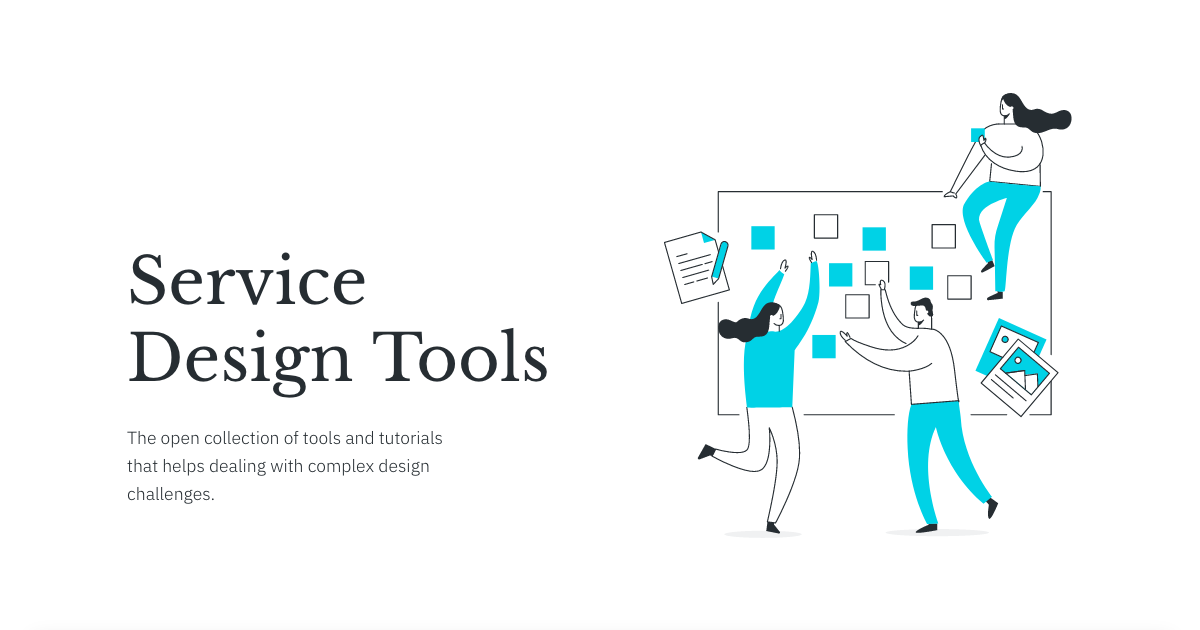
Future backcasting | Service Design Tools
From the future to the present to understand how our today's actions affect our tomorrow, and gain design inspirations.
Backstitch
Backstitch: A Godot plugin that enables fast collaboration for dev teams, game jams, and classrooms.
History of The Graphical User Interface (GUI): A Wonderful Curse
You have to mainline info all the time because our information tools make you do so. Infinite scroll timelines, group chats with no beginning or end, recommender algorithms with no sense of place — all of them require constant vigilance to make sense of. We can do better.

Charlie Warzel
had a death in the family and was almost completely off the internet for a few days & my observation is that there is too much happening too fast such that basic facts abt the world are difficult to ascertain unless you are mainlining info all the time & doing that seems to drive people insane
