

Had a lot of fun chatting again with my twin brother Dylan Patel. We went through lab economics over the next few years - the shift from inference to training as RSI draws near; and how Anthropic and OpenAI are on track to control most of the world’s usable FLOPs within the next few years (because they can monetize compute better and thus outbid everyone). And then we discuss whether the $10T+ of total AI capex we’ll see by the end of the decade will cause a sovereign debt crisis, where hyperscaler debt raises interest rates, drives non-AI exposed countries into bankruptcy, and crashes non-AI equities. One question we weren’t able to resolve is whether there’s anything that can counter all the forces barrelling towards centralization in this industry - the economies of scale in training, the scarcity of compute, and eventually continual learning and RSI. 𝐄𝐏𝐈𝐒𝐎𝐃𝐄 𝐋𝐈𝐍𝐊𝐒 * Transcript: https://www.dwarkesh.com/p/dylan-patel-3 * Apple Podcasts: https://podcasts.apple.com/us/podcast/dylan-patel-anthropic-openai-will-have-most-of/id1516093381?i=1000785793715 * Spotify: https://open.spotify.com/episode/1chA0sqLyHUL684tUEE3ek?si=Dgplc0zpTz-H6O642qY5mA 𝐒𝐏𝐎𝐍𝐒𝐎𝐑𝐒 * Grok Bot has been quite helpful with my search for a new editor. I created a recruiter bot and described the type of editor I was looking for. That bot then spun up a handful of subagents that combed through my emails and X DMs, read the end credits of various documentaries I like, and figured out who edits for some of my favorite YouTubers. It took all of those results, and then delivered me a shortlist of candidates that matched my criteria. Try Grok Bot for yourself at https://x.ai/bot * Antithesis lets you add time travel to your software testing toolkit. Since the Antithesis platform is fully deterministic, everything that happens inside of it is perfectly reproducible. So if your software crashes, you can rewind to the exact right moment, freeze time, and investigate. Or you can test different hypotheses by perturbing the system: kill a node or disable a feature, see what happens, then reset the trajectory and try something else. Learn more at https://antithesis.com/dwarkesh * Jane Street is hiring for two separate ML internships right now, one focused primarily on research and one focused on engineering. In both cases, interns are expected to contribute to real work, not contrived exercises: one common project is adapting a frontier LLM paper to financial markets, which tend to come with a ton of different gnarly challenges. Importantly, you don’t need any finance background to apply. 2027 applications are open now at https://janestreet.com/dwarkesh To sponsor a future episode, visit https://dwarkesh.com/advertise. 𝐓𝐈𝐌𝐄𝐒𝐓𝐀𝐌𝐏𝐒 00:00:00 – Two labs will soon control most of the world’s compute 00:07:01 – $6 billion in fab capex enables $1t+ of end revenue 00:13:08 – Compute prices will rise if the labs outbid everyone 00:18:22 – Which layer will capture most of the surplus? 00:25:40 – Will datacenter regulation slow down AI? 00:29:43 – Labs are shifting compute from inference to R&D 00:33:27 – China gets less than 10% of new compute, but its labs need less 00:48:48 – Will AI cause a sovereign debt crisis? 01:07:52 – Will the world's future workforce belong to a few companies?
Dylan Patel – Anthropic & OpenAI will have most of the world’s compute by 2028
"Every force is screeching towards centralization."
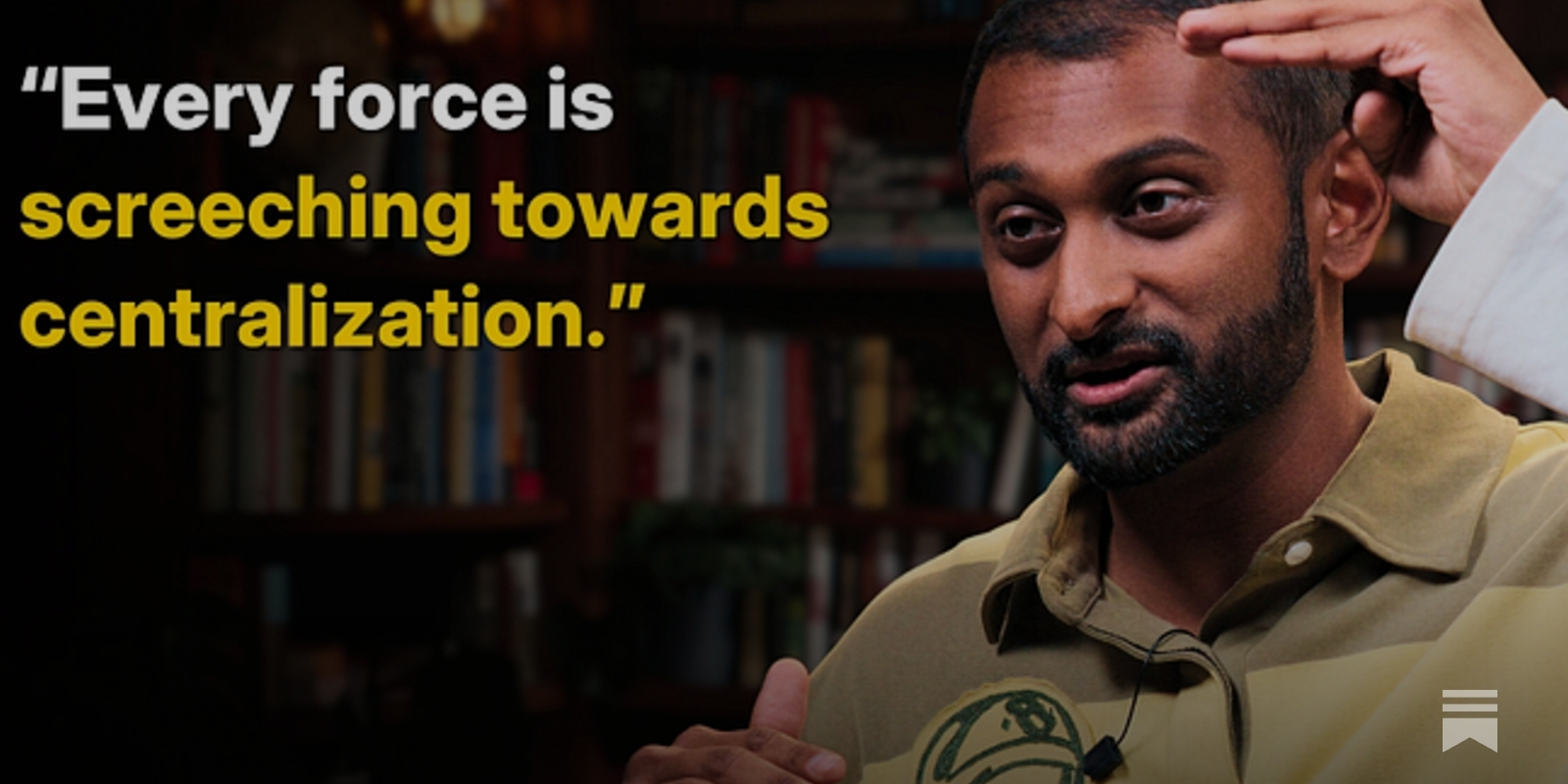
The Geopolitics of AI Infrastructure - Dylan Patel, SemiAnalysis
What the hell happened with AGI timelines in 2026?
March 2026 Global Dialogues Survey | Windfall Trust
Here’s what the world had to say about the AI economy
The state of the tech industry in 2026 - LDX3 New York
AI's Trillion-Dollar Opportunity: Sequoia AI Ascent 2025 Keynote
AI Isn't as Powerful as We Think | Hannah Fry
AI is now unpopular. That may not make a difference.
The loudest warning about AI and jobs yet
200 economists and AI leaders say something big is happening. What should we do about it? Plus: Apple sues OpenAI

A big lesson of my China visit: compute shortages are holding back Chinese AI
One estimate suggests that OpenAI has about as much compute as the entire Chinese AI industry.
The real AI economy is being built by ordinary people
Far from Silicon Valley pitch decks, workers across Asia and Africa are bypassing tech industry hype to quietly rewire their daily jobs — one prompt, workflow, and local problem at a time.

Where will AI be at the end of 2027? A bet
We, Gary Marcus, author, scientist, and noted skeptic of generative AI, and Miles Brundage, an independent AI policy researcher who recently left OpenAI and is bullish on AI progress, have agreed to the following bet, at 10:1 odds, with criteria drawn from two earlier Substack essays by Gary that proposed criteria for

The Era of Experience & The Age of Design: Richard S. Sutton, Upper Bound 2025
AI Economy Institute - Microsoft Research
The AI Economy Institute (AIEI) is Microsoft’s flagship think tank dedicated to shaping an inclusive, trustworthy AI economy. We building a network of scholars and convening that network with our subject matter experts to explore how artificial intelligence is transforming work, education, and productivity – and making this knowledge base available to policy-makers, educators, and […]

1/7 Proud to share our paper, accepted as an oral at ICML '26! We highlight how Big Tech’s influence on AI R&D drives damaging outcomes, and what we as researchers can do about it. We also discuss underlying economic causes. See link for paper, and below for a brief summary arxiv.org/abs/2512.03077
1/7 Proud to share our paper, accepted as an oral at ICML '26! We highlight how Big Tech’s influence on AI R&D drives damaging outcomes, and what we as researchers can do about it. We also discuss underlying economic causes. See link for paper, and below for a brief summary arxiv.org/abs/2512.03077
