

How a chatbot has turned Ukrainian civilians into digital resistance fighters
They are using eVorog to gather military intelligence—putting themselves in danger

The Tor Project | Privacy & Freedom Online
Defend yourself against tracking and surveillance. Circumvent censorship.

It's Time to Take Down your Smart Cameras 😬
Robust Steganography from Large Language Models
Recent steganographic schemes, starting with Meteor (CCS'21), rely on leveraging large language models (LLMs) to resolve a historically-challenging task of disguising covert communication as ``innocent-looking'' natural-language communication. However, existing methods are vulnerable to ``re-randomization attacks,'' where slight changes to the communicated text, that might go unnoticed, completely destroy any hidden message. This is also a vulnerability in more traditional encryption-based stegosystems, where adversaries can modify the randomness of an encryption scheme to destroy the hidden message while preserving an acceptable covertext to ordinary users. In this work, we study the problem of robust steganography. We introduce formal definitions of weak and strong robust LLM-based steganography, corresponding to two threat models in which natural language serves as a covertext channel resistant to realistic re-randomization attacks. We then propose two constructions satisfying these notions. We design and implement our steganographic schemes that embed arbitrary secret messages into natural language text generated by LLMs, ensuring recoverability even under adversarial paraphrasing and rewording attacks. To support further research and real-world deployment, we release our implementation and datasets for public use.

The always-listening Apple Watch
Government Says Terabytes of Signal Chats are Central to the Case Against Minnesota 15 - UNICORN RIOT
The Minnesota 15 case is about conversations, thousands of pages of it, harvested from encrypted group chats on Signal and loaded into an Everlaw database for prosecutors to build conspiracy charges against Trump's political opponents.

CyberChef
The Cyber Swiss Army Knife - a web app for encryption, encoding, compression and data analysis
Revealed: Leaked Chats Expose the Daily Life of a Scam Compound’s Enslaved Workforce
A whistleblower trapped inside a “pig butchering” scam compound gave WIRED a vast trove of its internal materials—including 4,200 pages of messages that lay out its operations in unprecedented detail.

“Anything you post on the internet will be there as long as it's embarrassing an... | Hacker News
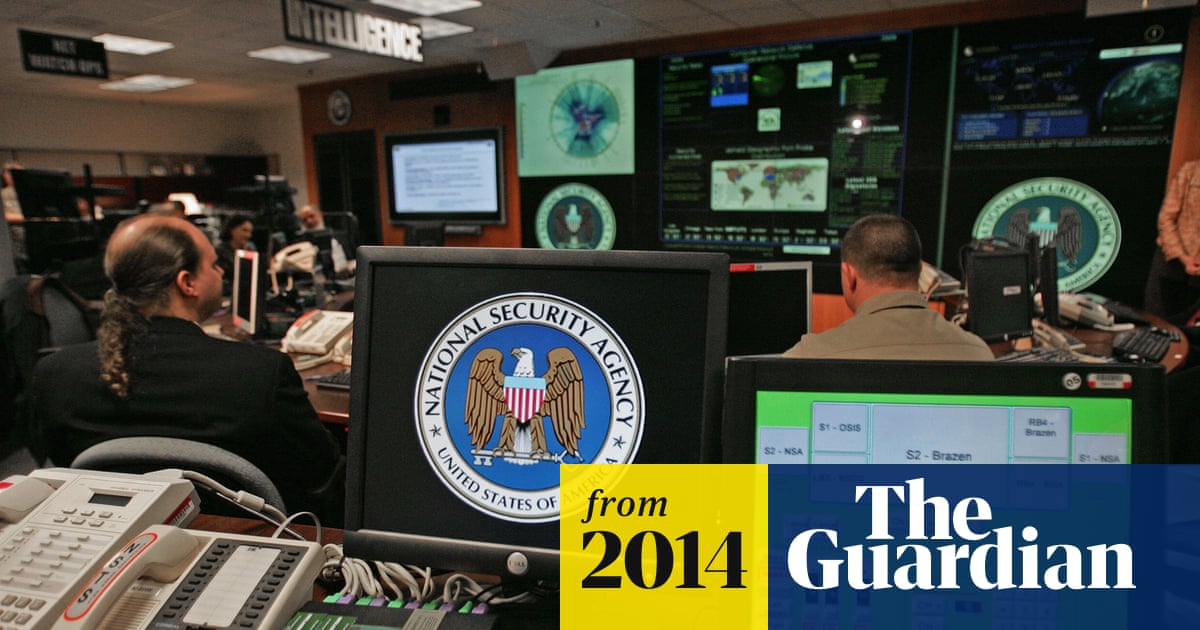
Privacy under attack: the NSA files revealed new threats to democracy
We now know the apparatus of repression has been attached to the democratic state, but our struggle for privacy is far from hopeless. By Eben Moglen
THE DEGRADATION OF HUMAN RIGHTS AND FREE PRESS THROUGH THE PEGASUS SOFTWARE IN THE ERA OF SURVEILLANCE, AS A THREAT TO INTERNATIONAL SECURITY. A DEBATE OF CIVIL LIBERTIES AND CENSORSHIP
The evolution of cyber spying technology presents new and rising dangers; coupled with the easy justification for use of the on-going terrorist crisis these dangers have now become major threats to the international security system. This article aims to provide analysis of these threats, using the new software Pegasus as a focal point of discussion. Developed by the Israeli ‘cyber-warfare’ company ‘NSO’, this spyware signals a danger not only to security but freedom of the press and journalistic integrity. This paper’s focus will centre on how this software is used for censorship rather than to combat terrorism and will examine the social and political ramifications of said use. As highlight, the case of UAE activist Ahmed Mansoor and his contemporaries who were writing against authoritarian governments will be discussed. This article will urge that strict global legislation is needed to stop the abuse of spyware as a tool of censorship.
Have Ukrainian strikes on Yandex data centres hit Russian online disinformation? • FRANCE 24
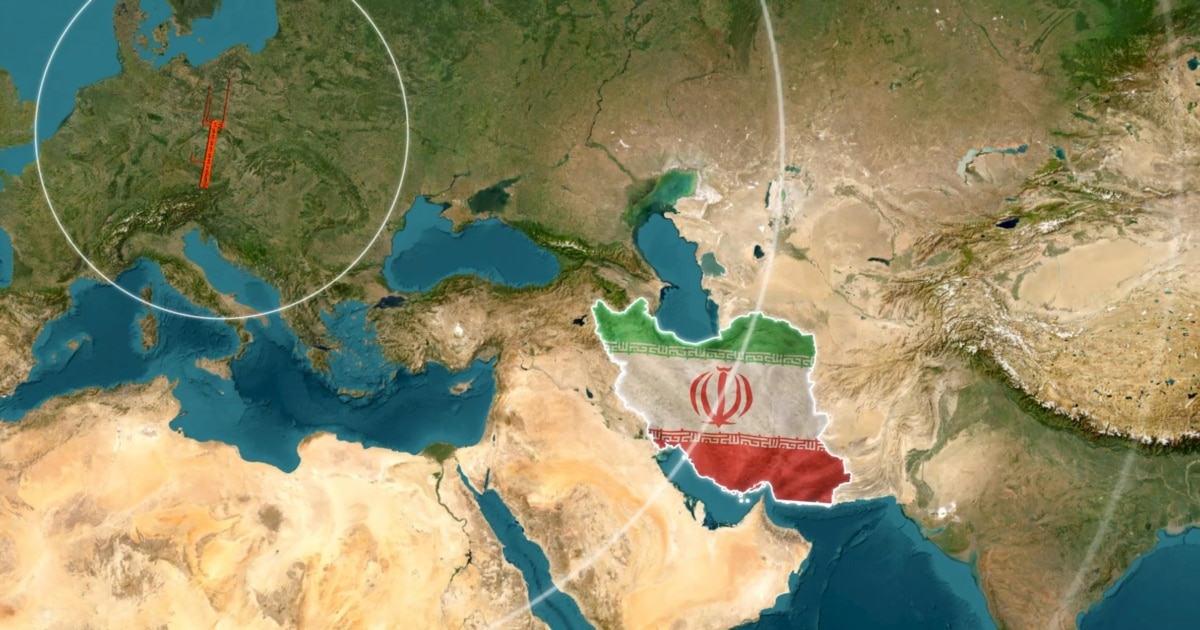
A Mysterious Signal Transfixes Radio Sleuths -- And Intelligence Experts
The mysterious Persian-language transmission began about 12 hours after the start of the US-Israeli bombing campaign against Iran. It was jammed five days later. Is it a coded message for US agents in Iran? Iranian sleeper cells? Israeli operatives? That’s what experts are trying to decipher.
+KAOS: Ten Years of Hacking and Media Activism
At the end of the 20th century, hacking was bleeding edge. When the ideas, practices and pranks of this experimental niche of technophiles attracted the attention of a handful of activists in Italy, they understood that information and communication were what would give shape and voice to social, political, and cultural processes in the near future. +KAOS is a cut and paste of interviews, like a documentary film transposed on paper. It describes the peculiar relationship between hacktivism and activism, in Italy and beyond, highlighting the importance of maintaining digital infrastructures. While this may not sound as glamorous as sneaking into a server and leaking data, it is a fundamental topic: not even the most emblematic group of hacktivists can operate without the services of radical server collectives. Autistici/Inventati (https://www.autistici.org - https://www.inventati.org)

Episode #140: Eli Mallon - Streamplace and the future of decentralized video streaming
This week we're joined by Eli Mallon, founder of Streamplace, a decentralized video streaming platform. In this episode we discuss the future of decentralized video streaming, the challenges of building a new platform, and how developers can leverage Streamplace's tools. We also go into Atproto, the decentralized social media network that stream place is built on. - https://stream.place/about - https://techcrunch.com/2025/04/04/beyond-bluesky-these-are-the-apps-building-social-experiences-on-the-at-protocol - https://github.com/iameli - https://www.linkedin.com/in/eli-mallon-5703a94a - https://bsky.app/profile/iame.li - https://www.livepeer.org/ Episode sponsored By WorkOS (https://workos.com) and Mailtrap (https://l.rw.rw/devtools_2) Become a paid subscriber our patreon, spotify, or apple podcasts for the full episode. - https://www.patreon.com/devtoolsfm - https://podcasters.spotify.com/pod/show/devtoolsfm/subscribe - https://podcasts.apple.com/us/podcast/devtools-fm/id1566647758 - https://www.youtube.com/@devtoolsfm/membership

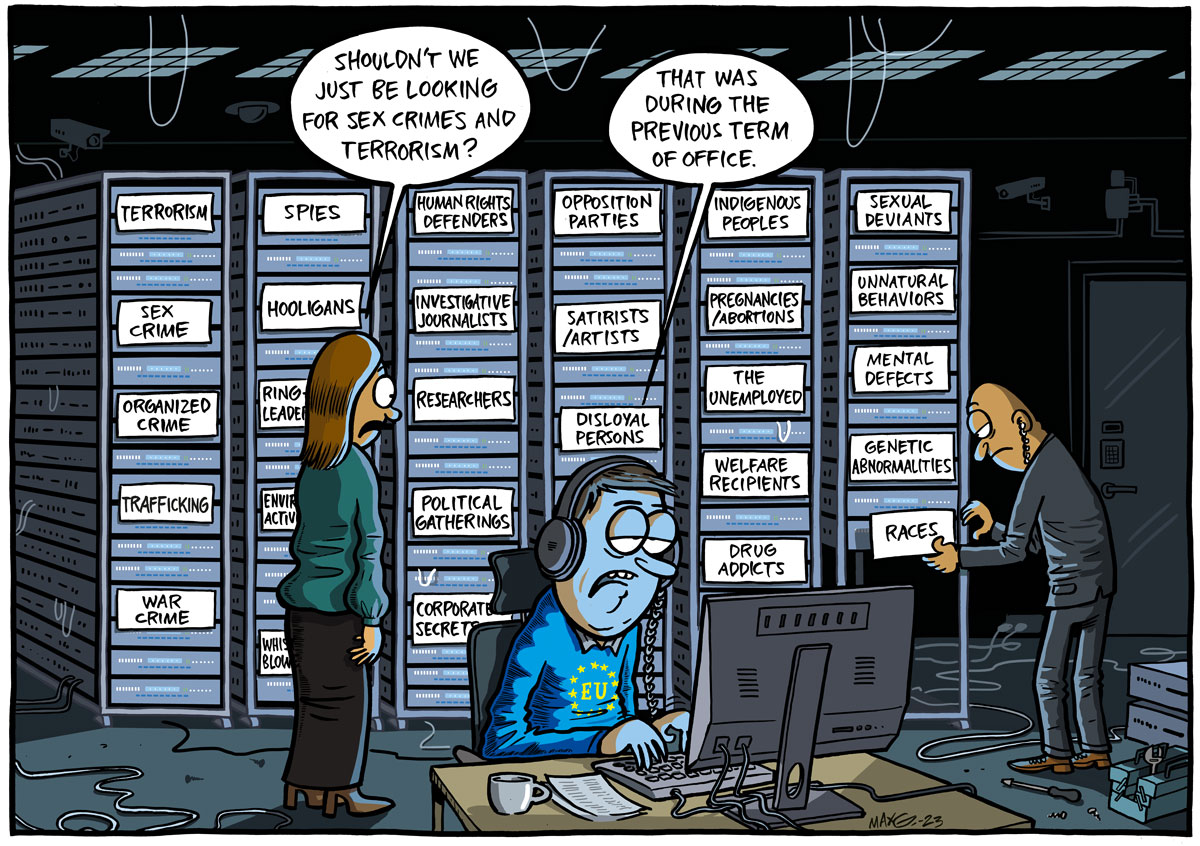
Chat Control & Going Dark: The war on encryption is on the rise. Through a shady collaboration between the US and the EU.
After Snowden’s whistleblowing in 2013, large parts of the internet became encrypted, enabling private and secure communication. Not everyone has welcomed this change. Most notably, the FBI and other U.S. government agencies have fought what is often called the “crypto wars”, the war on encryption. In recent years, they have been joined by the European Commission. Under the slogan “what about the children,” they try to introduce total mass surveillance of all EU citizens — first through the proposed Chat Control legislation, and later via the Going Dark and ProtectEU initiatives. The goal is to legally mandate spy tools on every European smartphone and computer. The forces behind these efforts have turned out to be American tech companies and intelligence agencies.
You never know when you'll need to communicate covertly. Why not practice? Play along! Here's the apps, code, and web demos in this video: https://www.bennjordan.com/blog/stego-links Jared Owen's excellent Enigma video: https://www.youtube.com/watch?v=ybkkiGtJmkM 💗 Support this channel and join an amazing community: http://www.patreon.com/bennjordan 👀 Stalk me on social media for more frequent updates: https://linktr.ee/BennJordan 🔴 Subscribe To My Streaming Channel. I stream weekly! https://www.youtube.com/watch?v=geaIEWGhgsI Timeslots: 0:00 - Intro 1:07 - The History of Steganography 5:30 - Soviet Microdots 7:20 - Abusing File Compression 12:19 - Hiding Sh*t In Audio 16:01 - Ultrasonic Messaging 18:15 - Hiding Sh*t In Video