Harvard professor Shoshana Zuboff wrote a monumental book about the new economic order that is alarming. "The Age of Surveillance Capitalism," reveals how the biggest tech companies deal with our data. How do we regain control of our data? What is surveillance capitalism? In this documentary, Zuboff takes the lid off Google and Facebook and reveals a merciless form of capitalism in which no natural resources, but the citizen itself, serves as a raw material. How can citizens regain control of their data? It is 2000, and the dot.com crisis has caused deep wounds. How will startup Google survive the bursting of the internet bubble? Founders Larry Page and Sergey Brin don't know anymore how to turn the tide. By chance, Google discovers that the "residual data" that people leave behind in their searches on the internet is very precious and tradable. This residual data can be used to predict the behavior of the internet user. Internet advertisements can, therefore, be used in a very targeted and effective way. A completely new business model is born: "surveillance capitalism." Original title: De grote dataroof Director: Roland Duong Research: Tom Reijner, Halil Ibrahim Özpamuk Camera: Adri Schrover Sound: Jochem Salemink Editing: Roland Duong, Paul Delput, Rinze Schuurman Production: Marie Schutgens Production assistant: Britt Bennink Image Editing: Rob Dorrestijn, Paula Witkamp Online Coordinator: Arja van den Bergh Commissioning Editors: Bregtje van der Haak, Doke Romeijn On VPRO broadcast you will find nonfiction videos with English subtitles, French subtitles and Spanish subtitles, such as documentaries, short interviews and documentary series. This channel offers some of the best travel series from the Dutch broadcaster VPRO. Our series explore cultures from all over the world. VPRO storytellers have lived abroad for years with an open mind and endless curiosity, allowing them to become one with their new country. Thanks to these qualities, they are the perfect guides to let you experience a place and culture through the eyes of a local. Uncovering the soul of a country, through an intrinsic and honest connection, is what VPRO and its presenters do best. So subscribe to our channel, and we will be delighted to share our adventures with you! more information at https://www.VPRObroadcast.com Visit additional youtube channels bij VPRO broadcast: VPRO Broadcast: https://www.youtube.com/VPRObroadcast VPRO Metropolis: https://www.youtube.com/user/VPROmetropolis VPRO Documentary: https://www.youtube.com/VPROdocumentary VPRO World Stories: https://www.youtube.com/VPROworldstories VPRO Extra: https://www.youtube.com/channel/UCTLrhK07g6LP-JtT0VVE56A VPRO VG (world music): https://www.youtube.com/vrijegeluiden VPRO 3voor12 (alternative music): https://www.youtube.com/3voor12 VPRO 3voor12 extra (music stories): https://www.youtube.com/channel/UCtgVYRLGraeL9rGMiM3rBHA www.VPRObroadcast.com
Shoshana Zuboff: Secrets of Surveillance Capitalism
Governmental control is nothing compared to what Google is up to. The company is creating a wholly new genus of capitalism, a systemic coherent new logic of accumulation we should call surveillance capitalism. Is there nothing we can do?surveillance capitalism
Shoshana Zuboff: Secrets of Surveillance Capitalism
Governmental control is nothing compared to what Google is up to. The company is creating a wholly new genus of capitalism, a systemic coherent new logic of accumulation we should call surveillance capitalism. Is there nothing we can do?surveillance capitalism
Thieves of Experience: How Google and Facebook Corrupted Capitalism | Los Angeles Review of Books
Whatever its imperfections, Shoshana Zuboff's "The Age of Surveillance Capitalism" is an original and brilliant work, and it arrives at a crucial moment.

'The goal is to automate us': welcome to the age of surveillance capitalism
Shoshana Zuboff’s new book is a chilling exposé of the business model that underpins the digital world. Observer tech columnist John Naughton explains the importance of Zuboff’s work and asks the author 10 key questions
How Google Discovered the Value of Surveillance | Hacker News
It took basically until now for the bloom to come off the rose. Think about that. For 20 years Google has been supposedly hiring the smartest guys in the room and all it took was free food, some ball pits and slides, contributing some tech to open source, and working on a handful of "moonshots" that haven't gone anywhere to keep the sheen of innovation going. And it worked. For 20 years.
Surveillance is the Business Model of the Internet: Bruce Schneier
“Surveillance is the business model of the Internet,” Schneier told attendees. “We build systems that spy on people in exchange for services.” Corporations call it marketing.

Internet for the People: The Fight for Our Digital Future
"For all the informational convenience the internet offers, it is deeply flawed. How can it be improved? Writer Ben Tarnoff proposes one possibility in this intriguing book, which urges the development of 'a public lane on the information superhighway.' It's worth checking out for yourself." – Seth MacFarlane Why is the internet so broken, and what could ever possibly fix it? In Internet for the People, leading tech writer Ben Tarnoff offers an answer. The internet is broken, he argues, because it is owned by private firms and run for profit. Google annihilates your privacy and Facebook amplifies right-wing propaganda because it is profitable to do so. But the internet wasn't always like this—it had to be remade for the purposes of profit maximization, through a years-long process of privatization that turned a small research network into a powerhouse of global capitalism. Tarnoff tells the story of the privatization that made the modern internet, and which set in motion the crises that consume it today. The solution to those crises is straightforward: deprivatize the internet. Deprivatization aims at creating an internet where people, and not profit, rule. It calls for shrinking the space of the market and diminishing the power of the profit motive. It calls for abolishing the walled gardens of Google, Facebook, and the other giants that dominate our digital lives and developing publicly and cooperatively owned alternatives that encode real democratic control. To build a better internet, we need to change how it is owned and organized. Not with an eye towards making markets work better, but towards making them less dominant. Not in order to create a more competitive or more rule-bound version of privatization, but to overturn it. Otherwise, a small number of executives and investors will continue to make choices on everyone’s behalf, and these choices will remain tightly bound by the demands of the market. It's time to demand an internet by, and for, the people now.
Former Facebook executive says Google, Facebook are 'surveillance states' and risk more regulation
Chamath Palihapitiya's holding company, which also includes former Twitter executive Adam Bain, hit the public markets on Thursday.

Cory Doctorow: Zuck’s Empire of Oily Rags
For 20 years, privacy advocates have been sounding the alarm about commercial online surveillance, the way that companies gather deep dossiers on us to help marketers target us with ads. This pitch…
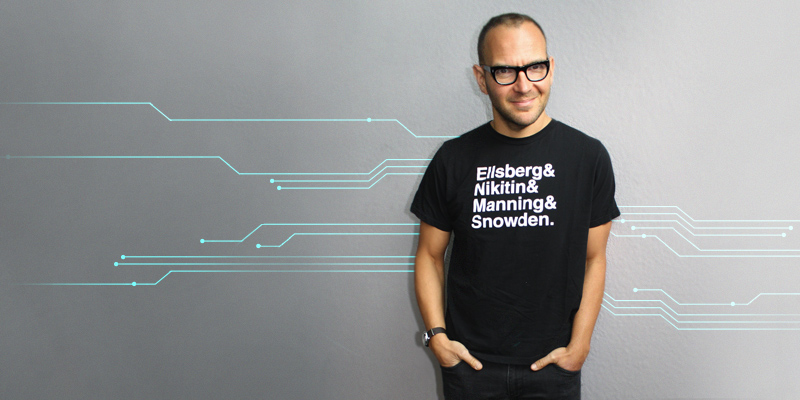
How to Destroy ‘Surveillance Capitalism’
Surveillance capitalism is just capitalism — with surveillance. Here’s how to beat it.
Escaping surveillance capitalism, at scale
Self-hosting and paid subscriptions promise an escape from surveillance capitalism. What guarantees do they really offer, and at what cost?

How Google Discovered the Value of Surveillance
In 2002, still reeling from the dot-com crash, Google realized they’d been harvesting a very valuable raw material — your behavior.

The Internet is a surveillance state | CNN
Bruce Schneier says our surveillance state is efficient beyond the wildest dreams of George Orwell, and consumers are given little chance to opt out

Tidying Up When We Have No Control over Our Digital Lives
Never-ending notifications. Pull-to-refresh rewards. There's no escape from surveillance capitalism.

Facebook and Google’s pervasive surveillance of billions of people is a systemic threat to human rights
There needs to be a radical transformation of Facebook and Google's surveillance business model as it poses a systemic threat to human rights,