

I Stream When I Feel Like It I Upload When My Brain is full I Have A Patreon! https://www.patreon.com/CerosTV #commentary #react #drama https://www.twitch.tv/cerostv https://discord.gg/atHPuDyY7c https://www.instagram.com/cerostv/ 0:00 The Things I Never Learned 0:39 The Myth of Common Knowledge 2:38 Why Asking Questions Feels Dangerous 6:12 Why We Fear Being Beginners 11:20 There Is No Expiration Date on Learning
The Best Tacit Knowledge Videos on Every Subject — LessWrong
TL;DR Tacit knowledge is extremely valuable. Unfortunately, developing tacit knowledge is usually bottlenecked by apprentice-master relationships. Ta…
Learn anything with the /teach skill
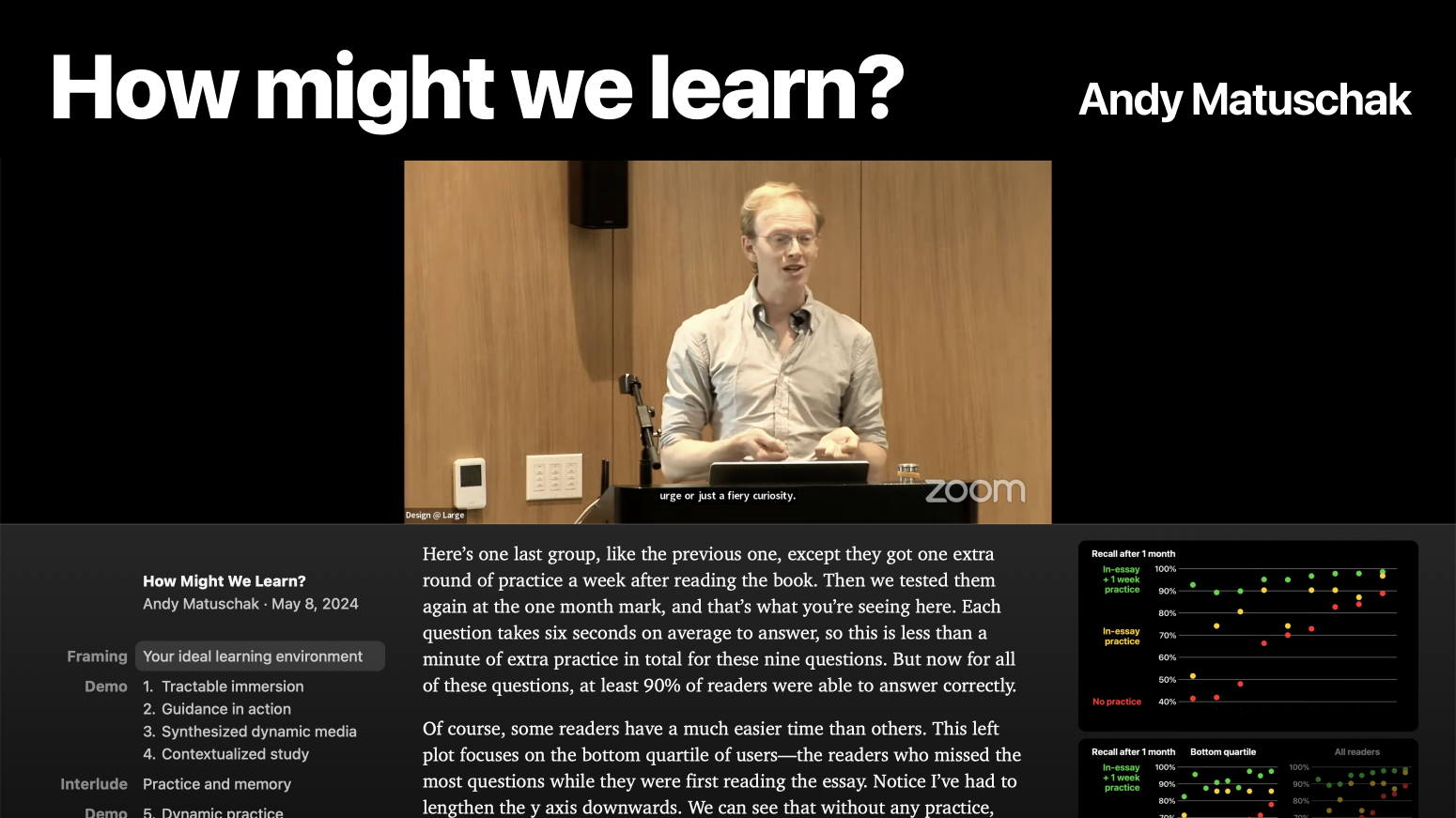
Why You Should Keep Listening Even If You Don’t Understand | AJATT | All Japanese All The Time
Like I’ve said before…the set of tools/methods described on this site…I don’t know why it all works; looking at and thinking about how people learn their native language, it just all seemed obvious to me. In other words, I knew what I needed to do to achieve fluency…but not much more.
AI and the Wisdom of Uncertainty
AI chatbots rarely say "I don't know," and neither, increasingly, do we. But we can cultivate our epistemic resilience.

What You Don't Know Will Make a Whole New World by Dorothy Lazard | East Bay Booksellers
From one of California’s most celebrated librarians and public historians, a coming-of-age memoir about the thirst for knowledge and hometown pride.A Best Book of the Year, Oakland Public Library2023 Bronze Winner for the Foreword INDIES Award, Autobiography & Memoir"What You Don’t Know will inspire for its grace, zest and courage.
Intellectual slop
How Learning Happens | Seminal Works in Educational Psychology and Wha
How Learning Happens introduces 28 giants of educational research and their findings on how we learn and what we need to learn effectively, efficiently, and

AI #169: New Knowledge
Even in a relatively quiet period, AI is out there creating new knowledge.
Holdfast 0: Situating
This post introduces the written version of some optimistic and constructive thinking on knowledge in networks that I’ve been wrestling with since the end of last year.
Illusion of knowledge through Facebook news? Effects of snack news in a news feed on perceived knowledge, attitude strength, and willingness for discussions
Research indicates that using social network sites as a source for news increases perceived knowledge even if, objectively, people fail to acquire knowledge. This might result from the frequent repetition of topics in news posts caused by multiple news outlets posting about the same news topics and the algorithm that favors similar postings. These repeated encounters can have a positive effect on the perception of knowing more, even if actual learning hardly occurs. An experiment (N = 810, representative of German Internet users) tested these assumptions. Participants were assigned to one of four groups and received a news feed with no information, few news posts, many news posts, or a full-length news article. Results indicate that many news posts increased perceived knowledge that is not paralleled by a gain in factual knowledge. Perceived knowledge mediates effects of reading many news posts on more extreme attitudes and the willingness for discussions. Even if participants who read the news article gained factual knowledge, they did not feel more knowledgeable than participants who were exposed to a news feed containing news posts. The results emphasize the meaning of engaging with full news articles, both for learning facts and for more accurate knowledge assessments.
Beyond the Dark Forest Theory of the Internet
Re-learning how to be yourself online

A quote from Andrew Quinn
One could say in the first quarter-century of my life, that while I was always fascinated by programming, I could never overcome the guilt of not really knowing whether the …
Ever thought we acquire generalizable knowledge by discarding details and compressing our experiences? In a new BBS paper, @sabinasloman.bsky.social and I argue otherwise, proposing a novel way of studying human learning inspired by double descent in ML. Disagree? Propose a commentary by May 15 :)
This entire grift relies on convincing people that they don't know how to do the things they have always known how to do, and ironically, if it works, we will, in a very short amount of time, forget how to do all the things we have always known how to do.

More Perfect Union
Jimmy Fallon: "And do you use ChatGPT when raising your baby?" Sam Altman: "I cannot imagine figuring out how to raise a newborn without ChatGPT."

