Many of the world’s most successful businesses began as someone’s good idea. But the path from startup to conventional financial success typically involves going public, prioritizing shareholders’ interests, and ultimately selling to a giant conglomerate whose intentions are far from the original mission of the business’s founders. In this episode, Laura interviews guests who say this conventional path of success is desperately in need of an overhaul. Why must new and innovative ideas come to market through old and undemocratic platforms? What if rather than selling out, successful businesses became community assets that put ownership and governance in the hands of workers and even consumers? Could a startup become a means of building community wealth, economic justice, and accountability over our technology? Our guests explain how. GUESTS Pia Mancini, Co-Founder & CEO, Open Collective (https://opencollective.com/) Lauren Ruffin, Co-Founder, Crux (https://www.laurenruffin.com/) Nathan Schneider, Professor of Media Studies, University of Colorado Boulder (https://nathanschneider.info/) CONTENT Open Collective: A Tech Platform that Shares Power 0:00 Building the Cooperative Economy 6:50 Benefits & Examples of Open Collective Model 14:56 Exit to Community Strategy for Shared Ownership 17:16 Work and Anti-Work From Karl Marx to Reddit 23:23 CREDITS Executive Producer: Laura Flanders Creative Director: Matt Colaciello Communications Director: Jeremiah Cothren Editors: Charlotte Carpenter, Nat Needham Radio & Podcast Producer: Jeannie Hopper Co-Director Development: Dominic Marcella Story Producer: Sabrina Artel Motion Graphics: Nat Needham Digital Content Creator: Leigh Friedman Production Assistant: Ryan Hotes Interns: Janet Hernandez, Adelle Villarente, Te Maia Wiki DONATE at https://lauraflanders.org/donate/ SUBSCRIBE to our newsletter: http://www.lauraflanders.org FOLLOW The Laura Flanders Show Twitter: https://twitter.com/thelfshow Facebook: https://www.facebook.com/theLFshow Instagram: https://www.instagram.com/thelfshow/ ACCESSIBILITY This episode is closed captioned. #startup #cooperatives #tech #platformcooperativism #opensource #democracy #opencollective #economicjustice #peopleoverprofits #democracy #collectiveownership #business
The corporation—a return to origins?
This paper contributes to contemporary debates in political theory about the power of business corporations by offering a genealogy of the corporation through the lens of a series of historical mutations of the corporate form. Originally, there were two corporate forms, both non-profit: member corporations (today's associations) and property corporations (today's charitable foundations). The contemporary business corporation arguably is a hybrid of both of these original forms, introducing unique commercial features (shares with profit distribution rights that are transferable). These commercial features are largely responsible for the corporation's extractive nature, that is, its tendency to prey on non-shareholder interests. The future of the corporation may well lie in a partial return to the two original non-profit forms. Two corporate forms developed in the nineteenth century can provide the format for such a return: cooperatives (which reinforce the idea of membership) and foundation-owned companies. The cooperative structure is a halfway house between a business corporation and a member corporation (association), and in a parallel fashion, a foundation-owned company is a halfway house between a business corporation and a property corporation (foundation). If we want to reduce corporations’ extractive nature, facilitating the spread of cooperatives and foundation-owned companies seems the way forward.

The Rise of the Silicon Valley Small Business
What you need to know about the next big startup archetype
Delete Your Account: On the Theory of Platform Capitalism | Los Angeles Review of Books
The platform confuses capital-flow and social form, rearranging the relationship of profit to community and intelligence to organization.

The Rise of the Decentralized Startup
I think we’re seeing a very big shift right now in how startups are created and operate. But before we dig into that, I want to spend some time talking about work. For centuries, work has bee…

Platform Politics
Available open access digitally under a CC-BY-NC-ND license. The 'sharing economy', powered by companies like Airbnb, Uber and Deliveroo, promised to revolutionize the way we work and live. But what changes have come about, and why? This book shows how platform capitalism is not only shaped by business decisions, but is a result of struggles involving social movements, consumer politics and state interventions. It focuses in particular on the controversial tactics used by platform giants to avoid regulation. Drawing on cutting-edge research and analysis, the book provides a critical overview of the struggles around platforms, examines platform power, and reflects on the different possible futures of the platform economy.

Traits of Founding Teams That Win — An IT VC’s perspective
By Christopher J. Rust, Founding Partner, Clear Ventures

After Capitalism: A Cooperative Economy (Documentary)
Is America Encouraging the Wrong Kind of Entrepreneurship?
In a 1990 paper, “Entrepreneurship: Productive, Unproductive, and Destructive,” late economist William Baumol argued that not all entrepreneurs are equal: there are both “productive” and “unproductive” endeavors. Most people think of all entrepreneurship to be what Baumol referred to as the “productive” kind, where the companies that founders launch commercialize something new or better, benefiting society and themselves in the process. Baumol was worried, however, by a very different sort of entrepreneur, the “unproductive” ones who exploit special relationships with the government to construct regulatory moats, secure public spending for their own benefit, or bend specific rules to their will — in the process, stifling competition to create advantage for their firms. Two recent trends indicate that this may be happening in the U.S. today: rising profits, especially those earned by the largest businesses in the economy, and suggestive evidence of an increase in efforts to shape the rules of the game. Baumol may have been ahead of his time. If the U.S. is going to tackle its many problems, we are going to have to find ways to encourage would-be entrepreneurs to start innovative, productive businesses, rather than dedicating their efforts to co-opting government in order to secure economic advantage.
Platform co-op governance: deep democracy on scale
This article was written with new inspiration from many conversations around the the Platform Cooperatives conference in NYC in Nov 2017…

Democratizing Social Media | Platform Cooperativism Consortium
Exploring the Potentials of Cooperative Models In the age of the ever-expanding platform economy, questions over the ownership and governance of social media platforms have become increasingly…

Founders Hub | Transform Finance
The founder playbook for building a company that lasts and stays true to why you started it. Research, case studies, and practical tools for incorporation, fundraising terms, board structure, ownership, and culture.
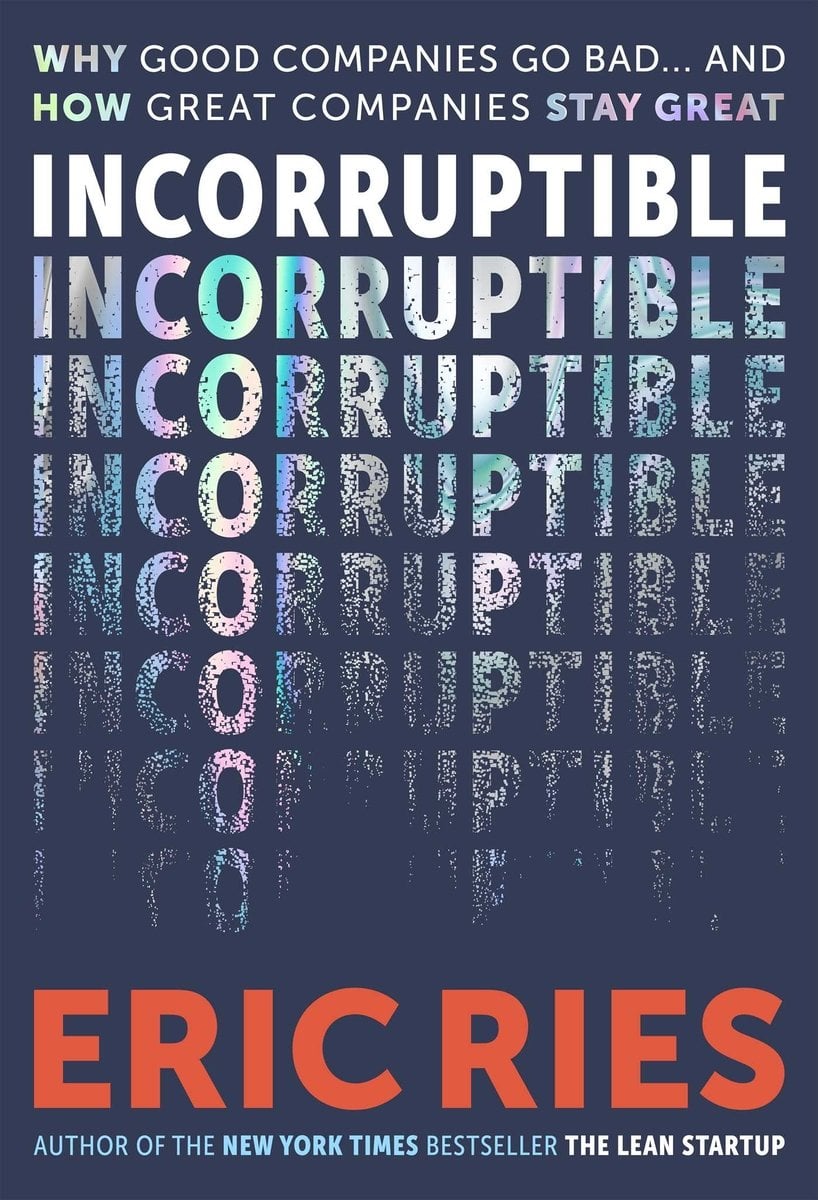
Incorruptible
Instant New York Times Bestseller "Incorruptible by Eric Ries is the best and most important business book of the year." —Dan Heath, NYT Bestselling Author & Podcast Host of "What It's Like To Be..." A Thinkers50 Best New Management Book | A Next Big Idea Club Must-Read From Eric Ries, creator of The Lean Startup, comes a bold and urgently needed rethink of how organizations are built—and why success itself so often turns companies against the people and principles that made them worth building in the first place. For decades, we've explained corporate corruption as a problem of bad actors, moral weakness, or isolated scandals. But that story doesn't match reality. Again and again, companies founded with strong ideals drift toward short-term thinking, extractive behavior, and mission abandonment—often despite the best intentions of the people inside them. Incorruptible argues that this failure is not primarily ethical. It is structural. As organizations grow, the systems that govern them—ownership, incentives, charters, accountability, and decision-making—quietly reshape behavior. When those systems are poorly designed, even principled leaders are pushed toward outcomes they never wanted. Success itself becomes a form of financial gravity, bending companies away from their original purpose. Drawing on two decades of work with founders, CEOs, investors, and institution builders, Ries shows how these failures arise predictably—and how they can be prevented. He reframes corporate governance not as bureaucracy or compliance, but as a creative and strategic act at the heart of building enduring, mission-controlled companies. At a moment when trust in business is eroding, Incorruptible offers a clear-eyed diagnosis and a practical blueprint for change. Success alone will not protect what matters most. Only incorruptible design can. Get more information and bonus materials at incorruptible.co.
Start.coop | Empower Cooperative Growth
Discover resources and support to build and grow cooperatively-owned businesses, fostering community wealth-building and economic stability.

Rudy Fraser on Blacksky, Mutual Aid & Reclaiming Social Media
Pivot to People: It’s Time to Build the New Economy
Today’s calls for ethical, humane, responsible, regulated and beneficial technology, compounded with venture capital’s virtue signaling in…