Join Noah for wacky misadventures as he makes new friends and tries to learn Spanish. New videos and games launch April 30th, 2015, at http://pbskids.org. Oh Noah! is designed to teach Spanish to children ages four to seven through animated videos with embedded games that help build vocabulary. In each three-minute video, a misunderstanding launches a comic misadventure. Kids learn language better when they can put it into meaningful context. Although – like Noah – they may not understand all the Spanish dialogue, kids can comprehend the story told through rich visual storytelling, much like a silent movie. Play Oh Noah! games at http://pbskids.org/noah
How I Learned Spanish in 3 Months | Loïs Talagrand
Complete breakdown of my 90-day Spanish challenge: constraints, tools, timeline, and final 30-minute conversation result.
Learning to solve complex tasks by growing knowledge culturally across generations
Knowledge built culturally across generations allows humans to learn far more than an individual could glean from their own experience in a lifetime. Cultural knowledge in turn rests on language: language is the richest record of what previous generations believed, valued, and practiced, and how these evolved over time. The power and mechanisms of language as a means of cultural learning, however, are not well understood, and as a result, current AI systems do not leverage language as a means for cultural knowledge transmission. Here, we take a first step towards reverse-engineering cultural learning through language. We developed a suite of complex tasks in the form of minimalist-style video games, which we deployed in an iterated learning paradigm. Human participants were limited to only two attempts (two lives) to beat each game and were allowed to write a message to a future participant who read the message before playing. Knowledge accumulated gradually across generations, allowing later generations to advance further in the games and perform more efficient actions. Multigenerational learning followed a strikingly similar trajectory to individuals learning alone with an unlimited number of lives. Successive generations of learners were able to succeed by expressing distinct types of knowledge in natural language: the dynamics of the environment, valuable goals, dangerous risks, and strategies for success. The video game paradigm we pioneer here is thus a rich test bed for developing AI systems capable of acquiring and transmitting cultural knowledge.

Why Kids Can't Read Anymore
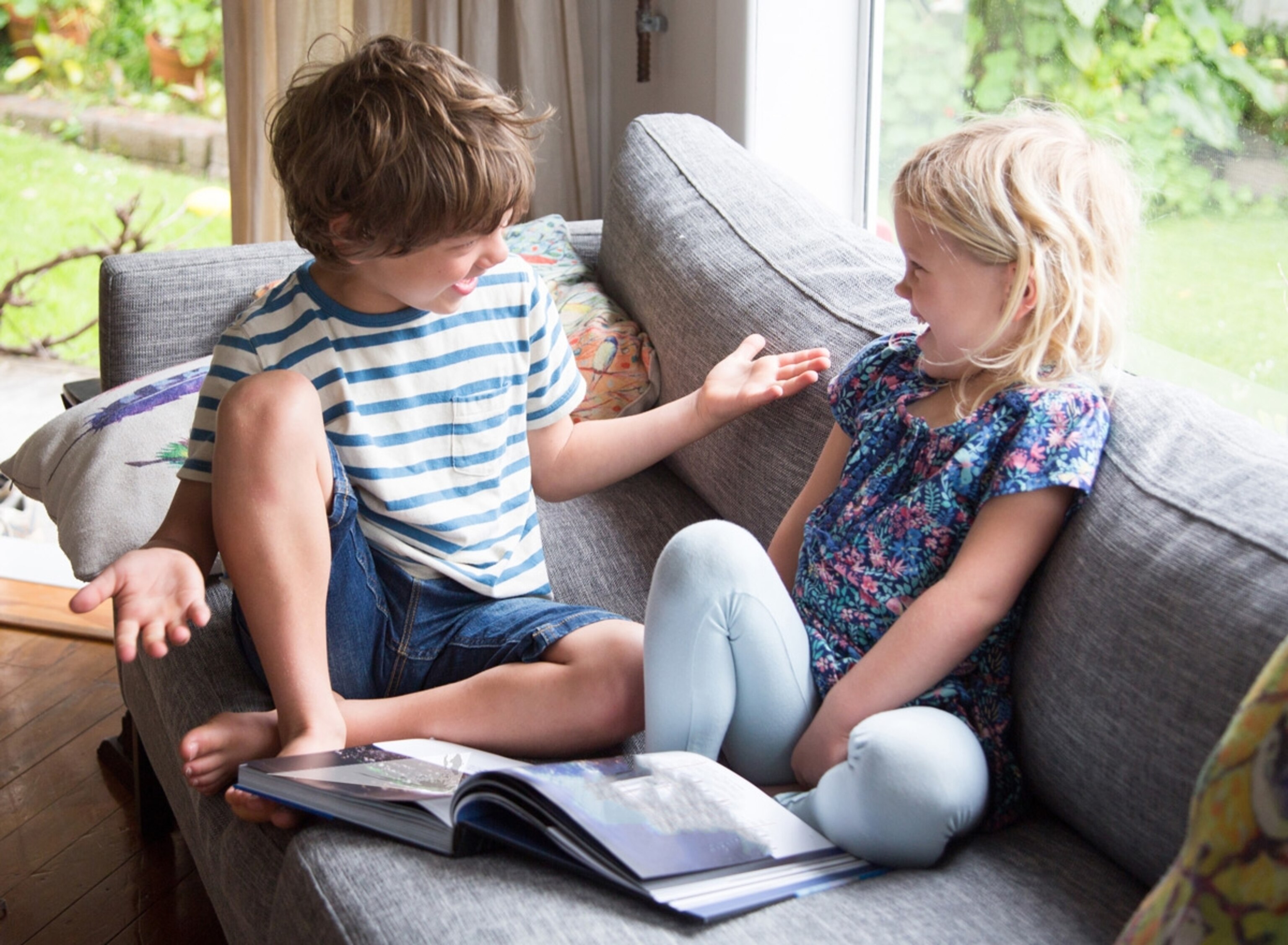
Why your family’s secret language is good for kids
‘That whoa-whoa is chasing the hodgie!’ Your household’s familect can strengthen bonds and develop language skills.
The Minecraft Generation (Published 2016)
How a clunky Swedish computer game is teaching millions of children to master the digital world.


The 10 Best Animation and Game Design Podcasts | 2022 Ed.
See the very best in game design podcasts with our curated list of The 10 Best Video Game Design Podcasts. Both beginners and experts are guaranteed to learn something.

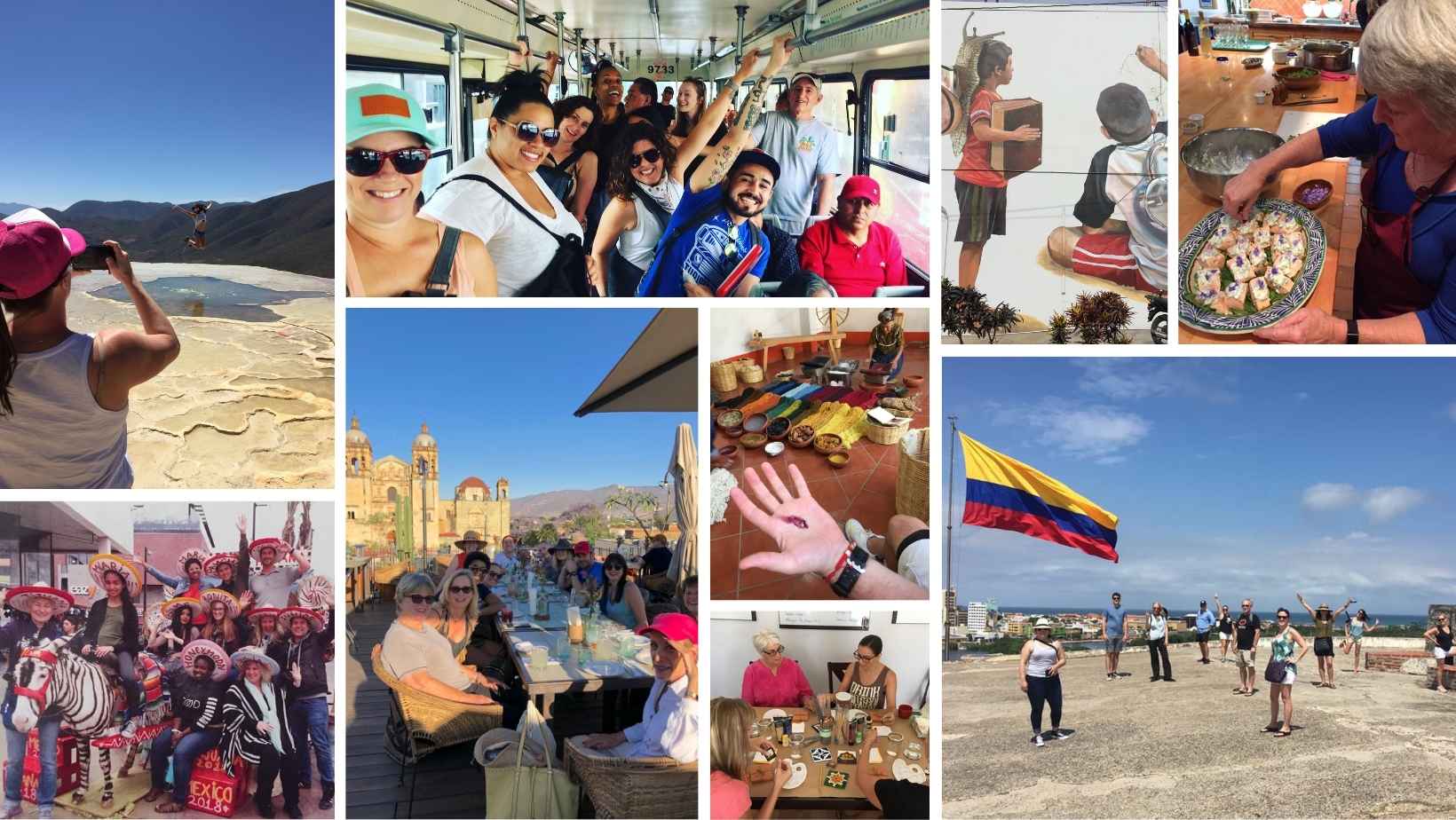
Online Spanish Classes San Diego | Culture & Language Center
Learn Spanish and gain confidence through real conversations and tailored online Spanish classes with friendly, certified teachers from Latin America. Visit us!
"What's my model inside of?": Exploring the role of environments for grounded natural language understanding
In contrast to classical cognitive science which studied brains in isolation, ecological approaches focused on the role of the body and environment in shaping cognition. Similarly, in this thesis we adopt an ecological approach to grounded natural language understanding (NLU) research. Grounded language understanding studies language understanding systems situated in the context of events, actions and precepts in naturalistic/simulated virtual environments. Where classic research tends to focus on designing new models and optimization methods while treating environments as given, we explore the potential of environment design for improving data collection and model development. We developed novel training and annotation approaches for procedural text understanding based on text-based game environments. We also drew upon embodied cognitive linguistics literature to propose a roadmap for grounded NLP research, and to inform the development of a new benchmark for measuring the progress of large language models on challenging commonsense reasoning tasks. We leveraged the richer supervision provided by text-based game environments to develop Breakpoint Transformers, a novel approach to modeling intermediate semantic information in long narrative or procedural texts. Finally, we integrated theories on the role of environments in collective human intelligence to propose a design for AI-augmented "social thinking environments" for knowledge workers like scientists.
Conheça DiaTV, canal de televisão queer dentro do YouTube - 30/07/2026 - Ilustrada - Folha
Influenciadores são apresentadores em programação diária

Babel — a connections game for Korean, Japanese and Chinese
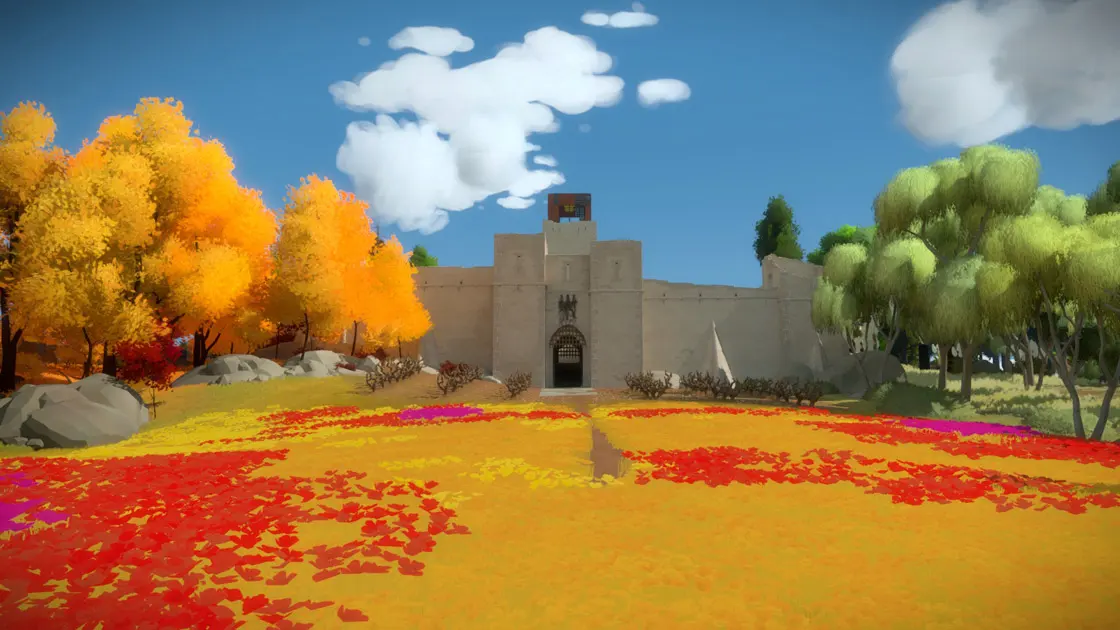
Interview With 'The Witness' Creator Jonathan Blow
The video game creator on the nature of science, language and design
Dreaming Spanish – Learn with Comprehensible Input
Master Spanish with comprehensible input. Dreaming Spanish gives you real, engaging content at every level to build lasting fluency naturally.
Cultivating Visual Literacy: A Play-Based Approach to Drawing Education for Young Children
This paper introduces a novel, play-based method for teaching drawing to young children, emphasising observation, creativity, and the development of visual literacy. The method, refined through years of practical testing with the author's children, moves beyond rote copying and focuses on engaging parents in the learning process. It leverages fun, interactive exercises designed to enhance spatial reasoning, attention to detail, and an appreciation for artistic expression while fostering the understanding of drawing as a natural form of expression alongside language and mathematics, helping children develop a confident, lifelong relationship with visual communication that transcends common perceptions of drawing as an intimidating or exclusively talent-based skill. This paper also presents a literature review on early childhood art education and highlights the importance of drawing as a fundamental cognitive skill.