


I spoke to the people who call themselves Indigenous Boricuas and the academics presenting evidence that the Natives of Puerto Rico did not go extinct in the 16th century. Support my work on Patreon: https://www.patreon.com/user?u=42409701 Follow me on Instagram, Facebook, TikTok, Twitter: Bianca Graulau Full interview with historian Juan Manuel Delgado. Credit: Alex Zacarias https://www.youtube.com/watch?v=7tKk28N85cQ Dr. Juan Carlos Martinez Cruzado's 2005 DNA study: https://pubmed.ncbi.nlm.nih.gov/15693025/ Uahtibili Báez's book: https://www.amazon.com/Puerto-Rico-mentira-Edici%C3%B3n-aniversario/dp/1723742236 Huana Naboli's Códigos Lingüísticos de la Chiba Borikua: https://books.google.com.pr/books/about/Codigos_Linguisticos_de_la_Chiba_Borikua.html?id=P1Z-yQEACAAJ&redir_esc=y Indigenous Dictionary: https://books.google.com.pr/books/about/Diccionario_de_voces_ind%C3%ADgenas_de_Puert.html?id=PTc0AQAAIAAJ&redir_esc=y
The Gender History of Puerto Rico, Before Colonization
Exploring the gender history of la isla before the patriarchy was imposed onto it, with references from The Taino Dictionary, The University of Puerto Rico – Colonialism and the Language of Teaching and Learning, Queer Indigenous Studies: Critical Interventions in Theory, Politics, and Literature, and more.
Ancient DNA sheds light on what happened to the Taino, the native Caribbeans
A new DNA study explores where the Taino came from and where they went.

This Culture, Once Believed Extinct, Is Flourishing
A new exhibition explores the cultural heritage of the Taíno, the indigenous people of the Caribbean

Not yet gone, but effectively extinct
A small drop in one species' population can drive others to actually die out.

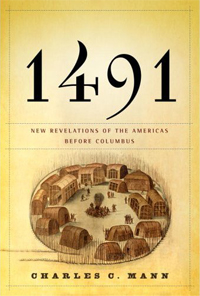
1491: New Revelations of the Americas Before Columbus
1491: New Revelations of the Americas Before Columbus is a 2005 non-fiction book by American author and science writer Charles C. Mann about the pre-Columbian Americas. It was the 2006 winner of the National Academies Communication Award for best creative work that helps the public's understanding of topics in science, engineering or medicine.
The invasive soft coral Xenia umbellata has been confirmed in Cuban waters
Octocoral colonies with unusual morphology were detected in September 2022 and October 2023 in two coastal areas east of Havana, Cuba, and tentatively identified as Unomia stolonifera. U. stolonifera is an invasive octocoral from the Indo-Pacific that was first reported in the Caribbean off Venezuela in the 2000s, where it has spread rapidly, smothering coral reefs and substantially altering benthic communities. After obtaining tissue samples from a Cuban octocoral colony, we re-examined the specimen using molecular barcoding of three mitochondrial regions (16S/ND2, mtMutS, COI) and the nuclear large ribosomal subunit (28S rRNA), and we unequivocally identified it as Xenia umbellata. X. umbellata, a native of the Red Sea, was first identified in southern Puerto Rico in October 2023 and has since been found in various marine ecosystems along the southern coast of the island. The presence of either invasive octocoral species in Cuba or elsewhere in the Caribbean would be of a serious environmental concern due to their documented tolerance, totipotentiality, propagation capacity and significant negative interactions with local benthic fauna. Attempts to eradicate the invasive soft coral colonies from Cuban waters have been initiated with apparent success, helping to control further expansion. The most likely introduction pathway is the accidental or intentional releases from the aquarium trade but transport via ballast water cannot be ruled out. We cannot discount the possibility of independent invasion events from different routes to Puerto Rico and Cuba occurring within a year of each other. Propagation from Cuba to Puerto Rico, or vice versa, which we consider highly improbable, would likely imply that soft coral populations may also have been established on Hispaniola but have remained undetected in the Dominican Republic and Haiti to date.

German immigration to Puerto Rico
However, it was the economic and political situation in Europe during the early 19th century plus the fact that the Spanish Crown re-issued the Royal Decree of Graces (Real Cédula de Gracias) which now allowed Europeans who were not of Spanish origin to immigrate to the island that contributed the most to the immigration of hundreds of German families to Puerto Rico in search of a better life.
Chronology and ecology of early islanders in the Philippines: The Mindoro Archaeology Project
The investigation and excavation of caves and rockshelters located at the southern end of Occidental Mindoro produced significant artefacts, data, and information related to the initial arrival and colonization of the Philippine archipelago by anatomically modern humans. The sites provided several indications for the increasing adaptation to maritime environments and delivered evidence for their behavioural and technological complexity. Mindoro lies along a direct route to reach the main islands of the Philippines coming from the Asian mainland via Borneo and Palawan. Since 2010, surveys conducted in the karstic regions of Ilin Island and Sta. Teresa, Magsaysay have mapped and explored over 40 caves and rockshelters. Particularly the sites of Bubog 1, Bubog 2, Cansubong 2 Cave, and Bilat Cave, have delivered cultural and biological materials that chronicle human habitation and adaptation to maritime and coastal environments over a period of 35–40,000 years. Early islanders in the region intensively foraged for molluscs and other marine invertebrates along the coast, employed different techniques to catch a variety of reef and pelagic fish as well as terrestrial animals, and were embedded in maritime networks with access to transfer routes, through which technology, information, and ideologies were disseminated over long distances and across Island Southeast Asia (ISEA) and possibly also reaching the Southeast Asian mainland. The results of the archaeological research in Mindoro contribute to our understanding of the processes of human island adaptation, complement ongoing research on the peopling of Southeast Asia, and enhance current knowledge of prehistoric subsistence strategies across the region.
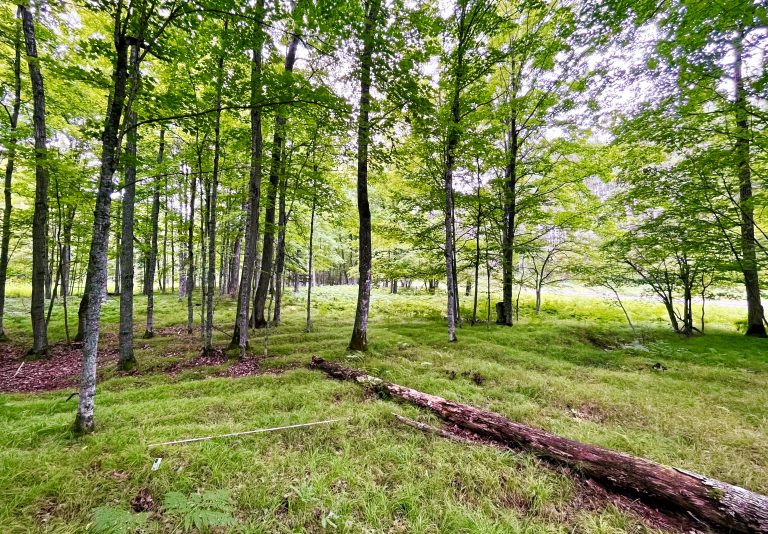
Archaeologists Uncover Massive 1000-Year-Old Native American Farms That Defy the Limits of Agriculture
Hidden beneath Michigan’s forests, researchers have uncovered vast ancient farmlands built by ancestral Menominee communities, revealing a complex agricultural system.
Puerto Rico shakes to a new beat
Reggaeton - a new musical form that combines reggae and Latin rhythms - is taking the island of Puerto Rico by storm.
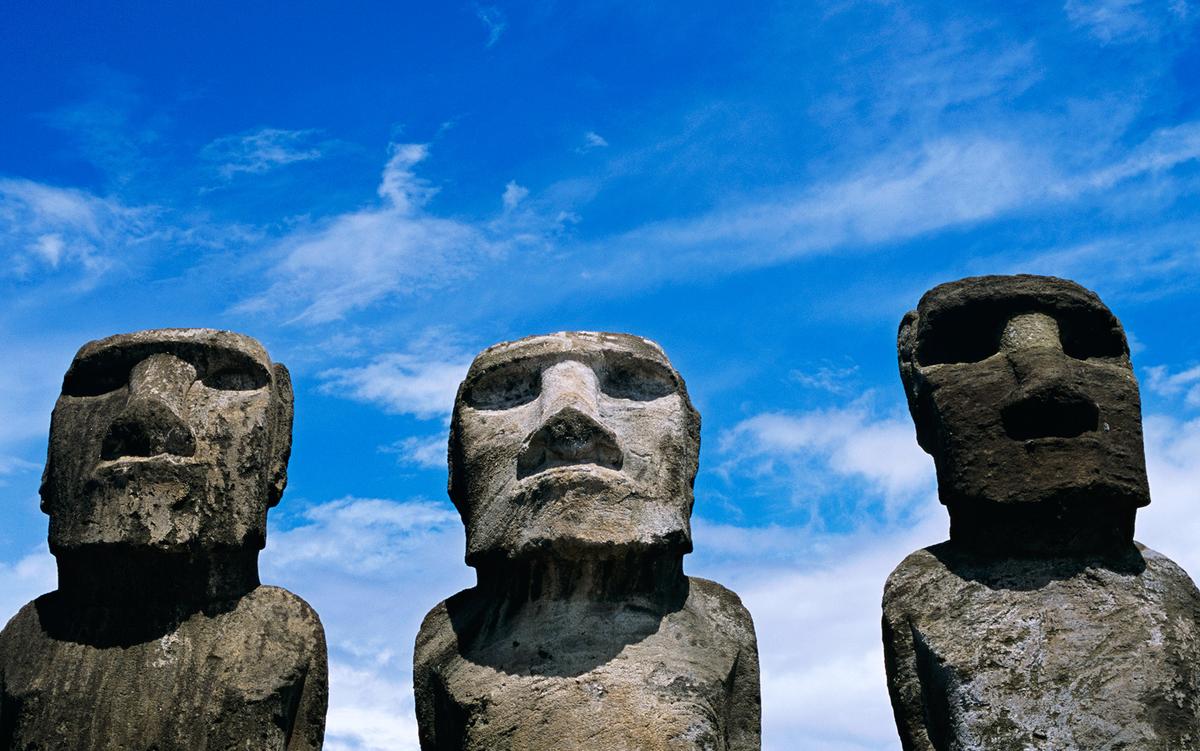
What the idea of civilisational ‘collapse’ says about history | Aeon Essays
The idea that the Maya or Easter Islanders experienced an apocalyptic end makes for good television but bad archaeology
“UNSETTLING LANDSCAPES: APPLICATIONS OF ETHNOBOTANICAL RESEARCH IN DEFINING ABORIGINAL RIGHTS AND RE-AFFIRMING INDIGENOUS LAWS IN T’SOU-KE TERRITORY, VANCOUVER ISLAND AND BEYOND.”
In this dissertation, I explore how, in Canada, Indigenous people’s relationships with culturally-significant plant species are an expression of Aboriginal rights, and I ask how these rights can be affirmed and exercised using a form of intersocietal law within and between First Nations and state governments. I examine how my own and others’ ethnobotanical and ethnoecological research can help to decolonize the Crown legal systems that limit Indigenous peoples in regenerating their relationships with native plant species and the ecosystems within which they are situated. In order to explore how Indigenous people’s relationships with native plant species can be expressed in law, my dissertation is grounded in a case study, developed and carried out in collaboration with the T’Sou-ke Nation, members of which have lived on southern Vancouver Island since time immemorial as part of the Straits Salish language group. Using the T’Sou-ke case study as an example, I explain how this evidence of knowledge and use of plants helps to root contemporary First Nations’ rights throughout their territories, which is essential to establishing the basis of land and resource rights that have legal force to be claimed today.I indicate current challenges faced by T’Sou-ke Nation in exercising plant-associated rights throughout their territory and outline how the current legal test for proving Aboriginal rights is problematic. The T’Sou-ke have an abundance of rich evidence of their use of 100 native plant species and of Indigenous laws and governance associated with the same. I contend that the obvious and long-standing Indigenous management of these plant species and various ecosystems on southern Vancouver Island supports a very significant claim of legal rights and I believe that my research is broadly applicable to other First Nations in BC and beyond. The T’Sou-ke Nation, historically and today, are norm creating, generating and interpreting people as reflected in their distinct social organization adapted and adjusted by their members through many changing social and ecological variables over centuries. The re-examination of the values, rules, protocols, customs and practices associated with markers of Indigenous plant use throughout Straits Salish landscapes, specifically with the assistance of Indigenous knowledge holders, as well as ethnohistorical, ethnobotanical, and traditional ecological knowledge, re-frames how evidence of land use and occupancy is presented, and, ultimately, how we might all govern these resources together. For the T’Sou-ke, laws around plants are not limited to certain traditional practices, or to specific sites or places; law also rests in species and in the long-term relationships that people have with culturally important plant species. As such, the normative ordering of T’Sou-ke laws relating to their plant use and management must be judged on T’Sou-ke terms, not by Canadian legal terms. My hope is that this research contributes to the larger discussion of acknowledging Indigenous peoples’ distinct and culturally relative rights and principles with respect to native plants, while strengthening and growing the ties that bind all British Columbians together.
Sazón and struggle: In Puerto Rico and Cuba, food is a marker of resilience and creativity
The two island nations, separated by almost 800 miles, have sister cuisines.

Decolonizing as a Spiritual Path- Leny Strobel, Center of Babaylan Studies
Not sure how I missed this paper.ore relevant than ever now. aclanthology.org/2023.emnlp-main.797/

We are Who We Cite: Bridges of Influence Between Natural Language Processing and Other Academic Fields
aclanthology.org