

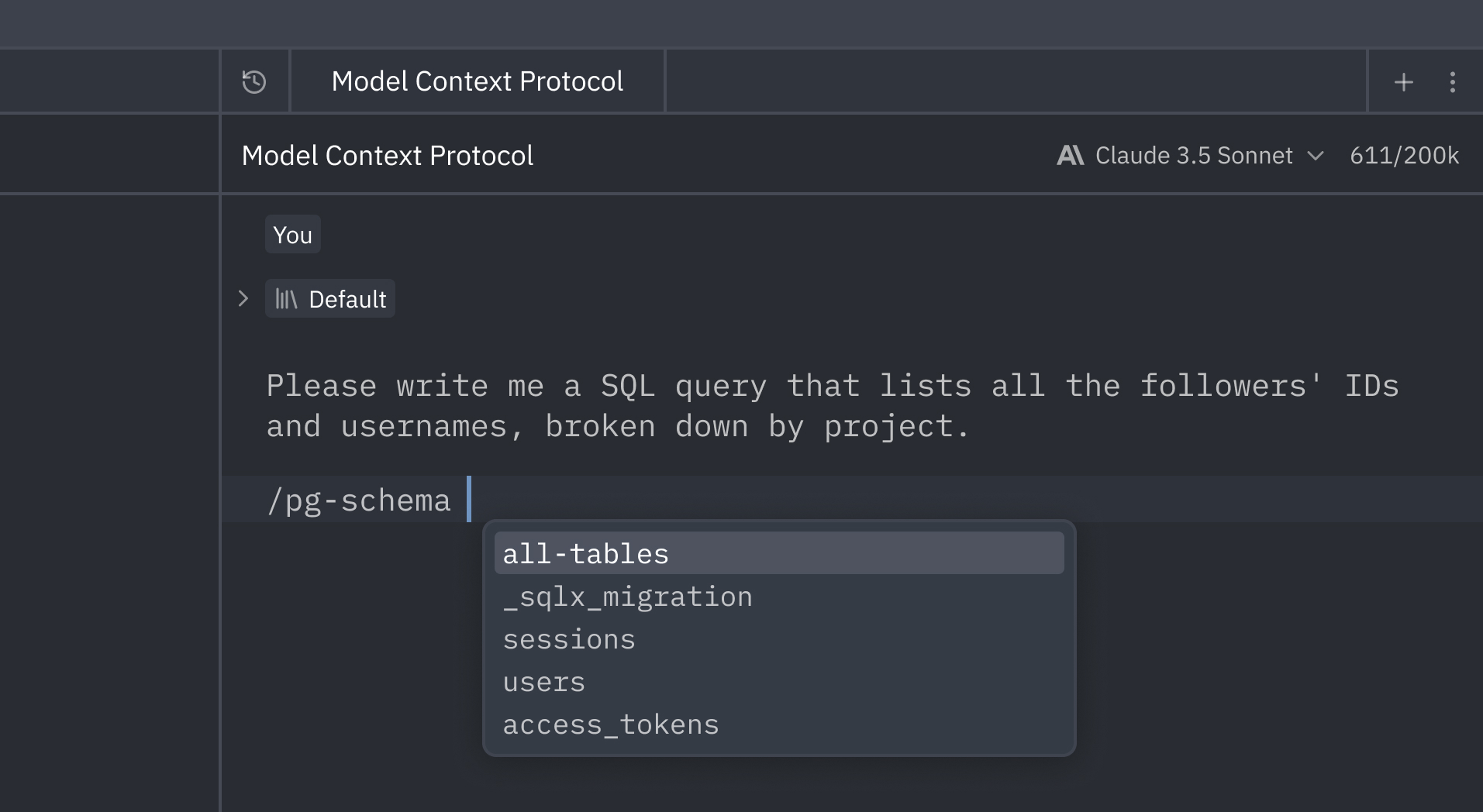
From the Zed Blog: How you can quickly add external context to language model conversations with Zed extensions built using the new Model Context Protocol.
yzfly/awesome-context-engineering
A curated collection of resources, papers, tools, and best practices for Context Engineering in AI agents and Large Language Models (LLMs).
Extending AI chat with Model Context Protocol (and why it matters)
Posted on Tuesday 11 Feb 2025. 2,995 words, 24 links. By Matt Webb.

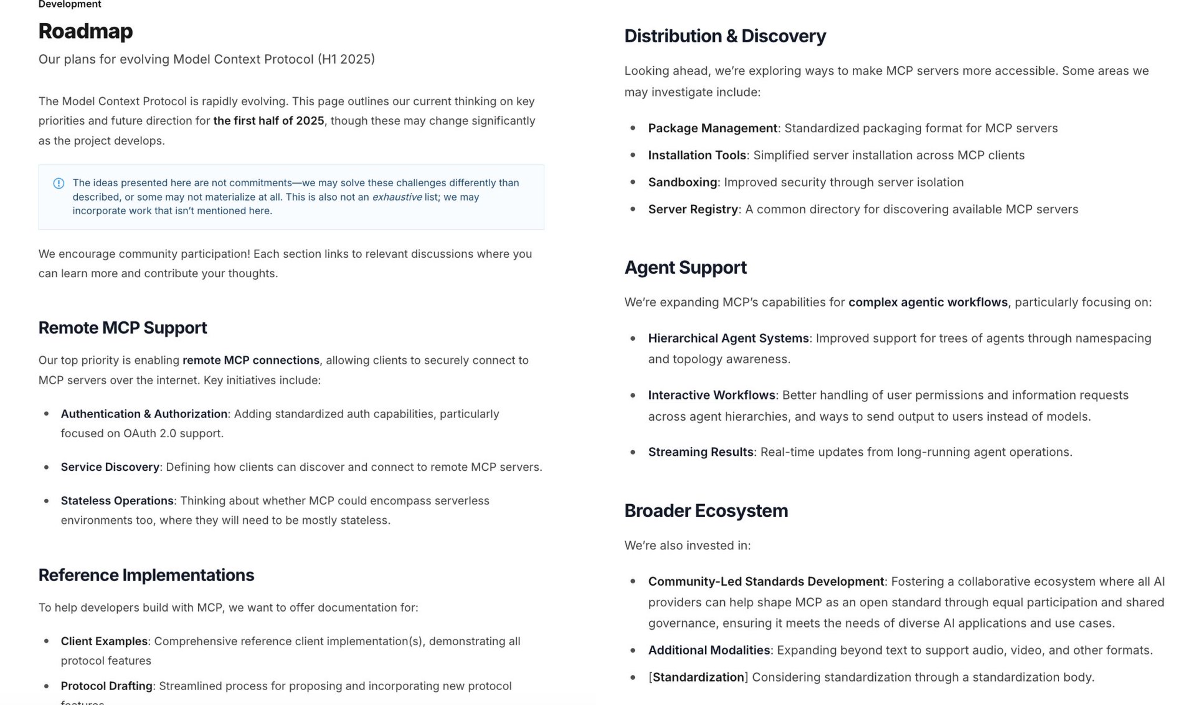
Roadmap - Model Context Protocol
Our plans for evolving Model Context Protocol
Context Engineering | Meetup
"Context engineering is the delicate art and science of filling the context window with just the right information for the next step" - Andrej KarpathyLearn about tools, frameworks, and code that is in service of context engineering from practitioners in this space.Dive into the set of strategies fo

Model Context Protocol
An open protocol that enables seamless integration between LLM applications and external data sources and tools. - Model Context Protocol

Lost in the Middle: How Language Models Use Long Contexts
While recent language models have the ability to take long contexts as input, relatively little is known about how well they use longer context. We analyze the performance of language models on two tasks that require identifying relevant information in their input contexts: multi-document question answering and key-value retrieval. We find that performance can degrade significantly when changing the position of relevant information, indicating that current language models do not robustly make use of information in long input contexts. In particular, we observe that performance is often highest when relevant information occurs at the beginning or end of the input context, and significantly degrades when models must access relevant information in the middle of long contexts, even for explicitly long-context models. Our analysis provides a better understanding of how language models use their input context and provides new evaluation protocols for future long-context language models.
Recursive Language Models: the paradigm of 2026
How we plan to manage extremely long contexts
.png?v=c8c07d4bf43b)
Luozhu on Twitter / X
I taught a speech model to understand context in conversation. This is what happenedIt adjusts voice and tone to express urgency, comfort, understanding from the dialogue. Just like a real human being520M model. Runs locally on consumer devicesHow this is achieved 🧵 pic.twitter.com/oMgSh2TKbO— Luozhu (@LuozhuZhang) February 27, 2026

Alex Albert on Twitter / X
We just published a near-term development roadmap for the model context protocol (MCP)Some highlights:- Remote support (and auth!)- Reference implementations- Better package management- Agent support pic.twitter.com/SflJi1RapH— Alex Albert (@alexalbert__) January 2, 2025
Alex Albert on Twitter / X
Introducing the Model Context Protocol (MCP)An open standard we've been working on at Anthropic that solves a core challenge with LLM apps - connecting them to your data.No more building custom integrations for every data source. MCP provides one protocol to connect them all: pic.twitter.com/kYsivQyPDq— Alex Albert (@alexalbert__) November 25, 2024

Introducing the Model Context Protocol
The Model Context Protocol (MCP) is an open standard for connecting AI assistants to the systems where data lives, including content repositories, business tools, and development environments. Its aim is to help frontier models produce better, more relevant responses.

Context Rot: How Increasing Input Tokens Impacts LLM Performance
Large Language Models (LLMs) are typically presumed to process context uniformly—that is, the model should handle the 10,000th token just as reliably as the 100th. However, in practice, this assumption does not hold. We observe that model performance varies significantly as input length changes, even on simple tasks. In this report, we evaluate 18 LLMs, including the state-of-the-art GPT-4.1, Claude 4, Gemini 2.5, and Qwen3 models. Our results reveal that models do not use their context uniformly; instead, their performance grows increasingly unreliable as input length grows.
GitHub - facebookresearch/context-language-models: Official repository for "Context Language Models"
Official repository for "Context Language Models". Contribute to facebookresearch/context-language-models development by creating an account on GitHub.