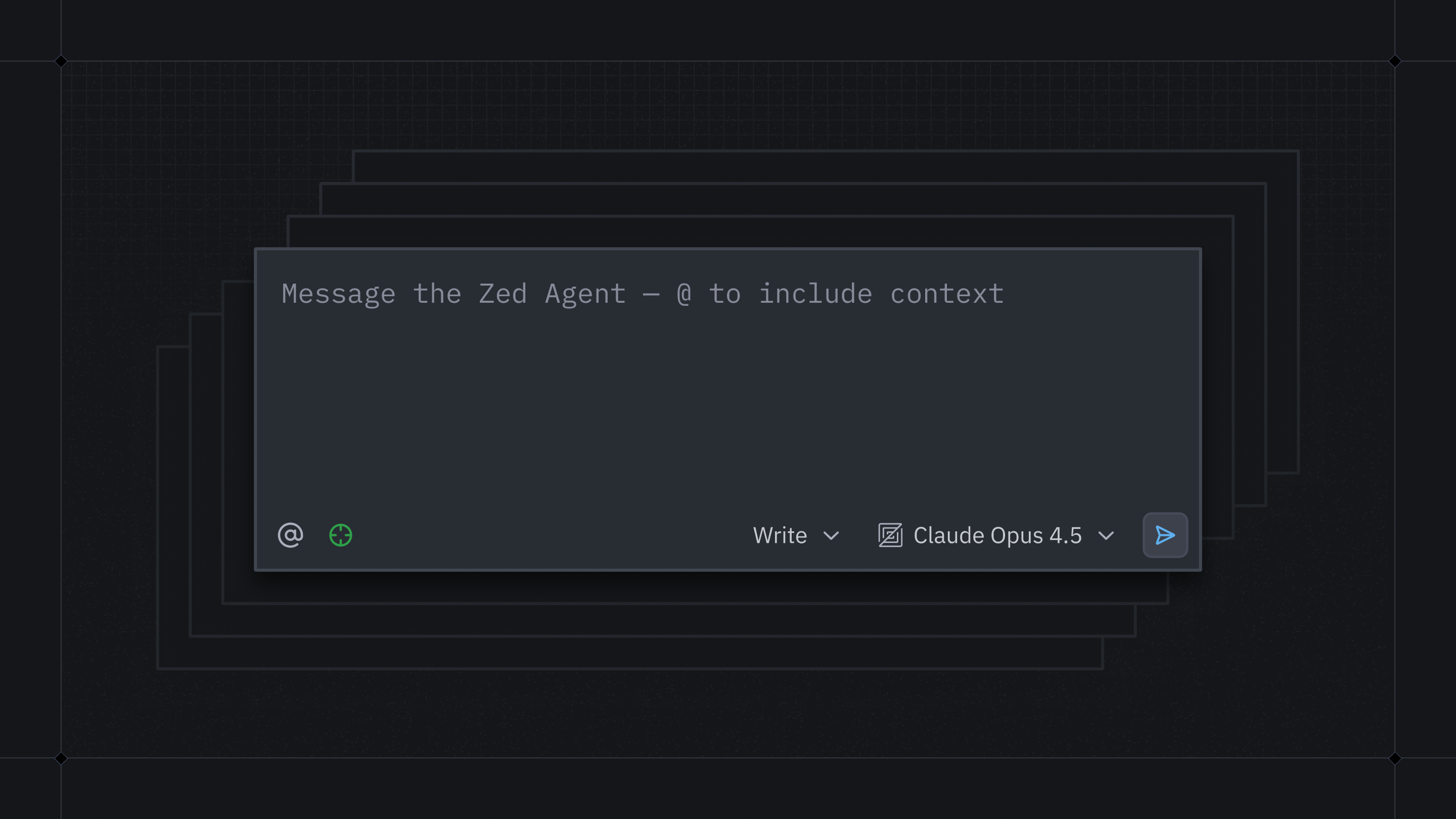
From the Zed Blog: Agents handle typing so we can focus on thinking.
Introducing Delta
From the Zed Blog: A multiplayer environment for coding with agents, from the creators of Zed.
Joshua Gu on Twitter / X
Recent agentic systems (Claude Code, Codex, RLM, etc.) push context out of the prompt and into the environment (e.g., as files). This helps them maintain long-term knowledge about their goals and functionality.🚨 While this is a good idea, we show a surprising result: systems… pic.twitter.com/XHFVaDcr4l— Joshua Gu (@astrogu_) May 20, 2026

Rachel Thomas on Twitter / X
"We argue for a reorientation from autonomous to human-centered coding agents: systems designed not only to complete tasks, but to collaborate effectively with people."@ZhiruoW @jyangballin @KLierethttps://t.co/ncWiAUxwbo 1/— Rachel Thomas (@math_rachel) October 20, 2026

Build Agent Advocates, Not Platform Agents
Language model agents are poised to mediate how people navigate and act online. If the companies that already dominate internet search, communication, and commerce -- or the firms trying to unseat...

AI Agents Will Become the New UI, and Apps Take a Backseat
For decades, screens, keyboards, and structured applications have shaped our relationship with technology. People learned how to interact with computers


Agent Skills
AI coding agents take the shortest path to done, which usually means skipping the specs, tests, and reviews that make software reliable at scale. Agent Skill...

Google for Developers Blog - News about Web, Mobile, AI and Cloud
An open specification for finding and verifying tools, skills, and agents across the web.Agents are ...

Google for Developers Blog - News about Web, Mobile, AI and Cloud
An open specification for finding and verifying tools, skills, and agents across the web.Agents are ...
Introducing Cursor 2.0 and Composer · Cursor
A new interface and our first coding model, both purpose-built for working with agents.

Writing with AI help can shift your opinions | Cornell Chronicle
Artificial intelligence-powered writing assistants that autocomplete sentences or offer “smart replies” not only put words into people’s mouths, they also put ideas into their heads, according to new research.

browser-use/browser-use
🌐 Make websites accessible for AI agents. Automate tasks online with ease.
The Rise of Agent Experience (AX)
Cognition | Agent Trace: Capturing the Context Graph of Code
We’re excited to join in Cursor, Cloudflare, Vercel, git-ai, OpenCode and others in support of [Agent Trace](https://agent-trace.dev/). As described in the spec, Agent Trace is an open, vendor-neutral spec for recording AI contributions alongside human authorship in version-controlled codebases.