

This paper treats AI as diagnostic for the deeper changes taking place in the existing order of things. It uses AI's alignment with both the political economy and with the dualisms that underpin it, including race, gender and anthropocentrism, to highlight the nihilistic character of the current restructuring. AI's scaling and accelerationism are taken as examples of the wider tactics being invoked by hegemonic power to maintain control under changing conditions. From this perspective, the massive build-out of data centres isn't simply a seizure of energy resources but a manifestation of an aggressive and misogynist technopolitics. The paper argues that a liberal push for digital sovereignty doesn't interrupt these dynamics but plays into the hands of emerging technofascism. It proposes instead the prefigurative tactic of 'decomputing', which draws on degrowth, deautomatisation and a convivial approach to technology. It explores decomputing as a means to mitigate both material and relational harms and as a decisive turn towards infrastructuring the common good. The paper concludes that AI is the contradiction that reveals many others, not least the gap between claims to legitimacy and the actuality of destructive violence, and proposes an alternative technopolitics of reciprocity that prioritises care and sustainability.
AI, Decomputing and the Interregnum
This paper treats AI as diagnostic for the deeper changes taking place in the existing order of things. It uses AI's alignment with both the political economy and with the dualisms that underpin it, including race, gender and anthropocentrism, to highlight the nihilistic character of the current restructuring. AI's scaling and accelerationism are taken as examples of the wider tactics being invoked by hegemonic power to maintain control under changing conditions. From this perspective, the massive build-out of data centres isn't simply a seizure of energy resources but a manifestation of an aggressive and misogynist technopolitics. The paper argues that a liberal push for digital sovereignty doesn't interrupt these dynamics but plays into the hands of emerging technofascism. It proposes instead the prefigurative tactic of 'decomputing', which draws on degrowth, deautomatisation and a convivial approach to technology. It explores decomputing as a means to mitigate both material and relational harms and as a decisive turn towards infrastructuring the common good. The paper concludes that AI is the contradiction that reveals many others, not least the gap between claims to legitimacy and the actuality of destructive violence, and proposes an alternative technopolitics of reciprocity that prioritises care and sustainability.
Beyond AI: Infrastructuring the Common Good
Rather than taking AI as a central focus, this paper treats it as diagnostic of deeper contradictions. AI intensifies extractivism while being unable to deliver on its promises, and its rampant scaling of energy and resource demands heralds a form of ‘total mobilisation’. This paper proposes decomputing as a programme for pushing back against such technocratic nihilism. Decomputing adopts a degrowth framework and advocates for reclaiming agency through deautomatisation and people’s councils, in order to develop convivial alternatives that centre an ethics of care. It is a philosophical and tactical response to the wider crisis of care induced by the collapse of existing systems. Decomputing proposes a prefigurative praxis for those experiencing ruptures in the infrastructures of everyday life, while minimising the opening for an authoritarian turn or war economy. Rather than capitulating to an increasingly fascistic world order, decomputing advocates a shift in the idea of order itself, one that means challenging the idea that ever more advanced tech is synonymous with progress. The paper argues that reclaiming critical infrastructures can be decoupled from the collapse of the general technopolitical regime, and makes a plausibility argument informed by destituent power and largely forgotten British cybernetics. Where the Luddite call was to ‘put down all machinery hurtful to the Commonality’, the goal of decomputing is the infrastructuring of the common good.
From the Platform Society to the AI Society: Towards Critical Studies of Generative AI
The era of AI has begun. Generative AI is rapidly reshaping knowledge production, culture, and political authority, giving rise to an emerging AI society. Yet this transformation did not emerge ex nihilo. This paper argues that the AI society can only be understood in relation to the platform society from which it arises. Tracing the transition from platforms to AI, we identify interlinked economic, epistemic, and political shifts. Economically, AI emerges within platform-based rentier capitalism but reconfigures the monopoly mechanisms on which its accumulation depends. Epistemically, LLMs mark a shift from predictive to generative epistemics, entangling theory formation and knowledge production with private research-as-a-service infrastructures. Politically, governance shifts from data politics to alignment politics: from shaping visibility to shaping what can be said, thought, and imagined. Together, these transformations signal a qualitative shift in mediation—from governing interaction to governing cognition itself—and call for a Critical AI Studies.
Computing, Complexity and Degrowth : Systemic Considerations for Digital De-escalation
Research on digital degrowth predominantly critiques digital expansion or presents alternative digital practices. Yet, analyzing the link between digital technologies and complexity is crucial to overcome systemic obstacles hindering digital de-escalation. This article presents the different types of links between complexity and computing observed in the literature: the infrastructural complexity inherent in digital technologies, the socio-political complexity induced by them, and finally, the ontological complexity (individual’s ways of relating to their environment) hindered by digitization. The paper explores these links to identify ways to reduce infrastructural and socio-political complexities, and to move away from the reductionist paradigm, in order to support digital degrowth. Its development shows that complexity induces ratchet effects (i.e. irreversibilities in the development of a technique in a society), rendering degrowth efforts difficult to handle by individuals. Therefore, strategies to overcome these barriers are proposed, suggesting that bottom-up simplification approaches stand a greater chance of making alternatives emerge from different stakeholders (including users). This digital shift assumes the development of methods and technical tools that enable individuals to disengage from their attachments to digital habits and infrastructure, opening a substantial field of study.
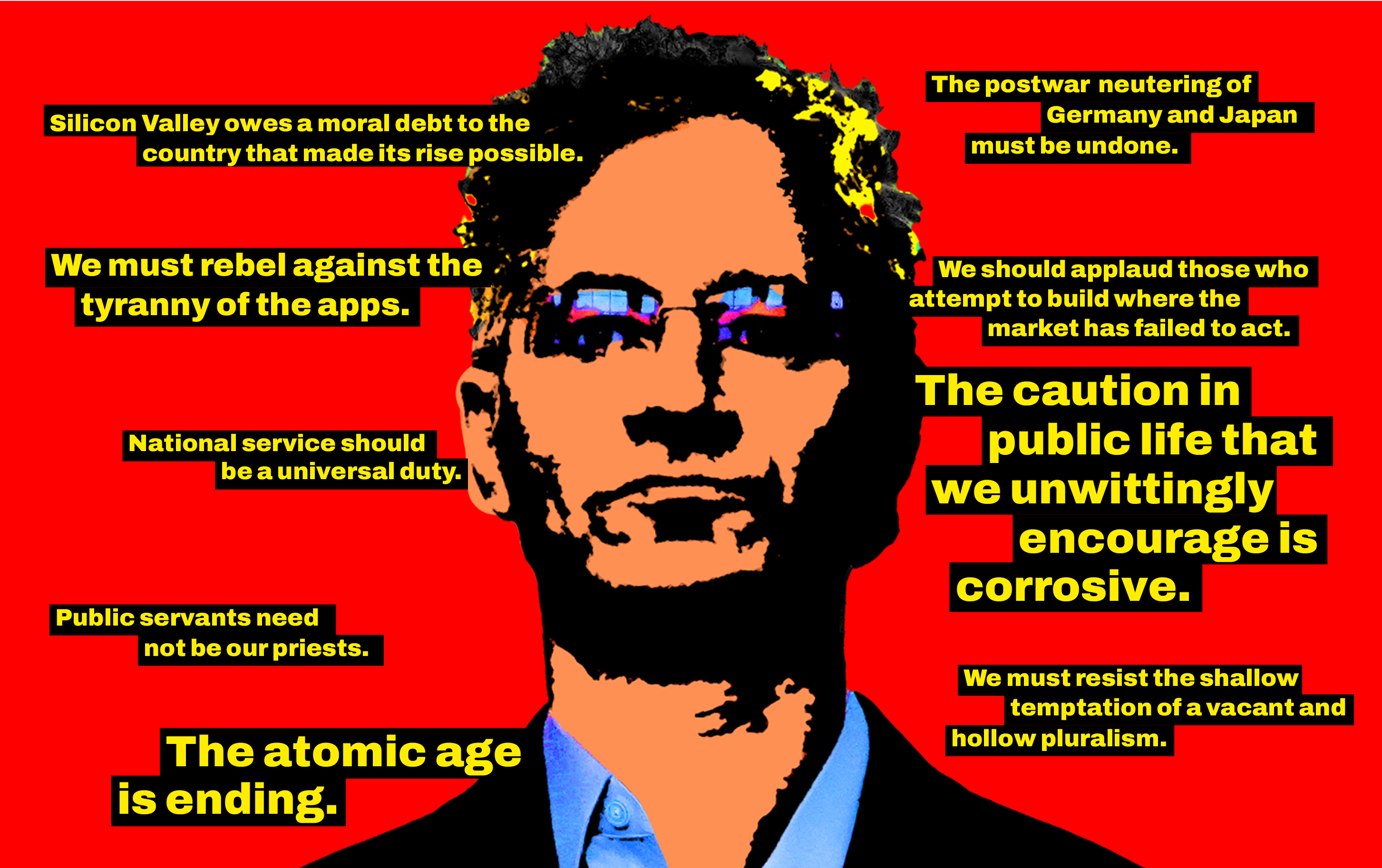
Palantir's social media manifesto is a blueprint for technofascism
The surveillance firm’s viral X post calls for hard power, conscription and the end of pluralism. AI expert and academic Mark Coeckelbergh on what happens when technology becomes the gateway to authoritarianism
Field Theory: AI as Social Science Question, Object & Tool
Uses of advanced artificial intelligence are changing how societies organize labor, govern, produce knowledge, and make meaning. In light of these developments, this essay argues that AI models, tools, and systems pose three interrelated imperatives for social science: they demand renewed attention to social theories of how technology, human experience, and social order are entangled; they require study as objects of inquiry in their own right; and they offer capabilities that may transform—or upend—the practice of social investigation itself. From Weber’s analysis of rationalization to Du Bois’s study of technology and inequality to contemporary scholarship on algorithmic governance, the essay examines what social science distinctively offers: the capacity to historicize the apparently unprecedented, to trace connections across scales, and to center those most affected by technological change. It identifies how algorithmic systems are remaking the distribution of opportunity and risk as a central task of social inquiry and asks what futures social science might help bring into being.
Information Access of the Oppressed: A Problem-Posing Framework for Envisioning Emancipatory Information Access Platforms
Online information access (IA) platforms are targets of authoritarian capture. These concerns are particularly serious and urgent today in light of the rising levels of democratic erosion worldwide, the emerging capabilities of generative AI technologies such as AI persuasion, and the increasing concentration of economic and political power in the hands of Big Tech. This raises the question of what alternative IA infrastructure we must reimagine and build to mitigate the risks of authoritarian capture of our information ecosystems. We explore this question through the lens of Paulo Freire's theories of emancipatory pedagogy. Freire's theories provide a radically different lens for exploring IA's sociotechnical concerns relative to the current dominating frames of fairness, accountability, confidentiality, transparency, and safety. We make explicit, with the intention to challenge, the dichotomy of how we relate to technology as either technologists (who envision and build technology) and its users. We posit that this mirrors the teacher-student relationship in Freire's analysis. By extending Freire's analysis to IA, we challenge the notion that it is the burden of the (altruistic) technologists to come up with interventions to mitigate the risks that emerging technologies pose to marginalized communities. Instead, we advocate that the first task for the technologists is to pose these as problems to the marginalized communities, to encourage them to make and unmake the technology as part of their material struggle against oppression. Their second task is to redesign our online technology stacks to structurally expose spaces for community members to co-opt and co-construct the technology in aid of their emancipatory struggles. We operationalize Freire's theories to develop a problem-posing framework for envisioning emancipatory IA platforms of the future.

The rise of AI sovereignty: Authoritarian technological imaginaries as a form of reflexive control
Recent literature increasingly examines generative artificial intelligence's (AI's) role in disinformation and propaganda as a key driver of digital authoritarianism. Yet, less attention has been paid to how authoritarian regimes may influence the global governance of AI itself. This essay addresses this gap by analysing the impact of authoritarian technological imaginaries, focusing on the rise of ‘AI sovereignty’ as a central concept shaping global AI governance. It adopts a conceptual framework that combines the notion of imaginaries with the concept of reflexive control, originating in Soviet strategic thought and referring to influencing an adversary's perceptions so they act in ways aligned with the initiator's goals, to study authoritarian diffusion and the global politics of AI. Through an examination of public statements by the Russian president, the study shows how Russia constructs an AI imaginary that extends Cold War logics of nuclear competition into the digital era, framing AI as a matter of security and survival rather than ethics or rights. Drawing on the Russian case, the analysis identifies three frames that underpin the authoritarian AI imaginary: AI as a tool for power and domination; Western AI as a cultural threat; and AI as a guarantor of state efficiency. The article argues that such imaginaries shape the cognitive environment of global policy debates, promoting sovereignty-centred and securitised approaches to AI governance. It suggests that recognising the role of reflexive control in authoritarian diffusion helps distinguish legitimate Global South concerns from authoritarian influence and supports more inclusive and resilient models of AI governance.

The rise of AI sovereignty: Authoritarian technological imaginaries as a form of reflexive control
Recent literature increasingly examines generative artificial intelligence's (AI's) role in disinformation and propaganda as a key driver of digital authoritarianism. Yet, less attention has been paid to how authoritarian regimes may influence the global governance of AI itself. This essay addresses this gap by analysing the impact of authoritarian technological imaginaries, focusing on the rise of ‘AI sovereignty’ as a central concept shaping global AI governance. It adopts a conceptual framework that combines the notion of imaginaries with the concept of reflexive control, originating in Soviet strategic thought and referring to influencing an adversary's perceptions so they act in ways aligned with the initiator's goals, to study authoritarian diffusion and the global politics of AI. Through an examination of public statements by the Russian president, the study shows how Russia constructs an AI imaginary that extends Cold War logics of nuclear competition into the digital era, framing AI as a matter of security and survival rather than ethics or rights. Drawing on the Russian case, the analysis identifies three frames that underpin the authoritarian AI imaginary: AI as a tool for power and domination; Western AI as a cultural threat; and AI as a guarantor of state efficiency. The article argues that such imaginaries shape the cognitive environment of global policy debates, promoting sovereignty-centred and securitised approaches to AI governance. It suggests that recognising the role of reflexive control in authoritarian diffusion helps distinguish legitimate Global South concerns from authoritarian influence and supports more inclusive and resilient models of AI governance.
Gradual disempowerment | 80,000 Hours
The proliferation of advanced AI systems may lead to the gradual disempowerment of humanity, even if efforts to prevent them from becoming power-seeking or scheming are successful. Humanity may be incentivised to hand over increasing amounts of control to AIs, giving them power over the economy, politics, culture, and more. Over time, humanity's interests may be sidelined and our control over the future undermined, potentially constituting an existential catastrophe. There's disagreement over how serious a problem this is and how it relates to [other concerns about AI alignment](https://80000hours.o

A Real Political Economy of Technology - The Ideas Letter
Two technological futures are competing for political and material priority: generative AI and the green transition. Benanav argues that while AI is marketed as a world-reordering breakthrough, its productivity gains…

Myopic memory: Capitalism's new continuity in the age of AI
This article is a commentary on the relationship between artificial intelligence (AI), capitalism, and memory. The political policies of neoliberalism have reduced the capacity of individuals and groups to reflect on and change the social world, meanwhile applications of AI and algorithmic technologies, rooted in the profit-seeking objectives of global capitalism, deepen this deficit. In these conditions, memory in individuals and across society is at risk of becoming myopic. In this article, I develop the concept of myopic memory with two core claims. Firstly, I argue that AI is a technological development that cannot be divorced from the capitalist conditions from which it comes from and is implemented in service of. To this end, I reveal capitalism and colonialism's historical and contemporary use of surveillance as a way to control the populations it oppresses, imagining their pasts to determine their futures, disempowering them in the process. My second core claim emphasises that this process of disempowerment is undergoing an acute realisation four decades into the period of neoliberalism. Neoliberal policies have restructured society on the basis of being an individual consumer, leaving little time, space, and institutional capacity for citizens to reflect on their impact or challenge their dominance. As a result, with the growing role of AI and algorithmic technologies in shaping our engagement with society along similar lines of individualism, it is my conclusion that the scope of memory is being reduced and constrained within the prism of capitalism, reducing its potential, and rendering it myopic.

EU-AI | Igor L.
The geopolitical landscape is shifting from physical borders to digital infrastructure. Here is a factual breakdown of how a $500 billion investment in "Sovereign AI" is changing global power dynamics. The Shift: From Land to "Substrate" Historically, a nation’s power was defined by its territory and legal systems (the Westphalian model). Today, power is increasingly tied to the compute substrate—the physical hardware and energy required to run AI. 1. Infrastructural Enclosure The "Sovereign Compute Coalition" (SCC) represents a massive consolidation of power. Major private entities are acquiring the three pillars of modern national strength: * Hardware: High-end AI chips (e.g., Nvidia). * Energy: The massive power grids needed to fuel them. * Data Centers: The physical "brains" of the digital economy. 2. The Rise of Technocracy As private companies own these essential tools, governments may find themselves in a position where they effectively "rent" their ability to govern. This moves decision-making power away from elected officials and toward those who control AI infrastructure. 3. Europe’s Strategic Response Europe is launching several initiatives to avoid becoming a "client state" of foreign tech providers. The strategy focuses on four main channels: * 8ra Initiative: Building a decentralized, multi-provider cloud-edge architecture to ensure data remains under European control and interoperable across borders. * ReArm Europe: A strategic defense package (presented in March 2025) aimed at boosting industrial competitiveness and reducing strategic dependencies in technology and defense. * Sovereign LLMs: Developing domestic models, such as Mistral, that are designed to align with European data privacy standards and cultural values. * Energy & Procurement: Using public procurement and new regulatory frameworks to create demand for homegrown, sustainable energy-efficient compute solutions. The goal of these moves is #DigitalSovereignty : the ability for a region to control its own digital destiny without relying exclusively on transnational monopolies. Data tells the real story. Are you following it? Follow #datanomics

3: Consulting the Record: AI Consistently Fails the Public - AI Now Institute
Amid the excitement over AI’s (speculative, hypothetical) potential, we have lost sight of the sobering reality of its present and recent past. AI is already intermediating critical social infrastructures, materially reshaping our institutions in ways that ratchet up inequality and concentrate power in the hands of the already powerful. It is consistently deployed in ways […]
Interoperable Sovereignty: The Democratic Alternative to Digital Authoritarianism
A Democratic Architecture for the Digital Age Digital sovereignty has become a central concern for governments worldwide, yet its meaning remains contested. Too often it is framed as...

"The forces that are now shaping AI are the same forces that turned the open internet into monopolistic platforms, converted peer-to-peer participation into precarious labor, and enclosed the digital commons. They are now threatening to capture and enclose thought itself." osf.io/preprints/socarxiv/qahd3_v1/
