

This declaration calls for action to address the challenges posed by the use of artificial intelligence within mathematics research.
Leiden Declaration on Artificial Intelligence and Mathematics
This declaration calls for action to address the challenges posed by the use of artificial intelligence within mathematics research.
Leiden Declaration on Artificial Intelligence and Mathematics
This declaration calls for action to address the challenges posed by the use of artificial intelligence within mathematics research.
Leiden Declaration on Artificial Intelligence and Mathematics
This declaration calls for action to address the challenges posed by the use of artificial intelligence within mathematics research.
Thoughts about the Leiden Declaration
Last September I went to a workshop at the Lorentz Centre in Leiden to discuss mathematics and AI with historians, philosophers, computer scientists, AI researchers, and mathematicians of several d…

Mathematics in the age of AI
An essay, based on a public lecture delivered at the 2026 International Congress of Mathematicians, on how the mathematical community might respond to the arrival of artificial intelligence tools that are capable of performing research-level mathematical tasks. Rather than debating the capabilities of such tools, we condition on the hypothesis that these capabilities will arrive, and examine instead a question that is orthogonal to it: what the goals and values of mathematical research actually are. The problem-solving component of mathematics is used as a case study.

Announcing the Advisory Group on Mathematics and Artificial Intelligence
[This is a guest post by the Advisory Group on Mathematics and Artificial Intelligence. This blog post was initially written in a different file format and converted using AI. — T.] We would …

A Severe Misalignment of AI in Mathematics
I am proud to be among the list of 25 initial signatories — all Fields Medallists — to the declaration below, which grew out of discussions between ourselves over the last week. We have…
Mathematical Beauty, Truth and Proof in the Age of AI | Quanta Magazine
Mathematicians have started to prepare for a profound shift in what it means to do mathematics.
No. 008: AI co-mathematician, compiler-verified protocols, open infrastructure bets - The Hallway Track
The Hallway Track No. 008 - How AI is affecting the practice of science
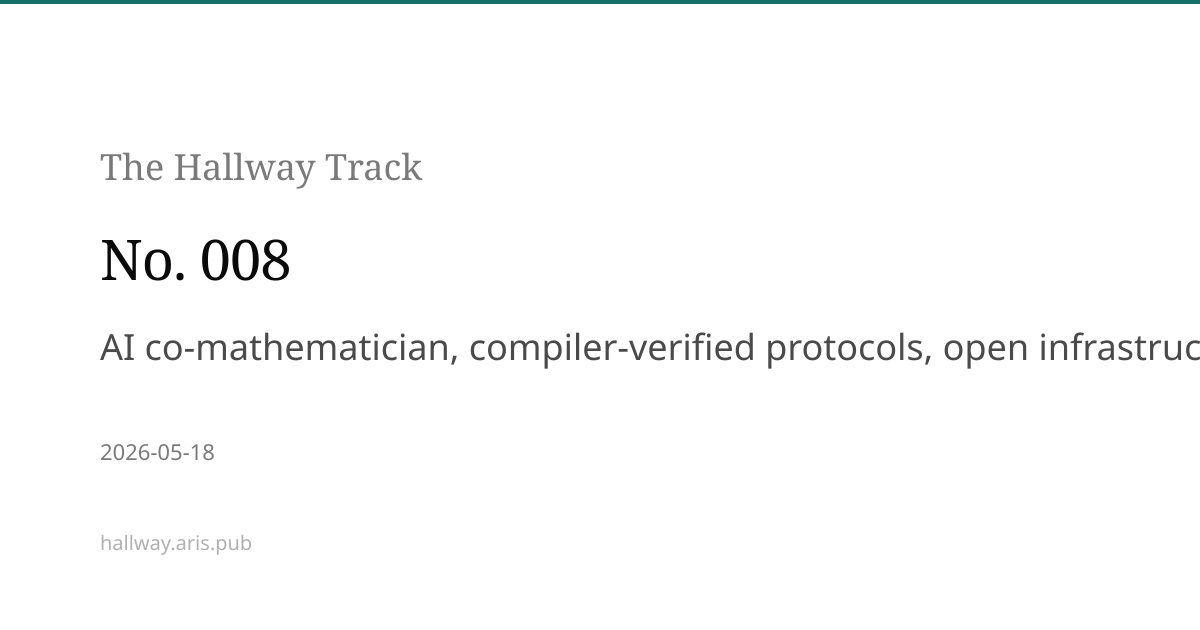
What it Means to Be a Mathematician When AI Does the Math
Researchers debate motivation, purpose, and the field’s future

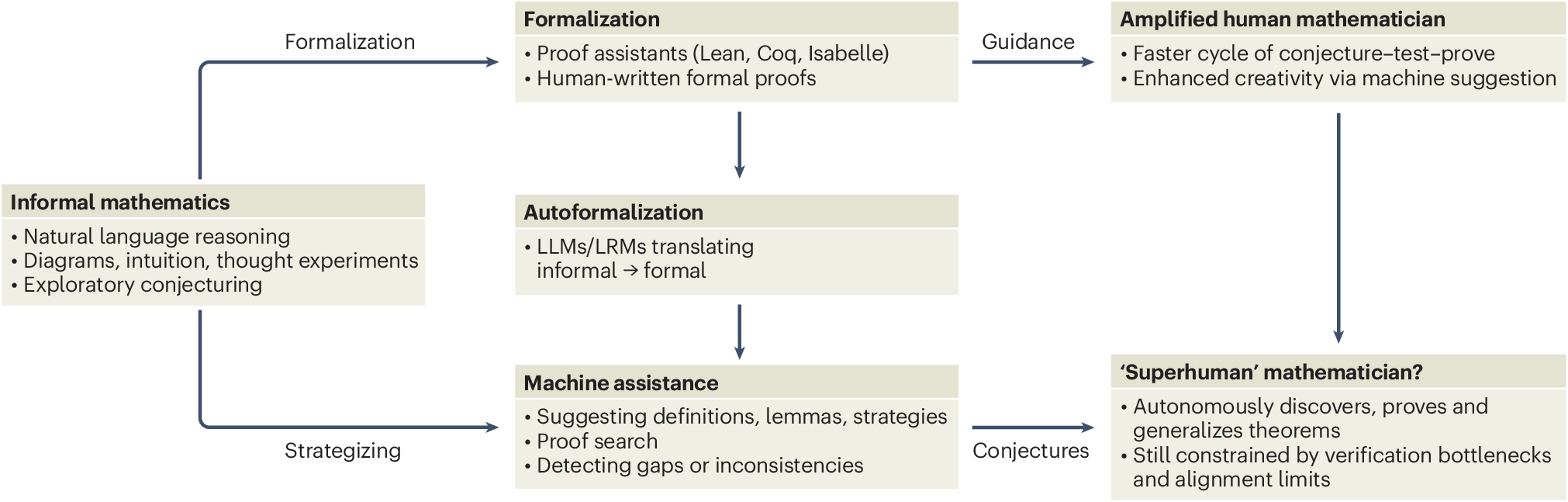
Mathematical discovery in the age of artificial intelligence
In this comment, we consider how artificial intelligence tools are reshaping the way mathematical research is conducted and discuss how future developments of this technology will transform mathematical practice.
Artificial intelligence in mathematics education: The good, the bad, and the ugly
Integrating Artificial Intelligence [AI] into mathematics education offers promising advancements and potential pitfalls. Striking a balance between AI-driven developments and preserving core pedagogical principles is critical in the teaching and learning environment. AI has emerged as a transformative force in various fields, including education. In the realm of mathematics education, AI technologies offer a spectrum of potential benefits (including personalize instruction, adaptive assessment, interactive learning environments, and real-time feedback, among others) and challenges (such as lack of creativity and problem-solving skills, inability to explain reasoning, bias in data and algorithms, absence of emotional intelligence and data privacy and security concern etc). This conceptual study used autoethnography as the methodology and qualitative content approach to analyze data. The study discussed historical background of AI and considered ethical issues around AI. It was concluded that the journey to harness the full potential of AI in mathematics education requires careful navigation of the good, the bad, and the ugly aspects inherent in this technological evolution.
The AI Revolution in Math Has Arrived | Quanta Magazine
AI is being used to prove new results at a rapid pace. Mathematicians think this is just the beginning.
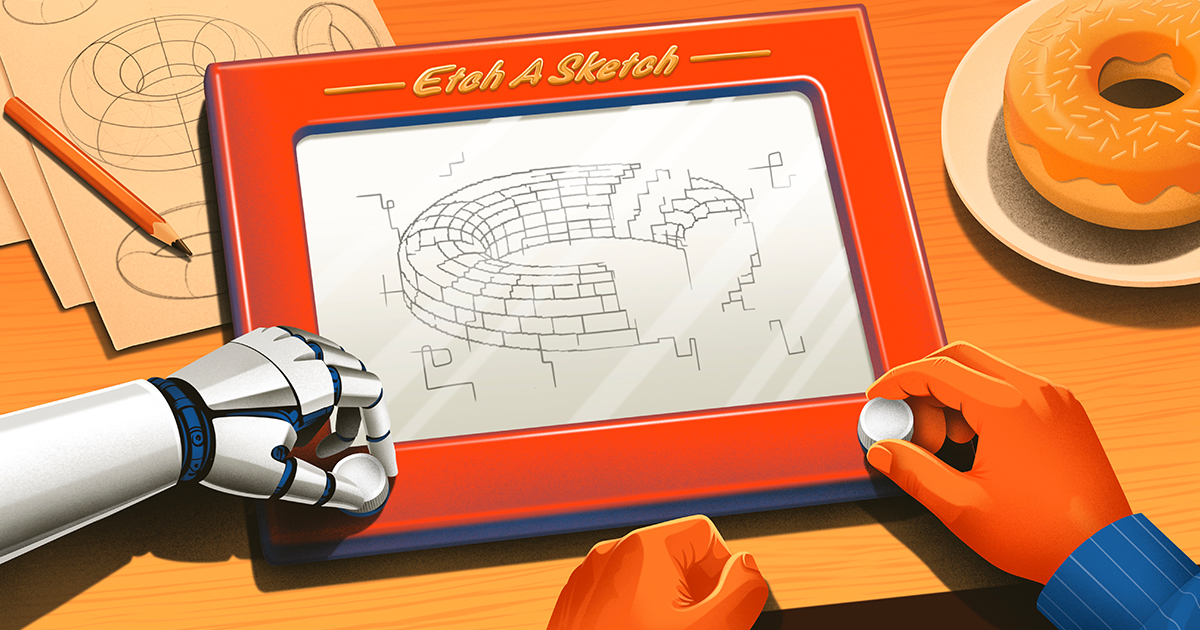
Is AI the End of Math As We Know It? | Quanta Magazine
Mathematicians are facing the sudden shift with grief, anger, and a desperate search for fresh ideas: “If we don’t adapt, there’s just no more math in 50 years.”

Thoughtful and relevant outside math. A partial summary: Gowers thinks it’s important to sustain a human mathematical culture, but is unconvinced by the Leiden Declaration’s attempt to do that by reaffirming human ownership of specific *discoveries*.

tachikoma
an interesting blog post by Timothy Gowers on the Leiden declaration (on AI and Math), on why he didn't sign. it gets to a subtler aspect of control over AI and our future.
