


Chela Giraldo explains how disabled states harm accessibility and what to do instead to build clearer, more inclusive user interfaces.
New HTML and CSS features you should be using in your design system - zeroheight
Declan Chidlow explores new HTML and CSS features that can make your design system more flexible, adaptable, and maintainable.


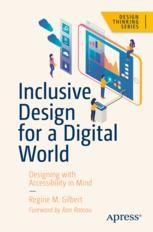
Inclusive Design for a Digital World
In this book, readers will learn the Web Content Accessibility Guidelines (WCAG) 2.1 requirements, emerging technologies such as VR and AR, best practices for web development, and implementation of inclusive design. Begin understanding the immense opportunities in designing for accessibility.
Substrates via Accessibility
The social model of disability holds that disability is produced by environments, not by bodies — that when software fails to accommodate a person’s needs, the environment is disabling them. We argue that the dominant organization of computing produces such interaction mismatches structurally: the commodity form of software requires a standardized consumer, and everyone whose needs diverge from this imagined subject is disabled by the software environment. The substrates research community has identified properties — disclosure, composability, malleability — that would address this, but the commodity form actively selects against these properties because they dissolve the boundaries on which exchange value depends. This raises a question: how can infrastructure organized against the grain of commodity logic be made durable? We find a precedent in accessibility infrastructure — sustained not by patronage but by the organized counter-power of disability rights movements. Through Allio, a system for cross-application augmentation built on accessibility APIs, we illustrate both what this foundation makes possible and where its limits lie. We argue that the accessibility case reframes the substrates programme’s central challenge as political-economic: the question of who sustains substrate infrastructure, and through what social mechanisms, is as important as the question of what properties it should have.
Substrates via Accessibility
The social model of disability holds that disability is produced by environments, not by bodies — that when software fails to accommodate a person’s needs, the environment is disabling them. We argue that the dominant organization of computing produces such interaction mismatches structurally: the commodity form of software requires a standardized consumer, and everyone whose needs diverge from this imagined subject is disabled by the software environment. The substrates research community has identified properties — disclosure, composability, malleability — that would address this, but the commodity form actively selects against these properties because they dissolve the boundaries on which exchange value depends. This raises a question: how can infrastructure organized against the grain of commodity logic be made durable? We find a precedent in accessibility infrastructure — sustained not by patronage but by the organized counter-power of disability rights movements. Through Allio, a system for cross-application augmentation built on accessibility APIs, we illustrate both what this foundation makes possible and where its limits lie. We argue that the accessibility case reframes the substrates programme’s central challenge as political-economic: the question of who sustains substrate infrastructure, and through what social mechanisms, is as important as the question of what properties it should have.
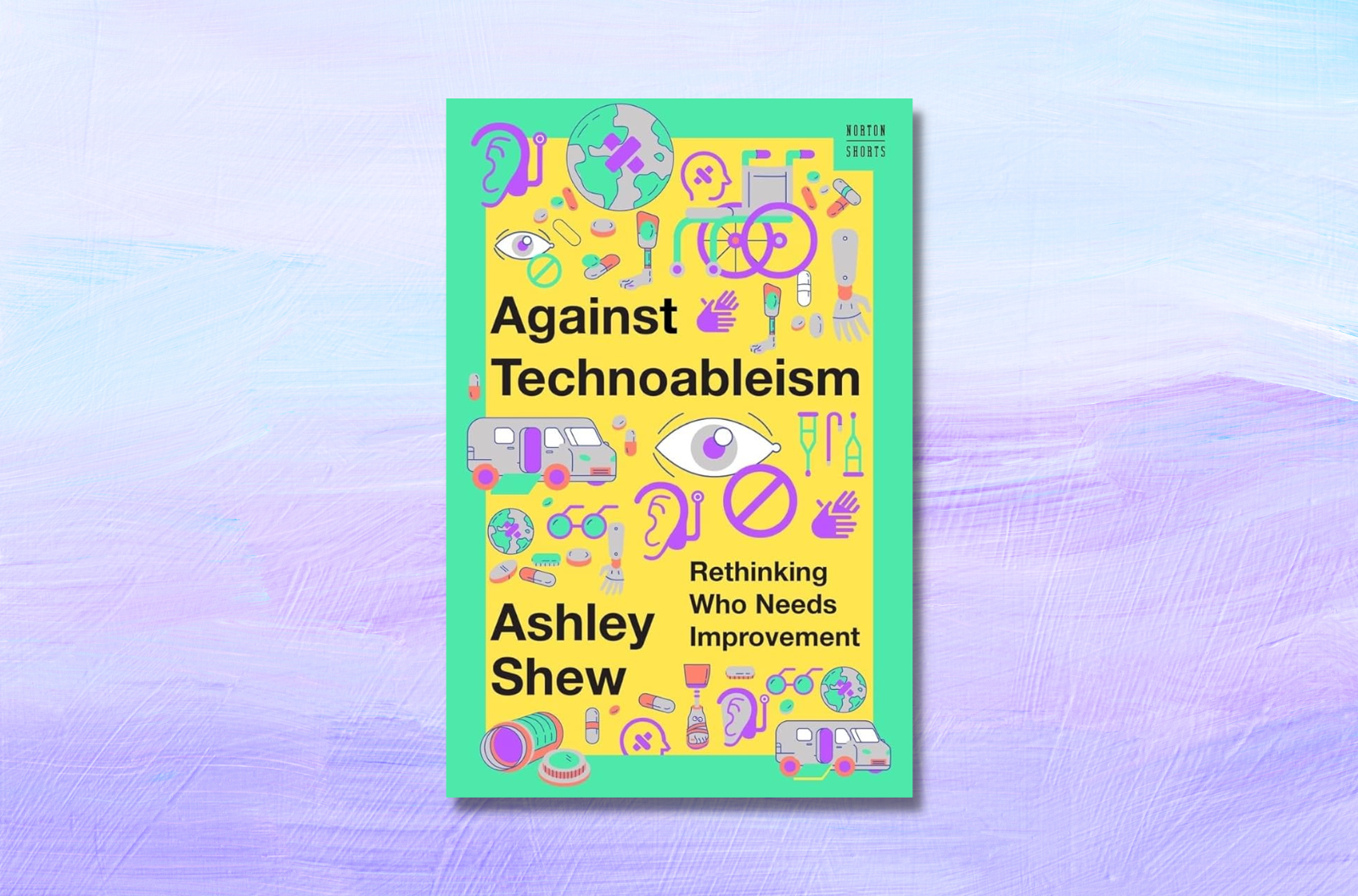
Ask Disabled People What They Want. It’s Not Always Technology.
While our lives are deeply entangled with technologies of all kinds, disabled people are almost never included in discussions about technology.
lukeslp/awesome-accessibility
Curated list of accessibility resources, tools, and best practices for creating inclusive digital experiences
recommended techniques for accessibility champions - A11y Toolkit
An open-source library of techniques to avoid the most common accessibility failures.
Usability/UX/Accessability Research? · Issue #819 · w3c-fedid/FedCM
I'm curious if this work has any usability, UX, or accessibility research that supports the designs here? Are there non-goals, or handling of failure case scenarios that have been envisioned an...
Ubiquitous Accessibility for People with Visual Impairments: Are We There Yet?
Ubiquitous access is an increasingly common vision of computing, wherein users can interact with any computing device or service from anywhere, at any time. In the era of personal computing, users with visual impairments required special-purpose, assistive technologies, such as screen readers, to interact with computers. This paper investigates whether technologies like screen readers have kept pace with, or have created a barrier to, the trend toward ubiquitous access, with a specific focus on desktop computing as this is still the primary way computers are used in education and employment. Towards that, the paper presents a user study with 21 visually-impaired participants, specifically involving the switching of screen readers within and across different computing platforms, and the use of screen readers in remote access scenarios. Among the findings, the study shows that, even for remote desktop access—an early forerunner of true ubiquitous access—screen readers are too limited, if not unusable. The study also identifies several accessibility needs, such as uniformity of navigational experience across devices, and recommends potential solutions. In summary, assistive technologies have not made the jump into the era of ubiquitous access, and multiple, inconsistent screen readers create new practical problems for users with visual impairments.

Disability-Driven Development
The influence of artificial intelligence on individuals with disabilities
The rapid advancement of artificial intelligence (AI) is reshaping assistive technologies, offering new possibilities for enhancing the independence, communication and quality of life of individuals with disabilities. This study presents a qualitative scoping review of 47 peer-reviewed articles published between 2018 and 2025, examining how AI has been integrated into assistive tools across domains such as mobility, communication, cognitive support, education and independent living. Specific AI applications include object recognition, gesture-based control, navigation assistance, emotion detection and natural language processing. The review highlights significant progress in personalization and real-time adaptation, while also identifying persistent challenges such as algorithmic bias, cost barriers, data privacy concerns and unequal access, particularly in low-resource settings. Ethical considerations and the need for inclusive, user-centered design approaches are emphasized. The study also underscores future research priorities, including standardization of development protocols, empirical evaluation of long-term effectiveness and policy frameworks to ensure equitable access. By synthesizing recent developments and critical gaps, this review contributes to understanding how AI can responsibly and effectively support assistive technologies, ultimately promoting more inclusive environments for people with disabilities.
Digital accessibility is real and tangible
A workshop using real-life examples and first-hand experience of how assistive technology works can result in a deeper understanding of accessibility needs

Accessibility Beyond Accommodations: A Systematic Redesign of Introduction to Computer Science for Students with Visual Impairments
Computer science education has evolved extensively; however, systemic barriers still prevent students with visual impairments from fully participating. While existing research has developed specialized programming tools and assistive technologies, these solutions remain fragmented and often require complex technical infrastructure, which limits their classroom implementation. Current approaches treat accessibility as individual accommodations rather than integral curriculum design, creating gaps in holistic educational support. This paper presents a comprehensive framework for redesigning introductory computer science curricula to provide equitable learning experiences for students with visual impairments without requiring specialized technical infrastructure. The framework outlines five key components that together contribute a systematic approach to curriculum accessibility: accessible learning resources with pre-distributed materials and tactile diagrams, in-class learning kits with hands-on demonstrations, structured support systems with dedicated teaching assistance, an online tool repository, and psychosocial support for classroom participation. Unlike existing tool-focused solutions, this framework addresses both technical and pedagogical dimensions of inclusive education while emphasizing practical implementation in standard university settings. The design is grounded in universal design principles and validated through expert consultation with accessibility specialists and disability services professionals, establishing foundations for future empirical evaluation of learning outcomes and student engagement while serving as a template for broader institutional adoption.

GitHub repository landing pages now show an accessibility tab, if provided
I’m excited to see how people use this new addition to the platform.

Out of Sight; Out of Mind - Ewan’s Blog
Disability did not become fashionable. Disabled people became harder to ignore.