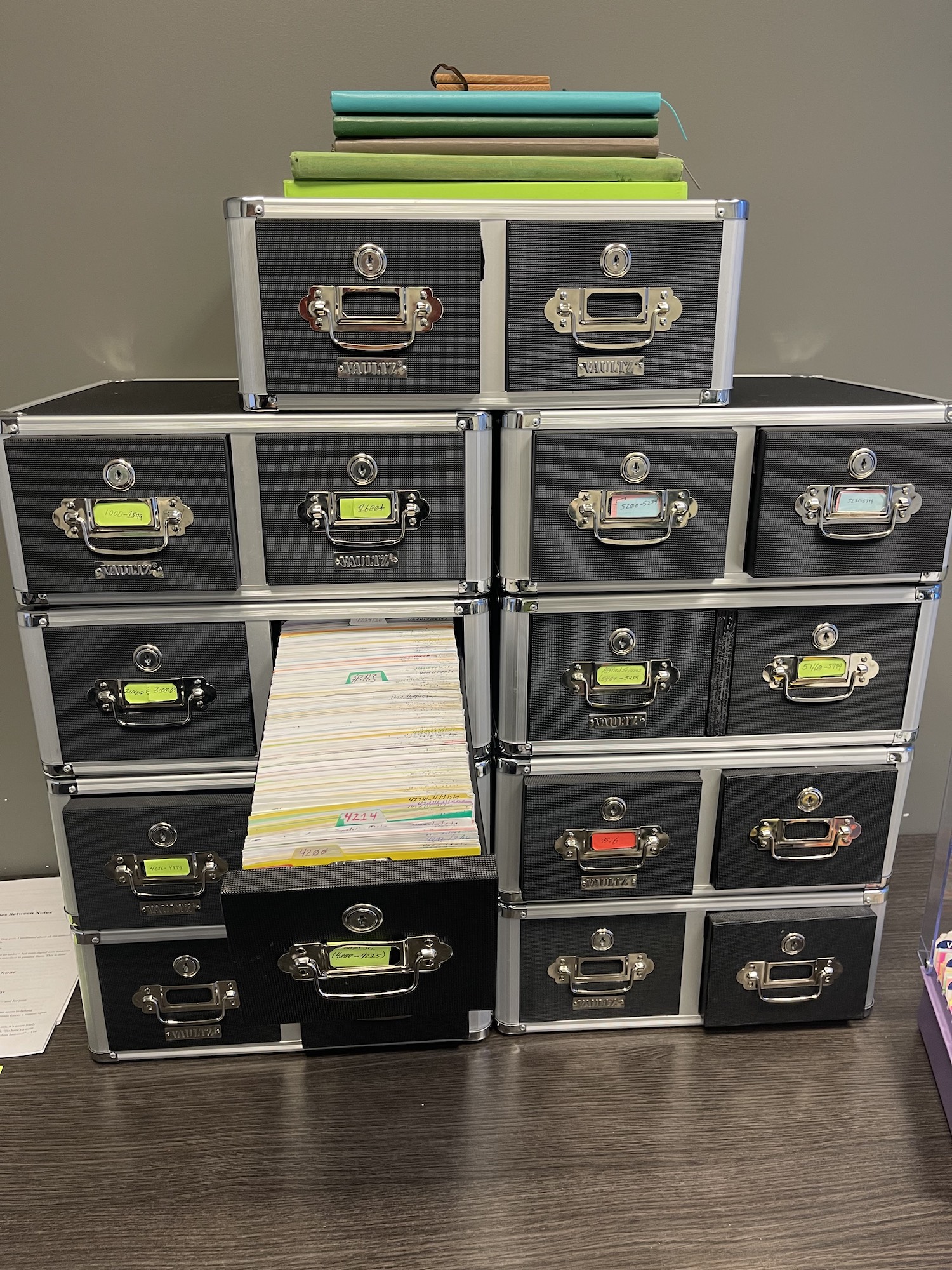
My goal is twofold: (1) I hope to motivate those who prefer paper-based thinking systems, and (2) I hope to present an alternative perspective for those who use digital Zettelkasten systems. I hope my perspective will add one or two valuable insights you can add to your Zettelkasten workflow (even a digital one).
Getting Started • Zettelkasten Method
A Zettelkasten is a personal tool for thinking and writing that creates an interconnected web of thought. Its emphasis is on connection and not mere collection of ideas.
Simplifying Zettelkasten by working out loud
What did I learn about learning as I used Zettelkasten idea and knowledge management to write five newsletters about disinformation in…

Neuron Zettelkasten
Neuron is a future-proof open-source app for managing your plain-text notes in Zettelkasten style, as well as for publishing them as a static site on the web. Read its Philosophy.
Callysto: Bringing Jupyter and Computational Thinking to the K-12 Curriculum
Cybera and the Pacific Institute for Mathematical Sciences are participating in the new national CanCode program, to develop coding and digital skills from kindergarten to grade 12. With the launch of the Callysto project, we are creating tools and frameworks that help teachers bring computational thinking into their math, science, social sciences, and humanities courses - giving students the analytical skills needed to comprehend the digital world. Leveraging the Jupyter 'All-in-One' Science Platform to put friendly yet powerful compute tools in classroom settings, we are creating showcase modules and workshop training for K-12 teachers to incorporate data and computing into the broad curriculum. At this presentation, you will learn about how Callysto will: Bring computational thinking to classrooms through K-12 teacher training Create opportunities to participate in free workshop training sessions and content creation Help K-12 teachers gain public recognition for participating in this educational training project Note: This presentation is related to our 2017 BCNET presentation on "Bringing The Thunder: Deploying Jupyter Notebooks For Research, Education, And Innovation." View Slidedeck
Don't Take the Black Pill - Andrew Kelley | SSW 2026
supernote-cli: pen, paper, and a pipe
A recent NYT piece argued we need a mental fitness revolution to combat the cognitive decay caused by algorithmic feeds and generative AI. It's an efficient one-two punch. If you're not brainrotting on short form video content, you're outsourcing all of your thinking to an LLM. The result is a kind of cognitive strip-mining. What's left requires active defense. For me, one way of defending that capacity for deep work is with a pen on e-ink. Whether it's annotating a paper or starting a sketch from scratch, I'm intentionally making room for focused thought. My army of clawed Claudes and Codexes will just have to wait.
The Zettelkasten Method — LessWrong
Early this year, Conor White-Sullivan introduced me to the Zettelkasten method of note-taking. I would say that this significantly increased my resea…
Digital Minimalism | The Paper Pilot
The Paper Pilot's digital garden of thoughts on philosophy, politics, and sociology
From groups to individuals, micro-computing and us, Paul Rony
From groups to individuals, micro-computing and us, Paul Rony
Zensical
Adaptive systems for evolving ideas – Zensical creates scalable Open Source systems for technical writing that always keep you in the flow
We're Not Building AI Features for the Money
From the Zed Blog: Why Zed invests in AI, and the future we're building toward.
My 17 Minute AI Workflow To Stand Out At Work
Care at the Edge of Automation – Topos Institute
Technologies don’t just solve problems, they change us. We invent technologies, and they invent us in turn, shaping our lives and worlds. This is the phenomenon that Terry Winograd and Fernando Flores, in Understanding Computers and Cognition (1986), called “ontological design.” It matters now more than ever—along with a second lesson they saw clearly. Technological research is always guided (and sometimes misguided) by deep ontological assumptions about, e.g., the nature of cognition, agency, and communication. If we are to create technologies that truly serve human flourishing and care, we must bring these hidden assumptions into the open and question them at their roots.

Optimistic Computing
I recently made two new friends: Abhinav Omprakash and Dawn Walker. Abhinav said I’m an optimist and I should write about it. Dawn said I shouldn’t try to coin any new terms. I should know better, but this essay follows Abhinav’s recommendation — and credits Dawn, in the very likely event I should have followed her advice instead. I have been alive for approximately four decades. Each of those decades was witness to its own fun brand of computering.
Changing Minds: Computers, Learning, and Literacy
An impassioned guide to how computers can fundamentally change how we learn and think.Andrea diSessa's career as a scholar, technologist, and teacher has b