


I think this talk gives lots of food for thought. Are we too entrenched in our ways, to think in other/better ways?
</> htmx ~ Yes, and...
In this essay, Carson Gross discusses his advice to young people interested in computer science worried about the future given the advancements in AI.
Its Time for a New Programming Language
Today, when compared to any other point in programming history, we find ourselves spoiled for choice when it comes to programming…
The Software We Haven’t Invented Yet, discussion and dinner hosted by Boxd and BlueYard · Luma
If this is such a big moment for software, why are we mostly imagining faster versions of what we already do? Better coding tools are the obvious part. The…
X : Do you think AI / vibe coding is not worthwhile? Me : Are you kidding? I was talking about conversational programming (what you call vibe coding) back in 2018. Of course, I think it's important.… | Simon Wardley | 44 comments
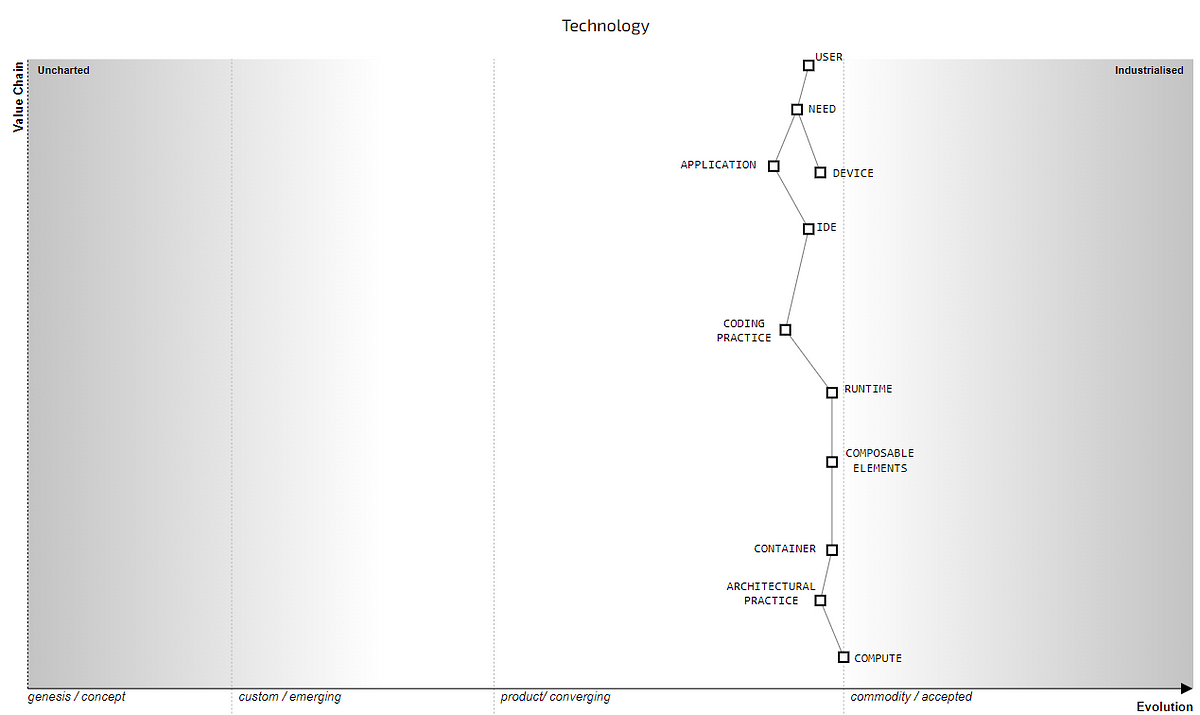
X : Do you think AI / vibe coding is not worthwhile? Me : Are you kidding? I was talking about conversational programming (what you call vibe coding) back in 2018. Of course, I think it's important. I think the approach we're using currently is flawed. X : Why? Me : Well, I could go on about the basics such as the medium is wrong (needs to be more image / whiteboard based rather than text) or how we're getting wrapped up in deterministic outputs (text based code) rather than realising the end outputs will eventually be non-deterministic models or we're still learning practices in this space especially with agents and how we rushing ahead into failure creating trust issues. There's a lot of messy stuff happening. But my real interest is with turning software engineering into an engineering discipline. X : Isn't it? Me : If I look at a map of decision making then testing (specifically TDD) is an engineering topic (see figure 1) but the development part is firmly a craft (see figure 2). If we want to make development an engineering subject then we need to learn from testing i.e. we should be building context specific tools (think a test suite) from lots of micro tools (think tests). See figure 3. X : And AI can help? Me : Oh, yes. In two parts - the construction of micro tools which helps us improve our ttA (time to answer) and in the construction of new hypothesis which helps us improve our ttQ (time to question). See figure 4. X : And is that happening? Me : Very slowly. Remember you have a multi billion dollar tool industry that doesn't want you creating tools and hence they're trying to flog you old tools with a skim of AI. X : But we need people selling pickaxes. Me : Sure. But they've been telling us that their pickaxes work everywhere ... making soup, you need a pickaxe with added AI. X : But coding is coding. Me : An electronic healthcare system is not the same as an online gambling site. The contexts are completely different. It's why the test suites are different and a test is nothing more than a micro tool. Why don't we compose our tool for that context out of micro tools ... just like testing? X : Because it's hard? Me: Pickaxe salespeople must love you. That's their marketing literature. Reminds me of the early days of Test Driven Development (TDD) where most people thought it was mad to build a test suite out of thousands of small tests. | 44 comments on LinkedIn

Reflections of an "Old" Programmer - Ben Northrop
Framing our programming careers in terms of knowledge accumulation and decay can yield some interesting insights.
Why the fuss about conversational programming?
First, there isn’t much fuss … yet. But there will be.
AI made me doubt everything about programming by Felienne Hermans - DDD Europe 2026
AI made me doubt everything about programming by Felienne Hermans - DDD Europe 2026
We should rethink how we teach people to code | deadSimpleTech
It's fair to say that the tech industry at the moment is not in a good place. Software engineers tend to be detached, demotivated and unwilling to care much about the work they're doing beyond their paycheck. Code quality is poor on the whole, made worse by the current spate of vibe coding and whatever other febrile ideas come out of Sam Altman's brain. Much of the software that we write is either useless or actively hurts people. And the talented, creative people that we most need in the industry are pushed to the margins of it.

How To Think Like A Programmer
The third golden age of software engineering – thanks to AI, with Grady Booch
The third golden age of software engineering – thanks to AI, with Grady Booch
(iterate think thoughts): Painting with Gaussians
Dmitri's blog about programming, Clojure, and software development
A quote from Andrew Quinn
One could say in the first quarter-century of my life, that while I was always fascinated by programming, I could never overcome the guilt of not really knowing whether the …
This morning, I had the distinct honour of giving the opening keynote at #RSECon26: "Where does the rigour go? Research software and the future of trustworthy science" The core argument: AI is… | Arfon Smith
This morning, I had the distinct honour of giving the opening keynote at #RSECon26: "Where does the rigour go? Research software and the future of trustworthy science" The core argument: AI is making it dramatically cheaper to produce plausible scientific outputs, without necessarily making them cheaper to check. The scarce resources are shifting towards attention, judgment, and verification. This is no doubt a disruptive time for research software engineers and research more generally. For Research Software Engineers specifically I think that creates some important new opportunities around: encoding domain judgment, building verification infrastructure, connecting agents to reality, and helping ensure that the emerging verification layer for science remains open. Thanks to everyone at RSECon26 for the thoughtful discussion, and especially to the many people whose work and ideas I that heavily influenced this talk. Link to slides in first comment

The future of programming and computing

Trends and adjacent possibles for the future of how computers are used and programmed
LIMITS 2026 -- Workshop on Computing within Limits
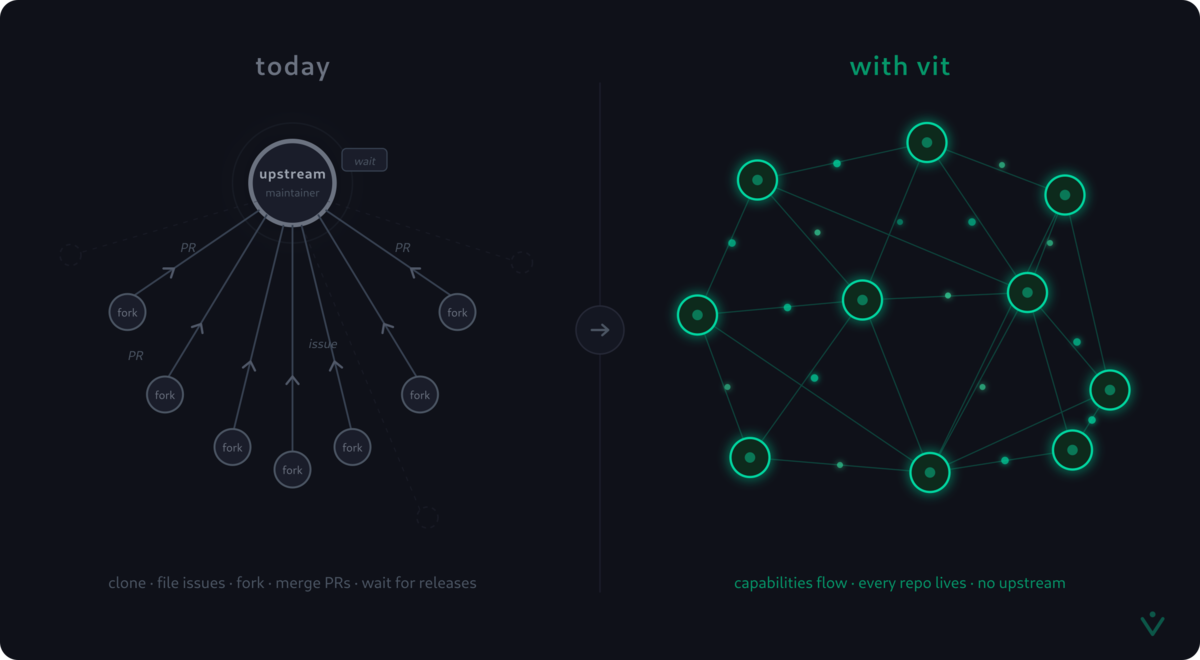
vit — open source is social

Humans approve intent, machines prove conformance
Introducing System One Models and Jev - TypeSafe AI Blog

Message from our CEO: After co-inventing ChatGPT, I kept asking myself: why have superhuman chat models not led to AGI? I’ve spent the last…
On-device intelligence for every product