We introduce TextWorld, a sandbox learning environment for the training and evaluation of RL agents on text-based games. TextWorld is a Python library that handles interactive play-through of text games, as well as backend functions like state tracking and reward assignment. It comes with a curated list of games whose features and challenges we have analyzed. More significantly, it enables users to handcraft or automatically generate new games. Its generative mechanisms give precise control over the difficulty, scope, and language of constructed games, and can be used to relax challenges inherent to commercial text games like partial observability and sparse rewards. By generating sets of varied but similar games, TextWorld can also be used to study generalization and transfer learning. We cast text-based games in the Reinforcement Learning formalism, use our framework to develop a set of benchmark games, and evaluate several baseline agents on this set and the curated list.
Environments Hub: A Community Hub To Scale RL To Open AGI
RL environments are the playgrounds where agents learn. Until now, they’ve been fragmented, closed, and hard to share. We are launching the Environments Hub to change that: an open, community-powered platform that gives environments a true home.Environments define the world, rules and feedback loop of state, action and reward. From games to coding tasks to dialogue, they’re the contexts where AI learns, without them, RL is just an algorithm with nothing to act on.

textcamp!
The lofty ambition of Textcamp is to create text-based adventure games that can be enjoyed by everyone, everywhere.
Ask HN: Great text based games to play? | Hacker News
I’d love to try one of these out. I have a modern computer so I’m guessing it’ll have to be emulated somehow, but what do you recommend as a great text based game to try? Like ones that really make you think and get creative
Quickly Training Game-Playing Agents with Machine Learning
Posted by Leopold Haller and Hernan Moraldo, Software Engineers, Google Research In the last two decades, dramatic advances in compute and connecti...

Choose-Your-Own-Adventure 𝐴𝐼 𝐷𝑢𝑛𝑔𝑒𝑜𝑛 Games
Neural networks like GPT-3 power text adventure games where you can do anything; but they are too expensive. I propose that if we turn them into Choose Your Own Adventure hypertext games, they become feasible and enable new gameplay.

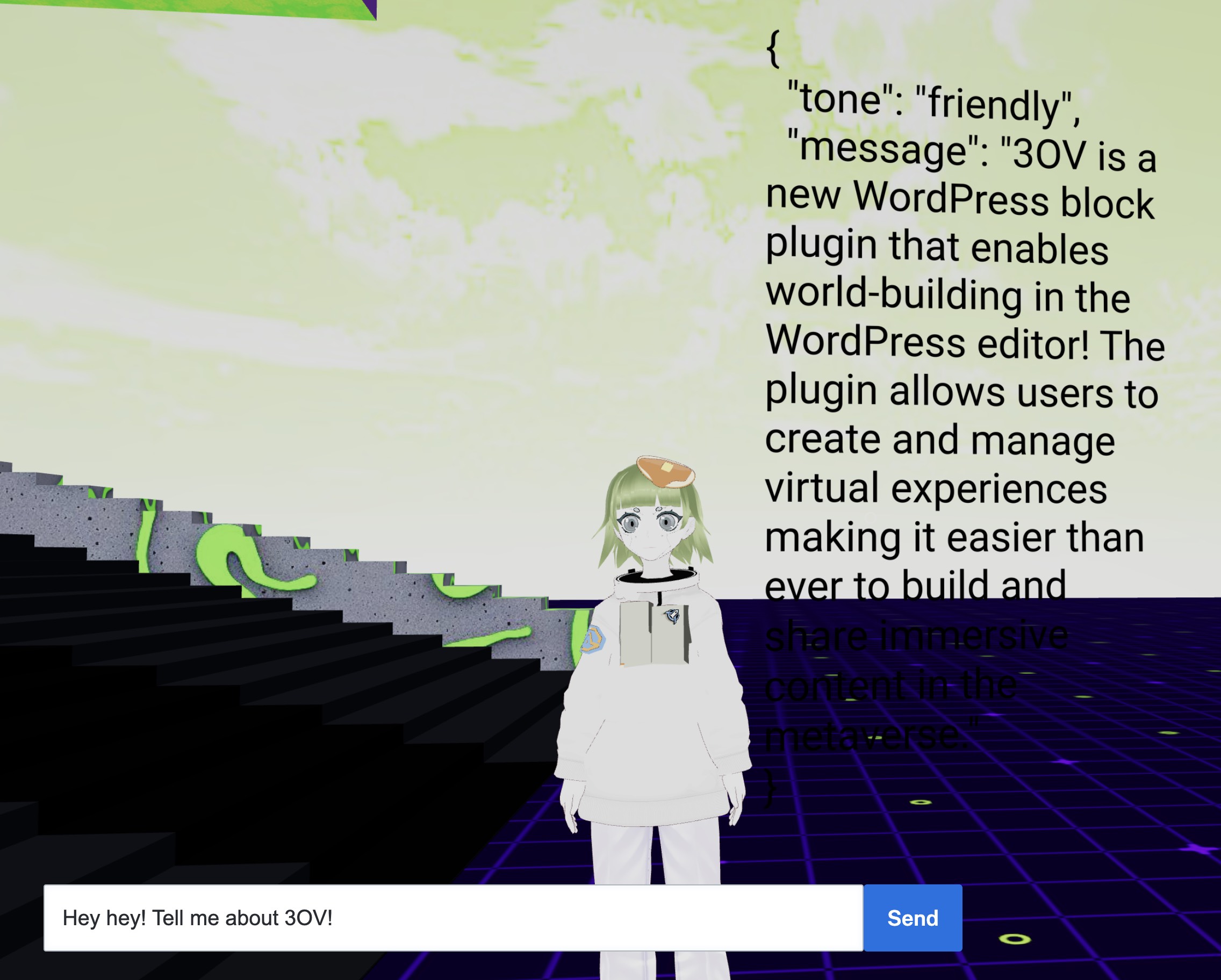
Exploring the Metaverse Potential of MagickML: A Multishot System Builder for AI Entities - XR Publisher
Learn about MagickML, a JavaScript-based framework that allows developers to create natural language processing systems using OpenAI language models like GPT-3. Explore the potential of Magick to revolutionize the way we interact with AI in virtual worlds, particularly in 3D web applications like 3OV
"What's my model inside of?": Exploring the role of environments for grounded natural language understanding
In contrast to classical cognitive science which studied brains in isolation, ecological approaches focused on the role of the body and environment in shaping cognition. Similarly, in this thesis we adopt an ecological approach to grounded natural language understanding (NLU) research. Grounded language understanding studies language understanding systems situated in the context of events, actions and precepts in naturalistic/simulated virtual environments. Where classic research tends to focus on designing new models and optimization methods while treating environments as given, we explore the potential of environment design for improving data collection and model development. We developed novel training and annotation approaches for procedural text understanding based on text-based game environments. We also drew upon embodied cognitive linguistics literature to propose a roadmap for grounded NLP research, and to inform the development of a new benchmark for measuring the progress of large language models on challenging commonsense reasoning tasks. We leveraged the richer supervision provided by text-based game environments to develop Breakpoint Transformers, a novel approach to modeling intermediate semantic information in long narrative or procedural texts. Finally, we integrated theories on the role of environments in collective human intelligence to propose a design for AI-augmented "social thinking environments" for knowledge workers like scientists.
Training AI Agents with RL | Unsloth Documentation
Learn how to train AI agents for real-world tasks using Reinforcement Learning (RL).

hyprstream/hyprstream
HyprStream: agentic infrastructure for continous online-learning applications
Learning User Simulators with Turing Rewards
Learning to simulate human users in interactive settings could advance the training of agent assistants, evaluation of personalization systems, research in the social sciences, and more. Existing approaches generally do so by training a large language model (LLM) to match a single ground truth response, either by maximizing the log probability or by using a similarity reward. We instead propose Turing-RL: a Turing-Test-based reinforcement learning approach for training user simulator models. Turing-RL uses a discriminative Turing reward with an LLM judge to score how indistinguishable a generated response is from the real user's given the user's history, and the user simulator LLM learns to produce responses indistinguishable from what the user could have said with such rewards. Across two different domains--conversational chat and Reddit forum discussion--we find that Turing-RL consistently outperforms baseline methods on both LLM and human evaluation metrics. Our study suggests that optimizing for indistinguishability, rather than response matching, is effective for learning user simulators.
A Survey on Large Language Model based Autonomous Agents
Autonomous agents have long been a prominent research focus in both academic and industry communities. Previous research in this field often focuses on training agents with limited knowledge within isolated environments, which diverges significantly from human learning processes, and thus makes the agents hard to achieve human-like decisions. Recently, through the acquisition of vast amounts of web knowledge, large language models (LLMs) have demonstrated remarkable potential in achieving human-level intelligence. This has sparked an upsurge in studies investigating LLM-based autonomous agents. In this paper, we present a comprehensive survey of these studies, delivering a systematic review of the field of LLM-based autonomous agents from a holistic perspective. More specifically, we first discuss the construction of LLM-based autonomous agents, for which we propose a unified framework that encompasses a majority of the previous work. Then, we present a comprehensive overview of the diverse applications of LLM-based autonomous agents in the fields of social science, natural science, and engineering. Finally, we delve into the evaluation strategies commonly used for LLM-based autonomous agents. Based on the previous studies, we also present several challenges and future directions in this field. To keep track of this field and continuously update our survey, we maintain a repository of relevant references at https://github.com/Paitesanshi/LLM-Agent-Survey.
hyprstream/README.md at main · hyprstream/hyprstream
HyprStream: agentic infrastructure for continous online-learning applications - hyprstream/hyprstream
Learning to solve complex tasks by growing knowledge culturally across generations
Knowledge built culturally across generations allows humans to learn far more than an individual could glean from their own experience in a lifetime. Cultural knowledge in turn rests on language: language is the richest record of what previous generations believed, valued, and practiced, and how these evolved over time. The power and mechanisms of language as a means of cultural learning, however, are not well understood, and as a result, current AI systems do not leverage language as a means for cultural knowledge transmission. Here, we take a first step towards reverse-engineering cultural learning through language. We developed a suite of complex tasks in the form of minimalist-style video games, which we deployed in an iterated learning paradigm. Human participants were limited to only two attempts (two lives) to beat each game and were allowed to write a message to a future participant who read the message before playing. Knowledge accumulated gradually across generations, allowing later generations to advance further in the games and perform more efficient actions. Multigenerational learning followed a strikingly similar trajectory to individuals learning alone with an unlimited number of lives. Successive generations of learners were able to succeed by expressing distinct types of knowledge in natural language: the dynamics of the environment, valuable goals, dangerous risks, and strategies for success. The video game paradigm we pioneer here is thus a rich test bed for developing AI systems capable of acquiring and transmitting cultural knowledge.
The “Courage Companion” – An AI-Supported Environment for Training Teenagers in Handling Social Media Critically and Responsibly
The provision of toxic content and misinformation is a frequent phenomenon in current social media with specific impact and risks for younger users. We report on efforts taken in the project Courage to mitigate and overcome these threats through dedicated educational technology inspired by psychological and pedagogical approaches. The aim is to empower adolescents to confidently interact with and utilize social media and to increase their awareness and resilience. For this purpose, we have adopted approaches from the field of Intelligent Tutoring Systems, namely the provision of a virtual learning companion (VLC). The technical system is a browser-based environment that allows for combining a controllable social media space with a VLC as a plugin. This environment is backed by an API that bundles Machine Learning and Natural Language Processing algorithms for detecting and classifying different types of risks. The pedagogical scenarios that are supported by this technical environment and approach range from chat-based dialogues to more complex narrative scripts.