

Yesterday a blog post by Cyrille Rossant entitled "Moving away from HDF5" caught my eye. My own tendency at the moment is to use HDF5 more and more, so I was interested in why someone else would want to do the opposite. Here is my conclusion after reading his post, plus some ideas about where scientific data management is or should be heading in my opinion.
The HDF5® Library & File Format - The HDF Group - ensuring long-term access and usability of HDF data and supporting users of HDF technologies
HDF5® Technical Details License: BSD-style Official Media Type: application/vnd.hdfgroup.hdf5 Standard File Extension: .h5, .hdf5 High-performance data management and storage suite Utilize the HDF5 high performance data software library and file format to manage, process, and store your heterogeneous data. HDF5 is built for fast I/O processing and storage. Download HDF5 Documentation What is HDF5®? HETEROGENEOUS DATA HDF® sup ports […]
FAIR Principles - GO FAIR
In 2016, the ‘FAIR Guiding Principles for scientific data management and stewardship’ were published in Scientific Data. The authors intended to provide guidelines to improve the Findability, Accessibility, Interoperability, and Reuse of digital assets. The principles emphasise machine-actionability (i.e., the capacity of… Continue reading →

Data Feminism
Today, data science is a form of power. It has been used to expose injustice, improve health outcomes, and topple governments. But it has also been used to d...
Who Will Keep Research Data Infrastructure Open and Running?
The scientific community must consider the longevity of open research infrastructure—why it might fail and how to prevent it.
Who Will Keep Research Data Infrastructure Open and Running?
The scientific community must consider the longevity of open research infrastructure—why it might fail and how to prevent it.
Why on earth would you publish data as RDF? – Pieter Colpaert
A rebuttal to a blog post of Anne Schuth, I which I argue that RDF will earn its place in real neurosymbolic systems. Its best argument is eventual interoperability across organizations.
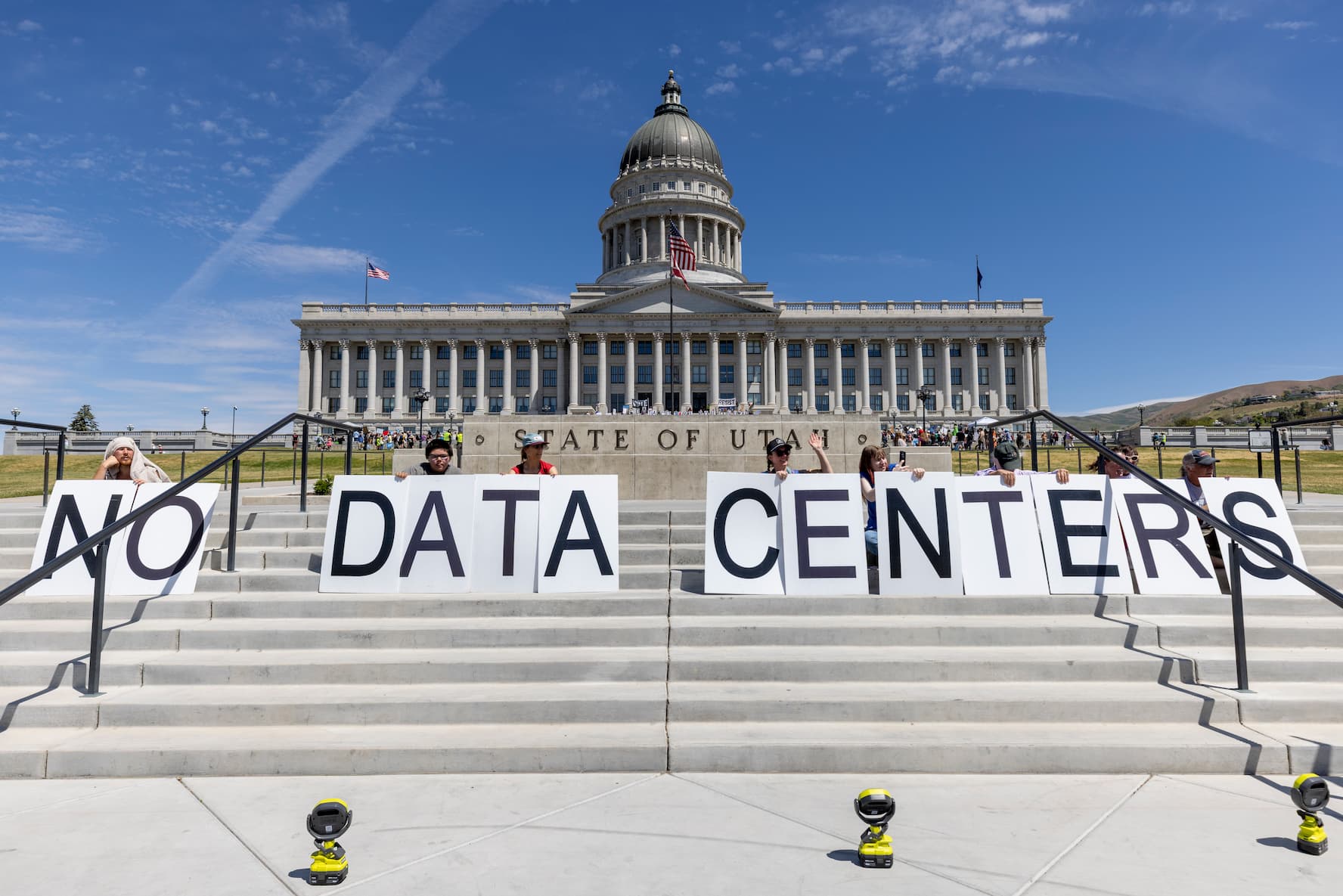
Why data centers are a top issue in the 2026 midterms | Brookings
Nicol Turner Lee and Darrell M. West examine how data center backlash is reshaping the 2026 midterms and AI's future.
\x5bSIG\x5d Data Governance: Data Organisation
Data Organisation Foundational Structures of Asset Governance Key Value Pairs 3 infrastructure Git Wiki Service management Ben Koo, Tim Bansemer, Jared Cordon May 25, 2021 HDX Thread 5: ICT Awareness and Competency in Data Governance

2025 Global Data Center Outlook
The data center sector will continue to grow at a phenomenal pace in 2025.

Data centers contain 90% crap data
We need to talk about the data. Crap data. We’re destroying our environment to create and store trillions of blurred images, half-baked videos, rip-off AI ‘songs’, rip-off AI animations, videos and images, emails with mega attachments, never-to-be-watched-again presentations, never-to-be-read-again reports, files and drawings from cancelled projects, drafts of drafts of drafts, out of date, inaccurate and plain wrong information, and gigabytes and gigabytes of poorly written, meandering content.
Data Scientist: The Sexiest Job of the 21st Century
Back in the 1990s, computer engineer and Wall Street “quant” were the hot occupations in business. Today data scientists are the hires firms are competing to make. As companies wrestle with unprecedented volumes and types of information, demand for these experts has raced well ahead of supply. Indeed, Greylock Partners, the VC firm that backed Facebook and LinkedIn, is so worried about the shortage of data scientists that it has a recruiting team dedicated to channeling them to the businesses in its portfolio. Data scientists are the key to realizing the opportunities presented by big data. They bring structure to it, find compelling patterns in it, and advise executives on the implications for products, processes, and decisions. They find the story buried in the data and communicate it. And they don’t just deliver reports: They get at the questions at the heart of problems and devise creative approaches to them. One data scientist who was studying a fraud problem, for example, realized it was analogous to a type of DNA sequencing problem. Bringing those disparate worlds together, he crafted a solution that dramatically reduced fraud losses. In this article, Harvard Business School’s Davenport and Greylock’s Patil take a deep dive on what organizations need to know about data scientists: where to look for them, how to attract and develop them, and how to spot a great one.

Data Science in 2020: Computing, Curricula, and Challenges for the Next 10 Years
In the past 10 years, new data science courses and programs have proliferated at the collegiate level. As faculty and administrators enter the race to provide data science training and attract new ...

Linked Data is a Political Agenda

A Data Utopia for Science-of-Science
Here I want to briefly sketch out a vision for how to solve a key set of problems facing science-of-science researchers, using the relatively new idea of a ‘data trust.’ In my ideal wor…

The Bazaar of Scientific Knowledge | shishyko!
Is the current form of the scientific paper still optimal in 2025? How do we preserve, and efficiently leverage, the uncut gems of the scientific process?