

Two NumPy-related news items appeared on my Twitter feed yesterday, just a few days after I had accidentally started a somewhat heated debate myself concerning the poor reproducibility of Python-based computer-aided research. The first was the announcement of a plan for dropping support for Python 2. The second was a pointer to a recent presentation by Nathaniel Smith entitled "Inside NumPy" and dealing mainly with the NumPy team's plans for the near future. Lots of material to think about... and comment on.
SciPy 1.0: fundamental algorithms for scientific computing in Python
SciPy is an open-source scientific computing library for the Python programming language. Since its initial release in 2001, SciPy has become a de facto standard for leveraging scientific algorithms in Python, with over 600 unique code contributors, thousands of dependent packages, over 100,000 dependent repositories and millions of downloads per year. In this work, we provide an overview of the capabilities and development practices of SciPy 1.0 and highlight some recent technical developments.

The Story of Python and how it took over the world | Python: The Documentary
Julia motivation: why weren't Numpy, Scipy, Numba, good enough?
I recently gave a Why Julia? talk to a roomful of computational fluid dynamicists and astrophysicists. (John Gibson, UNH & KITP, Julia - a high-performance dynamic programming language for technical computing, Kavli Institute, UCSB 2017-02-02). I got two main skeptical responses. One Python expert in the audience pointed out that much of what I was touting in Julia is available in Python: Numba for fast array math, %jit macros for just-in-time computation. I read up on these things afterwards a...

Formalizing CPython
AI agents wrote 613,318 lines of Lean that copy Python's internals, tested every piece against real Python, and turned up 418 bug reports along the way.
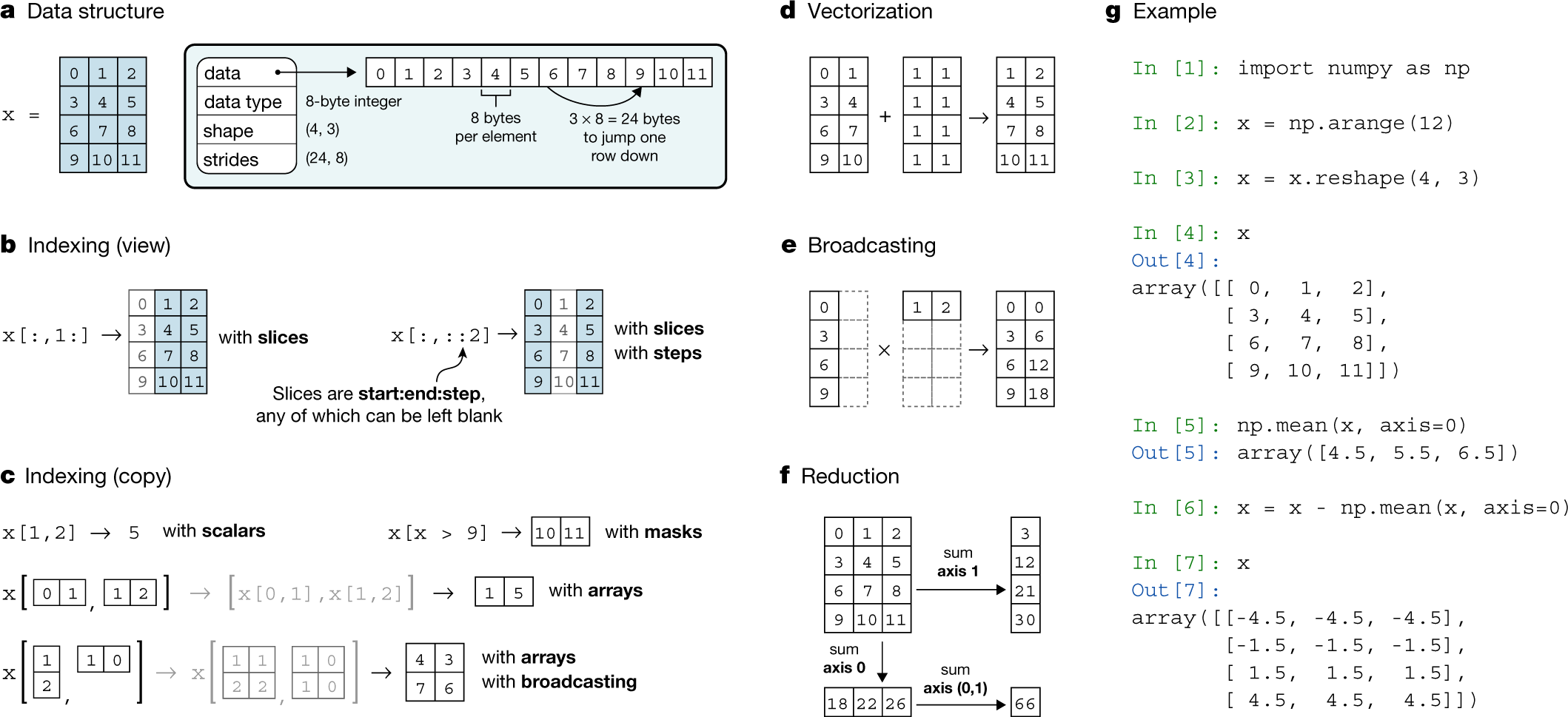
Array programming with NumPy
Array programming provides a powerful, compact and expressive syntax for accessing, manipulating and operating on data in vectors, matrices and higher-dimensional arrays. NumPy is the primary array programming library for the Python language. It has an essential role in research analysis pipelines in fields as diverse as physics, chemistry, astronomy, geoscience, biology, psychology, materials science, engineering, finance and economics. For example, in astronomy, NumPy was an important part of the software stack used in the discovery of gravitational waves1 and in the first imaging of a black hole2. Here we review how a few fundamental array concepts lead to a simple and powerful programming paradigm for organizing, exploring and analysing scientific data. NumPy is the foundation upon which the scientific Python ecosystem is constructed. It is so pervasive that several projects, targeting audiences with specialized needs, have developed their own NumPy-like interfaces and array objects. Owing to its central position in the ecosystem, NumPy increasingly acts as an interoperability layer between such array computation libraries and, together with its application programming interface (API), provides a flexible framework to support the next decade of scientific and industrial analysis.
Python Tutorial | Learn Python Programming Language - GeeksforGeeks
Your All-in-One Learning Portal: GeeksforGeeks is a comprehensive educational platform that empowers learners across domains-spanning computer science and programming, school education, upskilling, commerce, software tools, competitive exams, and more.

Pydata Paris Virtual Meetup June 2021
Goodbye Claude, Hello Pi
I’ve been a longtime Claude Code user, ever since it became available in the Claude Pro subscription plan over a year ago. I remember the first time I used it, feeling giddy as it spat out messy Python code for whatever random weekend project I was working on, all from a single prompt. I’m certain that in a few years we’ll all look back at its release as one of the major drivers of this new era of software development we’re in.
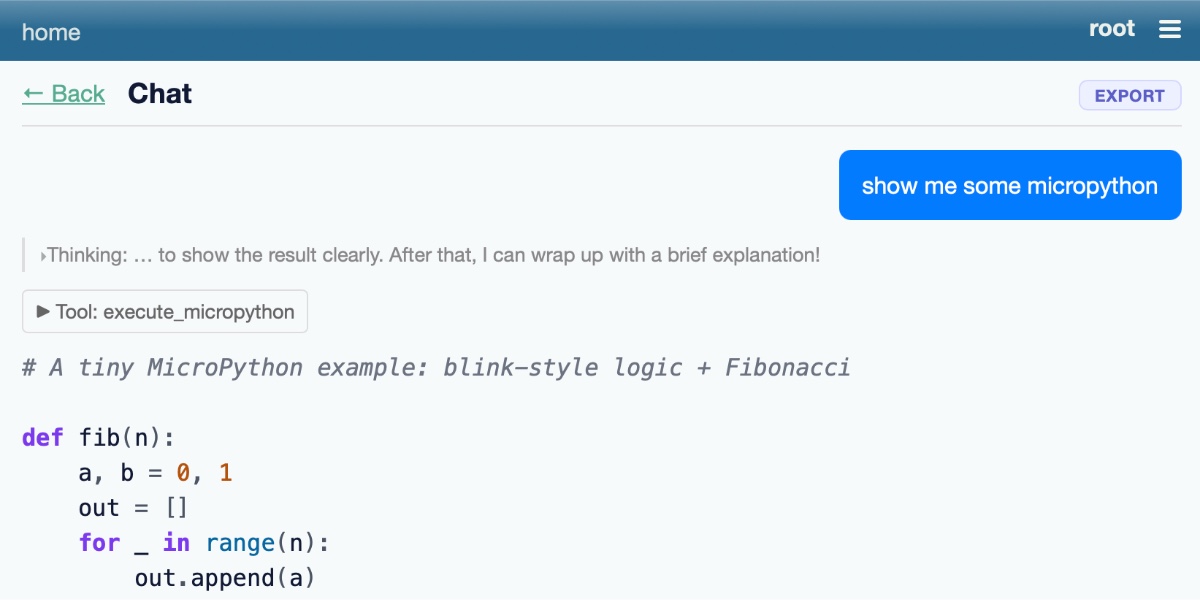
Running Python code in a sandbox with MicroPython and WASM
I’ve been experimenting with different approaches to running code in a sandbox for several years now, but my latest attempt feels like it might finally have all of the characteristics …
MPS in PyTorch 2.15
We’re on a journey to advance and democratize artificial intelligence through open source and open science.

hodgesmr/neural_network_from_scratch
A Jupyter notebook building and training a Neural Network from scratch with NumPy
Deep Learning with Python
Start building deep learning applications with Python and Keras today!

Linking the world's research to the code it runs on - OpenAlex blog
Research relies on software. Software written by scientists, for science, runs through the entire modern research stack: NumPy and SciPy, R and ggplot2, Jupyter, BLAST, ImageJ, AlphaFold. Yet in the scholarly record, that software is nearly invisible. Software is not usually cited formally in publications and is usually just mentioned in the text, which means […]

Matplotlib: A 2D Graphics Environment
Matplotlib is a 2D graphics package used for Python for application development, interactive scripting,and publication-quality image generation across user interfaces and operating systems
How Python is building a welcoming community for women
Learn how the Python community is addressing open source’s gender parity problem by recruiting women into core roles and building opportunity for women as we celebrate International Women’s Month:
