AI firms are invoking unproven extinction warnings to justify restrictions on developments by their smaller rivals whilst seeking greater influence over regulation

Bridging the gap: inequalities that divide those who can and cannot create sustainable outcomes with AI
The widespread use of AI technologies impacts individuals, organisations, and societies in ways that warrant more comprehensive investigation. Inequalities in benefiting from AI advancements may le...

The loudest warning about AI and jobs yet
200 economists and AI leaders say something big is happening. What should we do about it? Plus: Apple sues OpenAI

AI's economic peril to democracy | Brookings
Bell and Korinek argue that increasing use of AI in industry will create a dangerous cycle of rising inequality and weakened democratic norms.

Study maps how ‘Big AI’ influences AI laws and oversight — Centre for Technomoral Futures
AI companies influence policy and regulation using similar techniques to Big Tobacco, Big Pharma and Big Oil, according to a new study by colleagues at University of Edinburgh, Trinity College Dublin, TU Delft and Carnegie Mellon University.

How the Anthropic saga could threaten American AI dominance
The shutdown of top AI models reverberates abroad.

Import AI 452: Scaling laws for cyberwar; rising tides of AI automation; and a puzzle over gDP forecasting
How much could AI revolutionize the economy?

Stop trusting the extinction math
The AI industry's favourite 'statistic' isn't backed by data. And it distracts from what's really going on.

The AI Layoff Trap
If AI displaces human workers faster than the economy can reabsorb them, it risks eroding the very consumer demand firms depend on. We show that knowing this is not enough for firms to stop it. In...

The Big Short, AI edition
Investors are buying protection against an AI bust, just like they did with mortgage-backed securities before 2008...
AI is probably not a bubble
AI companies have revenue, demand, and paths to immense value
AI is probably not a bubble
AI companies have revenue, demand, and paths to immense value
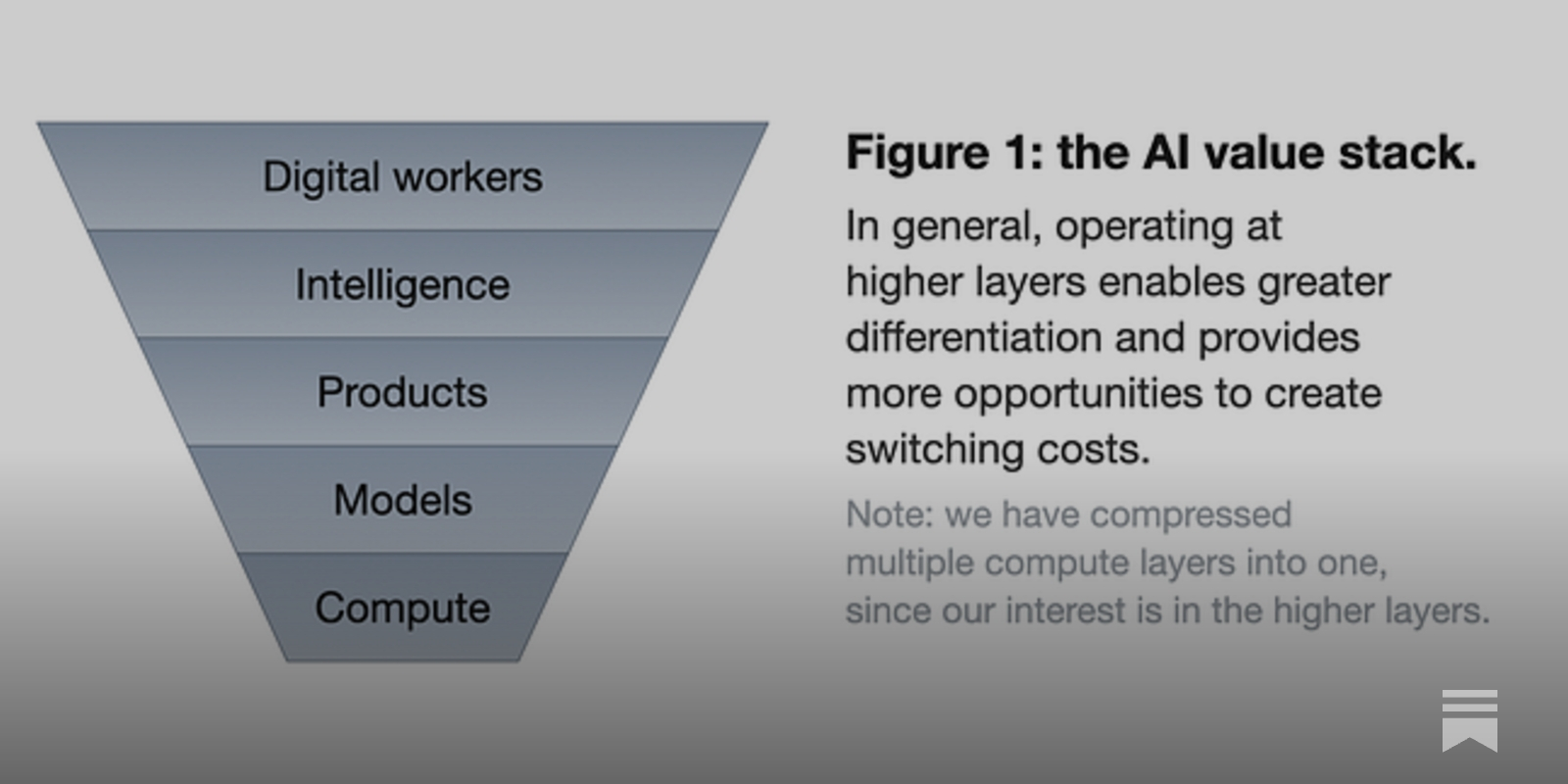
Up the Stack: How AI’s Escape From the Commodity Trap Risks Enterprise Lock-in
Critics and boosters are both looking in the wrong place
Irresponsible AI: big tech's influence on AI research and associated impacts
The accelerated development, deployment and adoption of artificial intelligence systems has been fuelled by the increasing presence of big tech in the AI field. This trend has been accompanied by growing ethical concerns and intensified societal and environmental impacts. This position paper argues that irresponsible AI development is strongly driven by big tech's influence and involvement in the field. First, we examine the growing and disproportionate influence of big tech in AI research and argue that its drive for scaling and general-purpose systems is fundamentally at odds with the responsible, ethical, and sustainable development of AI. Second, we review key current environmental and societal negative impacts of AI and trace their connections to big tech's influence. Third, we discuss the underlying economic forces driving big tech's actions. Finally, as a call to action, we invite AI researchers to counter big tech's influence in irresponsible AI development through strategies that build on the responsibility of implicated actors and collective action.
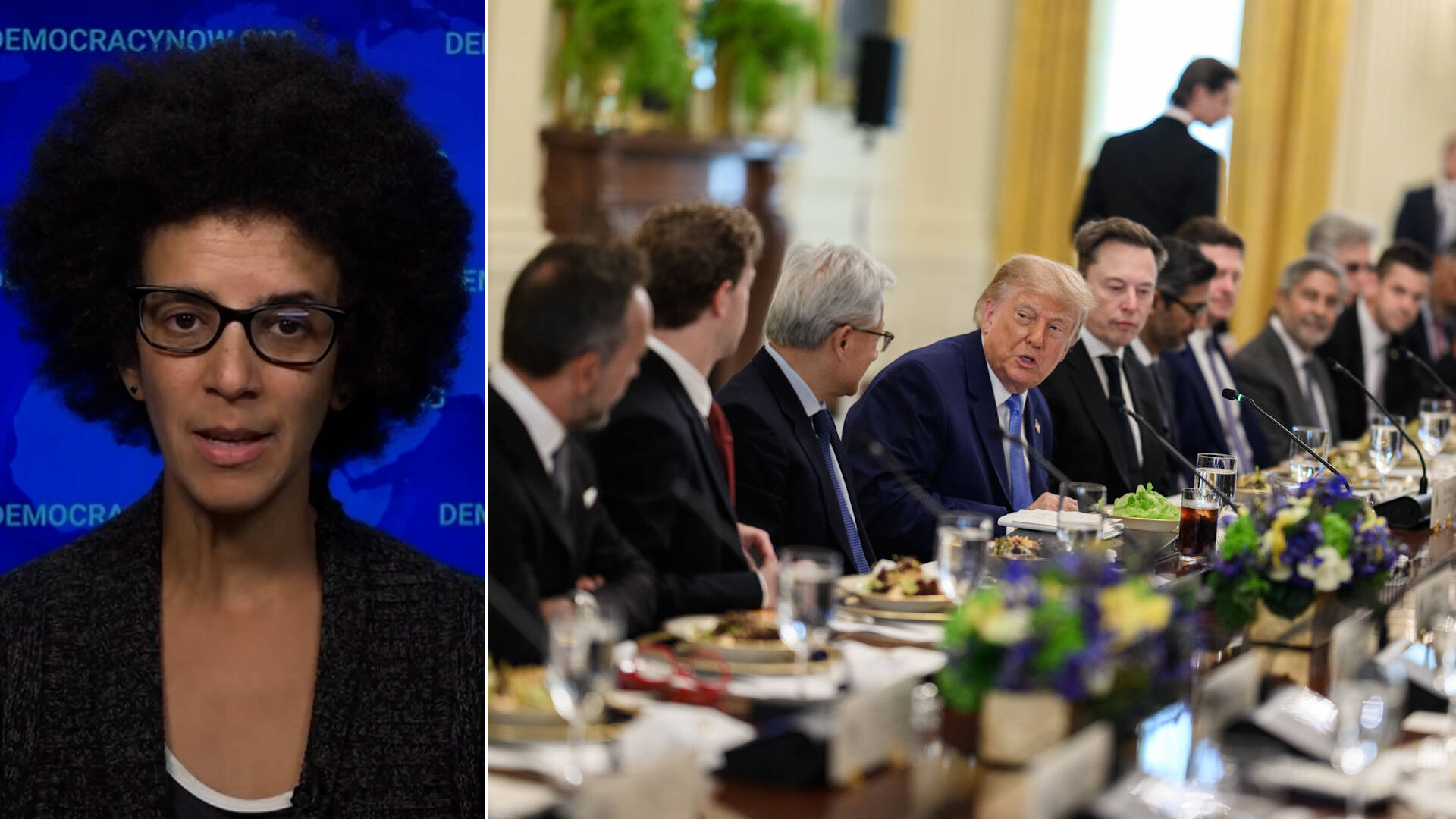
The Real Existential Risk Is AI CEOs Avoiding Oversight: “Alternative Nobel” Winner Timnit Gebru
We speak to the prominent AI researcher and leading critic of the AI industry, Timnit Gebru, who was recently awarded a 2026 Right Livelihood Award for her work investigating the harms and hype behind the global buildup of artificial intelligence. “Instead of discussing faulty, unreliable systems,” Gebru says tech leaders like SpaceXAI’s Elon Musk, OpenAI’s Sam Altman and Anthropic’s Dario Amodei are “marketing their systems as all-knowing, superpowerful, superintelligent,” and lobbying for “self-policing and self-regulation” to avoid being held “liable through existing laws.” Gebru expresses skepticism over increasingly widespread claims that AI algorithms pose an existential risk to humanity, warning that such claims are overblown and that “what is actually happening is regulatory capture.”