

Civic institutions—the rule of law, universities, and a free press—are the backbone of democratic life. They are the mechanisms through which complex societies encourage cooperation and stability, while also adapting to changing circumstances. The real superpower of institutions is their ability to evolve and adapt within a hierarchy
How AI Destroys Institutions
Civic institutions—like the rule of law, higher education, and a free press—are the backbone of democratic life. They are the mechanisms through which complex s

3: Consulting the Record: AI Consistently Fails the Public - AI Now Institute
Amid the excitement over AI’s (speculative, hypothetical) potential, we have lost sight of the sobering reality of its present and recent past. AI is already intermediating critical social infrastructures, materially reshaping our institutions in ways that ratchet up inequality and concentrate power in the hands of the already powerful. It is consistently deployed in ways […]

AI and Democratic Publics
Could existing democratic institutions and processes be improved by AI? A burgeoning body of scholarship asks how AI-driven machine learning can improve—or even replace— democratic institutions that aggregate opinions and beliefs (Ovadya 2023, Jungherr 2023).

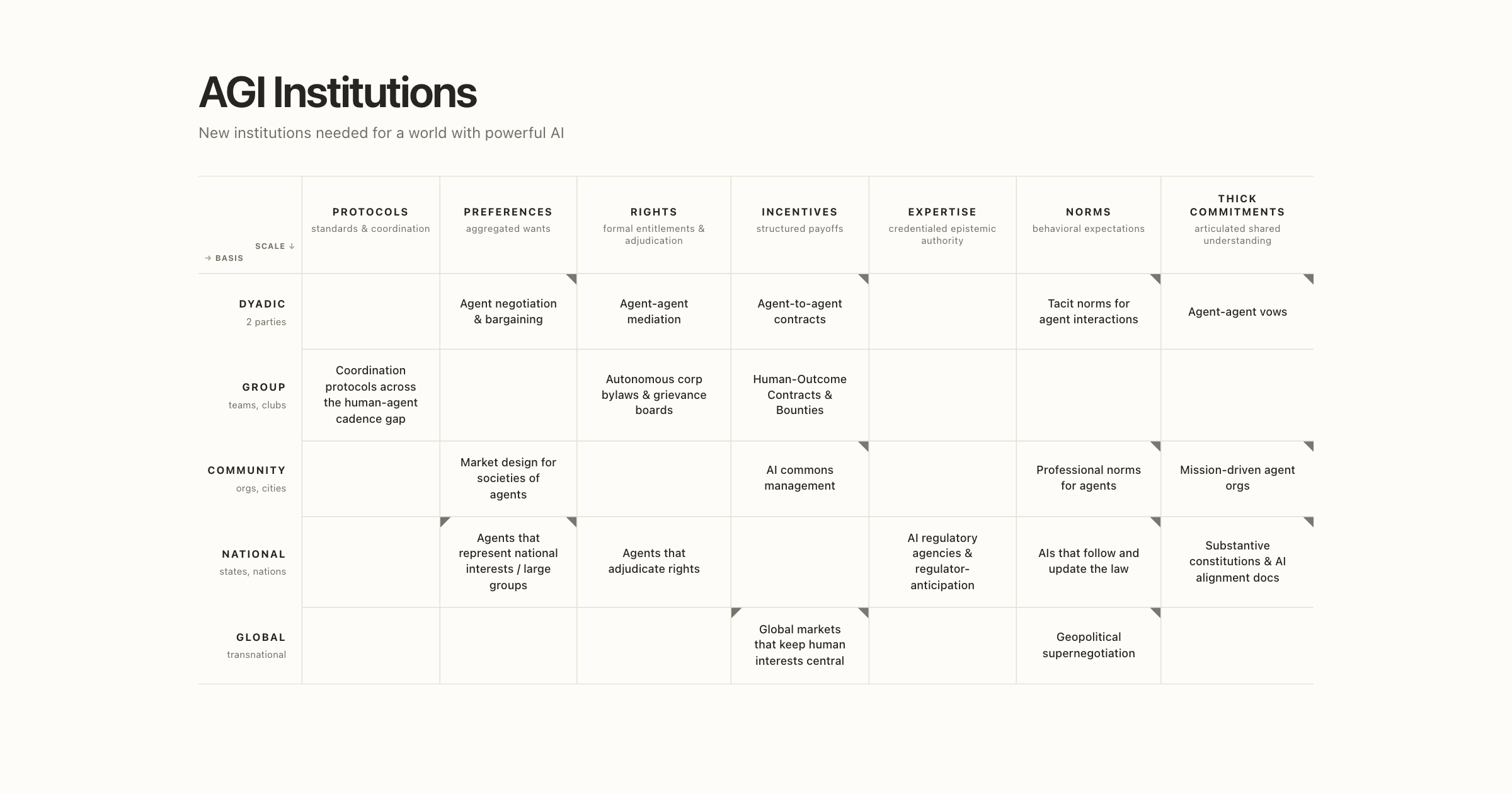
Existing Human Institutions — AGI Institutions Wiki
How existing human institutions handle coordination across scales — and how autonomous AI agents break them. Maps protocols, preferences, rights, incentives, expertise, norms, and thick commitments from dyadic to global.
Democratic Governance of AI Is the Real Solution
The potential for catastrophic effects from the AI boom demands robust deliberation and real democratic governance. Localized initiatives like data center moratoria won't get us there.

Considering How AI Destroys Democratic Institutions
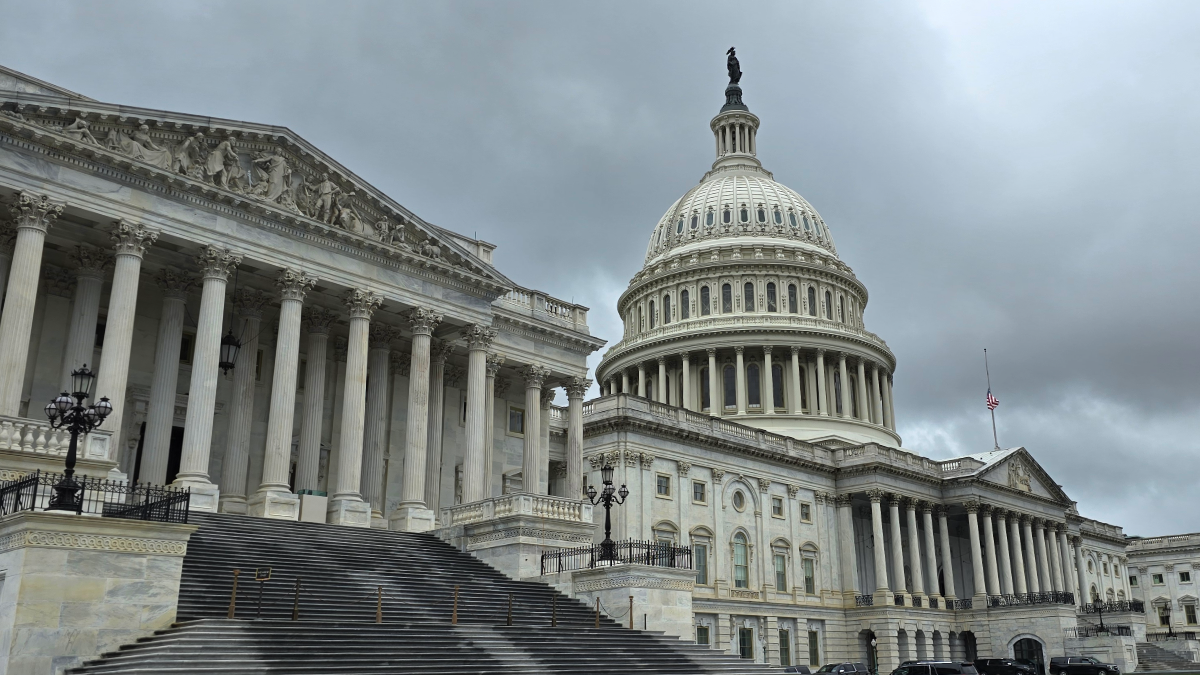
Boston University School of Law professors Woodrow Hartzog and Jessica Silbey say today's AI systems are a "death sentence" for civic institutions.
Governing AI Agents with Democratic ‘Algorithmic Institutions’
Virgilio Almeida, Fernando Filgueiras and Ricardo Fabrino Mendonça explore potential governance structures and forms of oversight for AI agents.

Pax Machina — Institutions in a World with Powerful AI
Proposals and debate, for institutions in a world with powerful AI.
How Shifting Responsibility for AI Harms Undermines Democratic Accountability | TechPolicy.Press
The moralization of individual AI use deflects responsibility away from powerful actors like corporations and governments, Suvradip Maitra and others write.

AI, Ethics, and Society — Home
Building a Solidarity Ecosystem for AI (SSIR)
How cooperatives, public institutions, and social movements can come together to intentionally build a practical, community-owned alternative to extractive AI systems. <meta property=

Building Political Superintelligence
Amidst fears of dystopia, a blueprint for how we use AI to reinvent the way we govern ourselves

AGI’s Bureaucratic Future · Pax Machina
AGI won’t do away with bureaucracy. Markets and democracies still run on shared rules. Used well, AI could make the institutions behind those rules more capable and easier to hold accountable.

AI as Social Technology: Astor Lecture by Professor Henry Farrell
AI as Social Technology: Astor Lecture by Professor Henry Farrell
AI FOR EPISTEMICS & COORDINATION
Civilization and technology have radically improved the human condition. Nonetheless, the world sometimes goes in directions which essentially nobody would prefer — e.g., nuclear arms races, unexpected financial crashes, predatory marketing, or ubiquitous political misinformation.