How to collect data about cognitive processes and events, how to analyze CTA findings, and how to communicate them effectively: a handbook for managers, tr
(PDF) The sensemaking process and leverage points for analyst technology as identified through cognitive task analysis
PDF | On Jan 1, 2005, P. Pirolli and others published The sensemaking process and leverage points for analyst technology as identified through cognitive task analysis | Find, read and cite all the research you need on ResearchGate

Some concerns from a researcher in this space · Issue #22 · zakirullin/cognitive-load
Hi, I do research about the cognitive factors of programming. I just completed my Ph.D. at Stanford involving studies of cognitive load in program comprehension, as detailed here: https://arxiv.org...
3 Cognitive Habits of People Who Get Things Done
High-achieving workers have these things in common.

Cognitive Load | Laws of UX
The amount of mental resources needed to understand and interact with an interface.

Hierarchical Task Analysis - an overview | ScienceDirect Topics
Learning How to Learn (And 20+ Studies) – Max's Two Cents
I have been interested in cognitive science and effective learning methods for years. I’ve read multiple books and articles and put many ideas to test. In this post, I aim to synthesize my notes and provide references to scientific studies.
Cognitive engineering
Cognitive engineering is an interdisciplinary field that applies principles from cognitive psychology, cognitive neuroscience, and human factors to design and develop engineering systems that effectively support or enhance human cognitive processes.[1][2] The field emerged in the 1980s when Donald Norman and others recognized the need to better understand how humans interact with complex technological systems.[3]
What is ‘executive dysfunction’ and how do you overcome it?
Difficulty starting and getting overwhelmed by tasks are a few signs of it. We asked experts for tips on mitigating the effects

Cognitive Bias Lab | Learn to Make Better Decisions
Explore cognitive biases with interactive tests, simulations, and real-world examples. Free platform to sharpen decision-making and critical thinking — no sign-up needed.
Finding Flow: Escaping Digital Distractions Through Deep Work and Slow Living
Learn how to achieve flow state and defeat digital distractions through environment design, mindful breaks, and deep work practices for a more focused life.

Cognitive Gadgets Theory Might Change Your Mind—Literally
A book by Cecilia Heyes gives teacher-educators something to think about

Things 3 From an OmniFocus and TaskPaper User
I spend a lot of time with my task manager. My day job is a little bit of technical development and a little bit of project management. The project management piece is a capital “P.M.” I manage a dozen large projects spread over several years. Each project has between one and twenty different people on the team. This review is written from that perspective. I’m not a productivity blogger or a guy that just likes to try out software.
When Using AI Leads to “Brain Fry”
As firms increasingly incentivize employees to build and oversee complex teams of agents—for example, by measuring and rewarding token consumption as a proxy for performance—people are finding themselves pushed to their cognitive limits. Participants in a recent study described a “buzzing” feeling or a mental fog with difficulty focusing, slower decision-making, and headaches. The authors call this phenomenon “AI brain fry,” defined as mental fatigue from excessive use or oversight of AI tools beyond one’s cognitive capacity. This AI-associated mental strain carries significant costs in the form of increased employee errors, decision fatigue, and intention to quit. The findings also show how AI-driven workflows can be designed to diminish burnout and point toward specific manager, team, and organizational practices to avoid mental fatigue even as AI work intensifies.

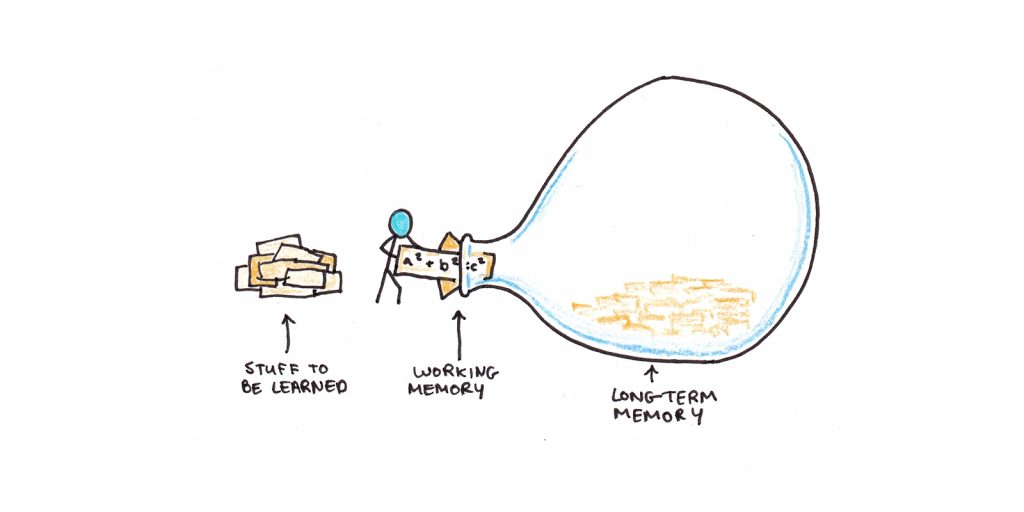
Cognitive Load Theory and its Applications for Learning - Scott H Young
What makes learning hard? How can we make it easier? Cognitive load theory explains how we learn and how to do it better.