


The privacy by design approach has already been applied in different areas. We believe that the next challenge in this area today is to go beyond individual cases and to provide methodologies to explore the design space in a systematic way. As a first step in this direction, we focus in this paper on the data minimization principle and consider different options using decentralized architectures in which actors do not necessarily trust each other. We propose a framework to express the parameters to be taken into account (the service to be performed, the actors involved, their respective requirements, etc.) and an inference system to derive properties such as the possibility for an actor to detect potential errors (or frauds) in the computation of a variable. This inference system can be used in the design phase to check if an architecture meets the requirements of the parties or to point out conflicting requirements.
Privacy Architectures: Reasoning About Data Minimisation and Integrity
Privacy by design will become a legal obligation in the European Community if the Data Protection Regulation eventually gets adopted. However, taking into account privacy requirements in the design of a system is a challenging task. We propose an approach based on the specification of privacy architectures and focus on a key aspect of privacy, data minimisation, and its tension with integrity requirements. We illustrate our formal framework through a smart metering case study.

Privacy by Design
In view of rapid and dramatic technological change, it is important to take the special requirements of privacy protection into account early on, because new technological systems often contain hidden dangers which are very difficult to overcome after the basic design has been worked out. So it makes all the more sense to identify and examine possible data protection problems when designing new technology and to incorporate privacy protection into the overall design, instead of having to come up with laborious and time-consuming “patches” later on. This approach is known as “Privacy by Design” (PbD).

Building Software for a Zero Trust World
How we are helping to build Zero Trust architectures that safeguard the most protected data in the world

A data minimization model for embedding privacy into software systems
Modern software systems (social networking, banking and shopping applications) are becoming increasingly dependent on our data. These systems need data to provide various economic and social benefits to users as well as businesses. However, the extensive use of personal data in systems poses a threat to user privacy. Therefore, privacy laws expect software systems to practice Data Minimization (DM), to minimize data in software systems. This has put software developers in a dilemma to minimize user data to provide user privacy and maximize user data for enhanced system functionality. Following the design science research approach, in this research we propose and evaluate a methodology that enables developers to make their decisions to minimize user data in software systems through understanding data. The methodology encourage developers to think of the ways they would use data in a system design focusing on the storage and sharing of data. Developers in the three experiments conducted to evaluate the methodology agreed that it enables them to think of the ways they use data in system designs and it helps them to make decisions to minimize using data in a system design. Developers also showed positive intention to use the proposed methodology within system development activities.
Unlinkable Inference as a User Privacy Architecture
Unlinkable inference is a technique that provably sandboxes your AI requests from each other and from your identity. We discuss its building blocks, applications, and how it fits into the broader landscape of private personal intelligence.
Decentralized Identity Verification using Zero-Knowledge Proofs: A Privacy-Preserving Authentication Framework
In the contemporary online interaction, digital iden- tity is central, but most systems follow a centralized provider like Google or Facebook. Although convenient, these models pose ma- jor risks to data breach, surveillance, and single point of failure. The proposed paper proposes a privacy-sensitive decentralized identity verification system that uses Zero-Knowledge Proofs (ZKPs) to allow users to make it through claims (e.g., age, citizen- ship, or enrollment) without any personal data being provided, thereby solving the challenges outlined in the paper. Our architecture integrates verifiable credentials, zero-knowledge-SNARKs and an issuer trust registry that is maintained on blockchain smart contracts to guarantee trustless verification and eliminate dependence on centralized authorities. Its system gives its users full control over credentials, allows reuse across applications, and does not expose data.A proof-of-concept implementation has shown the approach to be feasible with Circom and SnarkJS to generate proof, Solidity smart contracts to verify them, and a user interface implemented in React. Results of the evaluations showed that determination of the verification latency is low, the overhead to generate proofs is moderate, and no privacy leakage occurs. It can be used in potential applications such as education, e-governance, healthcare, finance, and online voting.
Differential Privacy
In 1977 Dalenius articulated a desideratum for statistical databases: nothing about an individual should be learnable from the database that cannot be learned without access to the database. We give a general impossibility result showing that a formalization of Dalenius’ goal along the lines of semantic security cannot be achieved. Contrary to intuition, a variant […]
zama-ai/concrete-ml
Concrete ML: Privacy Preserving ML framework using Fully Homomorphic Encryption (FHE), built on top of Concrete, with bindings to traditional ML frameworks.
Potential uses for the Privacy Sandbox
Today on The Keyword, we outlined our vision for an initiative aimed at evolving the web with architecture that advances privacy, while co...

Gajesh on Twitter / X
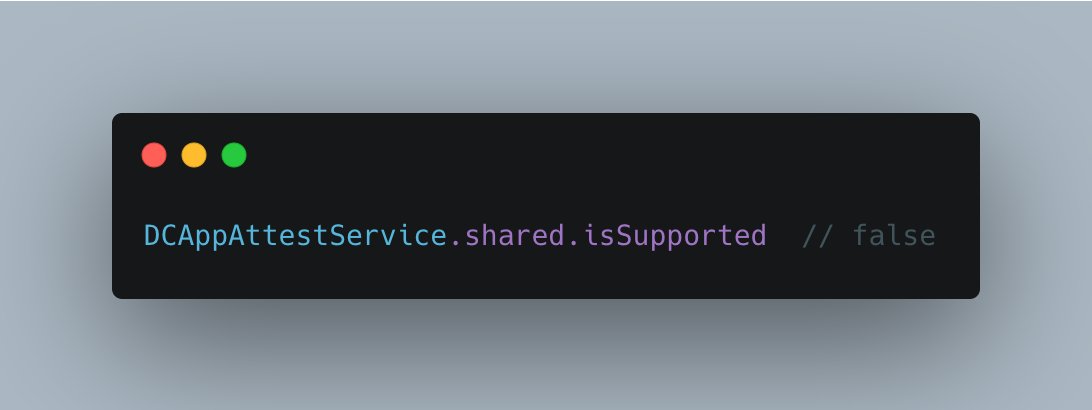
TL;DRapple has turn on this switch for everyone to participate in decentralized inferenceppl can rent out their unused compute space and anyone can use this with privacy guarantees https://t.co/LTP4zyjsdt pic.twitter.com/8Dvo7XK8jJ— Gajesh (@gajesh) February 18, 2026
Doubly Efficient Private Information Retrieval and Fully Homomorphic RAM Computation from Ring LWE
A (single server) private information retrieval (PIR) allows a client to read data from a public database held on a remote server, without revealing to the server which locations she is reading. In a doubly efficient PIR (DEPIR), the database is first preprocessed, but the server can subsequently answer any client's query in time that is sub-linear in the database size. Prior work gave a plausible candidate for a public-key variant of DEPIR, where a trusted party is needed to securely preprocess the database and generate a corresponding public key for the clients; security relied on a new non-standard code-based assumption and a heuristic use of ideal obfuscation. In this work we construct the stronger unkeyed notion of DEPIR, where the preprocessing is a deterministic procedure that the server can execute on its own. Moreover, we prove security under just the standard ring learning-with-errors (RingLWE) assumption. For a database of size $N$ and any constant $\varepsilon>0$, the preprocessing run-time and size is $O(N^{1+\varepsilon})$, while the run-time and communication-complexity of each PIR query is $polylog(N)$. We also show how to update the preprocessed database in time $O(N^\varepsilon)$. Our approach is to first construct a standard PIR where the server's computation consists of evaluating a multivariate polynomial; we then convert it to a DEPIR by preprocessing the polynomial to allow for fast evaluation, using the techniques of Kedlaya and Umans (STOC '08). Building on top of our DEPIR, we construct general fully homomorphic encryption for random-access machines (RAM-FHE), which allows a server to homomorphically evaluate an arbitrary RAM program $P$ over a client's encrypted input $x$ and the server's preprocessed plaintext input $y$ to derive an encryption of the output $P(x,y)$ in time that scales with the RAM run-time of the computation rather than its circuit size. Prior work only gave a heuristic candidate construction of a restricted notion of RAM-FHE. In this work, we construct RAM-FHE under the RingLWE assumption with circular security. For a RAM program $P$ with worst-case run-time $T$, the homomorphic evaluation runs in time $T^{1+\varepsilon} \cdot polylog(|x| + |y|)$.
Vertical Federated Learning: Concepts, Advances, and Challenges
Vertical Federated Learning (VFL) is a federated learning setting where multiple parties with different features about the same set of users jointly train machine learning models without exposing their raw data or model parameters. Motivated by the rapid growth in VFL research and real-world applications, we provide a comprehensive review of the concept and algorithms of VFL, as well as current advances and challenges in various aspects, including effectiveness, efficiency, and privacy. We provide an exhaustive categorization for VFL settings and privacy-preserving protocols and comprehensively analyze the privacy attacks and defense strategies for each protocol. In the end, we propose a unified framework, termed VFLow, which considers the VFL problem under communication, computation, privacy, as well as effectiveness and fairness constraints. Finally, we review the most recent advances in industrial applications, highlighting open challenges and future directions for VFL.
Differential Privacy
A robust yet accessible introduction to the idea, history, and key applications of differential privacy—the gold standard of algorithmic privacy protection

PrivacySIM: Evaluating LLM Simulation of User Privacy Behavior
Large language models (LLMs) are increasingly used to simulate human behavior, but their ability to simulate individual privacy decisions is not well understood. In this paper, we address the problem of evaluating whether a core set of user persona attributes can drive LLMs to simulate individual-level privacy behavior. We introduce PrivacySIM, an evaluation suite that benchmarks LLM simulation of user privacy behavior against the ground-truth responses of $1{,}000$ users. These users are drawn from five published user studies on privacy spanning LLM healthcare consultations, conversational agents, and chatbots. Drawing on these user studies, we hypothesize three persona facets as plausible predictors of privacy decision-making: demographics, previous experiences, and stated privacy attitudes. We condition nine frontier LLMs on subsets of these three facets and measure how often each model's response to a data-sharing scenario matches the user's actual response. Our findings show that (1) privacy persona conditioning consistently improves simulation quality over no-persona conditioning, but even the strongest model (40.4% accuracy) remains far from faithfully simulating individual privacy decisions. (2) A user's stated privacy attitudes alone may not be the best predictor because they often diverge from the user's actual privacy behavior. (3) Users with high AI/chatbot experience but low stated privacy attitudes are the most challenging to simulate. PrivacySIM is a first step toward understanding and improving the capabilities of LLMs to simulate user privacy decisions. We release PrivacySIM to enable further evaluation of LLM privacy simulation.