

In this paper we present a simple database definition language: that of categories and functors. A database schema is a small category and an instance is a set-valued functor on it. We show that morphisms of schemas induce three ''data migration ...
Functorial data migration
In this paper we present a simple database definition language: that of categories and functors. A database schema is a small category and an instance is a set-valued functor on it. We show that morphisms of schemas induce three “data migration functors”, which translate instances from one schema to the other in canonical ways. These functors parameterize projections, unions, and joins over all tables simultaneously and can be used in place of conjunctive and disjunctive queries. We also show how to connect a database and a functional programming language by introducing a functorial connection between the schema and the category of types for that language. We begin the paper with a multitude of examples to motivate the definitions, and near the end we provide a dictionary whereby one can translate database concepts into category-theoretic concepts and vice versa.
Algebraic data integration
In this paper, we develop an algebraic approach to data integration by combining techniques from functional programming, category theory, and database theory. In our formalism, database schemas and instances are algebraic (multi-sorted equational) theories of a certain form. Schemas denote categories, and instances denote their initial (term) algebras. The instances on a schema S form a category, S–Inst, and a morphism of schemas F : S → T induces three adjoint data migration functors: ΣF : S–Inst → T–Inst, defined by substitution along F, which has a right adjoint ΔF : T–Inst → S–Inst, which in turn has a right adjoint ΠF : S–Inst → T–Inst. We present a query language based on for/where/return syntax where each query denotes a sequence of data migration functors; a pushout-based design pattern for performing data integration using our formalism; and describe the implementation of our formalism in a tool we call AQL (Algebraic Query Language).
Ologs: A Categorical Framework for Knowledge Representation
In this paper we introduce the olog, or ontology log, a category-theoretic model for knowledge representation (KR). Grounded in formal mathematics, ologs can be rigorously formulated and cross-compared in ways that other KR models (such as semantic networks) cannot. An olog is similar to a relational database schema; in fact an olog can serve as a data repository if desired. Unlike database schemas, which are generally difficult to create or modify, ologs are designed to be user-friendly enough that authoring or reconfiguring an olog is a matter of course rather than a difficult chore. It is hoped that learning to author ologs is much simpler than learning a database definition language, despite their similarity. We describe ologs carefully and illustrate with many examples. As an application we show that any primitive recursive function can be described by an olog. We also show that ologs can be aligned or connected together into a larger network using functors. The various methods of information flow and institutions can then be used to integrate local and global world-views. We finish by providing several different avenues for future research.
A Categorical Unification for Multi-Model Data: Part I Categorical Model and Normal Forms
Modern database systems face a significant challenge in effectively handling the Variety of data. The primary objective of this paper is to establish a unified data model and theoretical framework for multi-model data management. To achieve this, we present a categorical framework to unify three types of structured or semi-structured data: relation, XML, and graph-structured data. Utilizing the language of category theory, our framework offers a sound formal abstraction for representing these diverse data types. We extend the Entity-Relationship (ER) diagram with enriched semantic constraints, incorporating categorical ingredients such as pullback, pushout and limit. Furthermore, we develop a categorical normal form theory which is applied to category data to reduce redundancy and facilitate data maintenance. Those normal forms are applicable to relation, XML and graph data simultaneously, thereby eliminating the need for ad-hoc, model-specific definitions as found in separated normal form theories before. Finally, we discuss the connections between this new normal form framework and Boyce-Codd normal form, fourth normal form, and XML normal form.

Categorical Data Structures for Technical Computing
Many mathematical objects can be represented as functors from finitely-presented categories $\mathsf{C}$ to $\mathsf{Set}$. For instance, graphs are functors to $\mathsf{Set}$ from the category with two parallel arrows. Such functors are known informally as $\mathsf{C}$-sets. In this paper, we describe and implement an extension of $\mathsf{C}$-sets having data attributes with fixed types, such as graphs with labeled vertices or real-valued edge weights. We call such structures "acsets," short for "attributed $\mathsf{C}$-sets." Derived from previous work on algebraic databases, acsets are a joint generalization of graphs and data frames. They also encompass more elaborate graph-like objects such as wiring diagrams and Petri nets with rate constants. We develop the mathematical theory of acsets and then describe a generic implementation in the Julia programming language, which uses advanced language features to achieve performance comparable with specialized data structures.

Category Theory for Programmers: The Preface
Table of Contents Part One Category: The Essence of Composition Types and Functions Categories Great and Small Kleisli Categories Products and Coproducts Simple Algebraic Data Types Functors Functo…
Graceful database schema evolution: the PRISM workbench: Proceedings of the VLDB Endowment: Vol 1, No 1
Supporting graceful schema evolution represents an unsolved problem for traditional information systems that is further exacerbated in web information systems, such as Wikipedia and public scientific databases: in these projects based on multiparty ...

Composing schema mappings: Second-order dependencies to the rescue: ACM Transactions on Database Systems: Vol 30, No 4
A schema mapping is a specification that describes how data structured under one schema (the source schema) is to be transformed into data structured under a different schema (the target schema). A fundamental problem is composing schema mappings: given ...

Let's build an Entity Component System (part 2): databases
In this series we build Mach Engine's Entity Component System from first principles in the Zig programming language. In part one we looked at how ECS relates to data oriented design, in part two we look at database design and how it relates to ECS as we begin writing our implementation.

Functional Query Languages with Categorical Types
We study three category-theoretic types in the context of functional query languages (typed lambda-calculi extended with additional operations for bulk data processing). The types we study are:
A relational model of data for large shared data banks
Future users of large data banks must be protected from having to know how the data is organized in the machine (the internal representation). A prompting service which supplies such information is not a satisfactory solution. Activities of users at terminals and most application programs should remain unaffected when the internal representation of data is changed and even when some aspects of the external representation are changed. Changes in data representation will often be needed as a result of changes in query, update, and report traffic and natural growth in the types of stored information. Existing noninferential, formatted data systems provide users with tree-structured files or slightly more general network models of the data. In Section 1, inadequacies of these models are discussed. A model based on n -ary relations, a normal form for data base relations, and the concept of a universal data sublanguage are introduced. In Section 2, certain operations on relations (other than logical inference) are discussed and applied to the problems of redundancy and consistency in the user's model.
GATlab: Modeling and Programming with Generalized Algebraic Theories
Categories and categorical structures are increasingly recognized as useful abstractions for modeling in science and engineering. To uniformly implement category-theoretic mathematical models in software, we introduce GATlab, a domain-specific language for algebraic specification embedded in a technical programming language. GATlab is based on generalized algebraic theories (GATs), a logical system extending algebraic theories with dependent types so as to encompass category theory. Using GATlab, the programmer can specify generalized algebraic theories and their models, including both free models, based on symbolic expressions, and computational models, defined by arbitrary code in the host language. Moreover, the programmer can define maps between theories and use them to declaratively migrate models of one theory to models of another. In short, GATlab aims to provide a unified environment for both computer algebra and software interface design with generalized algebraic theories. In this paper, we describe the design, implementation, and applications of GATlab.
The operad of wiring diagrams: formalizing a graphical language for databases, recursion, and plug-and-play circuits
Wiring diagrams, as seen in digital circuits, can be nested hierarchically and thus have an aspect of self-similarity. We show that wiring diagrams form the morphisms of an operad $\mcT$, capturing this self-similarity. We discuss the algebra $\Rel$ of mathematical relations on $\mcT$, and in so doing use wiring diagrams as a graphical language with which to structure queries on relational databases. We give the example of circuit diagrams as a special case. We move on to show how plug-and-play devices and also recursion can be formulated in the operadic framework as well. Throughout we include many examples and figures.
Combinators for bidirectional tree transformations: A linguistic approach to the view-update problem: ACM Transactions on Programming Languages and Systems: Vol 29, No 3
We propose a novel approach to the view-update problem for tree-structured data: a domain-specific programming language in which all expressions denote bidirectional transformations on trees. In one direction, these transformations---dubbed lenses---map ...

Entity Component System and SQL
The Yawning Gash If you have ever dabbled in video game development in the past ten or twenty years, chances are you used an object oriented programming language to do so. Hell, my first attempts at creating a game were done using the jMonkey engine. And one can easily see why OOP is popular for game development: it is very convenient to summarise data into semantic classes:
self-hostable notion replacements

not necessarily feature-parity - i do not care about databases
siyuan-note/siyuan
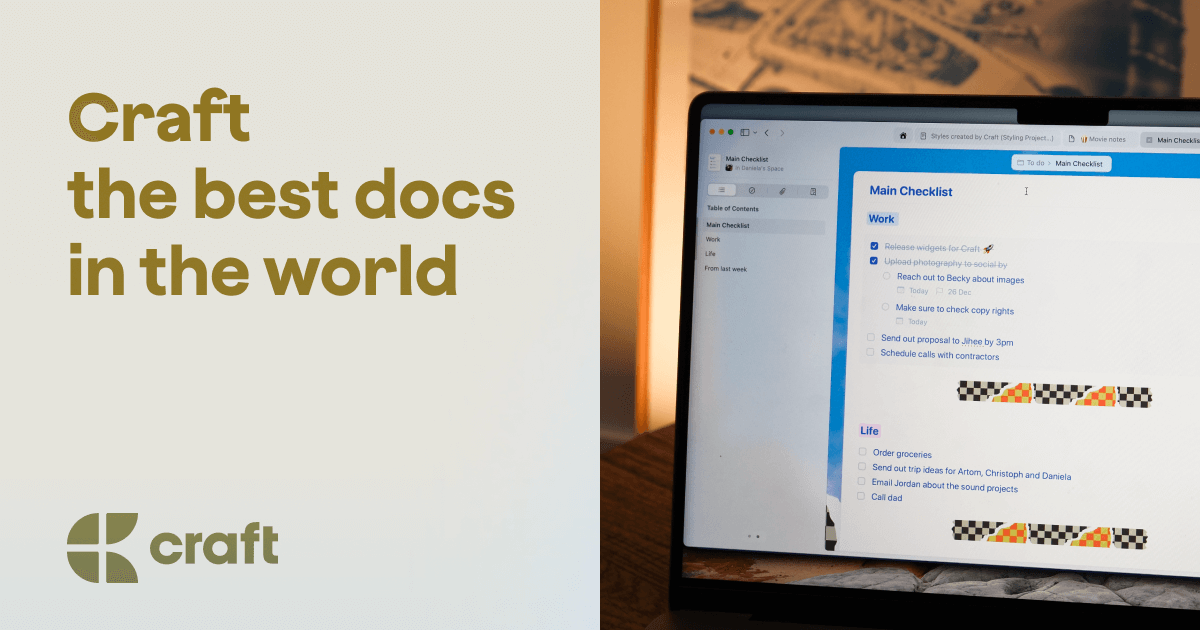
Craft — Docs and Notes Editor
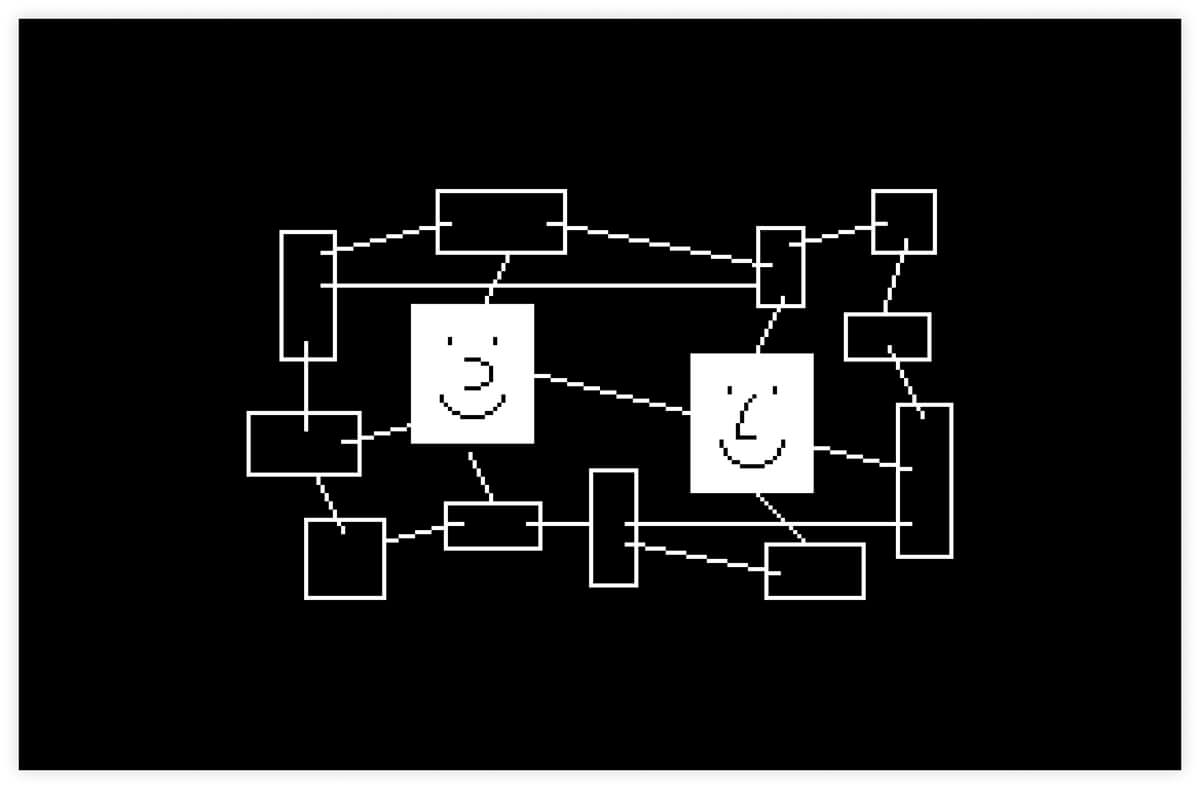
Anytype — A safe haven for digital collaboration
Obsidian - Sharpen your thinking
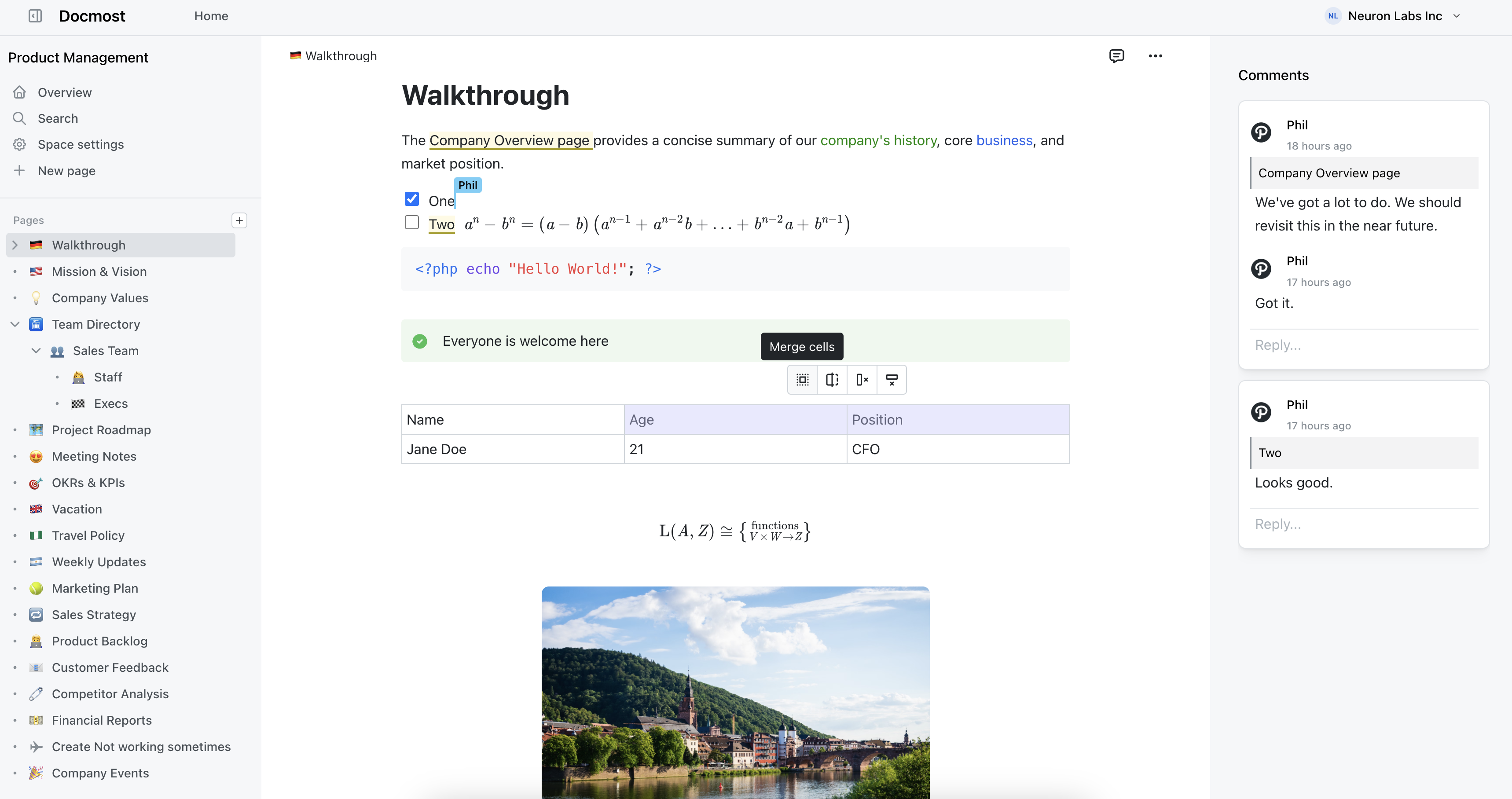
Enterprise-ready Wiki for Teams | Docmost
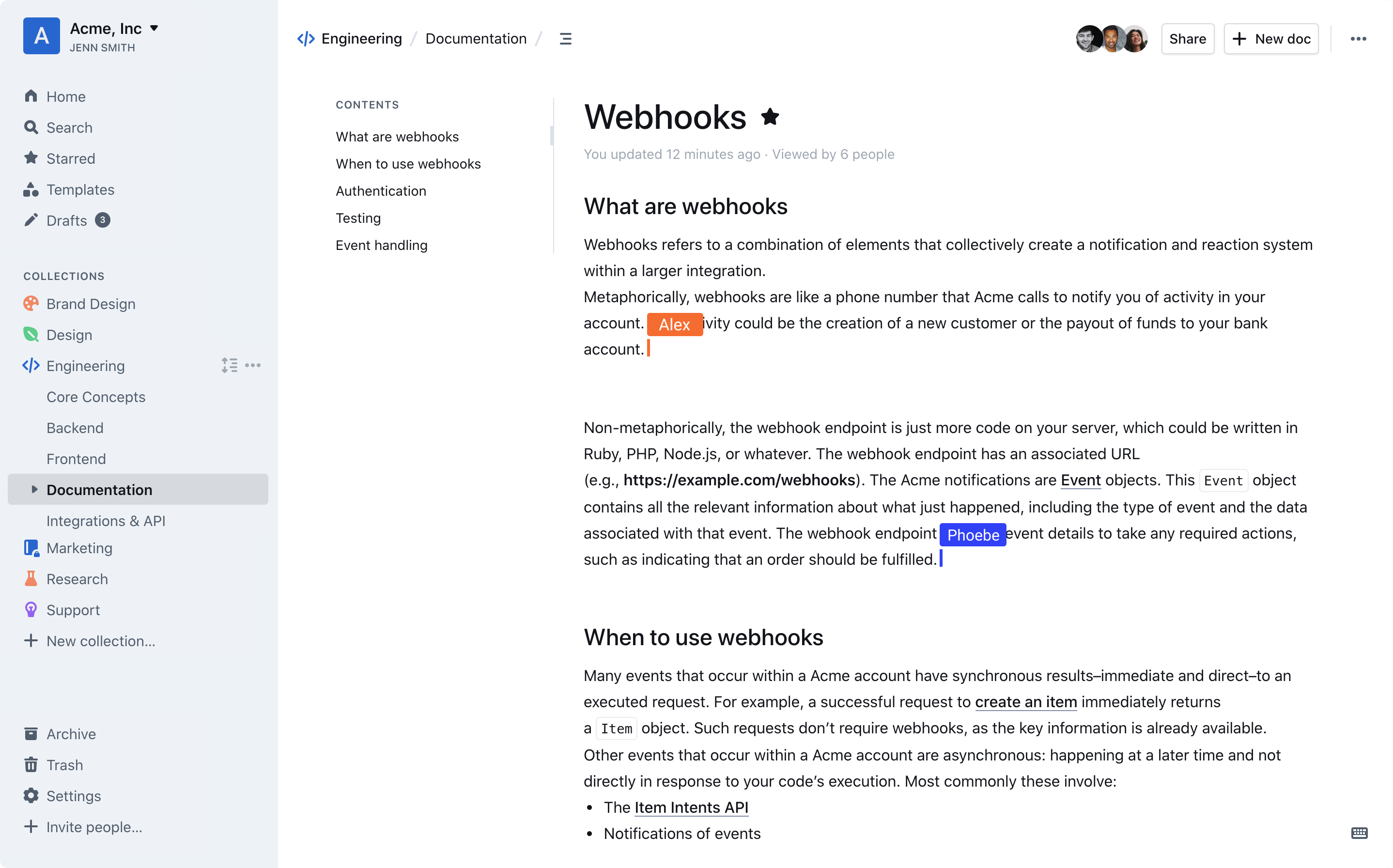
Outline – Team knowledge base & wiki