

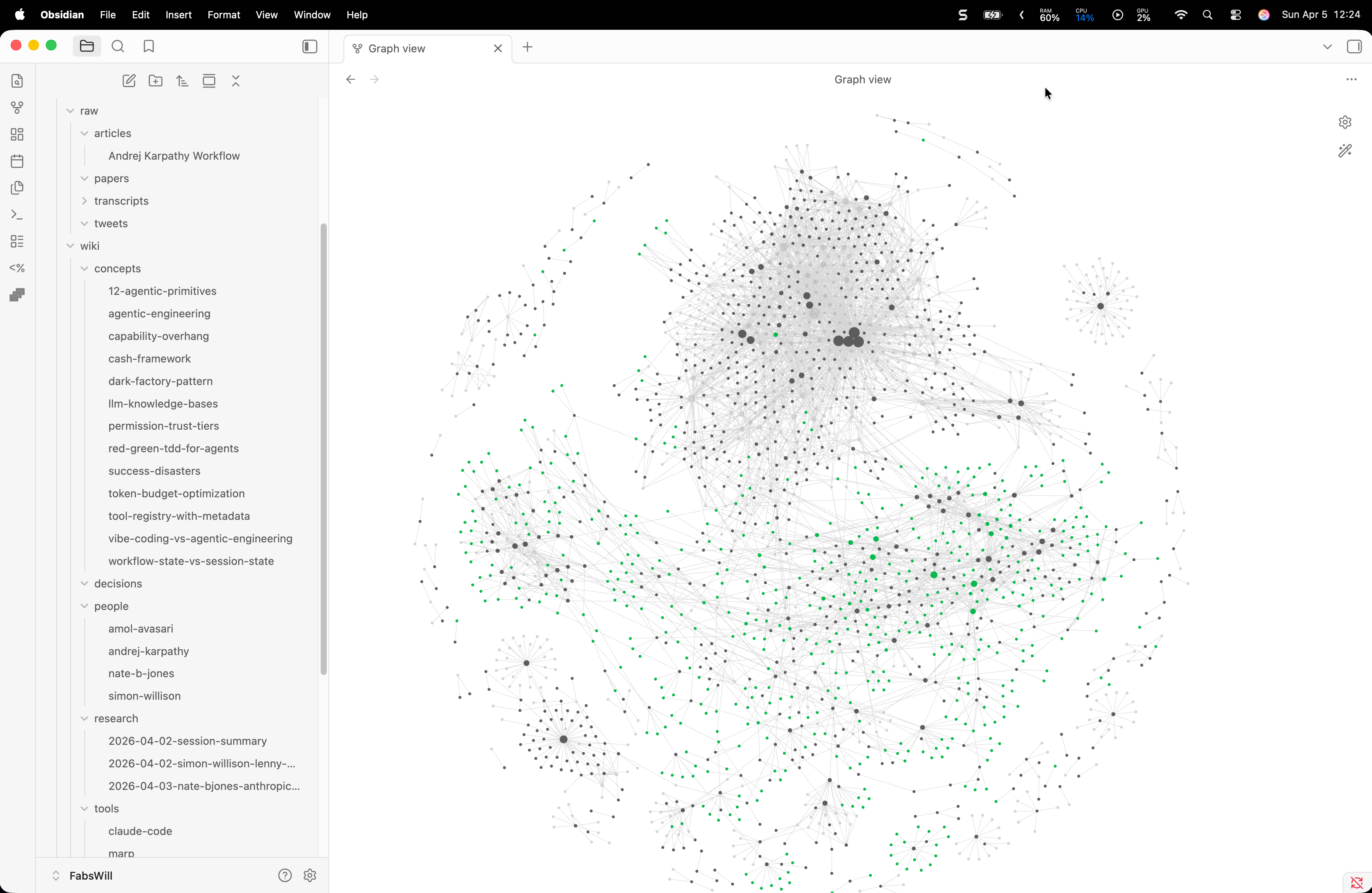
Andrej Karpathy posted about using LLMs to build personal knowledge bases. I took his workflow, wired it into my Obsidian vault with Claude Code, and within an hour had 21 cross-linked wiki articles compiled from YouTube transcripts. Here is how it works and why it matters.
How To Build LLM Wiki In Obsidian? 🧠 A Memory Layer For Any Agentic AI
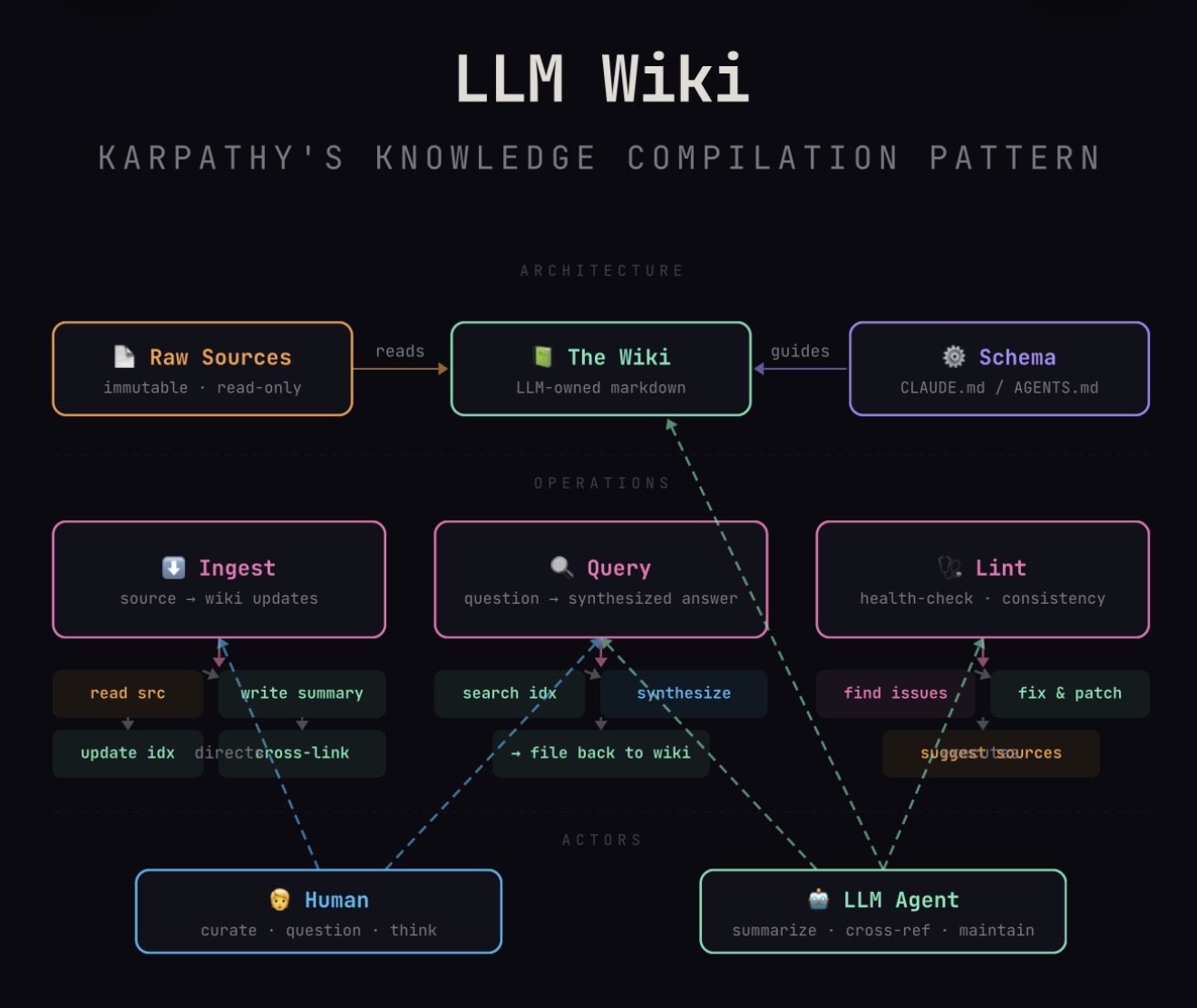
Yuchen Jin on Twitter / X
Karpathy’s “LLM Wiki” pattern: stop using LLMs as search engines over your docs. Use them as tireless knowledge engineers who compile, cross-reference, and maintain a living wiki. Humans curate and think.Diagram generated by my Claude agent knowledge worker. https://t.co/5u5i1GeFK8 pic.twitter.com/NIaq3KlAok— Yuchen Jin (@Yuchenj_UW) April 4, 2026
How to Build an LLM Knowledge Base
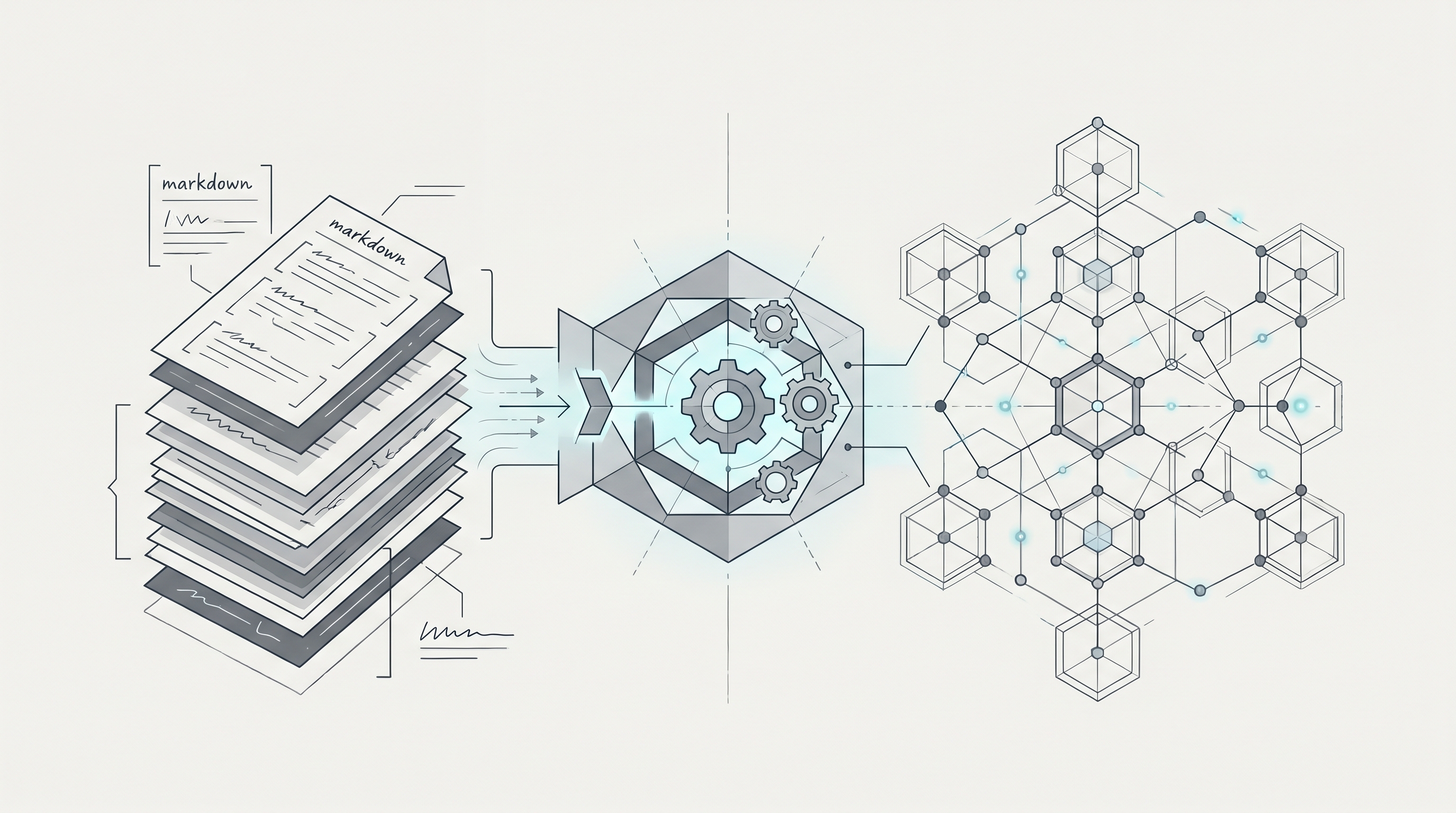
A hands-on guide to building a simple LLM knowledge base with raw markdown sources, a compiled wiki, reusable prompts, and an agent that keeps improving the knowledge base over time.
10 Easy Ways to Enhance Your LLM Wiki or Knowledge Base
Karpathy's LLM Knowledge Base Wiki for Enterprise | Vijoy Pandey posted on the topic | LinkedIn
There's a new kind of computer media in the enterprise: Write once, Read never. The docs are perpetually stale, constantly diverging from reality, and scattered across Confluence, SharePoint, GitHub, Webex (or Slack) threads, Notion, Obsidian - and in my personal life, add Apple Notes, Goodnotes, web clippings, and multiple Google Drives worth of docs and slides that nobody is ever going back to. Karpathy tweeted his LLM knowledge base wiki architecture which went viral last weekend and I decided to give it a run yesterday. Verdict: You *have* to try this out. Prediction: You won’t be able to live without it soon. There were a few mods and decisions I made to the base Karpathy provided. First, the vault / folder structure in Obsidian. I already use Obsidian as a human. Instead of creating separate vaults and dealing with the sync nightmare, I just have folders for Human and Agent, and a Raw folder. (1) The Human/ folder is where I write long form articles and notes independent of the knowledge base wiki. No LLM or agent touches this folder. (2) I do have Arnold Layne, my OpenClaw agent, doing background tasks for me. Raw/ is where both Arnold and I, dump raw snippets. Inclusive of diverse kinds of media. (3) The Agent/ folder is where the LLM (Claude in my case) synthesizes the wiki. No human touches this folder. Second, some customizations to CLAUDE.md for enterprise-like usage - (4) Domain extensions - the agent needs to know that quantum computing and agentic AI have different entity types and different provenance thresholds. (5) Primary source protection, when I drop in my own original work, secondary sources can extend it or raise questions against it, but they cannot overwrite it. It sounds like a small thing but its’s not, especially at enterprise scale where provenance actually matters. Karpathy is upfront that what he’s built is working memory for a single agent, and it’s truly remarkable at that. The jump to Shared Context across teams, reconciling conflicting beliefs at org scale, ontologies that don’t collapse under the weight of a hundred contributors - those are much harder problems and what we are exploring with the Internet of Cognition. PS: The screenshot shows my Obsidian vault after just two runs: one with Karpathy’s original tweet and gist file itself (so meta!) and one with our Internet of Cognition paper. Claude (Sonnet) read it, compiled it into structured summaries, entity pages, concept pages, backlinks, merged all the information cohesively, and keeps it all maintained from there. You just read the Wiki. It’s simply magical.

Why LLM Wiki? 🧠 Future Of Knowledge For Agentic AI & Humans
Andrej Karpathy on Twitter / X
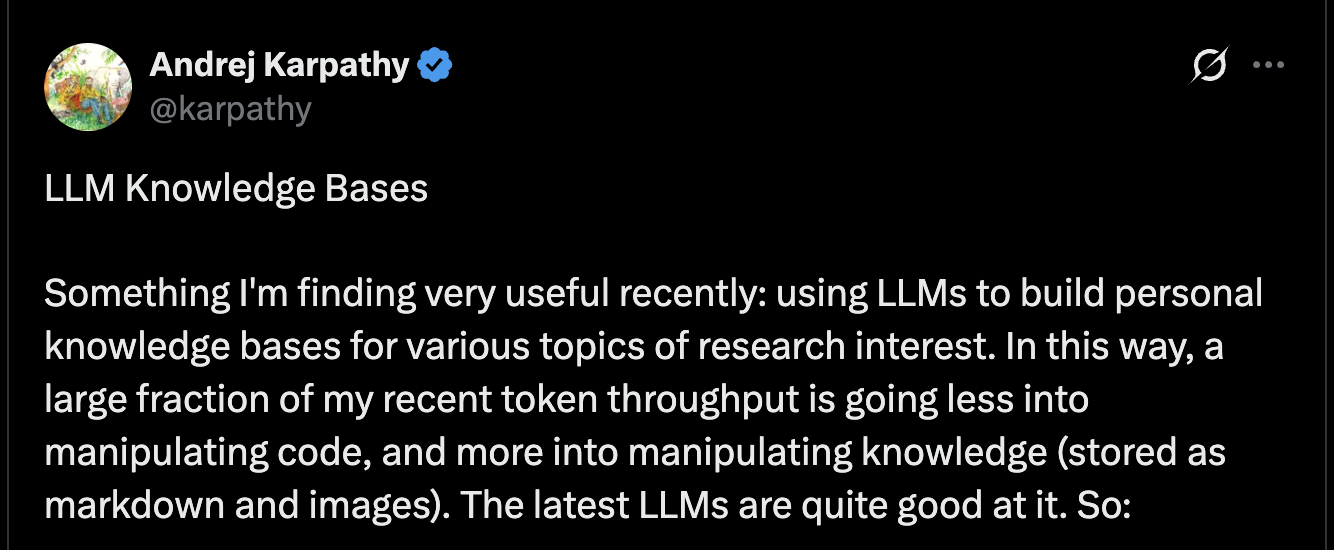
LLM Knowledge BasesSomething I'm finding very useful recently: using LLMs to build personal knowledge bases for various topics of research interest. In this way, a large fraction of my recent token throughput is going less into manipulating code, and more into manipulating…— Andrej Karpathy (@karpathy) April 2, 2026
Wikidata
the free knowledge base with 120,900,955 data entities that anyone can edit.

Wiki Builder: A Claude Code Plugin for Building LLM Knowledge Bases
Wiki Builder is an open-source Claude Code plugin that turns the LLM-knowledge-base workflow into a one-command setup. Scaffold a configurable wiki, point Claude at sources, and let the agent compile durable pages, indexes, and concept maps for you.

Build an LLM Wiki for Your AI Agents
Build an LLM Wiki for Your AI Agents with myKG and Obsidian How to turn a folder of mixed format documents into a typed, interlinked knowledge graph your agents can actually read — using myKG and …
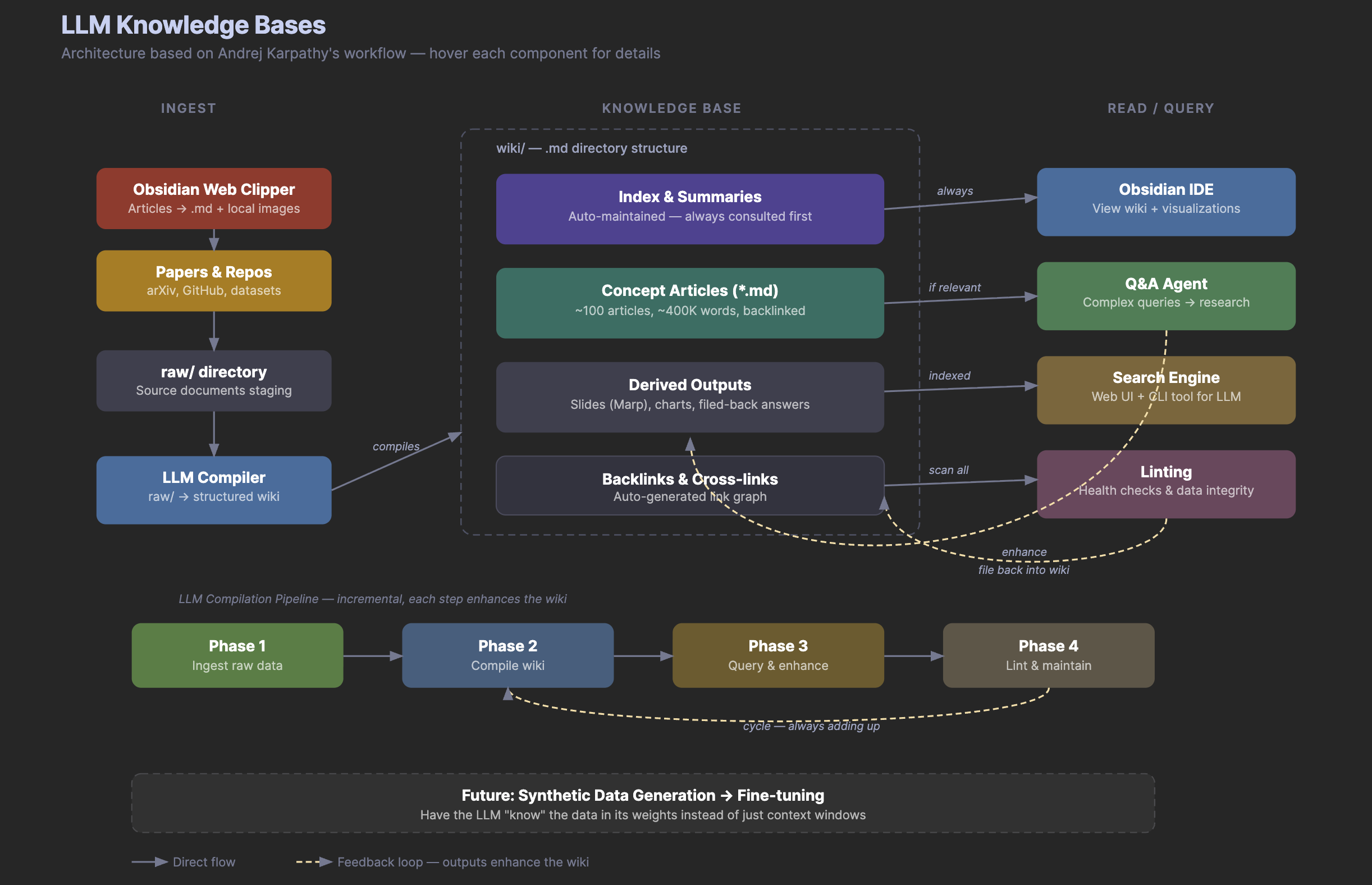
LLM Knowledge Bases
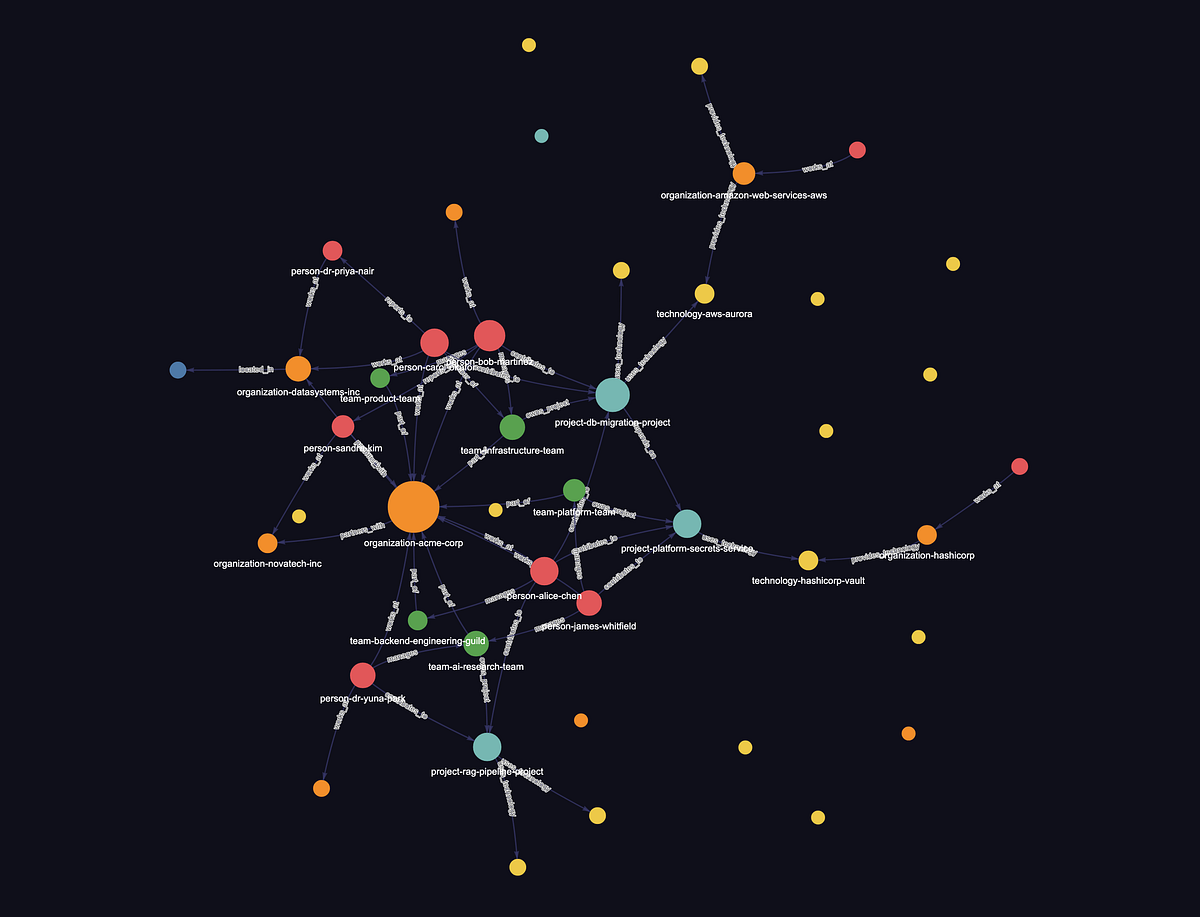
A visual breakdown of Andrej Karpathy's approach to building personal knowledge bases powered by LLMs. Learn the 4-phase pipeline: ingest, compile, query, and maintain - with an interactive architecture diagram.
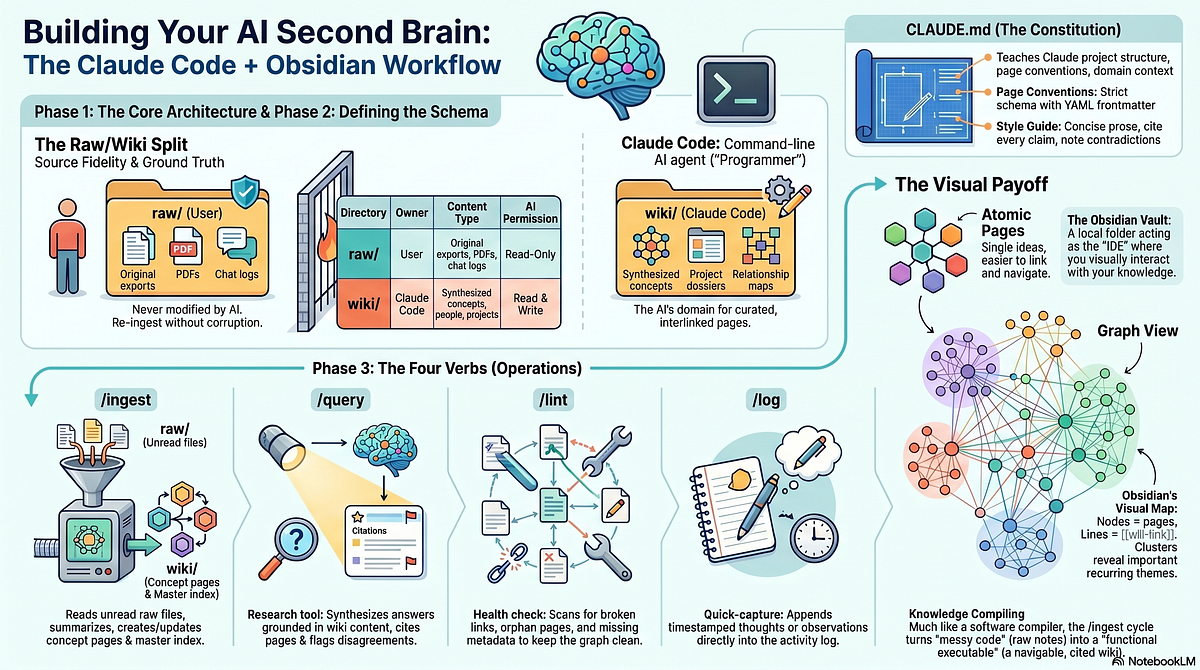
Build an AI Second Brain(LLM Wiki Pattern) With Claude Code and Obsidian
TLDR:Build an AI-powered knowledge base in Obsidian. Use Claude Code slash commands to ingest, link, and query your notes into a smart…
LLM Wikis

AI-compiled knowledge bases
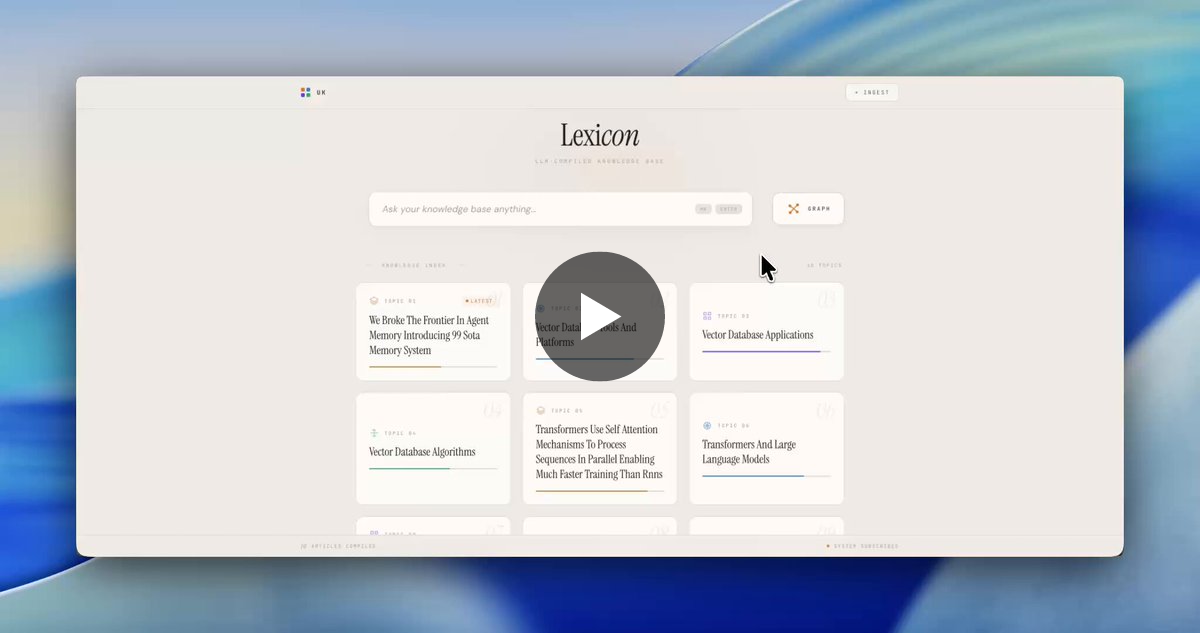
Jared Goering on Twitter / X
OpenWiki: Open Source Repo Documentation for Coding Agents
Wiki Memory

The Obsidian heads were right.
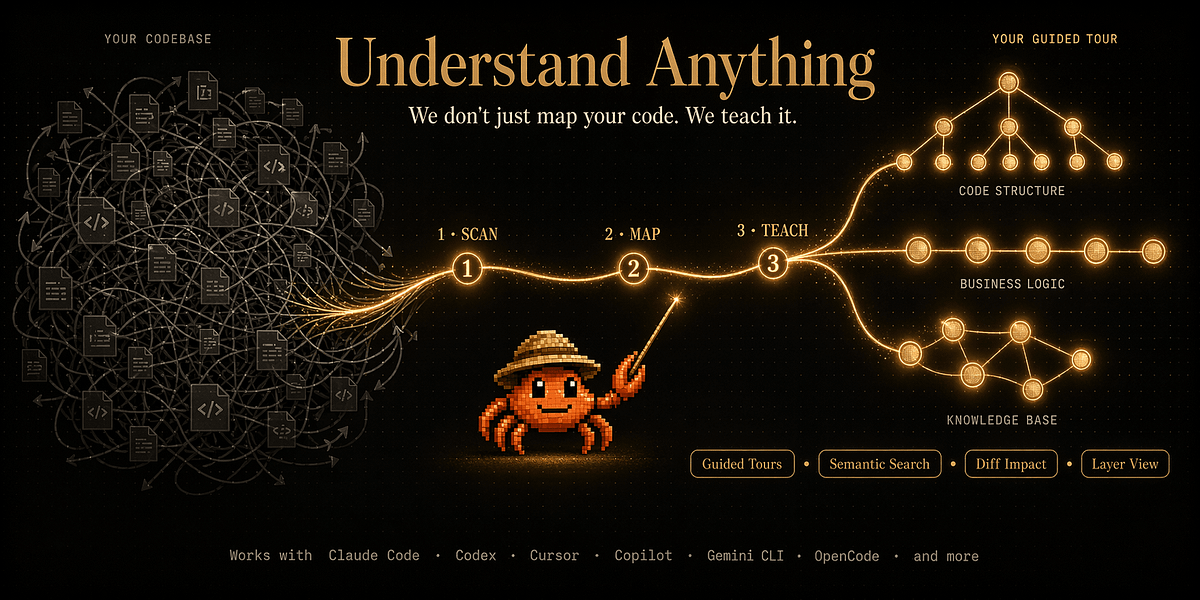
The Definitive Guide to Understand Anything: Turning Code and Knowledge Into Graphs That Teach
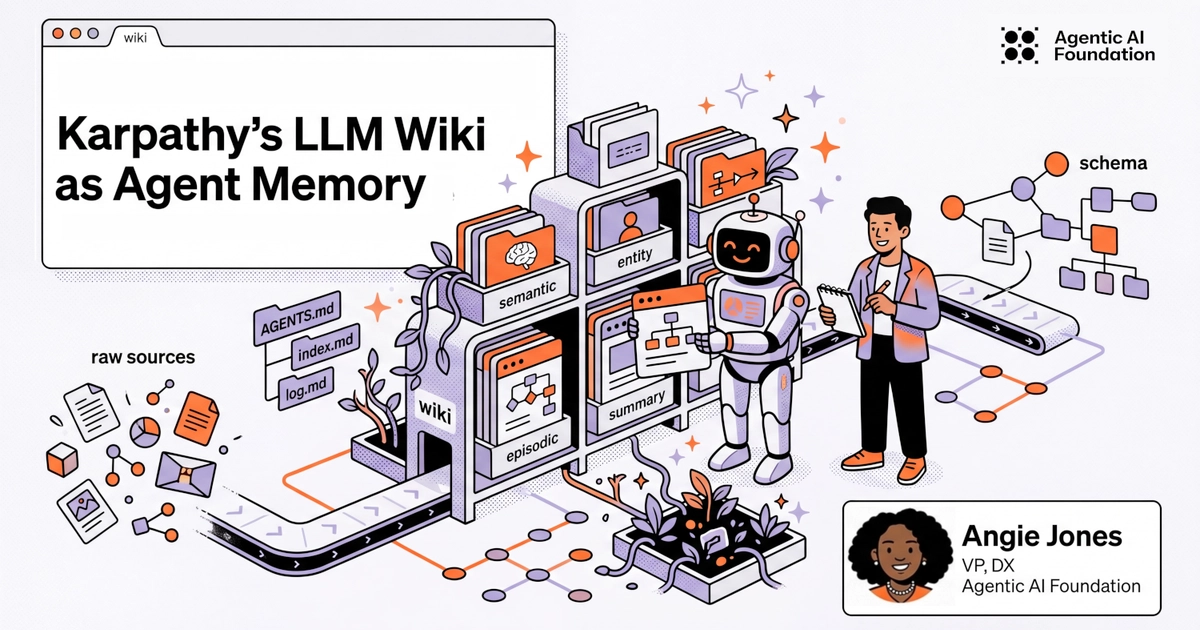
Karpathy's LLM Wiki as Agent Memory - Agentic AI Foundation (AAIF)