

This course introduces the principles and practices of open science, with an emphasis on reproducible research workflows, transparent reporting, and collaborative scholarship. Students will critically examine reproducibility, explore tools that support openness (such as Git, GitHub, and Quarto), and apply these tools in hands-on assignments and a final open project. Students will also explore how open science practices vary across disciplines, including education, humanities, social sciences, industry and government, and STEM contexts. This course emphasizes applying open science principles to real-world data problems in alignment with the principles of producing reproducible research.
Center for Open Science
At the Center for Open Science, our mission is to increase openness, integrity, and reproducibility of scholarly research. Promoting these practices within the research funding and publishing communities accelerates scientific progress

FORRT - Framework for Open and Reproducible Research Training
Integrating open and reproducible science into higher education
Doing Data Science on the Shoulders of Giants: The Value of Open Source Software for the Data Science Community · Issue 2.2, Spring 2020
Open source software is ubiquitous throughout data science, and enables the work of nearly every data scientist in some way or another. Open source projects, however, are disproportionately maintained by a small number of individuals, some of whom are institutionally supported, but many of whom do this maintenance on a purely volunteer basis. The health of the data science ecosystem depends on the support of open source projects, on an individual and institutional level.

Reproducible research: methodological principles for transparent…
This Mooc proposes methodological principles for open and transparent science. It deals in a practical way with note-taking, computational documentation, replicability of analyses.

Doing Data Science on the Shoulders of Giants: The Value of Open Source Software for the Data Science Community
Open source software is ubiquitous throughout data science, and enables the work of nearly every data scientist in some way or another. Open source projects, however, are disproportionately maintained by a small number of individuals, some of whom are institutionally supported, but many of whom do this maintenance on a purely volunteer basis. The health of the data science ecosystem depends on the support of open source projects, on an individual and institutional level.
ScienceOpen
Ideal for sharing early results, building dialogue, and gaining recognition — all while staying flexible for future publication.
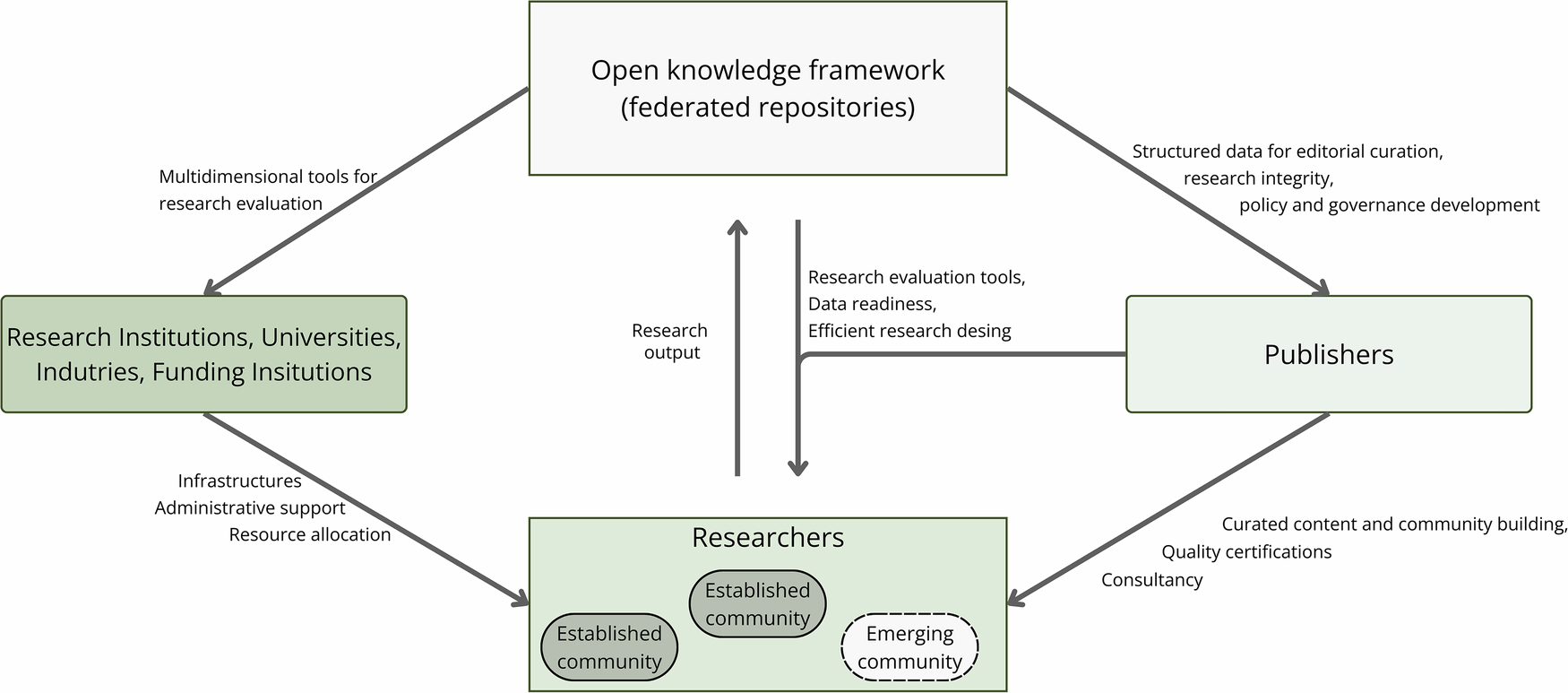
Fostering cultural change in research through innovative knowledge sharing, evaluation, and community engagement strategies
Bringing together researchers, funders, industry partners, and publishers from 14 countries across five continents, we advance the debate around open-science, assessment and learning. We introduce an integrative “open-knowledge system” framework linking knowledge production, validation, assessment, and reuse into one ecosystem view, and translate it into actionable recommendations for each stakeholder. Shifting focus to modular, machine-readable knowledge objects, these recommendations are intended to help diagnose misaligned incentives and guide reforms that properly value all scientific contributions.
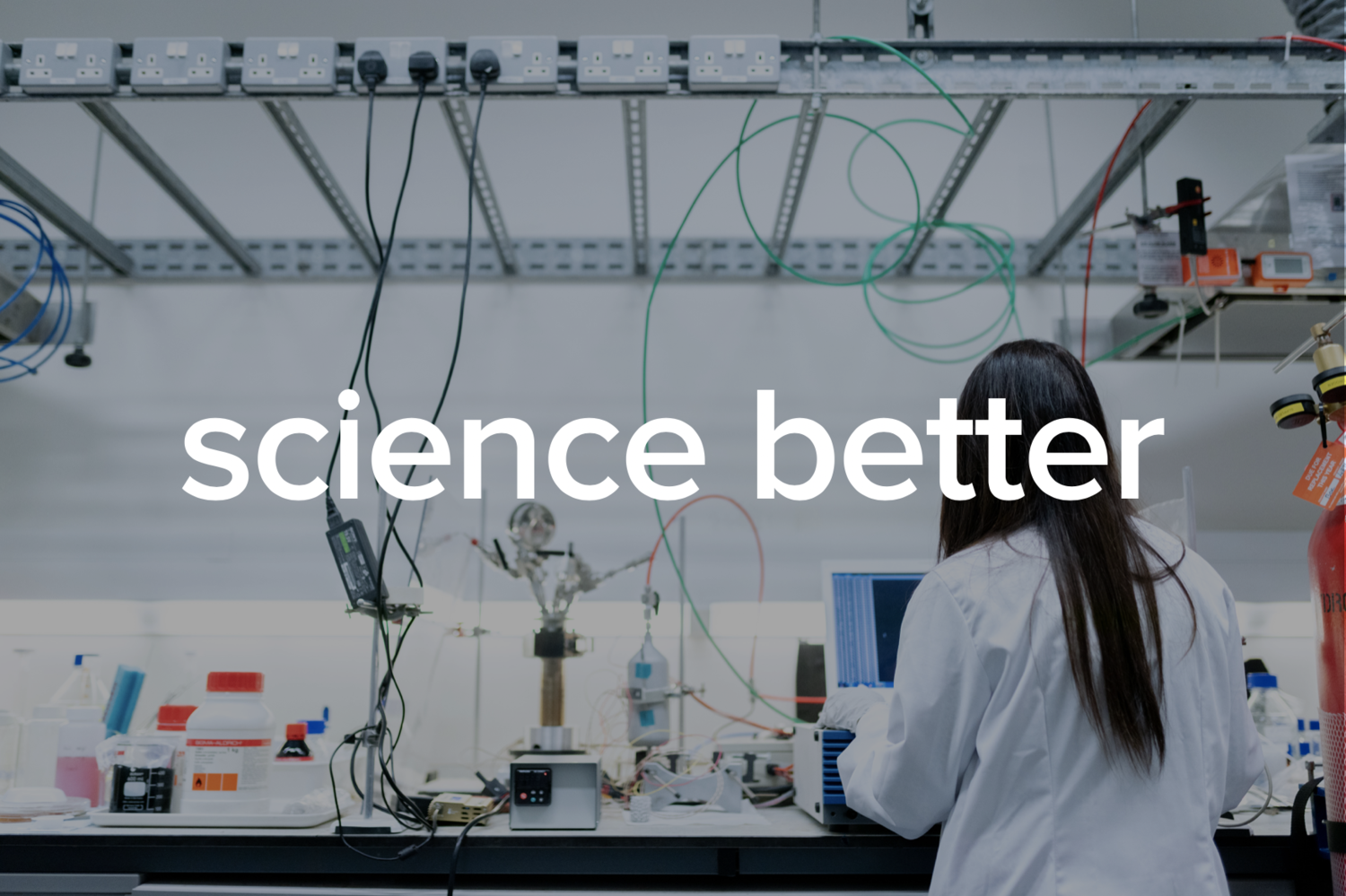
Improving scientific mentorship with "Open Labs" — science better
Open Labs would be a place for experienced scientists to post their open questions and curiosities — a list of the ideas they don't have time to pursue personally but wish someone would.
The Minimum Viable Scientific Record
The open science movement does not lack a shared vision. Decades of declarations, statements of principle, and calls to action have failed to put that vision into practice. This essay proposes a minimum viable scientific record (MVR) that would make the open science vision possible, and asks funders to make operating on it a condition of their money.

The Future of Open Source | datagubbe.se
Cataloguing and theorising open research practices in the arts, humanities and social sciences: Problematising and diversifying ‘Open Science’
Background Discourses of ‘Open Science’ have been criticised for privileging the quantitative and positivist methodologies of science, technology, engineering and mathematics (STEM) research at the expense of qualitative, interpretive, critical-theoretical, practice-based, and other forms of research more common in the arts, humanities and social sciences (AHSS). Methods In this article, which emerged from a work component of the MORPHSS (Materialising Open Research Practices in the Humanities and Social Sciences) project, we document the process, outcomes and practical implications of work to develop a catalogue of open research practices in these disciplines, which proceeded via a wide-ranging literature review followed by targeted desk research and a conceptual mapping exercise. Results Key findings include the fact that open research practices in AHSS are diverse, extending beyond the suite of practices emphasised within dominant accounts of Open Science. We identify among these practices a range of forms of openness including those focused on mobilising the involvement and expert knowledge of diverse participants and communities. Conclusions Presenting a typology of forms of openness in AHSS that is consistent with the epistemic logics of these disciplines, we conclude that openness in AHSS is highly situated and context-dependent, as well as resisting quantification and binary measurement. Drawing on these conclusions, we offer a series of recommendations for institutions, open research monitoring initiatives, funders, publishers, learned societies and researchers to enhance the inclusivity of their policy and practice around openness.

Open Responses: What you need to know
We’re on a journey to advance and democratize artificial intelligence through open source and open science.
