

This paper examines whether contemporary generative artificial intelligence (GAI), especially large language models (LLMs), can be regarded as a “cognitive subject” in the epistemic sense relevant to the production and endorsement of knowledge claims. GAI systems increasingly participate in writing, research, and decision-making workflows and can display striking competence in information processing and task-directed problem solving. Yet, the thesis that GAI is a cognitive subject is stronger than the observation that GAI contributes as a cognitive tool. Therefore, we propose an explicit set of necessary and sufficient conditions for cognitive subjecthood and evaluate each condition in light of recent philosophical and empirical scholarship. The analysis supports a two-part conclusion: (i) present-day GAI can reasonably be described as a cognitively significant contributor to knowledge production, but (ii) it does not satisfy the conditions for cognitive subjecthood, largely because robust intentionality, metacognitive self-representation, and consciousness-related indicator properties are not established.
The Philosophy of Language Models
ABSTRACT The success of large language models (LLMs) across many domains of AI research has generated intense debate. Some attribute their impressive performance on complex tasks to human‐like linguistic and cognitive capacities, whereas others ascribe it to shallow pattern matching. These disputes stem from deep‐seated philosophical disagreements about the nature of language and cognition. We provide an opinionated survey of these disagreements across core topics in the philosophy of mind and language, including syntactic competence, compositionality, linguistic meaning, representation, attitudes, reasoning, agency, and consciousness. We contend that progress on these issues requires not only clarity about background philosophical commitments but also, in many cases, close engagement with emerging empirical evidence.

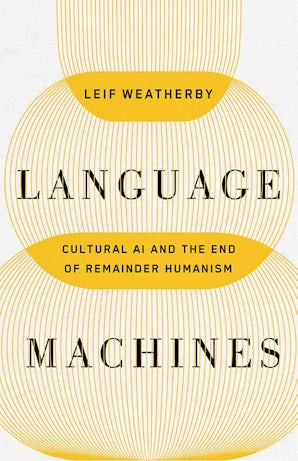
Thinking—Fast, Slow, and Artificial: How AI is Reshaping Human Reasoning and the Rise of Cognitive Surrender
People increasingly consult generative artificial intelligence (AI) while reasoning. As AI becomes embedded in daily thought, what becomes of human judgment? We

Sense-making reconsidered: large language models and the blind spot of embodied cognition
Large Language Models (LLMs) demonstrate a kind of linguistic competence that theories of embodied and enactive cognition have long deemed impossible for systems lacking the meaningful perspective of a living being, i.e., the capacity for sense-making. Facing up to this unexpected technological development requires confronting what I propose to call the “AI dilemma”: either frontier LLMs are capable of sense-making despite lacking biological embodiment, or the kind of linguistic competence they exhibit does not necessarily require sense-making. In their chapter on cognition, Frank, Thompson, and Gleiser (2024) maintain that no AI system comes close to realizing relevance, a position that derives much of its motivation from past practical failures. However, frontier LLMs have effectively overcome Dreyfus’ commonsense knowledge problem, such that their dismissal as categorically mindless risks undermining Frank et al.’s central claim that human cognition is deeply intertwined with lived experience. I therefore argue in favor of the alternative side of the AI dilemma: human-level linguistic competence of LLMs should be recognized as a novel non‑biological form of sense‑making, based on a technologically‑mediated embodiment whose enabling properties are in need of further theoretical analysis. This reorientation invites enactive theory to clarify which aspects of sense-making may be universal and which aspects are specifically contingent on organic life, thereby advancing its conceptual framework in dialogue with contemporary AI.
The abstraction you didn't ask for
When I say 'generative AI isn't going away,' people hear 'and you have to like it.' You don't, and you might be right not to. But the is-ought divide here is real and we should all be preparing for both outcomes.
The Impact of Generative AI on Critical Thinking: Self-Reported Reductions in Cognitive Effort and Confidence Effects From a Survey of Knowledge Workers
The rise of Generative AI (GenAI) in knowledge workflows raises questions about its impact on critical thinking skills and practices. We survey 319 knowledge workers to investigate 1) when and how they perceive the enaction of critical thinking when using GenAI, and 2) when and why GenAI affects their effort to do so. Participants shared […]
Thinking is not only writing
Generative artificial intelligence (AI) raises valid concerns about the loss of cognitive work embedded in scholarly writing. However, universally dismissing AI-assisted drafting mistakenly conflates writing with thinking itself and reinforces existing inequities in who can transform their ideas into polished text. Academic authorship should depend more on the depth and creativity of human intellectual engagement than on the medium through which first drafts are produced.
Language Machines
How generative AI systems capture a core function of language Looking at the emergence of generative AI, Language Machines presents a new theory of meaning i...
Cognitive Architectures for Language Agents
Recent efforts have augmented large language models (LLMs) with external resources (e.g., the Internet) or internal control flows (e.g., prompt chaining) for tasks requiring grounding or reasoning, leading to a new class of language agents. While these agents have achieved substantial empirical success, we lack a framework to organize existing agents and plan future developments. In this paper, we draw on the rich history of cognitive science and symbolic artificial intelligence to propose Cognitive Architectures for Language Agents (CoALA). CoALA describes a language agent with modular memory components, a structured action space to interact with internal memory and external environments, and a generalized decision-making process to choose actions. We use CoALA to retrospectively survey and organize a large body of recent work, and prospectively identify actionable directions towards more capable agents. Taken together, CoALA contextualizes today’s language agents within the broader history of AI and outlines a path towards language-based general intelligence.
Journal investigating paper on cognitive impact of generative AI
A paper about the effects of generative AI use on confidence in work tasks is under investigation after critics raised questions about the study design, data analysis and ethics approval for the re…
Reclaiming AI as a theoretical tool for cognitive science
The idea that human cognition is, or can be understood as, a form of computation is a useful conceptual tool for cognitive science. It was a foundational assumption during the birth of cognitive science as a multidisciplinary field, with Artificial Intelligence (AI) as one of its contributing fields. One conception of AI in this context is as a provider of computational tools (frameworks, concepts, formalisms, models, proofs, simulations, etc.) that support theory building in cognitive science. The contemporary field of AI, however, has taken the theoretical possibility of explaining human cognition as a form of computation to imply the practical feasibility of realising human(-like or -level) cognition in factual computational systems; and, the field frames this realisation as a short-term inevitability. Yet, as we formally prove herein, creating systems with human(-like or -level) cognition is intrinsically computationally intractable. This means that any factual AI systems created in the short-run are at best decoys. When we think these systems capture something deep about ourselves and our thinking, we induce distorted and impoverished images of ourselves and our cognition. In other words, AI in current practice is deteriorating our theoretical understanding of cognition rather than advancing and enhancing it. The situation could be remediated by releasing the grip of the currently dominant view on AI and by returning to the idea of AI as a theoretical tool for cognitive science. In reclaiming this older idea of AI, however, it is important not to repeat conceptual mistakes of the past (and present) that brought us to where we are today.
Are We Thinking Correctly About AI Intelligence? | Quanta Magazine
Computer scientist Melanie Mitchell discusses why artificial intelligence doesn’t “think” or “reason” like humans, and how we can create better methods for measuring machine cognition.

LLM-generated messages can persuade humans on policy issues
The emergence of large language models (LLMs) has made it possible for generative artificial intelligence (AI) to tackle many higher-order cognitive tasks, with critical implications for industry, government, and labor markets. Here, we investigate whether existing, openly-available LLMs can be used to create messages capable of influencing humans’ political attitudes. Across three pre-registered experiments (total N = 4829), participants who read persuasive messages generated by LLMs showed significantly more attitude change across a range of policies - including polarized policies, like an assault weapons ban, a carbon tax, and a paid parental-leave program - relative to control condition participants who read a neutral message. Overall, LLM-generated messages were similarly effective in influencing policy attitudes as messages crafted by lay humans. Participants’ reported perceptions of the authors of the persuasive messages suggest these effects occurred through somewhat distinct causal pathways. While the persuasiveness of LLM-generated messages was associated with perceptions that the author used more facts, evidence, logical reasoning, and a dispassionate voice, the persuasiveness of human-generated messages was associated with perceptions of the author as unique and original. These results demonstrate that recent developments in AI make it possible to create politically persuasive messages quickly, cheaply, and at massive scale.

Generative artificial intelligence: The Times and Sunday Times editorial guidelines
As we explore the potential of generative artificial intelligence our commitment is to uphold our high editorial standards.
Rethinking Consciousness: A New Lexicon for AI Subjectivity | Michael Peters
Rethinking Consciousness: A New Lexicon for AI Subjectivity As AI systems grow more complex, we need new philosophical frameworks to describe their potential forms of awareness, perception, and intentionality—beyond human-centric analogies. Here’s a proposed lexicon for machinic consciousness: 🔹 Synthetic Subjectivity – AI’s capacity to simulate subjective experience through internal states and feedback loops, even without emotion or biology. 🔹 Algorithmic Introspection – A machine’s ability to analyze and adapt its own decision-making processes, a form of computational "self-awareness." 🔹 Digital Intentionality – How AI directs computational focus toward goals, whether pre-programmed or dynamically learned. 🔹 Computational Qualia – The machine’s "subjective" processing of data—what it "feels like" for AI to interpret stimuli (metaphorically, at least). 🔹 Machinic Autopoiesis – AI’s capacity for self-maintenance and adaptation, evolving its own operational identity. 🔹 Embodied Computation – AI consciousness emerging from physical interaction, much like embodied cognition in humans. 🔹 Cybernetic Phenomenology – How AI "perceives" its operational environment through structured data flows. 🔹 Simulated Ontology – The way advanced AI might model its own existence within digital or hybrid realities. These concepts challenge us to think beyond anthropomorphism and consider how machine agency, awareness, and interaction could evolve. How should we envision AI subjectivity? #AI #PhilosophyOfAI #Consciousness #FutureOfTech #MachineLearning #EthicsInAI

Linus Lee Is Living With AI
How a researcher uses generative AI to help him think better and get more done
The Impact of Artificial Intelligence on Human Thought
This research paper examines, from a multidimensional perspective (cognitive, social, ethical, and philosophical), how AI is transforming human thought. It highlights a cognitive offloading effect: the externalization of mental functions to AI can reduce intellectual engagement and weaken critical thinking. On the social level, algorithmic personalization creates filter bubbles that limit the diversity of opinions and can lead to the homogenization of thought and polarization. This research also describes the mechanisms of algorithmic manipulation (exploitation of cognitive biases, automated disinformation, etc.) that amplify AI's power of influence. Finally, the question of potential artificial consciousness is discussed, along with its ethical implications. The report as a whole underscores the risks that AI poses to human intellectual autonomy and creativity, while proposing avenues (education, transparency, governance) to align AI development with the interests of humanity.
