Every few decades, software engineering is declared “dead” or on the verge of being automated away. We’ve heard versions of this story before. But what if it’s just the start of a new “golden age” of a different type of software engineering, like it has been many times before? In this episode of The Pragmatic Engineer, I’m joined once again by Grady Booch, one of the most influential figures in the history of software engineering, to put today’s claims about AI and automation into historical context. Grady is the co-creator of the Unified Modeling Language, author of several books and papers that have shaped modern software development, and Chief Scientist for Software Engineering at IBM, where he focuses on embodied cognition. Grady shares his perspective on three golden ages of computing since the 1940s, and how each emerged in response to the constraints of its time. He explains how technical limits and human factors have always shaped the systems we build, and why periods of rapid change tend to produce both real progress and inflated expectations. He also responds to current claims that software engineering will soon be fully automated, explaining why systems thinking, human judgment, and responsibility remain central to the work, even as tools continue to evolve. — *Brought to you by our season partners:* • Statsig — The unified platform for flags, analytics, experiments, and more. http://statsig.com/pragmatic • Sonar – The makers of SonarQube, the industry standard for automated code review. https://www.sonarsource.com/pragmatic/?utm_medium=paid&utm_source=pragmaticengineer&ut[…]egory=Paid&s_source=Paid%20Other&s_origin=pragmaticengineer • WorkOS – Everything you need to make your app enterprise ready. https://workos.com/ — *The Pragmatic Engineer deepdives relevant for this episode:* • When AI writes almost all code, what happens to software engineering? https://newsletter.pragmaticengineer.com/p/when-ai-writes-almost-all-code-what • Inside a five-year-old startup’s rapid AI makeover https://newsletter.pragmaticengineer.com/p/ai-first-makeover-craft • Software architecture with Grady Booch https://newsletter.pragmaticengineer.com/p/software-architecture-with-grady-booch • What is old is new again https://newsletter.pragmaticengineer.com/p/what-is-old-is-new-again — *Where to find Grady Booch:* • X: https://x.com/grady_booch • LinkedIn: https://www.linkedin.com/in/gradybooch • Website: https://computingthehumanexperience.com — *In this episode, we cover:* (00:00) Intro (01:04) The first golden age of software engineering (18:05) The software crisis (32:07) The second golden age of software engineering (41:27) Y2K and the Dotcom crash (44:53) Early AI (46:40) The third golden age of software engineering (50:54) Why software engineers will very much be needed (57:52) Grady responds to Dario Amodei (1:06:00) New skills engineers will need to succeed (1:09:10) Resources for studying complex systems (1:13:39) How to thrive during periods of change — See the transcript and other references from the episode at https://newsletter.pragmaticengineer.com/podcast — Production and marketing by https://penname.co/.
The third golden age of software engineering – thanks to AI, with Grady Booch
Andrej Karpathy: Software Is Changing (Again)
Why Software Engineering Is Indispensable in the Age of Coding Agents
Can AI make Software Engineering (SE) -- the discipline -- obsolete? And can it make software engineers -- the professionals -- redundant? This paper argues that the rise of capable AI coding...

Why AI hasn’t replaced software engineers, and won’t
Coding agents as normal technology
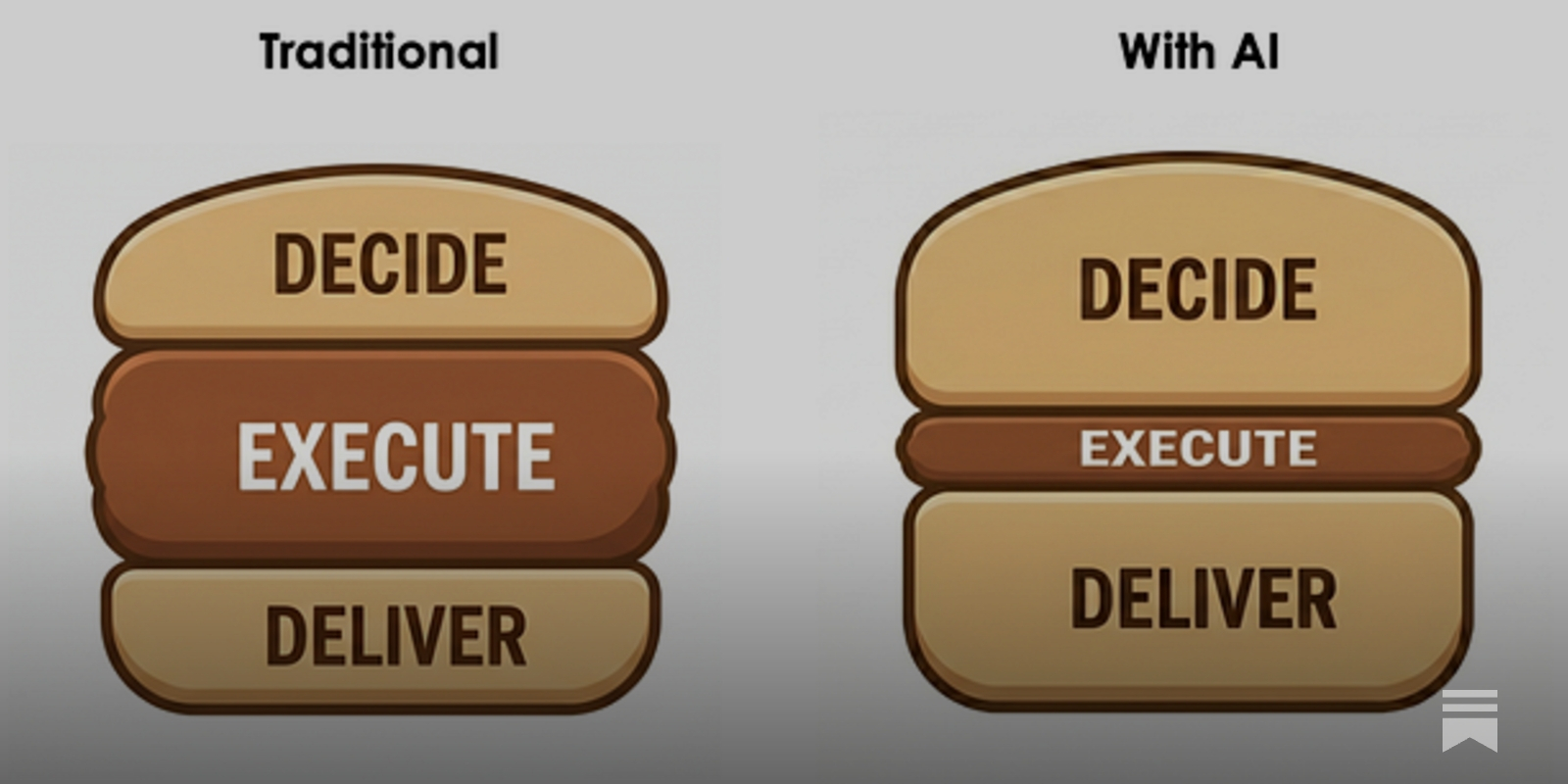
Human-Centered Artificial Intelligence: Three Fresh Ideas
Human-Centered AI (HCAI) is a promising direction for designing AI systems that support human self-efficacy, promote creativity, clarify responsibility, and facilitate social participation. These human aspirations also encourage consideration of privacy, security, environmental protection, social justice, and human rights. This commentary reverses the current emphasis on algorithms and AI methods, by putting humans at the center of systems design thinking, in effect, a second Copernican Revolution. It offers three ideas: (1) a two-dimensional HCAI framework, which shows how it is possible to have both high levels of human control AND high levels of automation, (2) a shift from emulating humans to empowering people with a plea to shift language, imagery, and metaphors away from portrayals of intelligent autonomous teammates towards descriptions of powerful tool-like appliances and tele-operated devices, and (3) a three-level governance structure that describes how software engineering teams can develop more reliable systems, how managers can emphasize a safety culture across an organization, and how industry-wide certification can promote trustworthy HCAI systems. These ideas will be challenged by some, refined by others, extended to accommodate new technologies, and validated with quantitative and qualitative research. They offer a reframe -- a chance to restart design discussions for products and services -- which could bring greater benefits to individuals, families, communities, businesses, and society.
Is AI causing a repeat of Frontend’s Lost Decade? | Mastro Blog
AI is doing to programming what framework-brain did to the frontend before. Deskilling, or just working at a higher level of abstraction?
An AI state of the union: We’ve passed the inflection point & dark factories are coming
How Cursor is building the future of AI coding with Claude
Programming (with AI agents) as theory building
Back in 1985, computer scientist Peter Naur wrote “Programming as Theory Building”. According to Naur — and I agree with him — the core output of software engineers is not the program itself, but the theory of how the program works. In other words, the knowledge inside the engineer’s mind is the primary artifact of engineering work, and the actual software is merely a by-product of that.

AI made me doubt everything about programming by Felienne Hermans - DDD Europe 2026
AI made me doubt everything about programming by Felienne Hermans - DDD Europe 2026
The Era of Experience & The Age of Design: Richard S. Sutton, Upper Bound 2025
What the hell happened with AGI timelines in 2026?
The Trap of Instant Heroism in the Era of AI
AI has expanded what engineering leaders can do.

Design Engineering with Maggie Appleton
Care at the Edge of Automation – Topos Institute
Technologies don’t just solve problems, they change us. We invent technologies, and they invent us in turn, shaping our lives and worlds. This is the phenomenon that Terry Winograd and Fernando Flores, in Understanding Computers and Cognition (1986), called “ontological design.” It matters now more than ever—along with a second lesson they saw clearly. Technological research is always guided (and sometimes misguided) by deep ontological assumptions about, e.g., the nature of cognition, agency, and communication. If we are to create technologies that truly serve human flourishing and care, we must bring these hidden assumptions into the open and question them at their roots.